
How to Bowl an Off Cutter in Cricket: Grip & Technique
On this page6
Watch a batter get cleaned up by an off cutter and their reaction is almost always the same: a half-shuffle across, bat coming down for a ball that was supposed to hold its line and instead darted back through the gate. The delivery looks like a stock ball right up until it pitches. That’s the whole trick, and it’s why medium-fast bowlers keep it in the bag even when they can’t spin the ball a fraction with their wrist.
What the Off Cutter Does
Like an off-break from a spinner, the off cutter moves into the right-handed batter, from off stump toward leg, after pitching. At medium-fast pace this makes it hard to pick: the batter’s instinct is to play for the ball continuing straight on, and instead it cuts back in and clatters into the stumps or traps them lbw.
Off Cutter vs. Leg Cutter at a Glance
| Feature | Off Cutter | Leg Cutter |
|---|---|---|
| Direction of movement | Off to leg (into right-hander) | Leg to off (away from right-hander) |
| Finger action | Middle finger pulls left side | Index finger drags right side |
| Threat | Lbw, bowled | Edge to slip, caught behind |
| Pitch contact | Seam grips, ball cuts in | Seam grips, ball cuts away |
The Grip
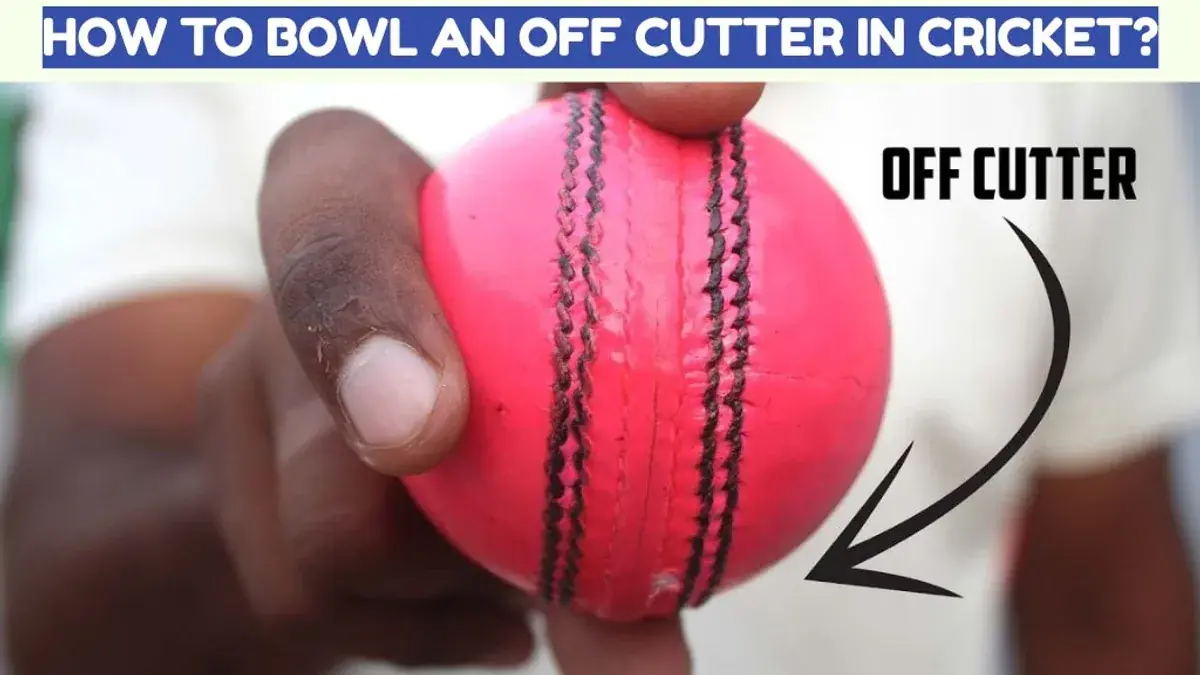
- Hold the ball with the seam running across your fingers, not upright as in a conventional delivery.
- Place your index and middle fingers across the top of the ball, angled toward the left side (for a right-arm bowler).
- Your middle finger does most of the work. It’s the primary cutting finger at release.
- Rest your thumb underneath on the smooth side for support.
- Angle the seam slightly rather than holding it vertical.
This grip is basically the mirror image of the leg-cutter grip.
Step-by-Step Bowling Action
Step 1: Disguise the grip before your delivery stride. Change your grip inside the bowling hand while walking in, not visibly at the crease.
Step 2: Keep your normal action through load-up. Side-on position, arm height, and load-up all need to look identical to your stock delivery.
Step 3: At release, drag the middle finger down and across the left side of the ball. Think of pulling the ball inward: the middle finger rotates from the top of the ball down the left side as it leaves your hand. This produces anticlockwise spin (from a right-arm bowler’s view) that cuts the ball from off to leg.
Step 4: Keep the wrist behind the ball. Roll it over too early and the cutting action drops off, sometimes into an unintended full toss.
Step 5: Bowl a good-to-full length. Short off cutters sit up and get pulled. Full ones that hit the seam and cut in toward leg stump are the dangerous ones.
Common Mistakes
- Slowing the arm down through release, so pace bleeds away without adding any extra cutting action.
- Opening the action chest-on, which costs control over the seam angle.
- Bowling too full. An over-pitched off cutter turns into a half-volley swinging in, easy pickings; it needs to be just short enough to pitch and cut.
When to Bowl the Off Cutter
The off cutter works best in a few specific situations: as a variation after setting up with a standard seam delivery, on surfaces with natural grip or rough patches on the off side, against a batter playing with hard hands off the back foot (movement off the pitch changes the equation differently than movement through the air), and at the death in T20 cricket as a slower-ball variation.
One trap worth setting: bowl a couple of outswingers to open up the batter’s outside edge, then slip in an off cutter on the same line. The batter braces for the ball to move away. Instead it comes back in and takes out top of off or middle stump.
Frequently asked questions
What is the difference between an off cutter and a leg cutter?+
An off cutter moves from off to leg (into the right-handed batter), while a leg cutter moves from leg to off (away from the right-handed batter). The off cutter's finger action cuts down the left side of the ball; the leg cutter cuts down the right.
Does the off cutter need a wet pitch to work?+
No, but it is more effective on surfaces with grip — dry, abrasive pitches, rough patches, or slightly damp conditions where the seam holds and grabs. On flat, hard surfaces it still works as a pace variation, though lateral deviation may be reduced.
Who are famous users of the off cutter?+
Many prominent medium-fast bowlers have relied on the off cutter as a core wicket-taking delivery — it has been a staple of seam bowlers in all eras, particularly those who operate at medium pace and rely on movement off the pitch rather than raw pace.
Sources
Play & tools
Free browser games and tools — no account, no download.
- Play today's Sports Connections — Today's Sports Connections — daily hints, answers, and play the grid.
- Play Guess the NFL Player — A new mystery NFL player every day. Eight guesses, with a clue on each — plus free unlimited mode.
- Explore all our games →
Related cricket guides
View all →
How to Bowl a Leg Cutter in Cricket: Grip & Technique
A leg cutter is a fast bowler's delivery that cuts from leg to off. Grip fingers across the seam, then drag the index finger down at release for movement.
How to Bowl Reverse Swing in Cricket: Technique Explained
Reverse swing makes an old, scuffed ball curve opposite to normal swing. Keep the shiny side toward your target, angle the seam, and bowl at high pace.
How to Bowl the Doosra: Grip, Action, and Technique
The doosra is an off-spinner's secret weapon, a ball that turns away from a right-handed batter instead of into them. Learn to bowl it safely and well.

How to Bowl a Yorker in Cricket: Step-by-Step Guide
A yorker pitches at the batter's feet, making it nearly impossible to hit cleanly. Aim a full delivery at the base of the stumps, in the block hole.
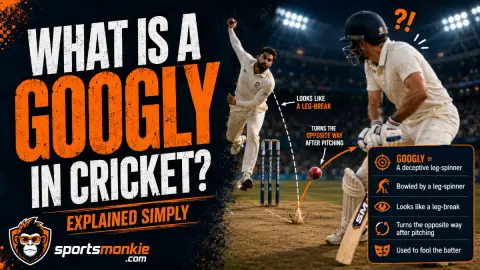
What Is a Googly in Cricket?
A googly is a leg-spinner's disguised delivery that turns the opposite way to a leg break, spinning into a right-hander. See how it's bowled and deceives.

How to Bowl a Teesra in Cricket: Grip and Action
The teesra is an off-spinner's mystery ball that goes straight on instead of turning. A pronated wrist and altered fingers deceive batters expecting spin.