
Wimbledon Debentures Explained: Price and How to Buy

On this page7
- 01What exactly is a Wimbledon debenture?
- 02How is a debenture different from a regular Wimbledon ticket?
- 03How much does a Wimbledon debenture cost in 2026?
- 04Who actually buys Wimbledon debentures, and why?
- 05Can you legally buy or sell a Wimbledon debenture?
- 06Is a Wimbledon debenture a good investment?
- 07The bottom line on Wimbledon debentures
A Wimbledon debenture is a five-year, tradeable financial security, not a ticket. Buying one guarantees the same numbered seat on Centre Court or No.1 Court for every day of The Championships for five straight years, plus access to private restaurants and lounges. A new Centre Court debenture for the 2026-2030 series was issued at £116,000, and whole debentures have since resold above £380,000, according to Yahoo Finance. You do not need to own one to attend on a debenture seat, either. Individual match days get resold through an official marketplace from around £875.
What exactly is a Wimbledon debenture?
Debentures are how the All England Lawn Tennis Club has funded its own construction projects since 1920, when 2,000 investors each put up £50 for a 25-year instrument paying either interest or tournament seats, according to Green & Purple. The modern version, issued by The All England Lawn Tennis Ground plc, is the same idea shrunk to five years: you lend the club a lump sum, and instead of interest you get a reserved seat for every day of play, every year, until the series ends.
Legally, a debenture is classed as a Qualifying Corporate Bond and its issuance is regulated by the UK’s Financial Conduct Authority, per Dowgate Capital, the stockbroker that runs the official trading desk for the AELTC. That regulatory status is what makes debentures legally resellable in a way no other Wimbledon ticket is, and it is the single fact that explains everything else in this article.
How is a debenture different from a regular Wimbledon ticket?
A regular ballot or Queue ticket gets you into the grounds for one day, is non-transferable, and is voided if you try to resell it. A debenture is the opposite on every count: it is a security you can hold, sell, or pass on, and it buys five years of guaranteed access rather than one afternoon.
| Full Centre Court debenture | Debenture-holder resale ticket | Public ballot ticket | Grounds Pass | |
|---|---|---|---|---|
| What you’re buying | A 5-year tradeable security | One seat for one match day, resold by a holder | One seat for one match day, allocated by lottery | Entry to the grounds and outer courts, no show-court seat |
| 2026 price | £116,000 issue price; resale up to £380,000 | £875–£2,390 (No.1 Court); £2,195–£9,495 (Centre Court) | ~£65–£155 (No.1 Court); ~£70–£315 (Centre Court) | ~£30–£33 |
| Duration | Every day, 5 years | One day | One day | One day |
| Guaranteed seat | Yes, same seat, every year | Yes, for that day | Yes, if the ballot picks you | No (standing room on outer courts only) |
| Legally resellable | Yes | Yes (that is the point of it) | No (void if resold) | No |
| Lounge/restaurant access | Yes | Yes, at most debenture-holder facilities | No | No |
The pricing gap tells the real story. A debenture-holder resale seat for a No.1 Court quarter-final costs roughly what a Centre Court ballot seat for the same round costs, per figures from WimbledonDebentureHolders.com and current 2026 ballot pricing. You are not paying for a wildly better view so much as paying for certainty. Ballot tickets are a lottery. Debenture seats are guaranteed the moment you have the money.
How much does a Wimbledon debenture cost in 2026?
Two different numbers get quoted, and mixing them up is the most common mistake in this topic. The issue price is what the AELTC charges when it releases a new batch of debentures; the resale price is what existing debentures fetch on the open market once that batch is running.
- Centre Court, 2026-2030 series: issued at £116,000 per debenture, up 45% on the £80,000 charged for the 2021-2025 series, according to the official Wimbledon debenture issue announcement. There are 2,520 Centre Court debenture seats in the series.
- No.1 Court, 2027-2031 series: issued at £73,000, a near-60% jump on the £46,000 charged in 2021 and £31,000 in 2016, per Wimbledon’s own 2027-2031 issue notice. There are 1,250 No.1 Court debenture seats.
- Resale, whole debentures: Centre Court debentures for the current series have traded above £380,000 (roughly $510,000) as of April 2026, more than triple the issue price in under two years, per Yahoo Finance. No.1 Court debentures resell for around £100,000, per City AM.
- Resale, single match days: through the official debenture-holder marketplace, a single 2026 Centre Court seat runs from about £2,195 for early rounds to £9,495 for the Gentlemen’s Final; No.1 Court runs from about £875 to £2,390 for the quarter-finals.
Do not assume the finals command the biggest markup relative to face value. Early-round Centre Court debenture tickets at over £2,000 for a first-round match are already priced well above what most fans expect to pay for live tennis, final or not.
Who actually buys Wimbledon debentures, and why?
Two groups, and they overlap more than you’d think. The first is loyal spectators who want the same seat every year without gambling on the ballot, a genuine convenience purchase for people who go every summer regardless. The second is buyers treating the debenture as an asset: Dowgate Capital’s head of trading told Yahoo Finance that demand has been “non-stop” for 18 months, and City AM reports the majority of premium debentures now go to overseas buyers, with demand led by the United States and growing fast out of India and the Middle East.
That is my read on it too: once a five-year Centre Court debenture is changing hands above £380,000 against a £116,000 issue price, the buyer is not just there for the tennis. They are betting the next holder will pay more still, and on recent history, that bet has paid off. Whether it keeps paying off is a separate question from whether the seat is worth having.
Can you legally buy or sell a Wimbledon debenture?
Yes, and this is the part most guides get vague on. Whole debentures trade through Dowgate Capital’s weekly auctions or via private sale, and debenture tickets are the only Wimbledon tickets specifically exempted from the UK’s 2025 crackdown on for-profit ticket resale, because the AELTC argued, successfully, that debenture income funds ongoing stadium work.
There is a restriction worth knowing before you get excited, especially if you are reading this from the US, Canada, or Australia: securities law blocks the registered ownership of a debenture from transferring into the United States, Canada, Australia, Japan, or South Africa, according to both Dowgate Capital and WimbledonDebentureHolders.com. That restriction applies to owning the underlying security, not to attending on one. Buyers anywhere, including all four of those countries, can still legally book individual match-day seats through a debenture holder’s resale ticket; they just can’t put their own name on the debenture register.
In practice, that means the realistic path for almost everyone reading this is the resale ticket market, not the debenture itself. Green & Purple and WimbledonDebentureHolders.com both sell single days directly; going that route gets you the same seat and lounge access as full ownership, for one day, without six figures and a stockbroker.
Is a Wimbledon debenture a good investment?
Treat it as a lifestyle purchase that happens to have resale value, not the other way around. A debenture is technically a wasting asset: its resale value trends down as the five-year series runs out of remaining Championships, all else equal. The recent tripling in Centre Court prices has been driven by a specific demand spike, not a guaranteed annual return. If the next big rivalry fades or a downturn hits discretionary luxury spending, that resale premium can compress fast. Buy it because you want ten years of certain seats across two series, not because you are chasing a return a stockbroker cannot promise you.
If a full debenture is out of reach, our guide to buying regular Wimbledon tickets covers the public ballot, the Queue, and Grounds Pass odds, the realistic route for the overwhelming majority of fans. For the rules that decide what happens on the court those seats overlook, see our breakdown of how tennis scoring works and what actually counts as a Grand Slam in tennis.
The bottom line on Wimbledon debentures
A debenture buys certainty, not a bargain: the same seat every day for five years, legally resellable, at a price that has run well ahead of inflation and shows no sign of settling. New Centre Court debentures cost £116,000 and now resell above £380,000; new No.1 Court debentures cost £73,000. Most fans will never own one and do not need to: a single debenture-holder resale ticket from around £875, or the public ballot, gets you the same tennis for a fraction of the outlay.
Frequently asked questions
What is a Wimbledon debenture in simple terms?+
It is a five-year, tradeable financial security issued by the All England Lawn Tennis Ground plc that guarantees the holder the same numbered seat on Centre Court or No.1 Court for every single day of The Championships for five years, plus lounge and restaurant access. Unlike a normal ticket, you can legally resell it.
How much does a Wimbledon debenture cost?+
A new Centre Court debenture for the 2026-2030 series was issued at £116,000, and a new No.1 Court debenture for 2027-2031 cost £73,000. On the resale market, whole Centre Court debentures have traded above £380,000 as of April 2026, while single debenture-holder match tickets run from roughly £875 to £9,495 depending on the court and round.
Can Americans, Canadians, or Australians buy a Wimbledon debenture?+
Not the underlying security itself. Securities law blocks the transfer of registered debenture ownership into the United States, Canada, Australia, Japan, and South Africa. Buyers in those countries can still legally purchase individual match-day tickets through a debenture holder's resale scheme; they just cannot go on the debenture register.
Is it legal to resell a Wimbledon debenture ticket?+
Yes, and it is the only Wimbledon ticket type where resale is legal. Ordinary ballot and Queue tickets are non-transferable and void if resold. Debenture tickets are specifically exempted from the UK's 2025 crackdown on for-profit ticket touting because the AELTC uses debenture revenue to fund stadium projects.
How many Wimbledon debentures are there?+
There are 2,520 Centre Court debenture seats and 1,250 No.1 Court debenture seats in each five-year series. New debentures are issued roughly every five years: Centre Court runs 2026-2030 and No.1 Court runs 2027-2031, with existing holders given priority to renew before any public application round opens.
Do debenture holders get better seats than regular ticket holders?+
Generally yes. Debenture seats sit in premium blocks on Centre Court and No.1 Court and come with access to private lounges, restaurants, and a dedicated car park that ballot and Grounds Pass tickets do not include. The trade-off is price: a debenture-holder resale ticket costs roughly ten to thirty times a ballot ticket for the same match.
Sources
- The Championships, Wimbledon – Debentures
- Wimbledon – 2027-2031 No.1 Court Debenture Issue announcement
- Dowgate Capital – Wimbledon Debentures (official trading broker)
- City AM – Wimbledon: Majority of £350,000 debentures sold to overseas fans
- Yahoo Finance – Wimbledon Investors Cash In With VIP Seats Costing Over $500,000
- WimbledonDebentureHolders.com – official resale marketplace and 2026 pricing
Play & tools
Free browser games and tools — no account, no download.
- Play today's Sports Connections — Today's Sports Connections — daily hints, answers, and play the grid.
- Play Guess the NFL Player — A new mystery NFL player every day. Eight guesses, with a clue on each — plus free unlimited mode.
- Explore all our games →
Related tennis guides
View all →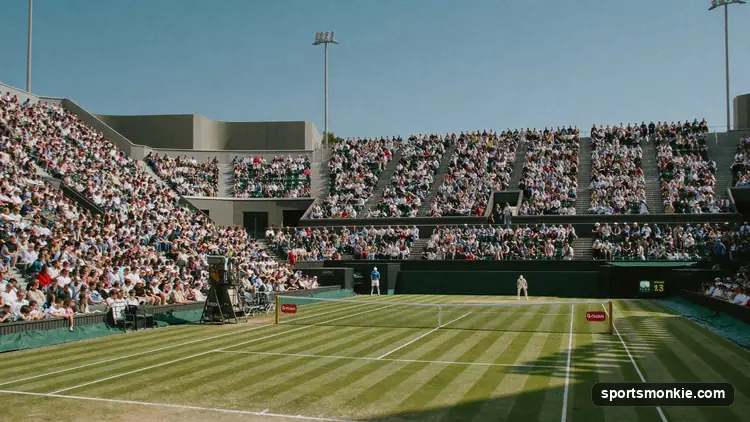
How Much Are Wimbledon Tickets?
How much Wimbledon tickets cost in 2026: the public ballot, resale, Ground passes, on-the-day queue and Debentures explained, with typical price ranges.
Cincinnati Masters Tennis Tickets: Prices and How to Buy Them
Cincinnati Masters tickets run about $9 for early rounds to $300+ for Center Court finals. Real 2026 session prices, packages, and how to buy them.

Wimbledon Ground Tickets: Price, Access, How to Get One
Wimbledon ground tickets cost £33 (£21-£26 in week two) and get you onto Courts 3-18, not Centre Court. What you actually see, and how to queue for one.

Wimbledon Tennis Tickets: How Much They Cost and How to Get Them
Wimbledon tickets run £21 for a Grounds Pass to £315+ for Centre Court finals. Here is how the public ballot, The Queue, and official resale actually work.
Continental Grip in Tennis: How to Hold It and When to Use It
The continental grip places the base knuckle of your index finger on bevel 2 of the racket handle. It is the grip for serves, volleys, slices, and overheads. Here is how to find it and drill it.
Eastern Grip in Tennis: The Bevel-3 Forehand Explained
The eastern grip in tennis places your index knuckle on bevel 3 for a flat, versatile forehand. Learn how to find it, its pros and cons, and who uses it.