
Why Golf Courses Aerate Greens (and When)
On this page5
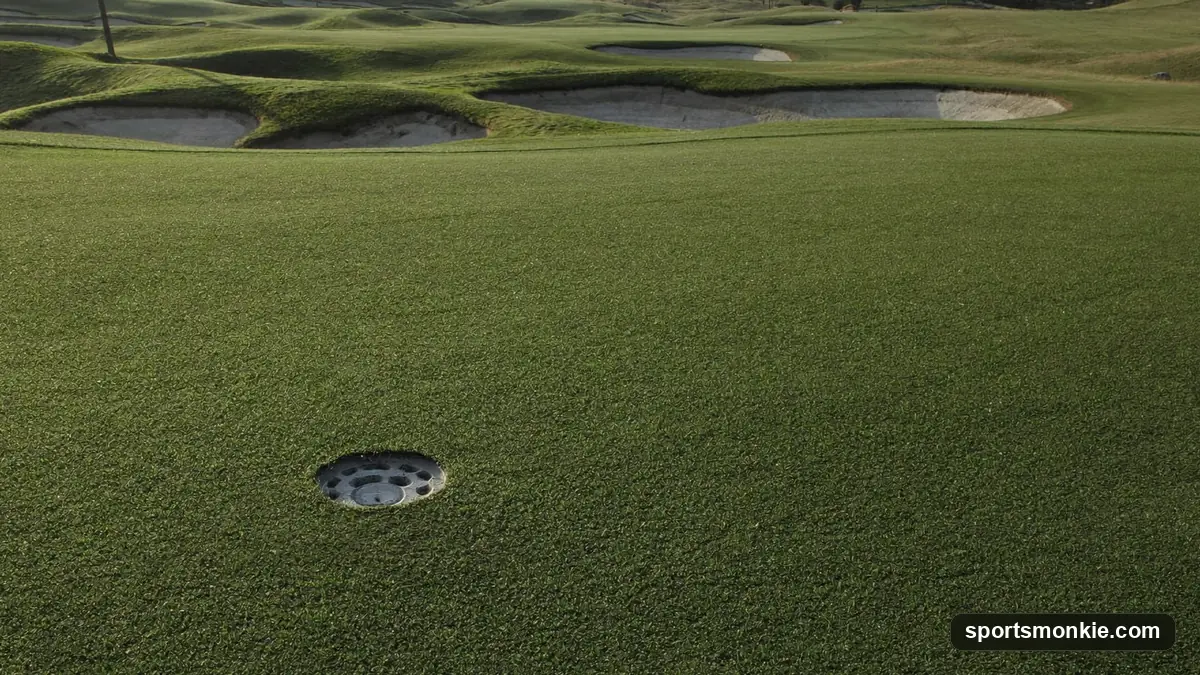
Golf courses aerate greens to keep the grass alive under enormous stress. The process relieves soil compaction, removes built-up thatch, and lets air, water and nutrients reach the roots of turf that is mowed shorter and walked on more than any other surface on the property. Without it, greens turn hard, soggy, and thin.
It looks like vandalism when you arrive to a green full of holes and sand. It is the opposite: the single most important maintenance job that keeps a putting surface smooth for the rest of the year.
What aeration actually does
Putting greens are mowed to a few millimetres and endure constant foot traffic, mowers and rollers. That pounds the soil tight, squeezing out the tiny air pockets roots need. Compacted soil cannot drain, cannot breathe, and grows shallow, weak grass.
Core aeration fixes this by punching thousands of small holes and, in the most common method, pulling out plugs of soil with hollow tines. According to the USGA Green Section, that opens channels for oxygen and water, and it removes a layer of the organic thatch that otherwise acts like a sponge, holding water at the surface and inviting disease.
The holes are then filled with sand topdressing. Over a few seasons this steadily replaces spongy organic matter with a firmer, better-draining sand-based rootzone, which is why the best greens feel smooth and consistent underfoot.
The main reasons, at a glance
Different problems drive aeration, but they overlap. Here is what each one solves.
| Problem | What aeration does | Result for golfers |
|---|---|---|
| Compacted soil | Opens air and water channels | Firmer, healthier turf |
| Thatch buildup | Removes organic layer | Less disease, better roll |
| Poor drainage | Sand-filled holes drain water | Fewer soggy, casual-water greens |
| Shallow roots | Encourages deeper growth | Turf survives heat and drought |
| Nutrient lockout | Lets fertiliser reach roots | Denser, greener grass |
When courses do it, and why timing matters
Most courses aerate once or twice a year, and they choose the timing around recovery, not convenience. The goal is to disrupt the surface when the grass is growing strongly enough to heal fast.
Cool-season greens (bentgrass, poa) are usually aerated in early spring and again in early autumn, avoiding the heat of midsummer when the turf is already stressed. Warm-season greens (Bermuda) are typically done in late spring into summer, when that grass grows fastest. This is why UK, US-north and Australian courses do not all aerate on the same calendar.
Some clubs now use smaller, solid tines more frequently to reduce disruption, but a deeper core aeration every year or so is still the job that does the heavy lifting.
The different methods, and why they matter to you
Not all aeration leaves the same mess, which is why one visit the greens are peppered with plugs and another they seem barely touched. Superintendents choose the method to match the problem.
- Hollow-tine (core) aeration pulls plugs of soil out, then the holes are topdressed with sand. It is the most disruptive but does the most good, tackling compaction and thatch together.
- Solid-tine aeration punches holes without removing a core, relieving compaction with far less surface damage, so greens recover in days rather than weeks.
- Needle-tine or micro-tine work uses very thin tines for a quick breather with minimal impact, often done during the season.
- Verticutting slices vertically to thin thatch and stand the grass up, sometimes paired with aeration.
If the greens look only lightly dotted, you likely caught a solid-tine or needle pass and putting will barely suffer. Full core aeration is the one worth planning around.
Playing on freshly aerated greens
Expect a bumpy fortnight. For one to three weeks after core aeration the surface is dotted with healing holes and settling sand, so putts bounce, wander offline and come up short. Your reads will be right and the ball still will not cooperate.
The upside is price. Many courses cut green fees during aeration recovery, so it can be a genuinely cheap round if you treat putting as a lottery. If you would rather wait, call ahead and ask when greens were last done. For more on how conditions and upkeep feed into the price of a round, see our breakdown of why golf is so expensive and the wider average cost of a round of golf.
Understanding why the holes are there also makes you a better guest. Pair it with our golf etiquette for beginners guide, and you will know to repair pitch marks and keep carts off recovering turf.
Aeration is short-term ugly for long-term smooth. The greens you love in peak season exist because of the weeks you would rather avoid.
Frequently asked questions
How often should golf greens be aerated?+
Most courses core-aerate greens once or twice a year, typically in spring and early autumn when the grass can recover fastest. Busy or heavily compacted greens may get additional light aeration with smaller tines through the season. The exact schedule depends on grass type, soil, traffic and climate, so it varies from course to course.
Can you still play on aerated greens?+
Yes, courses stay open, but the putting surface will be bumpy for one to three weeks while the holes heal and sand settles. Putts wobble offline and roll shorter than usual. Many clubs discount green fees during this window, so it can be a cheap time to play if you can forgive your putting.
Is there a downside to aerating greens?+
The only real downside is temporary. Freshly aerated greens putt poorly for a couple of weeks and the course looks scarred with sand-filled holes. Skipping aeration is far worse: it leads to compacted soil, thatch buildup, weak roots and eventually thin, disease-prone greens that never recover as cleanly.
What is the 90-degree rule in golf?+
It is a cart rule, not an aeration one. The 90-degree rule requires golf carts to stay on the cart path until they are level with the ball, then turn 90 degrees to drive straight across to it, minimising turf wear. Courses often enforce it, along with keeping carts off freshly aerated or wet areas.
Sources
Play & tools
Free browser games and tools — no account, no download.
- Play today's Sports Connections — Today's Sports Connections — daily hints, answers, and play the grid.
- Play Guess the NFL Player — A new mystery NFL player every day. Eight guesses, with a clue on each — plus free unlimited mode.
- Explore all our games →
Related golf guides
View all →
What Is a Mulligan in Golf? When It Is and Is Not Allowed
A mulligan is an unofficial do-over shot, usually on the first tee, that is accepted in casual play but not under the Rules of Golf.

How to Read Greens in Golf: Slope, Grain, and Speed Made Simple
To read greens in golf, judge speed first, then slope: walk to the low side of the hole, feel the tilt with your feet, and let gravity tell you which way the putt breaks. Here is the full method.
Why Do Golf Courses Have 18 Holes?
Why do golf courses have 18 holes? It traces back to St Andrews, not a whisky bottle. The real history of golf's 18-hole standard, explained.

The Hardest Golf Courses in the World, Measured
Which courses are genuinely hardest? Ranked using three independent measures: USGA slope and rating, championship scoring evidence, and playability for amateurs.
The Longest Golf Courses in the World
The longest golf course in the world is Australia's Nullarbor Links at 1,365 km. The longest conventional 18-hole course is Jade Dragon in China at 8,548 yards.

The Oldest Golf Courses in the World
The oldest golf courses in the world sit in Scotland: Musselburgh Old Links has documented play from 1672, while St Andrews traces golf to the 1400s.