
The Oldest Golf Courses in the World
On this page6
The oldest golf courses in the world are in Scotland. Musselburgh Old Links, just east of Edinburgh, has documented play from 1672 and was recognised by Guinness World Records as the oldest golf course ever played. The Old Course at St Andrews, in Fife, has evidence of golf reaching back to the 1400s, which is why the record has since been reassigned in its favour. Everywhere else came later, often by centuries.
That split, documented play versus first evidence of the game, is the whole reason “oldest” gets argued about. So it is worth pinning down what each claim actually rests on.
Where are the oldest golf courses?
Golf grew out of the linksland along Scotland’s east coast, the sandy, dune-backed strips between farmland and sea. These were common ground, free to walk, and firm enough to play on year-round. The oldest surviving courses all sit on that terrain: Musselburgh, St Andrews, Leith, Bruntsfield, and North Berwick.
The single clearest date belongs to Musselburgh. According to Scottish Golf History, Sir John Foulis of Ravelston, an Edinburgh lawyer, recorded paying for golf at Musselburgh in his account book in 1672. That written proof of a specific person playing on a specific piece of ground is what earned the Old Links its Guinness World Record.
St Andrews has the longer but hazier history. The Scottish Parliament banned golf there in 1457 because it distracted men from archery practice, which means the game was already well established. There was no formal “course” in the modern sense that early, so St Andrews claims the deeper roots while Musselburgh long claimed the cleaner record.
The oldest golf courses, ranked by date
Here is how the earliest documented courses line up. Dates reflect the first solid evidence of golf on that ground, not when a club was formally founded, which usually came much later.
| Course | Country | First documented golf | Note |
|---|---|---|---|
| St Andrews (Old Course) | Scotland | 1400s | Golf banned by Parliament in 1457 |
| Old Links, Musselburgh | Scotland | 1672 | Held Guinness record as oldest played |
| Royal Blackheath | England | 1608 | Oldest recorded outside Scotland |
| Royal Burgess (Bruntsfield) | Scotland | 1735 (society) | One of the oldest golfing societies |
| Royal Montreal | Canada | 1873 | Oldest in North America |
| Oakhurst Links | United States | 1884 | Among the oldest US layouts |
| St. Andrew’s Golf Club, Yonkers | United States | 1888 | Oldest in continuous US operation |
The gap in that table tells the real story. Scotland and England had organised golf for generations before it crossed the Atlantic. When it finally reached North America in the 1870s and 1880s, the game arrived nearly whole, rules and all.
Why the “oldest” title keeps changing
Guinness World Records once certified Musselburgh, then reassigned the honour toward St Andrews as historians leaned on the earlier, if looser, evidence. Neither answer is wrong; they measure different things. Musselburgh wins on documented, dated play. St Andrews wins on how far back golf demonstrably existed on the site.
For a traveller, both are playable today. Musselburgh’s nine-hole Old Links still runs inside a horse-racing track, and St Andrews remains public ground where a resident can walk on. Playing either is a genuinely different experience from a modern parkland course, closer to how the game was meant to be, on firm turf where the ground does half the work. If you are curious how much land a full modern layout swallows by comparison, see our guide to how many acres a golf course covers.
How the oldest courses survived
The remarkable thing about Musselburgh and St Andrews is not just their age but their continuity. Both sit on common land, ground the public had a right to use, which protected them from being sold off, drained, or built over as towns grew. Where private estates changed hands and their private courses vanished, common linksland stayed open to golfers generation after generation.
The equipment of those early centuries shaped the courses too. Players used a “featherie,” a leather pouch stuffed with boiled feathers, which flew maybe 150 to 175 yards for a strong striker. Holes were shorter, hazards were whatever nature left, and the routing simply followed the best ground out and back. When the gutta-percha ball arrived in the 1840s and flew farther, and later the rubber-cored ball around 1900, these old links were lengthened and reshaped rather than abandoned. That layering of eras is exactly why standing on the first tee at St Andrews feels like touching every stage of the game at once.
England’s contribution sits slightly apart. Royal Blackheath, near London, has a tradition dating to 1608, when Scottish courtiers who followed King James VI south are said to have brought the game with them, making it the oldest recorded golf outside Scotland.
The oldest golf courses in the United States
American golf is young. The oldest layouts date only to the 1880s, roughly two centuries after Musselburgh’s record. Oakhurst Links in West Virginia hosted play from 1884, and St. Andrew’s Golf Club in Yonkers, New York, founded in 1888, is usually credited as the oldest in continuous operation. Foxburg Country Club in Pennsylvania (1887) and Chicago Golf Club (1892) round out the earliest tier.
These courses matter less for their turf than for what they started. Within twenty years of St. Andrew’s opening, the United States had hundreds of courses and its own national championship. The game’s American century began on a cow pasture in Yonkers.
Oldest is not the same as best
People searching for the oldest course often really want the greatest, and those are separate lists. Pine Valley in New Jersey and the Old Course at St Andrews trade the world number-one spot on most expert panels. St Andrews is the rare name that appears near the top of both the age list and the quality list, which is part of why it draws pilgrims from every golfing nation. The players who shaped those rankings appear in our roundup of the greatest golfers of all time.
If Scotland’s historic links are on your bucket list, book tee times well ahead, some ballot months in advance, and budget for it. Prime rounds at heritage courses run well above a standard local green fee, a gap we break down in our look at the average cost of a round of golf. The history, though, is free to stand on.
Frequently asked questions
Where are the oldest golf courses in the world?+
Almost all of the oldest golf courses are in Scotland, the game's birthplace. Musselburgh Old Links, near Edinburgh, has documented play from 1672 and held the Guinness World Record as the oldest course. St Andrews, in Fife, has evidence of golf stretching back to the 1400s.
What are the 10 oldest golf courses in the United States?+
The oldest US courses date to the late 1880s. St. Andrew's Golf Club in Yonkers, New York (1888) is the oldest in continuous operation, alongside Oakhurst Links in West Virginia (1884), Foxburg in Pennsylvania (1887), and Chicago Golf Club (1892), among the earliest American layouts.
What is the number one golf course in the world?+
Oldest and best are different questions. Pine Valley in New Jersey and the Old Course at St Andrews top most expert rankings from panels like Golf Digest and Golf Magazine. St Andrews is the rare course that ranks near the top on both age and quality.
Where was the first golf course made?+
Golf as we know it developed on the linksland of eastern Scotland in the 1400s and 1500s. St Andrews is the most-cited birthplace, with records of the game being banned by the Scottish Parliament in 1457. No single course can be named as the literal first.
Sources
Play & tools
Free browser games and tools — no account, no download.
- Play today's Sports Connections — Today's Sports Connections — daily hints, answers, and play the grid.
- Play Guess the NFL Player — A new mystery NFL player every day. Eight guesses, with a clue on each — plus free unlimited mode.
- Explore all our games →
Related golf guides
View all →
Why Do Golf Courses Have 18 Holes?
Why do golf courses have 18 holes? It traces back to St Andrews, not a whisky bottle. The real history of golf's 18-hole standard, explained.

Wind Blows Zang's Missed Putt Back Into the Hole at St Andrews
Penn senior Madeleine Zang watched her missed bogey putt stop past the hole at St Andrews, then saw a gust roll it back in for the strangest five of the week.
Adrian Meronk Cries After Dunhill Win That Secures His 2027 Card as LIV Future Stays Uncertain
Adrian Meronk broke down after winning the Dunhill Links at St Andrews, a first title since 2023 that secures his DP World Tour card for 2027.
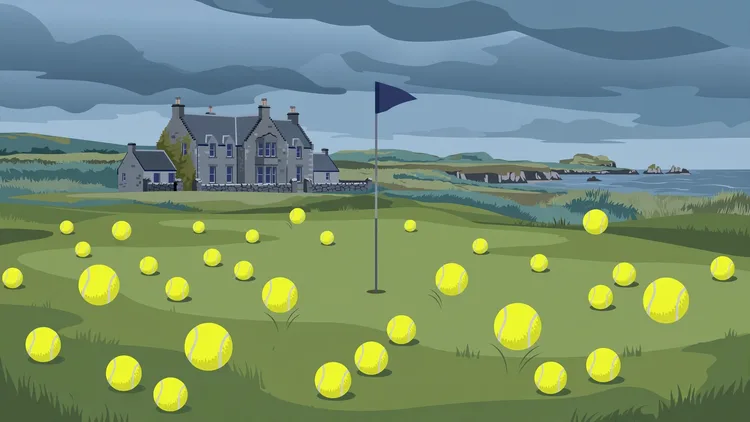
Celtic Fans Throw Tennis Balls at Owner Dermot Desmond During Dunhill Links at St Andrews
Celtic fans threw dozens of tennis balls at club owner Dermot Desmond at the Alfred Dunhill Links in St Andrews, and Celtic have severed ties with the fan group.
The Longest Golf Courses in the World
The longest golf course in the world is Australia's Nullarbor Links at 1,365 km. The longest conventional 18-hole course is Jade Dragon in China at 8,548 yards.

Golfers With the Most Holes in One: Ranked Career & Tour Records
Mancil Davis's documented 51 aces are the accepted record; Norman Manley's disputed 59 sits above it. Ranked: the 10 golfers with the most holes in one.