
Who Invented Tennis? The History and Origins of the Sport
On this page7
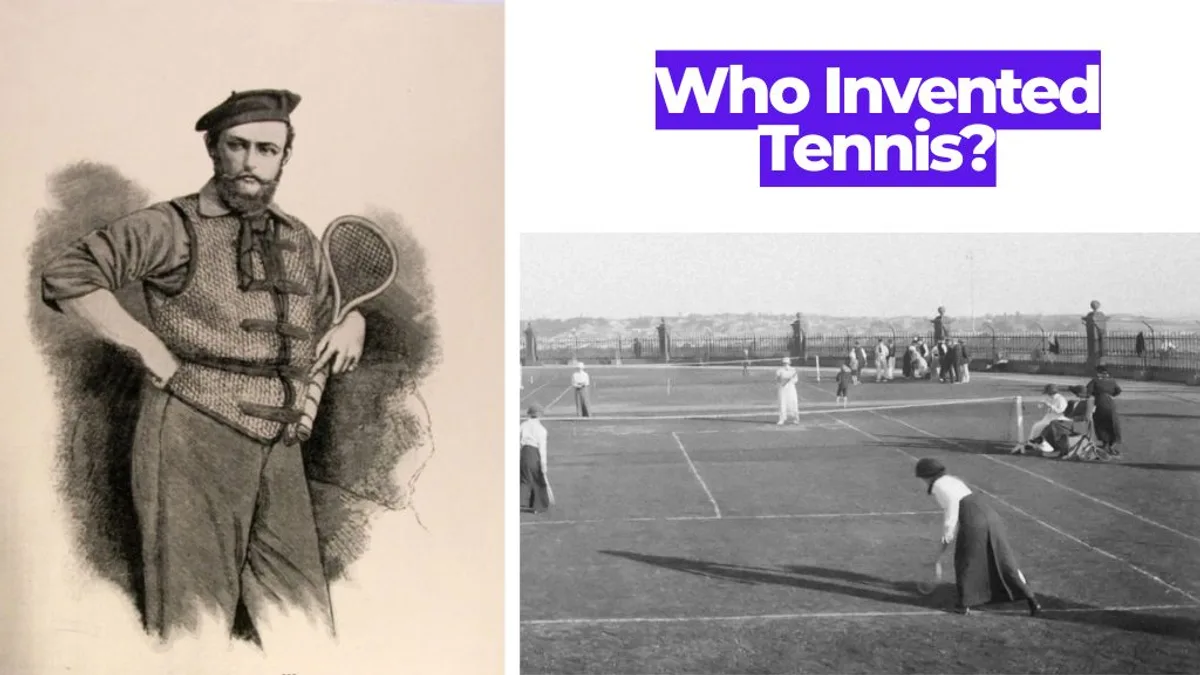
A British army officer with a patent and a garden party problem is why you can watch tennis today. In 1874, Major Walter Clopton Wingfield patented a portable outdoor game he called “Sphairistikè,” Greek for “ball-playing skill,” and sold it as an amusement for country house lawns. Nobody kept that name. Within three years the sport had rules, a court shape close to today’s, and a tournament: the first Wimbledon Championships in 1877, still running as the oldest tennis event on the calendar.
The precursor: real tennis
Wingfield didn’t invent racket sports from nothing. A different game, “real tennis” (also called court tennis or royal tennis), had been played indoors across Europe since at least the 1200s. French and English royalty played it in stone courts with sloped roofs, angled walls, and scoring rules that took years to learn. Henry VIII played it seriously enough that a court still stands at Hampton Court Palace. A small number of clubs still play real tennis today, but it bears little resemblance to the game we call tennis now.
Walter Clopton Wingfield and the 1874 patent
| Event | Date |
|---|---|
| Wingfield patents “Sphairistikè” | 1874 |
| First Wimbledon Championships | 1877 |
| ITF (International Tennis Federation) founded | 1913 |
| Open Era begins (professionals allowed in Slams) | 1968 |
Wingfield’s original court was hourglass-shaped, pinched in at the net and wider at the baselines, with a net set higher than the one used today. Players and clubs adjusted the design almost immediately as the game caught on, straightening the court into the rectangle still used now.
Standardization of the rules (1877)
The All England Croquet and Lawn Tennis Club in Wimbledon ran the first championship in 1877, and in the process locked in the court dimensions, net height, and scoring conventions that mostly survive intact. That tournament is Wimbledon, still played on the same grounds and still treated as the sport’s most prestigious event.
How lawn tennis spread
Lawn tennis moved fast once it left England. It reached the British Empire and the United States within a decade of Wingfield’s patent. The US National Championships, now the US Open, started in 1881. The French Championships took their modern shape in the early 1900s, and the Australian Open began in 1905.
The Open Era (1968)
For nearly a century, tennis drew a hard line between amateurs and professionals, and only amateurs could enter the Grand Slams. Paid players were shut out. That changed in 1968, when the sport opened its majors to both groups at once. The shift is why 1968 marks the real start of the professional game as fans know it, with prize money, ranked pros, and the tours that followed.
Women in early tennis
Women weren’t a late addition. The Wimbledon Ladies’ Singles began in 1884, just seven years after the men’s event, and tennis was among the first sports to include women at the Olympics, debuting them at the 1900 Paris Games.
Key figures in tennis history
A few names beyond Wingfield shaped the sport early on:
- Henry Jones helped draft the 1877 Wimbledon rules as a founding committee member.
- James Dwight is often called the “Father of American Tennis” for establishing the game in the United States.
- Suzanne Lenglen, a French player of the 1910s and 1920s, drew crowds and press attention that helped turn women’s tennis into a global draw.
Frequently asked questions
Who invented tennis?+
Major Walter Clopton Wingfield, a British army officer, is credited with inventing the modern game. He patented 'Sphairistikè' (Greek for 'ball-playing skill') in 1874, laying the foundation for lawn tennis.
When was tennis invented?+
The modern outdoor lawn tennis game was patented in 1874. The first Wimbledon Championships — the oldest tennis tournament in the world — were held in 1877, and standardized rules were established around the same time.
What did tennis evolve from?+
Lawn tennis evolved from 'real tennis' (also called court tennis or royal tennis), a centuries-old indoor racket game played in walled courts that was popular among European royalty and nobility from the medieval period onward.
Sources
Play & tools
Free browser games and tools — no account, no download.
- Play today's Sports Connections — Today's Sports Connections — daily hints, answers, and play the grid.
- Play Guess the NFL Player — A new mystery NFL player every day. Eight guesses, with a clue on each — plus free unlimited mode.
- Explore all our games →
Related tennis guides
View all →
What Is a Grand Slam in Tennis? The Four Major Tournaments
A Grand Slam in tennis is the four biggest events: the Australian Open, French Open, Wimbledon and US Open. Winning all four in a year is a Calendar Slam.
What Is Deuce in Tennis? Score, Advantage, and Tiebreaks
Deuce in tennis means both players have reached 40, so one player must win two straight points to take the game.
What Is Hawk-Eye in Tennis? How Electronic Line Calling Works
Hawk-Eye uses multiple cameras and ball-tracking software to judge whether a tennis shot landed in or out.
Walkover vs Retirement in Tennis: What Is the Difference?
A walkover happens before a match begins; a retirement happens after play starts. The distinction affects results, records and tournament administration.
Clay Court Tennis: Surface, Rules, and Why It Plays So Slow
Clay court tennis is the slowest surface with the highest bounce. See red vs. green clay, sliding, ball marks, upkeep, and why Nadal owns it.
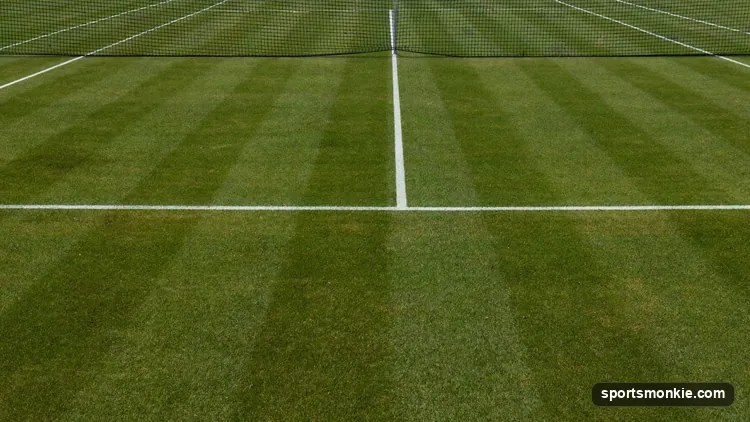
Grass Court Tennis: Why the Fastest Surface Plays So Different
Grass court tennis is the fastest, lowest-bouncing surface in the sport, per ITF's own pace rating. How Wimbledon's ryegrass shapes serve-and-volley play.