
What Is a Tight Lie in Golf? How to Play It

On this page5
A tight lie is a ball sitting on firm, closely mown or bare ground with little or no grass cushion underneath it. To play it, move the ball slightly back in your stance, lean your hands and weight toward the target, and make a shallow, ball-first strike so the leading edge meets the ball before it reaches the turf. Trying to scoop it is what produces the thin, skulled shot.
Tight lies punish the one thing many amateurs do instinctively, which is hitting the ground first. On a fluffy lie you get away with it. On firm turf, you do not.
What counts as a tight lie
A tight lie is defined by what is under the ball, not around it. When the ball sits down in soft grass there is a cushion the clubhead can slide through, so a slightly heavy strike still gets under the ball. On a tight lie that cushion is gone. You will meet it on:
- Firm, dry fairways in summer.
- Links and heathland turf that is naturally thin.
- Hardpan or bare dirt where the grass has worn away.
- Closely mown collection areas and run-offs around greens.
The common thread is that the leading edge has nowhere to go if it hits the ground behind the ball. Catch it slightly fat and the club digs; catch it slightly steep and it bounces into the ball’s equator for a skull across the green. That razor-thin margin is why tight lies rattle players who are perfectly comfortable in the rough.
How to play a tight lie
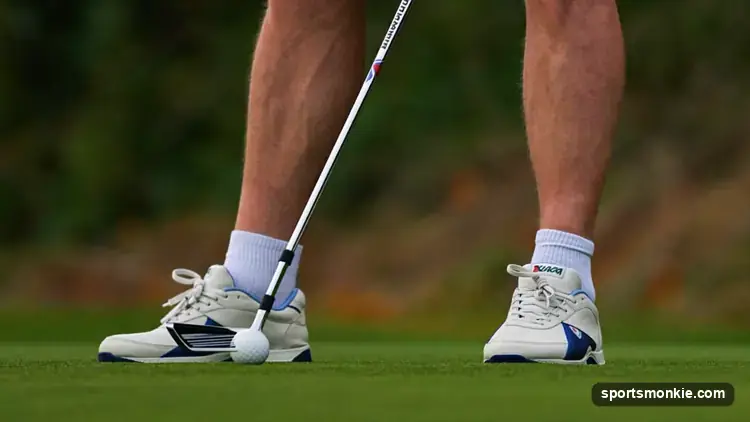
The setup does most of the work. Play the ball a touch back of centre, press your hands ahead of the ball so the shaft leans toward the target, and set roughly 60% of your weight on your lead foot. That combination delivers the club on a shallower, more descending path and guarantees you reach the ball before the turf.
Through the shot, keep the handle leading and resist the urge to help the ball into the air. The loft on the face is already enough; your job is to swing down and through with the low point just ahead of the ball. A quiet, rotating body and firm wrists beat a flicky, hands-driven scoop every time on firm ground.
Club and technique by lie type
Different lies reward different clubs and different low points. This is how to adjust as the ground under the ball changes.
| Lie type | Best club choice | Key technique adjustment |
|---|---|---|
| Firm fairway / tight lie | Low-bounce wedge or less loft | Ball back, hands ahead, ball-first strike |
| Hardpan / bare ground | Lower-lofted iron, minimal bounce | Shallow sweep, avoid digging leading edge |
| Closely mown run-off | Putter (Texas wedge) or hybrid | Roll it when the ground is smooth |
| Fluffy rough (ball sitting up) | Higher-loft, higher-bounce wedge | Slower, sweeping motion, let the club slide |
| Ball buried in rough | Wedge with more loft | Steeper attack, accelerate through the grass |
The pattern is clear: the tighter and firmer the lie, the less bounce and loft you want, and the more you rely on a clean ball-first strike. On the softest lies you can afford more bounce and a shallower, sliding contact. Understanding this trade-off is exactly why bounce on a wedge matters so much, and it is the single most misunderstood spec in the short game.
The wedge-off-a-tight-lie problem
The classic disaster is grabbing a high-bounce sand or lob wedge for a delicate shot off firm turf. The wide sole and high bounce lift the leading edge off the ground, so on a tight lie the club skips into the middle of the ball and sends it screaming over the green. Instruction teams at Golf Digest and the PGA repeat the same fix: on tight turf, use your lowest-bounce wedge, or take a pitching wedge or 9-iron and play a lower, running chip.
Set the hands forward, keep the swing compact, and clip the ball first. If you are between a delicate high shot and a safe low one off a bare lie, choose the low, running option almost every time. It removes the thinnest margin from the equation.
When to take the putter instead
The smartest tight-lie play is often not a chip at all. If the ground between you and the green is firm and closely mown, putting from off the green, the so-called Texas wedge, is the higher-percentage choice. You cannot catch a putt fat or thin the way you can a wedge, so even a mediocre putt from just off the surface tends to finish closer than a mishit chip. When you do reach for the flat stick from distance, the roll and feel differ by head type, which our comparison of blade vs mallet putters breaks down.
For most club golfers, the single biggest scoring gain around firm greens is simply choosing the safer club more often. Save the flashy flop for a soft lie with room to work, and read our guide to how to break 100 in golf for more on turning tricky lies into bogeys instead of doubles.
Next time you find a bald, firm lie, resist the instinct to lift it. Ball back, hands forward, strike down, and let the ground do nothing but sit there.
Frequently asked questions
What is considered a tight lie?+
A tight lie is when the ball rests on firm, closely mown or bare ground with little or no grass cushion beneath it, such as a hard fairway, links turf, or dried-out hardpan. There is no margin for hitting behind the ball, which is what makes it intimidating.
How do you hit from a tight lie?+
Play the ball slightly back of centre, lean your weight and hands toward the target, and make a shallow, ball-first strike so the leading edge catches the ball before the turf. Avoid trying to scoop or lift it; let the loft do the work while you swing down and through.
How do you hit a wedge off a tight lie?+
Use a wedge with low bounce so the leading edge sits close to the ground, set your hands slightly ahead, and clip the ball first with a shallow descending blow. A high-bounce wedge tends to bounce off firm turf into the middle of the ball, causing the thin, skulled shot most golfers fear.
When should you putt from a tight lie instead?+
When the ground between you and the green is firm and closely mown, putting is often the higher-percentage play. Rolling the ball removes the risk of catching it thin or fat off tight turf, and a poor putt from just off the green usually finishes closer than a poor chip.
Sources
Play & tools
Free browser games and tools — no account, no download.
- Play today's Sports Connections — Today's Sports Connections — daily hints, answers, and play the grid.
- Play Guess the NFL Player — A new mystery NFL player every day. Eight guesses, with a clue on each — plus free unlimited mode.
- Explore all our games →
Related golf guides
View all →
The Bump and Run: Golf's Highest-Percentage Short-Game Shot
The bump and run flies low and rolls to the hole like a putt. Here is the best club to use, when to play it over a chip or flop, and how to hit it.

What Is a Texas Wedge? Putting From Off the Green
A Texas wedge is a putter used from off the green. Named for windy, hard-baked Texas courses, it is the safe, low-risk play on firm ground. Here is exactly when to use it.

Golf Chipping Technique: How to Chip Crisply Every Time
Solid golf chipping technique comes from a narrow stance, ball back, weight forward, and a putting-style stroke with no wrist flip. Here is the exact setup and motion.

How to Hit a Pitch Shot in Golf: Setup, Distance Control & Trajectory
To hit a pitch shot, take a lofted wedge, play the ball center, put 60% of your weight on your lead foot, and control distance with backswing length, not hand speed.

What Is a Stinger in Golf? Tiger's Shot
A stinger is a low, penetrating golf shot that bores under the wind with heavy rollout. What it is, why Tiger made it famous, and how it is hit.
Over the Top Golf Swing: Why It Causes Your Slice
An over the top golf swing throws the club outside the line, cutting across the ball. What it means, why it slices, and the drills that fix it.