
What Is a Draw Control in Lacrosse?
On this page6
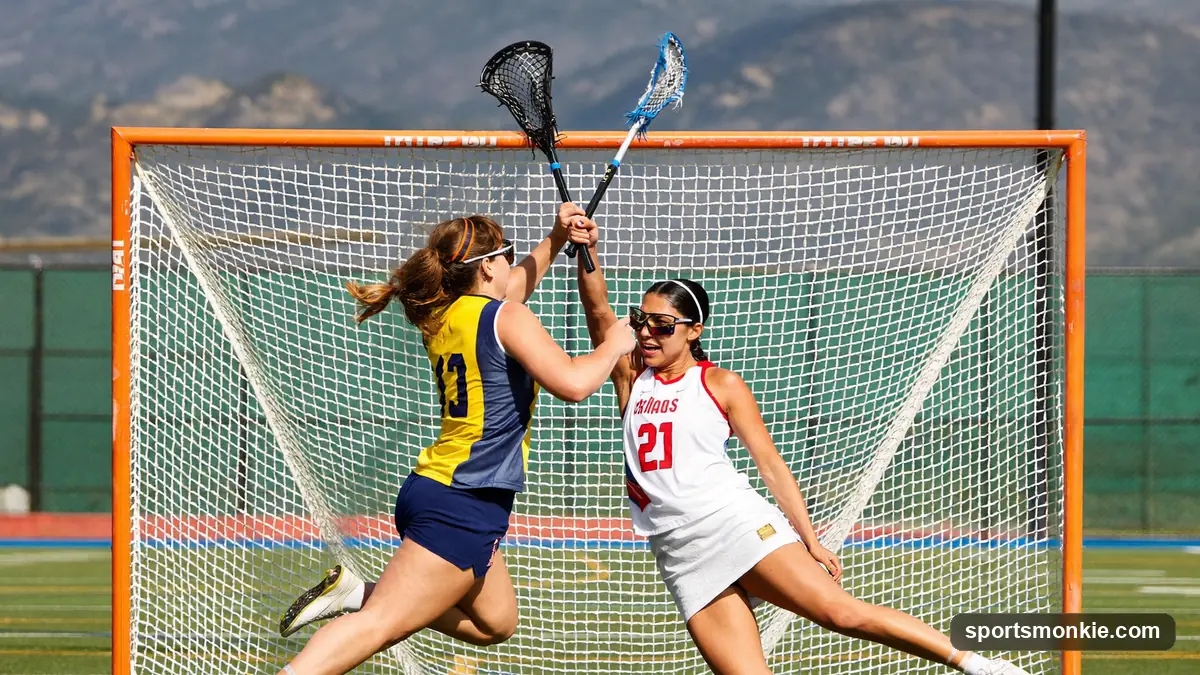
A draw control in lacrosse is winning possession of the ball off the draw, the restart used in women’s lacrosse to begin each half and to resume play after every goal. When a player comes away with the ball from that restart, she is credited with a draw control, the women’s-game equivalent of winning a men’s faceoff.
Because the draw decides who starts every single possession, draw controls are among the most important statistics in the sport: the team that keeps winning the draw simply gets the ball more often. Here is exactly how a draw works, how a draw control is earned, and why it swings games.
How the draw works
The draw takes place at the center of the field inside a marked circle. Two opposing players stand facing each other and place the backs of their stick heads together at about waist height, with the ball pinched between the two heads. They hold this position, tense and ready, until the referee blows the whistle.
On the whistle, both players draw their sticks up and out in a sharp, explosive motion, flinging the ball into the air, typically it must rise above head height. From that moment the ball is live, and both teams fight to gain possession as it comes down.
When a draw control is credited
A draw control is recorded when a player gains clean possession of the ball that results from the draw. That might be the draw taker herself flicking the ball to space and running onto it, or a teammate circling the center who scoops or catches the loose ball first.
In other words, the “draw” is the action, and the “draw control” is the outcome, someone actually securing the ball. It is one of the cleanest possession stats in lacrosse because it maps directly to a discrete, repeated event.
The draw versus the men’s faceoff
The draw is women’s lacrosse’s answer to the men’s faceoff, but the mechanics differ.
| Feature | Women’s draw | Men’s faceoff |
|---|---|---|
| When it happens | Start of each half and after every goal | Start of each quarter and after every goal |
| Body position | Standing, sticks held up at waist height | Crouched, sticks flat on the ground |
| Action | Fling the ball up into the air | Clamp and rake the ball along the ground |
| Winning stat | Draw control | Faceoff win |
Both serve the same purpose, deciding who starts the possession, but the standing, ball-in-the-air draw is distinctive to the women’s game.
The players around the circle
A draw is not just a duel between the two takers. Under the rules, a set number of additional players from each team are allowed to line up around the center circle, positioned to chase the ball once it goes up, while the rest of the field must stay outside the restraining lines until possession is decided. Those circle players are as important as the taker: they read the flight of the ball, box out their opponents like basketball players fighting for a rebound, and pounce on the loose ball.
This is why coaching the draw is really about coaching a small unit. A team might practice specific plays, directing the ball to a particular spot where a fast circle player is waiting, or having the taker try to control it cleanly to herself. The best draw units turn what looks like a coin flip into a repeatable, planned possession.
Why draw controls decide games
Possession is everything in a sport where scoring flows directly from having the ball. A team that dominates the draw gets extra possessions across a game, more chances to shoot, and fewer chances for the opponent. That is why coaches obsess over the draw and why box scores highlight draw-control totals.
A strong draw unit can effectively hoard the ball, wearing down opponents who rarely get to attack. Conversely, losing the draw battle can leave a talented offense starved of possession no matter how well it plays. For the broader context of positions and restarts, our lacrosse rules for beginners guide covers how the draw fits alongside the rest of the game, and our look at how many players are on a lacrosse team explains the lineups around the center.
The bottom line
A draw control is simply winning the ball from the draw, the women’s-lacrosse restart where two players fling the ball skyward on the whistle at the center. It is the equivalent of a men’s faceoff win, and because it determines who starts each possession, it is one of the most decisive stats in the sport. Win the draws, control the ball, and you control the game.
Related topic guides
Frequently asked questions
What does 'draw' mean in lacrosse?+
The draw is the restart in women's lacrosse used to start each half and to resume play after every goal. Two players meet at the center circle, place their stick heads together with the ball held between them at roughly waist height, and on the referee's whistle draw their sticks up and out, launching the ball into the air. It is the women's-game counterpart to the men's faceoff. The team that then secures the loose ball has won possession and, if a player gains it, is credited with a draw control.
Who takes the draw in women's lacrosse?+
Any player a team designates can take the draw, but teams usually assign it to a specialist, most often a midfielder with strong technique, timing and quickness. Because winning the draw sets up possession for the whole team, coaches often build their lineup around a reliable draw taker, much as a men's team relies on a faceoff specialist. Supporting players position around the center circle to chase down and secure the ball once it is flung into the air, so the draw is really a team effort led by the taker.
How do you win more draw controls?+
Winning draws comes from technique, timing and support. The draw taker works on a fast, clean release on the whistle and on directing the ball to space or to a teammate rather than straight up. The players circling the center must read the flight, box out opponents and attack the ball aggressively as it comes down. Practicing the draw as a coordinated unit, taker plus the circle players, is what turns individual skill into a consistent possession advantage over a full game.
What is the hardest position to play in lacrosse?+
Opinions vary, but goalkeeper is frequently named the hardest, because it demands fast reflexes, courage to face hard shots and the composure to direct the defense. Others point to the draw specialist or faceoff player, since so much of the game's possession hinges on that one repeated skill. Difficulty is subjective and depends on the player, but any role that repeatedly decides possession or defends the goal directly tends to carry the most pressure and the steepest learning curve.
Sources
Play & tools
Free browser games and tools — no account, no download.
- Play today's Sports Connections — Today's Sports Connections — daily hints, answers, and play the grid.
- Play Guess the NFL Player — A new mystery NFL player every day. Eight guesses, with a clue on each — plus free unlimited mode.
- Explore all our games →
Related guides
The 8-Meter Arc in Women's Lacrosse: Free Position Shots
The 8-meter arc in women's lacrosse is the fan in front of goal where a major defensive foul gives the attacker a free position shot. Rules and procedure inside.
Can You Kick the Ball in Lacrosse? The Rule Explained
Yes, you can kick the ball in men's lacrosse, and you can even score by kicking it. The women's game restricts it more. Here is exactly what the rules allow.

How to Cradle a Lacrosse Ball: Technique for Beginners
To cradle a lacrosse ball, move the stick head in a smooth curved arc so the ball stays pressed in the pocket. Learn one-hand and two-hand cradling here.

Lacrosse Equipment List: Everything You Need to Play
The full lacrosse equipment list: a men's player needs a helmet, gloves, and pads; a girls' player needs eyewear, a mouthguard, and a stick. Checklist inside.
Men's vs Women's Lacrosse: Every Major Difference
Men's vs women's lacrosse differ in players, checking, equipment, field, and stick rules. Here's every major difference in one clear breakdown.
Women's Lacrosse Positions Explained: All 12 Roles
Women's lacrosse fields 12 players a side. Here are all 12 positions — attack, midfield, defense and goalie — with each role and field zone explained.