
Volleyball: Rules and fundamentals
Browse SportsMonkie's rules and fundamentals about volleyball, organized in one crawlable topic hub.
6 articles in this topic.

Volleyball Referee Signals: Every Official Hand Signal Explained
Volleyball referee signals explained: point, ball in/out, four hits, double contact, net touch, foot fault, ball touched, delay, substitution, and end of set.
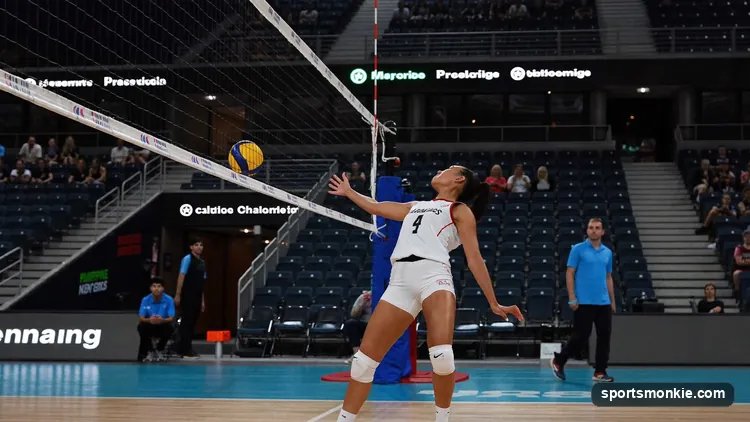
How Volleyball Scoring Works: Rally Scoring Explained
Volleyball uses rally scoring: a point on every rally, sets to 25, a fifth set to 15, win by two. How points, sets and matches are counted, with a table.

Libero Rules in Volleyball: What They Can and Can't Do
The libero is a back-row defensive specialist who can't attack above the net or block. Full libero rules: the jersey, substitutions and what's allowed.
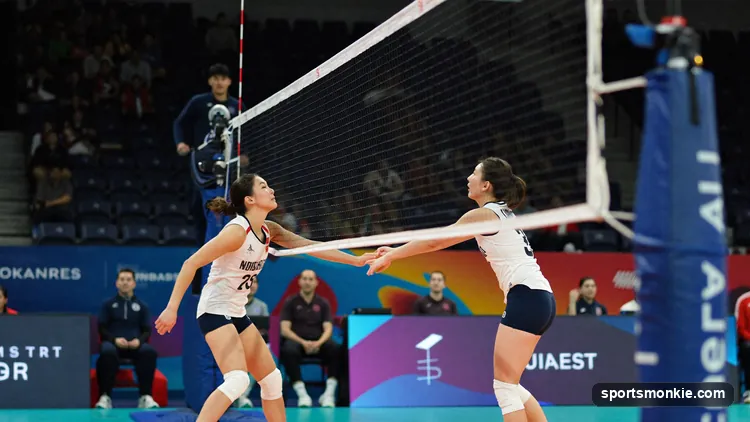
Volleyball Rules Explained: The Full Ruleset
Volleyball rules in one place: six players a side, three hits per rally, rally scoring to 25, clockwise rotation and the common faults that lose points.

Volleyball Net Height: Men, Women and Juniors
Official volleyball net height is 2.43 m (7 ft 11 5/8 in) for men and 2.24 m (7 ft 4 1/8 in) for women. Full chart for juniors, coed, beach and sitting.

Volleyball Rotation Explained Simply
Volleyball rotation means the six players move one spot clockwise each time their team wins the serve. How rotation, serve order and overlap work.