
Snowboard Tips for Beginners: What Actually Helps

On this page8
- 01How do you fall safely when snowboarding?
- 02What’s the single biggest beginner mistake, and how do you fix it?
- 03How do you link your first turns on heel and toe edges?
- 04What is the “butt-slide” phase, and how do you get through it faster?
- 05What are the top beginner snowboarding mistakes, and the exact fix for each?
- 06What should you wear and pack for your first day?
- 07How many days does it take before snowboarding feels natural?
- 08The bottom line
The tips that actually move a first-timer from flailing to riding are specific, not general: wear wrist guards and learn to fall onto your forearms or roll rather than catching yourself with a flat hand, keep your weight centered over the board instead of leaning back, and drill heel-edge control in a falling-leaf zigzag before you try to link real turns. Expect to fall 20 times or more in your first two hours on snow; that is normal, not a sign you are bad at this. The rest of this guide breaks down exactly how to do each of those, plus the layering and lesson-versus-DIY questions every beginner asks before day one. If you haven’t booked one yet, our breakdown of snowboard lessons for beginners covers group vs. private pricing and what a first-timer package includes.
How do you fall safely when snowboarding?
The instinct to catch yourself with a flat, outstretched hand is exactly what breaks wrists, and it is the single most preventable injury in the sport. A systematic review published on PubMed found wrist guards cut the risk of wrist injury by roughly 77% and wrist fractures by 71% among snowboarders, with the strongest protective effect in beginners who had fewer than five days on snow. Wear them under your gloves from run one; they cost less than a lift ticket and fit almost every beginner’s budget.
When you feel yourself going, keep your hands in loose fists instead of open palms. Burton’s beginner guide recommends rolling onto your forearms if you are falling forward, or sitting back onto your butt or knees if you are falling backward, then letting the roll absorb the impact instead of bracing to stop dead. If you simply lose balance and sit down on a slope, that barely counts as a fall at all - it is just how beginners stop.
What’s the single biggest beginner mistake, and how do you fix it?
Riding “in the back seat” - weight dropped onto your back leg instead of centered over the board - is the root cause of most other beginner problems, including catching an edge and losing control on anything steeper than a green run. It feels safer because it feels slower, but a snowboard steered from the back foot barely responds, so beginners overcorrect with their upper body and fall harder than if they had just stayed centered.
The fix is almost embarrassingly simple: exaggerate your weight onto your front foot until it feels like too much. Most riders who do this are actually centered for the first time, not overcorrected. Pair it with looking where you want to go rather than down at your board or your feet - your shoulders and hips follow your eyes, so a beginner staring at the snow six feet ahead ends up leaning forward and diving into it.
How do you link your first turns on heel and toe edges?
Turning is a two-edge skill, and the order you learn it in matters. Start with heelside: flex your ankles back to put pressure on your heel edge, which slows and steers you, and practice traversing across a gentle slope without pointing the board straight downhill. Then do the same on your toe edge, shifting weight forward onto your toes. Once both edges feel controllable on their own, Burton and instructors certified through PSIA-AASI teach the falling-leaf drill next: a zigzag traverse on one edge, shifting your weight left and right without changing which edge is down, which builds the pressure control that real turns need.
From there, C-turns bridge you into linked riding: point the board briefly down the fall line, then engage the opposite edge to arc back across the hill and slow down. Do a heelside C-turn, then a toeside one, and you have technically linked your first turn. Most beginners get here in their second or third session once the falling-leaf pattern stops feeling like a fight.
What is the “butt-slide” phase, and how do you get through it faster?
Almost every beginner spends their first couple of hours sliding down slopes on their heel edge in a slow, controlled skid, or literally sitting down and sliding on their butt when the board gets away from them. It looks and feels like you are not progressing, but it is the phase where your body is actually learning to read the board’s edges, and skipping it by forcing turns too early just means more falls later on steeper terrain.
The way through it is a standing sideslip, not a seated one: stay on your heel edge, keep your knees bent, and let the board slide straight downhill under control instead of sitting down every time you feel unsteady. Once a controlled sideslip feels boring rather than scary, the falling-leaf zigzag described above is the next step, and most riders are past the butt-slide stage entirely within two to three sessions.
What are the top beginner snowboarding mistakes, and the exact fix for each?
Five habits account for nearly every beginner fall, and each one has a specific, nameable correction rather than “practice more.”
| Mistake | Why It Happens | The Fix |
|---|---|---|
| Leaning back (“the back seat”) | Feels slower and safer at speed | Exaggerate weight onto your front foot until it feels like too much |
| Looking down at your feet or the board | Checking balance or footing | Look ahead at where you want to go; your body follows your eyes |
| Bracing falls with a flat hand | Instinct to catch yourself | Keep hands in loose fists, roll onto forearms or sit back, wear wrist guards |
| Trying to turn before edges are solid | Impatience to move past falling leaf | Master heelside and toeside traverses separately before linking turns |
| Standing with locked, straight knees | Nerves, unfamiliar stance | Sink into an athletic knee bend, like a soft squat, for shock absorption |
Fix the back-seat habit first. It is the one that causes the locked knees, the grabby edge catches, and the “why do I keep falling backward” frustration that ends most beginners’ first day early.
What should you wear and pack for your first day?
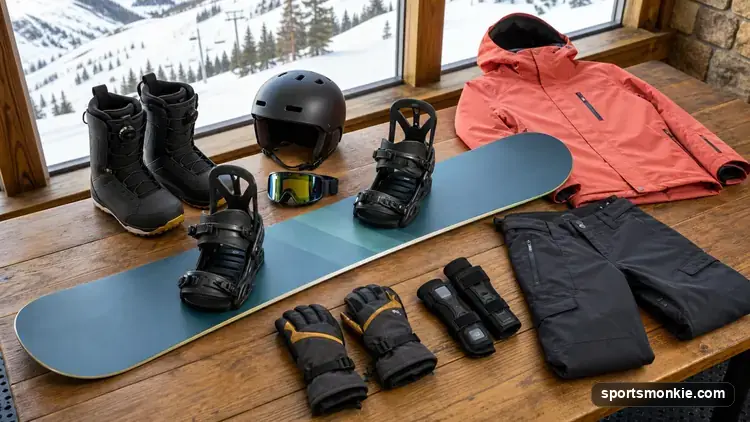
A three-layer system beats one thick jacket, and it is the difference between a fun day and a wet, cold one. REI Co-op’s expert advice recommends a moisture-wicking synthetic or merino base layer next to skin, an insulating fleece or lightweight puffy mid layer you can stash in your bag once you warm up, and a waterproof, breathable outer shell and pants. Skip cotton completely - it soaks up sweat from falling and takes hours to dry, which is how beginners end up cold and miserable by lunch.
Beyond layers, pack wrist guards, goggles (not sunglasses; they fog and offer no impact protection), waterproof gloves plus a dry spare pair, and sunscreen even on overcast days, since snow reflects UV. NOLS also flags hydration as an underrated beginner mistake: cold weather blunts your thirst signal, but a full day of falling and getting back up is genuinely physical, so carry water and a snack rather than waiting until you feel thirsty.
How many days does it take before snowboarding feels natural?
Set your expectations by the session, not the day. Most beginners are linking basic turns by session two or three, riding a green run without stopping by hour five to eight on snow, and comfortable on most blue terrain somewhere in their first season of regular riding. Skiers switching over often take slightly longer at first, since snowboarding balance is sideways rather than forward-facing and old habits do not transfer directly.
NOLS puts it plainly: progress at your own pace, and treat a positive mindset as part of the technique, not separate from it. A tense, frustrated rider tightens up, and a tight rider falls harder and more often than a relaxed one covering the same ground. Call it a day before you are exhausted, too - fatigue late in the session is when most beginner injuries actually happen, not in the first hour of falling.
The bottom line
Beginner snowboarding problems trace back to the same handful of fixable habits: a back-seat stance, eyes on the board instead of ahead, hands bracing a fall instead of rolling with it, and turns rushed before the edges are solid. Wear wrist guards, dress in three real layers, expect 20 to 50 falls in your first two hours, and give the falling-leaf drill the two or three sessions it actually needs before you judge your own progress.
If you are still choosing your setup, our snowboard for beginners guide covers picking the right board profile and flex, and our snowboard bindings for beginners guide breaks down strap versus rear-entry so your first day is not fighting your own gear on top of everything else. For more first-session breakdowns across other sports, browse our how-to guides.
Frequently asked questions
Do I need wrist guards to snowboard as a beginner?+
Yes. A systematic review in the Clinical Journal of Sport Medicine found wrist guards cut wrist injury risk by roughly 77% and wrist fractures by 71%, with beginners under five days of experience the group most likely to get hurt. They cost $20-40, fit under mittens, and are the single cheapest injury-prevention buy for a first day.
How many times will I fall on my first day of snowboarding?+
Plan on 20 to 50 falls in your first two hours, more if you skip a lesson. That is normal, not a sign of poor athleticism; nearly everyone falls constantly while their brain learns to balance sideways on a sliding platform. Falls drop off fast once heel-edge control clicks, usually by the end of session two or three.
Should I take a lesson or try to teach myself to snowboard?+
Take at least one lesson. PSIA-AASI Level I instructors are certified specifically to teach beginners on green terrain, and a group lesson (roughly $60-150 in the US, £40-90 in the UK) compresses a self-taught weekend of falling into a couple of controlled hours. Self-teaching works eventually, but it is slower and harder on your body.
What's the best way to stop on a snowboard?+
Drop onto your heel edge by flexing your ankles back and sinking your weight down and back slightly, which digs the uphill edge into the snow and kills your speed. Practice it stationary on flat ground before you try it moving. It is the first control skill every beginner curriculum teaches, before turning.
How long does it take to link turns on a snowboard?+
Most beginners link basic turns by their second or third session once heelside and toeside falling-leaf traverses feel automatic. Confident, linked turns down a green run without stopping typically take 5 to 8 total hours on snow. Skiers switching to snowboarding often take longer at first since the balance is entirely different.
What should I wear snowboarding for the first time?+
A three-layer system: a moisture-wicking synthetic or merino base layer, an insulating fleece or puffy mid layer, and a waterproof, breathable outer shell and pants. Skip cotton entirely; it holds sweat and chills you fast. Bring wrist guards, goggles, waterproof gloves, and a spare pair of gloves in your bag.
Sources
Play & tools
Free browser games and tools — no account, no download.
- Play today's Sports Connections — Today's Sports Connections — daily hints, answers, and play the grid.
- Play Guess the NFL Player — A new mystery NFL player every day. Eight guesses, with a clue on each — plus free unlimited mode.
- Explore all our games →
Related winter sports guides
View all →
Climbing Tips for Beginners: What Actually Helps You Improve
Real climbing tips for beginners: footwork over arm strength, reading routes, grip types, falling safely, and pacing to avoid forearm pump.
Snowboard Lessons for Beginners: Cost and What to Expect
Snowboard lessons for beginners: 2026 group vs private prices in the US, UK and Australia, how many lessons to link turns, and why day one is hardest.

Golf Swing Tips for Beginners: 9 Fixes That Cut Strokes Fast
The best golf swing tips for beginners start with grip, setup, and a slower takeaway — nine checkpoints that fix slices, chunks, and tops in one range session.
Fly Fishing for Beginners: How to Actually Get Started
Fly fishing for beginners explained: how it differs from spin fishing, why casting is the real learning curve, where to practice, costs, and etiquette.
Rock Climbing for Beginners: How to Actually Get Started
Rock climbing for beginners starts indoors. Bouldering vs top-rope vs lead explained, real gym costs in the US, UK, AU and CA, plus the belay test.
Snowboard Gear for Beginners: The Complete Checklist
The complete snowboard gear checklist for beginners, with real 2026 package prices and the rent-vs-buy math for a first season.