
What Muscles Does a Rowing Machine Work?
On this page6
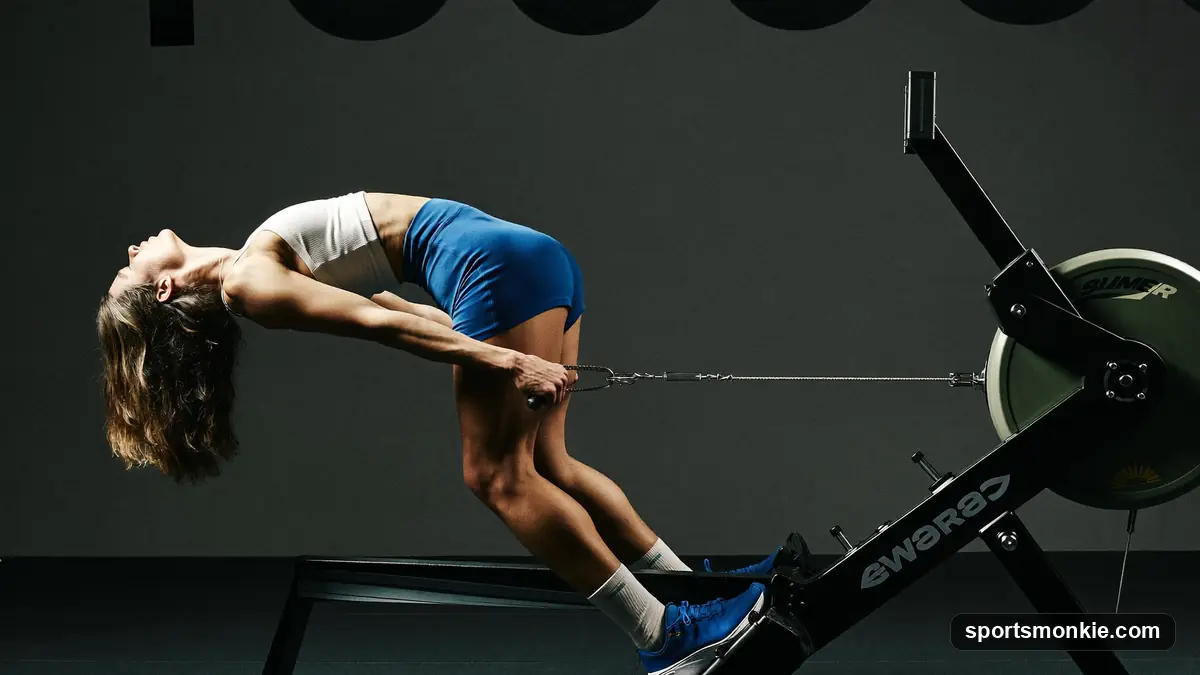
A rowing machine works nearly your entire body, but the power is dominated by the legs, which drive roughly 60 percent of every stroke, followed by the core, the back and then the arms. In one smooth movement you push off with your quadriceps, hamstrings, glutes and calves, stabilize and swing through your core and lower back, and finish the pull with your upper back, shoulders and arms. That is what makes rowing a true full-body, low-impact workout.
Understanding which muscles fire, and when, is also the key to rowing well. Most beginners assume it is an arm exercise and pull too early, which wastes energy. This guide breaks the stroke into phases and shows exactly what each part of your body is doing. It is general fitness information, not medical advice.
The stroke is legs-first
The single most important thing to know is that rowing is a pushing movement led by the legs, not a pulling movement led by the arms. Watch an experienced rower and you will see the legs straighten first, then the body swings back, and only at the very end do the arms draw the handle in. Getting that sequence right is what lets you row hard for a long time without your arms and grip giving out.
Coaches often describe the power split as roughly 60 percent legs, 20 percent core and back, and 20 percent arms. The exact numbers vary, but the lesson holds: if your legs aren’t doing most of the work, your technique needs attention.
Muscles by stroke phase
The rowing stroke has four phases, and different muscles dominate each one.
| Stroke phase | What happens | Main muscles |
|---|---|---|
| Catch | Coiled at the front, shins vertical | Hamstrings, calves (stabilizing) |
| Drive | Explosive push off the footplate | Quadriceps, glutes, hamstrings, calves |
| Finish | Body swings back, handle to ribs | Core, lower back, lats, rhomboids, biceps, rear shoulders |
| Recovery | Arms extend, body forward, knees bend | Light control; core and hip flexors |
The drive is where the biggest muscles, the quads and glutes, do the heavy lifting. The finish brings in the back and arms to complete the pull, and the recovery is a controlled reset that lightly engages the core and hip flexors.
The legs: the engine
Your quadriceps, hamstrings, glutes and calves generate most of the stroke’s power during the drive. Pushing hard through the footplate as if doing a leg press is what moves the flywheel. Because these are the largest muscles in the body, they are also why rowing burns so many calories, a point we cover in our guide to using a rowing machine to lose weight.
The core and back: the transmission
Between your legs and arms sits the core and back, which transmit power and keep you stable. Your abdominals and obliques brace the torso, the erector spinae in the lower back controls the body swing, and the lats and rhomboids of the upper back engage as you draw the handle in. This is why rowing is so good for posture and midsection strength, though visible abs still depend on overall body fat.
The arms and shoulders: the finish
The arms do the least work but the most visible part. Your biceps, forearms and rear shoulders finish each stroke by pulling the handle toward your lower ribs. Because they are smaller muscles, over-relying on them is the fastest way to tire out, which is exactly the mistake the legs-first sequence prevents. For a fuller look at how rowing compares to other cardio, see our rowing vs running breakdown, and our rowing machine training guide covers drills to groove the sequence.
Why the full-body effect matters
Because a single rowing stroke recruits the legs, core, back and arms while also taxing your heart and lungs, you get strength-endurance and cardiovascular training in one efficient, joint-friendly movement. Row with good legs-first technique and you build a balanced, functional kind of fitness that few machines can match, all without the impact of running.
Frequently asked questions
Does rowing work your legs or arms more?+
Rowing is primarily a leg exercise, not an arm one, even though it looks like an upper-body pull. The legs generate roughly 60 percent of each stroke's power through the quadriceps, hamstrings, glutes and calves, while the core and back transmit that force and the arms only finish the movement. Beginners who try to pull mainly with their arms tire fast and get far less from the machine; the drive should start from a strong push through the legs.
Is rowing a full-body workout?+
Yes. A rowing stroke sequences the legs, then the core and back, then the arms, so it recruits most major muscle groups in one continuous movement while also training your heart and lungs. Few machines work this much muscle at once, which is why rowing builds both cardiovascular fitness and muscular endurance. It is also low-impact, making it a joint-friendly way to get a genuine full-body session compared with running.
Can rowing build muscle?+
Rowing builds muscular endurance and can add some lean muscle, especially in the legs, back and core, but it is not a substitute for heavy strength training if pure size is your goal. The resistance is moderate and repeated many times, which develops toned, enduring muscle rather than maximal bulk. To build significant muscle, pair rowing with dedicated resistance training; to improve endurance, tone and conditioning, rowing on its own is excellent.
Does rowing work your abs?+
Yes, rowing engages the core throughout every stroke. The abdominal muscles and obliques stabilize your torso and help swing your body from the catch to the finish, while the lower back works alongside them. Rowing won't single-handedly reveal defined abs, since visible definition depends on overall body-fat levels, but it genuinely strengthens the core as part of the full-body movement, supporting better posture and a stronger midsection.
Sources
Play & tools
Free browser games and tools — no account, no download.
- Play today's Sports Connections — Today's Sports Connections — daily hints, answers, and play the grid.
- Play Guess the NFL Player — A new mystery NFL player every day. Eight guesses, with a clue on each — plus free unlimited mode.
- Explore all our games →
Related guides
Rowing Machine to Lose Weight: Does It Work?
Can a rowing machine help you lose weight? How rowing burns calories, why it's full-body, realistic results, and how to train for fat loss.
Rowing Machine Training: Technique, Muscles, and a Beginner Plan
Rowing machine training explained: the legs-body-arms stroke, which muscles it works, real calorie numbers, and a 4-week beginner workout plan.

How Does an Expansion Draft Work?
An expansion draft stocks a new team by letting it pick players that existing clubs leave unprotected, under league rules limiting how many each team can shield.
How Does MMA Scoring Work? Judging Explained
MMA judges score each round 10-9 on effective striking, grappling and control. Judging criteria, decision types and how a UFC fight is scored.

How Does Boxing Scoring Work?
Boxing uses the 10-point must system: three judges score each round, the winner gets 10 and the loser 9 or fewer. Knockdowns, 10-8 rounds and reading a scorecard.
How Bowling Scoring Works: Strikes and Spares
How bowling scoring works: a strike is 10 plus your next two balls, a spare is 10 plus your next one, and a perfect game of 300 is 12 strikes.