
Portable Golf Launch Monitors: What Actually Matters

On this page7
- 01What “portable” actually means
- 02Best portable launch monitors by price tier (2026)
- 03Which metrics actually matter, and which are marketing fluff
- 04Radar or camera: which is actually more accurate?
- 05A quick rule of thumb before you buy
- 06Do you need a simulator too, or is a launch monitor enough?
- 07The bottom line on portable launch monitors
A portable golf launch monitor is a handheld or tripod-mounted device, usually under 2 lbs, that reads your ball speed, launch angle, and spin off a single swing without the fixed hitting bay a full simulator needs. Prices run from $199.99 for a bare-bones radar unit to $2,499.99 for a camera system accurate enough for tour-level fittings. The one thing that separates them is not the price tag, it’s whether spin rate is measured or guessed.
What “portable” actually means
Three categories get called “portable,” and they are not the same purchase.
Handheld radar units are pocket-sized and battery-powered. Garmin’s Approach R10 is the reference point here at 3.5 x 2.8 x 1 inches and 5.2 ounces, with up to 10 hours of battery life and no camera at all. You set it behind the ball, hit, and it estimates flight from radar returns.
Tripod hybrid units add one or two small cameras to the radar for direct spin measurement. The Rapsodo MLM2PRO sits in this tier: still light enough to carry in a bag, but it needs a phone mount or tripod and roughly 8 to 10 feet of clearance behind the ball.
“Portable” simulator-grade units are the outlier. The Bushnell Launch Pro uses a three-camera photometric system and has its own screen and battery, so it travels and sets up without a laptop, even though it costs as much as some full simulator packages. Portable, in other words, describes setup speed and weight, not price.
Best portable launch monitors by price tier (2026)
| Model | Price (2026, USD) | Measurement method | Best for |
|---|---|---|---|
| Shot Scope LM1 | $199.99 | Doppler radar only, no spin or launch angle | Casual range sessions on a tight budget |
| Garmin Approach R10 | $499.99 | Doppler radar, estimated spin | Grab-and-go all-rounder, longest battery life |
| Voice Caddie SC4 Pro | ~$599 | Radar with ProMetrics spin processing | Built-in screen, no subscription required |
| Rapsodo MLM2PRO | $699.99 list ($599.99 in current promotions) | Hybrid radar + dual camera, directly measured spin with marked balls | Real spin data without simulator-grade pricing |
| FlightScope Mevo Gen2 | $1,299 | Fusion tracking, radar + camera | Serious practice with simulator compatibility |
| Bushnell Launch Pro | $2,499.99 (+ $199–$499/yr for club data) | Three-camera photometric system | Most accurate unit under $2,500, tour-style fittings |
Two patterns jump out. First, every jump in price tier buys you either a camera or a better one, not just a bigger screen. Second, the gap between $199.99 and $499.99 is mostly about which numbers you get at all, while the gap between $699.99 and $2,499.99 is about how precisely you get them, and about whether club data (not just ball data) is included.
These are US list prices. All six ship to the UK, Australia, and Canada through the manufacturers or authorized retailers, but expect to pay more than a straight currency conversion: the Garmin Approach R10 that runs $499.99 in the US retails for roughly AU$749 in Australia including local tax, and UK and Canadian buyers should budget a similar 20 to 30% premium over the US price once VAT, GST, or duty is added.
Which metrics actually matter, and which are marketing fluff
Every spec sheet lists a dozen-plus numbers. Three of them decide whether the unit is useful, and the rest mostly repackage those three.
- Ball speed is the foundation. It is directly measured by both radar and camera units and is rarely the source of a bad number.
- Launch angle matters for trajectory and dialing in a driver or wedge, and most units in every price tier measure it reliably.
- Spin rate is where devices split into two real categories: measured or estimated, and there’s a catch even inside the “measured” camp. Rapsodo states the MLM2PRO reads spin rate and spin axis directly from 240fps camera images and lands within 1% of high-end launch monitors, but only with its own RPT-marked balls; hit a regular range ball and it stops reporting spin at all. That detail rarely makes the ad copy. A radar-only unit with no camera, like the Shot Scope LM1, does not report spin rate or launch angle at all, only club speed, ball speed, smash factor, and distance.
Smash factor, apex height, and flight time are worth glancing at but are downstream of the three metrics above; a device that nails ball speed and spin will get these right too. Club path, face angle, and angle of attack are genuinely useful for fitting and lessons, but they are the metrics most likely to be estimated rather than measured on units without a dedicated camera on the club. If a $300 device claims to report club path with the same confidence as a $2,000 camera system, read that claim skeptically.
For context on what these numbers should look like at a high level: PGA Tour pros average around 173.9 mph ball speed and 116.5 mph clubhead speed off the tee this season, according to PGA Tour stats, figures put up by the same names on our list of the greatest golfers of all time. Most recreational golfers sit at less than half that clubhead speed, so don’t buy a unit based on how it performs at tour-level inputs; test reviews rarely swing it that fast either.
Radar or camera: which is actually more accurate?
Neither wins outright, and any buying guide that claims otherwise is selling something. Doppler radar is unmatched for tracking a ball’s full flight outdoors and is what tracks carry distance most reliably over real yardage. It struggles indoors, where the ball only travels a few feet before hitting a net, leaving too little data to calculate spin with confidence.
Camera-based (photometric) systems flip that weakness into a strength. They photograph the ball and clubhead at impact and measure rotation directly, so they don’t need distance to work and perform well in a garage or hitting bay. Their trade-off is lighting sensitivity and a narrower field of view, so setup and alignment matter more than they do with radar. Hybrid units like the MLM2PRO and the Mevo Gen2 exist specifically to cover each technology’s blind spot, radar for outdoor distance, camera for indoor spin, which is why hybrids dominate the $700 to $1,300 range.
A quick rule of thumb before you buy
Match the device to the question you’re actually trying to answer, not to the longest spec sheet:
- “Am I hitting it further than last month?” → a $200-$500 radar-only unit answers this fine.
- “Which wedge spins more?” → you need measured spin, so start at the Voice Caddie SC4 Pro or Rapsodo MLM2PRO.
- “I want realistic ball flight on a screen at home.” → go hybrid or camera, starting around $1,300.
- “I’m fitting clubs or coaching for a living.” → the Bushnell Launch Pro or a full Foresight/Trackman unit is the only tier with the club data precision that job needs.
If you’re tracking these numbers to chase a lower handicap rather than to fit new clubs, the device matters less than consistency. See our guide to how golf handicap is calculated for how much a few extra yards or a tighter dispersion actually moves your number.
Explore more gear breakdowns and coverage across the sport on our golf hub.
Do you need a simulator too, or is a launch monitor enough?
A launch monitor alone gets you real numbers on a mat or at the range. A simulator adds a screen, software, and usually a hitting bay so those numbers become a playable hole. Pure radar units like the Garmin R10 can connect to simulation software, but the ball flight on screen looks rougher because spin is estimated rather than measured, so mishits and curve shots don’t always render accurately. If course play on a screen is the goal, budget for a hybrid or camera unit from the start rather than upgrading twice.
The bottom line on portable launch monitors
Buy for the metric you’ll actually use weekly, not the one that sounds most impressive in a review. A $199.99 to $499.99 radar unit is honest value if you only care about distance and ball speed trends. Once spin rate matters, for wedge work, iron gapping, or dialing in a new driver, the price floor moves to roughly $600, because that’s where a camera enters the device. Above $1,300, you’re mostly paying for indoor reliability and simulator-grade club data, which is worth it for fittings and coaching but overkill for tracking your own progress at the range.
Frequently asked questions
What counts as a portable golf launch monitor?+
Anything under about 2 lbs that sets up in under a minute without a fixed hitting bay or overhead camera rig. That covers handheld radar units like the Garmin Approach R10, tripod hybrids like the Rapsodo MLM2PRO, and battery-powered camera units like the Bushnell Launch Pro, which is portable despite its higher price.
Are portable launch monitors accurate enough to trust?+
For ball speed and carry distance, yes. Budget radar units land within 2 to 3 percent of tour-grade systems on those two numbers. Spin rate and spin axis are where accuracy splits: units under $500 without a camera estimate spin, while hybrid and camera units measure it directly and are noticeably more reliable.
Do portable launch monitors need a subscription?+
It depends on the brand. The Shot Scope LM1 and Garmin Approach R10's core data are subscription-free for life. Rapsodo's MLM2PRO requires a $199.99 annual membership after its trial for full simulation and data history access, and SkyTrak's tiers start at $129.99 a year. Check this before you buy, not after.
What is the cheapest launch monitor that actually measures spin rate?+
The Voice Caddie SC4 Pro at roughly $599 and the Rapsodo MLM2PRO at $699.99 are the entry point for directly measured spin rather than an estimate. Anything cheaper, including the $199.99 Shot Scope LM1 and the $499.99 Garmin Approach R10, skips or approximates spin data to hit its price.
Can a portable launch monitor replace a full golf simulator?+
For practice and club fitting data, yes. For realistic ball flight on a screen with course play, only the hybrid and camera units (Rapsodo MLM2PRO, FlightScope Mevo Gen2, Bushnell Launch Pro) pair with simulation software convincingly. Pure radar units like the Garmin R10 give solid numbers but a rougher on-screen ball flight.
Is radar or camera technology more accurate for a portable launch monitor?+
Radar wins outdoors on carry distance over a full flight. Camera-based (photometric) systems win on spin rate and short-game data, especially indoors, because they measure rotation directly from high-speed images instead of estimating it from limited flight distance. Hybrid units like the MLM2PRO combine both to cover each one's weak spot.
Sources
- Garmin – Approach R10 Portable Launch Monitor (specs and price)
- Rapsodo – MLM2PRO Mobile Launch Monitor + Golf Simulator (specs and price)
- Bushnell Golf – Launch Pro Launch Monitor & Full Simulation (specs and price)
- Shot Scope – LM1 Launch Monitor (specs and price)
- PGA TOUR – Off the Tee Stats (tour-average ball speed and clubhead speed)
- SkyTrak – ST MAX Launch Monitor (specs and price)
Play & tools
Free browser games and tools — no account, no download.
- Play today's Sports Connections — Today's Sports Connections — daily hints, answers, and play the grid.
- Play Guess the NFL Player — A new mystery NFL player every day. Eight guesses, with a clue on each — plus free unlimited mode.
- Explore all our games →
Related golf guides
View all →
Garmin Approach R10: Is It Worth It in 2026?
The Garmin Approach R10 golf launch monitor lists at $599 and tracks 14 metrics off Doppler radar. Here's the accuracy, setup, and who should spend more.
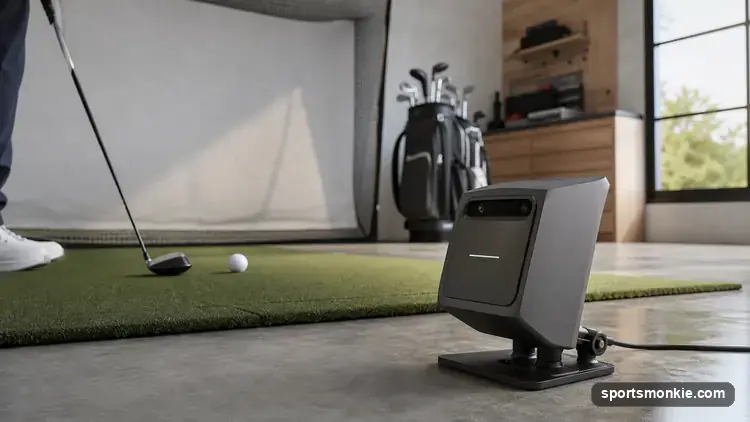
Shot Scope LM1 Review: Is It Worth It in 2026?
The Shot Scope LM1 golf launch monitor costs $199.99 and tracks 5 swing metrics with no subscription. Here's the accuracy, limits, and who should buy it.
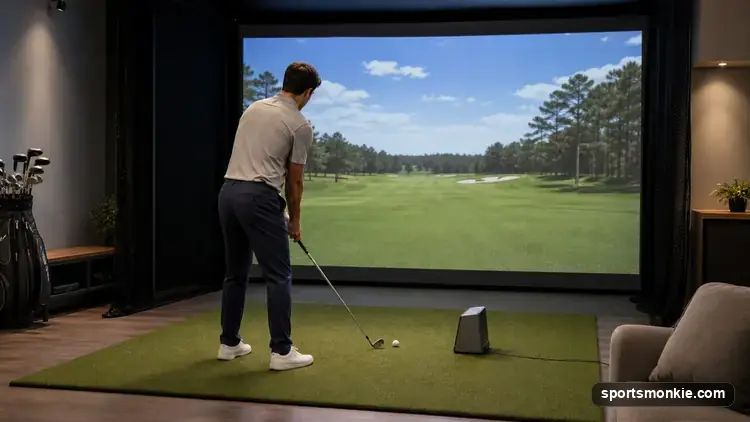
Best Launch Monitor for a Golf Simulator (2026 Guide)
A launch monitor for a golf simulator lives or dies on software compatibility, not specs. What actually works with GSPro, E6 Connect, and your room size.
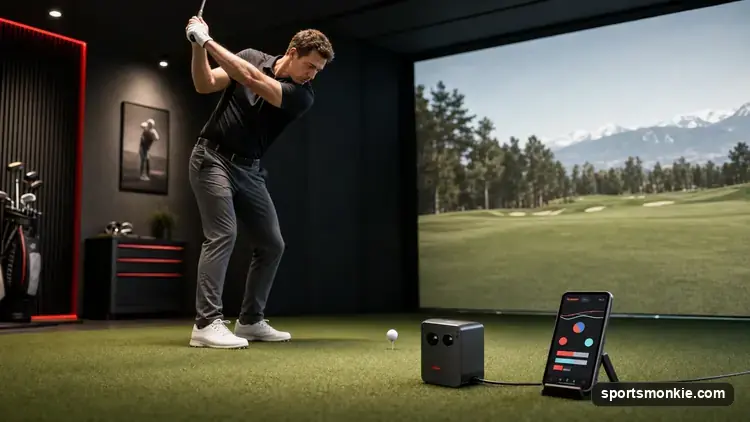
Rapsodo MLM2PRO Review: Is It Worth It in 2026?
Rapsodo MLM2PRO price, subscription cost, accuracy, and E6 Connect compatibility, tested against the Garmin R10 to answer whether it is worth buying in 2026.
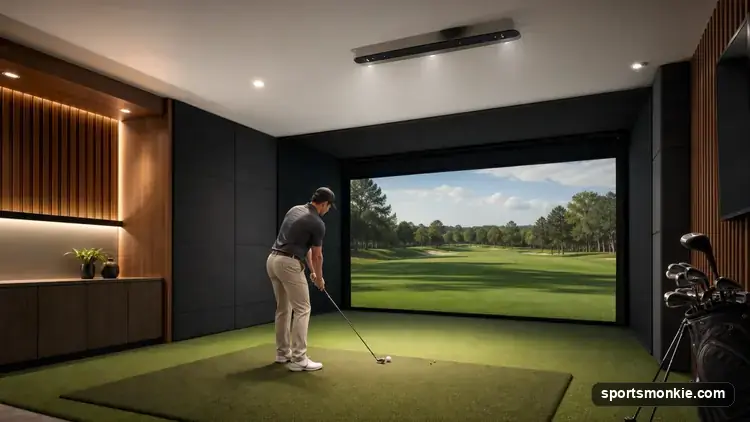
Overhead & Ceiling-Mounted Golf Launch Monitors: Worth It?
Overhead golf launch monitors mount to the ceiling, safe from mis-hits. What they cost, the ceiling height needed, and who should skip it for a floor unit.

Women's Golf Clubs for Beginners: What Actually Matters
Women's golf clubs for beginners come down to shaft flex, length, and grip size, not the paint job. 2026 starter-set prices and honest fitting advice.