
NBA Play-In Tournament Explained
On this page5
The NBA play-in tournament is a short knockout that decides the final two playoff seeds (7 and 8) in each conference. The teams that finish 7th through 10th take part, playing a compact bracket after the regular season and before the main playoffs. Introduced full-time in 2021, it keeps more teams in the race late.
How the play-in works
In each conference, four teams — the 7, 8, 9 and 10 seeds — compete for the last two playoff spots:
| Game | Matchup | Result |
|---|---|---|
| 1 | 7 vs. 8 | Winner = 7 seed |
| 2 | 9 vs. 10 | Loser eliminated |
| 3 | Loser of Game 1 vs. winner of Game 2 | Winner = 8 seed |
So the 7 and 8 seeds get two chances to advance, while the 9 and 10 seeds have no margin for error.
Who takes part
Only the 7th through 10th finishers in each conference. Seeds 1 through 6 go straight into the main playoff bracket, and 11th or worse misses the postseason. The play-in is the exact line between contention and elimination.
Why 7th or 8th is a big edge
Finishing 7th or 8th means you can lose your first play-in game and still host a second one for the 8 seed. The 9 and 10 seeds must win two straight to get in. That gap is why the closing weeks of the regular season are so tense for teams near the cut line.
Why the NBA created it
The league added the play-in to keep more teams motivated late in the year, discourage tanking, and manufacture dramatic pre-playoff games. It debuted in 2020 and became permanent in 2021, quickly producing memorable win-or-go-home nights.
What the winners get
The reward for surviving the play-in is a first-round date with a top seed — the 7 seed meets the 2, the 8 seed meets the 1. It is a steep next step, but for a 9 or 10 seed, simply reaching the playoffs is the prize. For more on the league and its stars, see our basketball guides.
Frequently asked questions
How does the NBA play-in tournament work?+
In each conference, the teams seeded 7th through 10th compete. The 7 and 8 seeds meet, and the winner clinches the 7th playoff spot. The 9 and 10 seeds meet in a win-or-go-home game, and the loser is eliminated. Then the loser of the 7-vs-8 game hosts the winner of the 9-vs-10 game, with that winner taking the 8th and final playoff seed.
Which teams play in the play-in tournament?+
The four teams in each conference that finish the regular season in 7th, 8th, 9th and 10th place. Teams seeded 1 through 6 skip the play-in and qualify directly for the [main playoff bracket](/how-do-the-nba-playoffs-work/). Finishing 11th or lower means missing the postseason entirely, so the play-in is the cutoff line for playoff contention.
Why was the play-in tournament created?+
The NBA introduced the play-in to keep more teams motivated deep into the season and to add high-stakes games before the playoffs. By putting the 7 through 10 seeds into a mini-knockout, it discourages tanking near the bottom of the standings and rewards teams that keep fighting for a top-eight finish. It debuted in a limited form in 2020 and became a permanent fixture in 2021.
Is it better to finish 7th or 8th than 9th or 10th?+
Yes, significantly. The 7 and 8 seeds get two chances to reach the playoffs: lose the first game and they still host a second one for the 8 seed. The 9 and 10 seeds must win two straight road-ish games with no margin for error. So finishing 7th or 8th is a major advantage over sneaking in at 9th or 10th, which is why the final regular-season standings matter so much.
Does the play-in affect playoff seeding?+
It only sets the 7 and 8 seeds; seeds 1 through 6 are fixed by regular-season record. Once the play-in decides the last two spots, the standard 16-team bracket runs as normal, with the 7 and 8 seeds facing the 2 and 1 seeds respectively. So a play-in team's reward is a first-round matchup against one of the conference's best.
How many games are in the play-in?+
Each conference plays three play-in games: 7-vs-8, 9-vs-10, and then the loser of the first against the winner of the second. Across both conferences that is six games total. It is a compact, high-pressure window squeezed between the regular season and the first round of the [playoffs](/how-do-the-nba-playoffs-work/).
Can a 10-seed make the playoffs through the play-in?+
Yes, but it is the hardest path. A 10-seed must win its first elimination game against the 9-seed, then beat the loser of the 7-vs-8 game, all on the road-heavy schedule of lower seeds. It has happened, and a hot 10-seed reaching the playoffs is one of the storylines the format was designed to create.
Sources
Play & tools
Free browser games and tools — no account, no download.
- Play 82-0 — Draft five, one per position, and see if your lineup can go a flawless NBA season.
- Play Era Ball — Draft an all-time NBA roster from a single era, then simulate a season and chase a perfect run.
- Play 32-0 — Draft five college basketball legends, one per position, and chase a perfect 32-0 national title.
- Explore all our games →
- Get the printable bracket — Download and print a blank tournament bracket to fill out by hand.
- Open the TS% calculator — Calculate TS% from points, field goal attempts and free throw attempts — scoring efficiency in one number.
- Explore all our free sports tools →
Related basketball guides
View all →
How Do the NBA Playoffs Work? Format Explained
The NBA playoffs are a 16-team, best-of-seven bracket: eight teams per conference, four rounds, ending in the NBA Finals. Seeds 7–10 reach it via the play-in.
How Does the NBA Draft Lottery Work?
The NBA draft lottery is a weighted random draw among the 14 non-playoff teams for the top four picks. The worst teams share the best odds, but nothing is guaranteed.
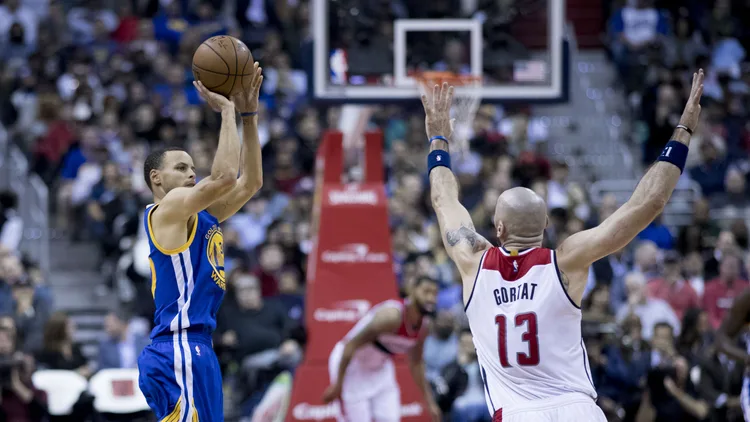
Steph Curry Says His $116 Million Extension Could Be His Last NBA Contract
Stephen Curry told ESPN he assumes the two-year, $116 million extension he signed in September could be the last contract of his NBA career, while insisting no retirement decision is coming soon.
NBA Bans Under Parlays, First-Basket Bets and Tip-Off Wagers in Integrity Clampdown
The NBA has told its sportsbook partners to remove under parlays on one player, unders on sub-12-minute players and first-of bets after the gambling scandals.

NBA Players Fear Wearable Tech Data Could Be Used Against Them in Contract Talks
Adam Silver says the NBA and the Players Association have no agreement on wearable tech in games, because players fear their own data could be used in bargaining.
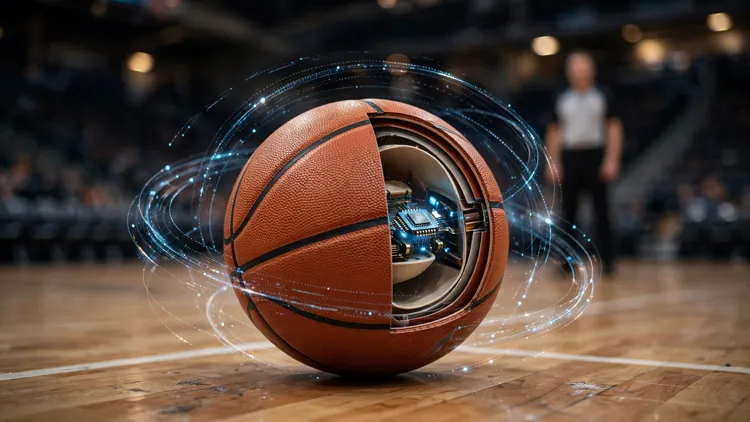
Silver's Smart Ball Puts a One-Gram Chip Inside the NBA's Ball, and Fans Smell a Magnet
Adam Silver says the NBA is testing a Wilson smart ball with a one-gram chip that tracks spin and trajectory, could help officials as soon as next year, and has fans joking about magnet balls.