
Best Lightweight Padel Rackets: Who Needs One and Why

On this page7
- 01What actually counts as a lightweight padel racket?
- 02Does FIP actually regulate racket weight?
- 03Who actually needs a lightweight padel racket?
- 04Best lightweight padel rackets to buy right now
- 05What do you actually give up with a lighter racket?
- 06Is lightweight actually better for a sore elbow?
- 07The bottom line on buying a lightweight padel racket
A lightweight padel racket is anything under about 355g, with 340g and below counting as genuinely light. The Head One Ultralight goes as low as 300g. That threshold isn’t set by any rulebook; it’s just where the market draws the line, since a “normal” padel racket runs 350 to 375g. The players who benefit most are beginners still building technique, anyone with arm or shoulder sensitivity, smaller or lighter-framed players, and net-focused players who win points with quick hands rather than heavy smashes. The trade-off is real but smaller than most buying guides admit: you give up a little raw power, not much.
What actually counts as a lightweight padel racket?
There’s no federation cutoff, so brands and reviewers set their own line. In practice:
- Standard weight: 350-375g, the range most intermediate and advanced rackets ship in.
- Lightweight: roughly 340-355g, the zone most “team light” and women’s models occupy.
- Very light / ultralight: under 340g, a small category topped by the Head One Ultralight at 300g.
That 300g figure matters because it’s roughly 15-20% below a typical frame, which is enough to change how the racket feels in your hand, not just what it weighs on a scale. Below 300g you’re essentially out of the adult padel racket market entirely; manufacturers don’t go lighter because the racket starts to feel unstable on off-center contact.
Does FIP actually regulate racket weight?
No, and this gets repeated wrong often enough that it’s worth stating plainly. The International Padel Federation’s Rules of Padel devotes a full section to “The Padel Racket,” and it regulates exactly three physical dimensions: a maximum total length of 45.5cm, a maximum head width of 26cm, and a maximum thickness of 38mm (with a 2.5% manufacturing tolerance). It also governs hole size, cord length, and bans devices that could communicate or distract. Weight is never mentioned.
So when a listing says a racket is “340g, within FIP limits,” that’s marketing shorthand, not a rule citation. Manufacturers converge on similar weight ranges because heavier composite layups and bigger sweet spots tend to land in a predictable band, not because a governing body told them to. If a brand or article claims FIP caps weight at some figure, that claim doesn’t check out against the current rulebook.
Who actually needs a lightweight padel racket?
Four groups get a genuine, provable benefit from going lighter, and the reasoning differs for each:
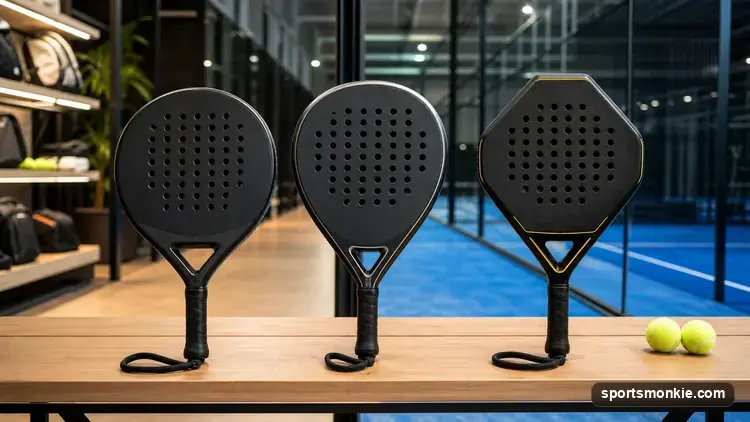
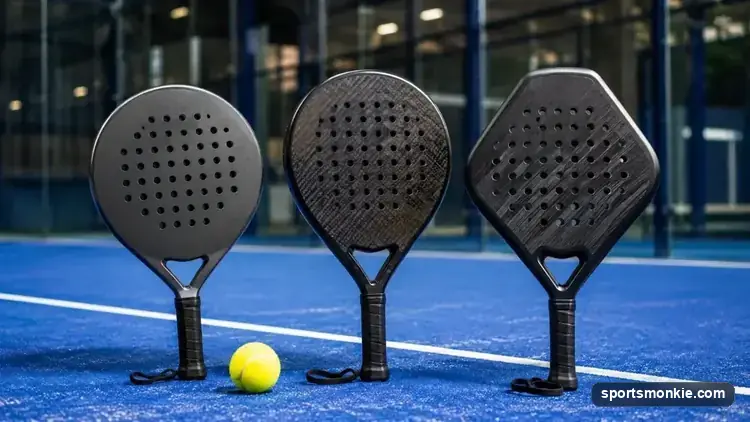
- True beginners. A lighter frame is easier to control through a still-inconsistent swing, and it builds the habit of generating pace with technique instead of muscling the ball. Pair it with a round shape for the biggest sweet spot.
- Smaller or lighter-framed players. If your forearm and grip strength are on the smaller end, a 340-350g racket lets you keep racket-head speed up without overworking the wrist and shoulder on every volley.
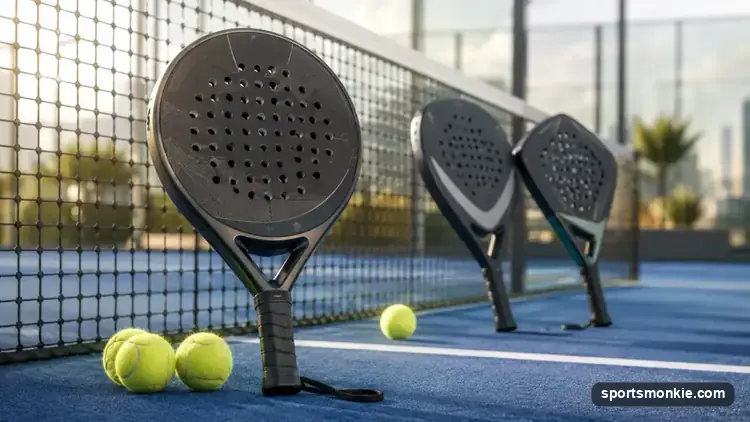
- Net-focused, fast-hands players. Padel is won at the net more than from the back glass, and a lighter racket reacts quicker to blocked volleys and bandejas where you don’t have time for a full swing.
- Players easing back from injury, with caveats. A lighter racket can help during a return-to-play phase, but see the elbow section below before assuming lighter is automatically safer.
If none of that describes you, and you’ve got a repeatable, fast swing and you’re chasing more pace off the smash, a standard 355-375g racket is still the better tool.
Best lightweight padel rackets to buy right now
Specs and street prices shift by season, so treat these as a current snapshot rather than a permanent ranking.
| Racket | Weight | Balance | Price (USD) | Best for |
|---|---|---|---|---|
| Head One Ultralight | 300g | Low, extended grip | $199.95 | The lightest option available; total beginners and arm-sensitive players |
| Head Gravity Team Light | 340g | Low | $149.95 | Round-shaped forgiveness for improving beginners |
| Babolat Counter Origin | 355g ±10g | Low (round) | $120 | Budget-friendly, fiberglass comfort for new players |
| Adidas Match Light 2026 | 345-360g | Low, hybrid shape | ~$85-100 | Cheapest genuine lightweight entry point |
| Bullpadel Elite Woman 2026 | 350-360g | Medium (teardrop) | $282-313 | Women’s fit with more controlled power than pure beginner frames |
| Babolat Air Viper 2.6 | 355g ±10g | Higher (teardrop) | $340 | Intermediate/advanced net attackers who want light without giving up pop |
The Head One Ultralight is the clearest pick if arm comfort is your only priority. Its single central hole and stretched grip keep balance low so the extreme lightness doesn’t feel skittish. For most beginners, though, the Gravity Team Light or Babolat Counter Origin is the smarter buy: still clearly lightweight, still round and forgiving, and $50-80 cheaper. The Babolat Air Viper 2.6 is the outlier here, a 355g teardrop with 16K carbon that proves “lightweight” and “underpowered” aren’t the same thing once you’re swinging fast enough to load it.
What do you actually give up with a lighter racket?
Less than the marketing copy implies. Tennis Warehouse University’s physics analysis of padel racket power found that a 20% increase in a racket’s effective mass produces only about a 4% gain in ball exit velocity, and that total power potential across the padel racket market spans just 5-7% from lightest to heaviest. In plain terms: swinging faster adds far more pace than adding grams to the frame does, and a well-timed shot from a 340g racket will out-hit a mistimed one from a 375g racket every time.
Where lighter rackets genuinely lose ground is stability on off-center contact (a heavier racket resists twisting on a mishit better than a light one does) and on pure smashes, where a bit more mass behind the ball helps overpowered players finish points. If your game is built around the smash, budget for a heavier frame. If it’s built around volleys, touch, and consistency, the lightweight column is the smarter bet.
Is lightweight actually better for a sore elbow?
This is where most gear guides get sloppy, and it’s worth a straight answer: not automatically. Mass dampens vibration on contact, so a very light, head-heavy racket can transmit more shock into your arm than a moderately heavier, handle-heavy one, which is the opposite of what “go lighter for your elbow” implies. What actually protects against lateral epicondylitis, commonly called tennis or padel elbow, is a low balance point, a soft EVA core, and a fiberglass rather than stiff carbon face, not weight in isolation.
In practice, that means someone managing elbow pain is often better served by a 355-370g racket with those three traits than by chasing the lightest frame on the shelf. If you’re already dealing with elbow symptoms, that combination matters more than the number stamped on the throat, and a physical therapist’s read on your swing mechanics will do more than any racket swap.
The bottom line on buying a lightweight padel racket
Buy lightweight if you’re a beginner, a smaller-framed player, or someone who wins points at the net rather than off the smash. The control and maneuverability are worth the small power trade-off, which the numbers show is smaller than most buyers expect. Skip it if your game already leans on a heavy, committed swing, or if you’re managing elbow pain and haven’t checked balance and core softness first. For a full breakdown of shape, core, and face material once weight is settled, read our padel racket buying guide, and if this is your first frame, start with our dedicated padel rackets for beginners picks. Curious how the court itself is set up before you buy? See our guide to padel court size and dimensions.
Ready to compare more gear across the sport? Browse the full racket sports hub for padel, pickleball, and tennis buying guides.
Frequently asked questions
What is considered a lightweight padel racket?+
Anything under about 355g counts as lightweight, and under 340g is genuinely light. There's no official cutoff; it's a market convention, since most padel rackets run 350-375g. The Head One Ultralight at 300g sits at the extreme end, and most lightweight models cluster between 340g and 355g.
Does FIP set a weight limit on padel rackets?+
No. The International Padel Federation's Rules of Padel regulate only length (45.5cm max), width (26cm max), and thickness (38mm max, with 2.5% tolerance). Weight isn't mentioned anywhere in the racket section. Every gram figure you see is a manufacturer or market choice, not a federation rule.
Is a lighter padel racket better for tennis elbow?+
Not automatically. A very light, head-heavy racket can transmit more vibration than a heavier one, because mass dampens shock on contact. What actually protects the elbow is low balance, a soft EVA core, and a fiberglass face, and weight in the 355-370g range with those traits often beats going ultralight.
What weight padel racket should a beginner buy?+
Around 345-365g with a round shape and low balance. That range is light enough to swing without strain but has enough mass to feel stable and forgive mishits. Going below 340g mainly helps smaller-framed players and juniors; most adult beginners do fine in the standard lightweight band.
Do lightweight padel rackets lose power?+
Some, but less than most players assume. Tennis Warehouse University's physics analysis found a 20% jump in a racket's effective mass produces only about a 4% gain in ball velocity, and total power potential across rackets spans just 5-7%. Swing speed and technique matter far more than the number on the frame.
What is the lightest padel racket you can buy?+
The Head One Ultralight, at 300g, is the lightest adult padel racket sold today, roughly 40-70g under a typical frame. It uses a single central hole and an extended grip to keep balance low despite the reduced mass. It's built for beginners and players who prioritize handling over pace.
Sources
Play & tools
Free browser games and tools — no account, no download.
- Play today's Sports Connections — Today's Sports Connections — daily hints, answers, and play the grid.
- Play Guess the NFL Player — A new mystery NFL player every day. Eight guesses, with a clue on each — plus free unlimited mode.
- Explore all our games →
Related racket sports guides
View all →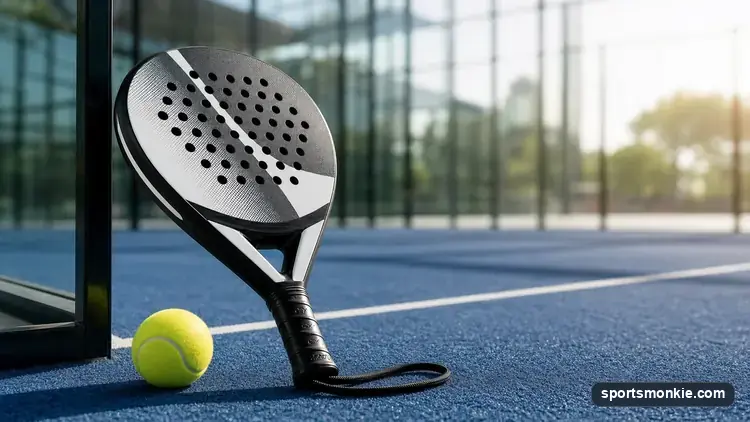
Adidas Padel Rackets: Which Model Should You Buy in 2026
Which Adidas padel racket to buy in 2026: Match for beginners, Cross It or Arrow Hit for control, Metalbone for power. Real prices and a clear pick.
Where to Buy a Padel Racket: Best Places by Country (2026)
Where to buy a padel racket for sale in the US, UK, Australia, and Canada in 2026: named retailers, real price ranges, and how to avoid a counterfeit.
Padel Racket Buying Guide: Shape, Core, and Price
How to choose a padel racket by shape, core, and skill level, with real 2026 price tiers from $50 to $300+ and the specs that actually matter.
Padel Rackets for Beginners: What to Buy and Avoid
Padel rackets for beginners: buy a round, soft-core racket near 350-365g. What to look for, budget picks with USD and GBP prices, and what to avoid.
Best Pickleball Paddle: How to Choose the Right One
How to pick the best pickleball paddle: control vs power vs all-court, materials, price tiers, and the new testing rules that decide what stays legal.
Top-Rated Pickleball Paddles: How to Pick the Right One
A spec-driven guide to the top rated pickleball paddle: core thickness, shape, weight, grip and price tiers, plus 2026 control and power picks.