
Largest Stadiums in the World by Seating Capacity
On this page14
- 01The 12 largest stadiums in the world, ranked
- 021. Narendra Modi Stadium
- 032. Rungrado 1st of May Stadium
- 043. Michigan Stadium
- 054. Beaver Stadium
- 065. Ohio Stadium
- 076. Kyle Field
- 087. Tiger Stadium
- 098. Neyland Stadium
- 109. Melbourne Cricket Ground
- 1110. Camp Nou
- 1211. FNB Stadium (Soccer City)
- 1312. Wembley Stadium
- 14How we ranked them
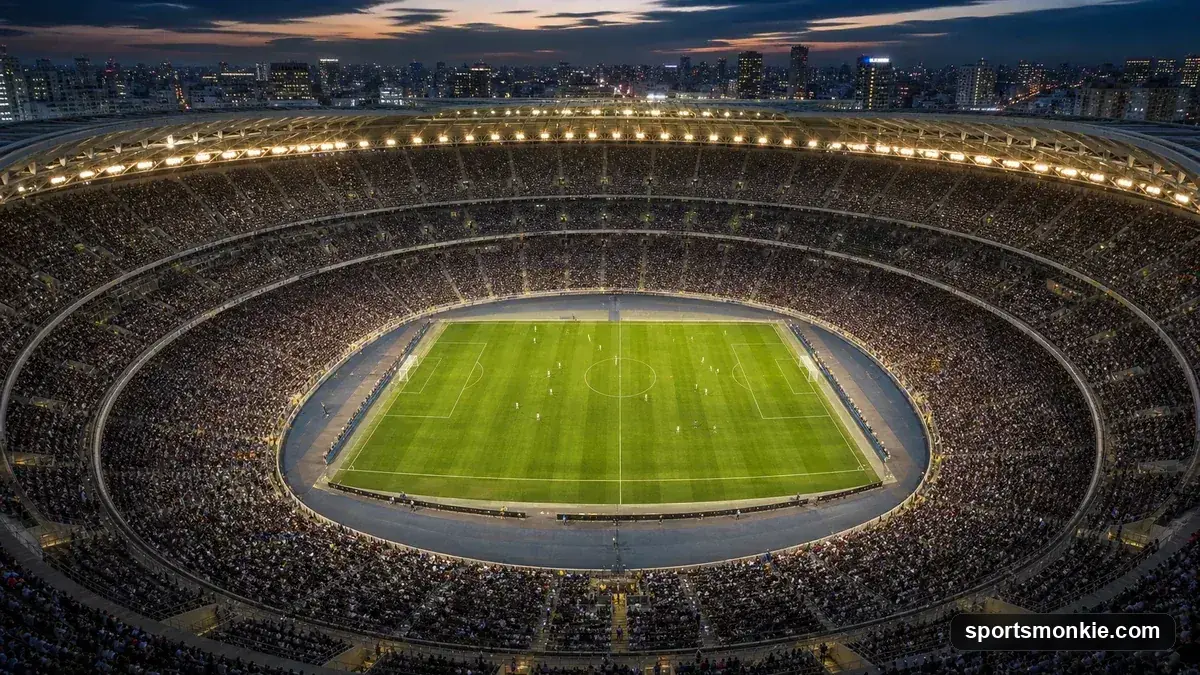
The largest stadium in the world is the Narendra Modi Stadium in Ahmedabad, India, which seats about 132,000 for cricket. Pyongyang’s Rungrado 1st of May Stadium is second at roughly 114,000, and Michigan Stadium leads the United States at around 107,601. Those are the top three as of 2026, and the rest of the top 12 is dominated by American college football, with one cricket ground and two football-specific stadiums rounding it out.
The 12 largest stadiums in the world, ranked
Capacities shift with renovations and safety rules, so treat these as approximate figures as of 2026, but the order at the top is well established:
| # | Stadium | Location | Approx. capacity | Primary use |
|---|---|---|---|---|
| 1 | Narendra Modi Stadium | Ahmedabad, India | ~132,000 | Cricket |
| 2 | Rungrado 1st of May Stadium | Pyongyang, North Korea | ~114,000 | Football / mass events |
| 3 | Michigan Stadium | Ann Arbor, USA | ~107,601 | College football |
| 4 | Beaver Stadium | University Park, USA | ~106,572 | College football |
| 5 | Ohio Stadium | Columbus, USA | ~102,780 | College football |
| 6 | Kyle Field | College Station, USA | ~102,733 | College football |
| 7 | Tiger Stadium | Baton Rouge, USA | ~102,321 | College football |
| 8 | Neyland Stadium | Knoxville, USA | ~101,915 | College football |
| 9 | Melbourne Cricket Ground | Melbourne, Australia | ~100,024 | Cricket / Australian rules |
| 10 | Camp Nou | Barcelona, Spain | ~99,354 (rebuild target ~105,000) | Football |
| 11 | FNB Stadium (Soccer City) | Johannesburg, South Africa | ~94,736 | Football / rugby |
| 12 | Wembley Stadium | London, England | ~90,000 | Football |
1. Narendra Modi Stadium
The Narendra Modi Stadium in Ahmedabad sits alone at the top, seating around 132,000 after a complete rebuild that reopened in 2020 on the site of the old Motera and Sardar Patel stadiums. It is the world’s largest cricket stadium by a wide margin over the Melbourne Cricket Ground, and one of the very few venues on this list built for a single sport rather than shared use. That a cricket ground tops the global list says everything about the sport’s scale in India, a country that fills stadiums like nowhere else.
2. Rungrado 1st of May Stadium
Pyongyang’s Rungrado 1st of May Stadium is the largest stadium outside India, holding roughly 114,000 spectators for the Mass Games, football internationals and athletics. It opened in 1989 with reported capacity closer to 150,000, but a 2014 renovation replaced bench seating with individual seats, which is the main reason its official figure fell even though the structure itself barely changed. It remains the biggest stadium ever built primarily for football and mass spectacle rather than any single fixed-seat sport.
3. Michigan Stadium
Known as “The Big House,” Michigan Stadium in Ann Arbor is the largest stadium in the United States and the biggest college football venue anywhere, seating about 107,601. Built in 1927 and expanded repeatedly since, it has drawn recorded crowds above 115,000 on its best Saturdays. Michigan Stadium alone outseats every current NFL stadium, a gap that illustrates how American college football operates at a scale professional leagues never bothered to match.
4. Beaver Stadium
Penn State’s Beaver Stadium in University Park is the second-largest in the country at roughly 106,572 seats, trailing Michigan Stadium by only a few thousand. Its bowl-shaped upper deck and “White Out” night games routinely produce some of the loudest recorded crowd noise in college sports. Like Michigan Stadium, it began far smaller and grew through decades of expansion rather than a single construction project.
5. Ohio Stadium
Ohio Stadium, home of Ohio State football in Columbus, holds about 102,780 fans and is nicknamed “the Horseshoe” for its open-ended bowl design. Opened in 1922, it is one of the oldest stadiums on this list still hosting major sport at its original site, having been expanded rather than replaced. Ohio State’s attendance regularly ranks among the highest in college football, keeping the stadium near full capacity most Saturdays.
6. Kyle Field
Texas A&M’s Kyle Field in College Station seats around 102,733 after a 2015 renovation that rebuilt most of the stadium while keeping its historic footprint. The upgrade added a fully enclosed upper deck, pushing capacity past the 100,000 mark for the first time. Its “12th Man” tradition, where the entire student section stands for the whole game, is closely tied to the stadium’s scale and noise.
7. Tiger Stadium
LSU’s Tiger Stadium in Baton Rouge, nicknamed “Death Valley,” holds about 102,321 fans and is famous for Saturday night atmosphere that stadium seismographs have reportedly registered as small earthquakes. It has been expanded in stages since 1924, and its steep, enclosed upper tiers concentrate noise more than most open-ended college bowls. LSU’s home crowds are consistently ranked among the most intimidating in the sport.
8. Neyland Stadium
Tennessee’s Neyland Stadium in Knoxville seats roughly 101,915 along the banks of the Tennessee River, where fans have historically arrived by boat for the “Vol Navy” tailgate tradition. First built in 1921, it has grown through more than a dozen expansions to reach its current size. It is the smallest of the eight American college stadiums that clear the 100,000-seat threshold.
9. Melbourne Cricket Ground
The Melbourne Cricket Ground, known simply as the MCG, holds about 100,024 seats and is the largest stadium in the Southern Hemisphere. It shares hosting duties between international cricket and Australian rules football, and its record attendances have exceeded its listed capacity when temporary standing areas were added for finals. The MCG has stood since 1853, making it far older than any other venue in the global top ten.
10. Camp Nou
FC Barcelona’s Camp Nou is the largest football-specific stadium in the world, holding about 99,354 before the club’s ongoing Espai Barça rebuild. The finished stadium is designed for roughly 105,000, which would move it above the Rungrado 1st of May Stadium among purpose-built football grounds once construction wraps. Camp Nou’s capacity has fluctuated during phased reopening, so any figure quoted mid-renovation should be treated as temporary.
11. FNB Stadium (Soccer City)
Johannesburg’s FNB Stadium, also called Soccer City, is Africa’s largest stadium at about 94,736 seats and hosted the 2010 World Cup final. Its calabash-inspired exterior, designed to resemble a traditional African pot, makes it one of the most recognizable stadium shapes in world sport. It remains the primary home for South Africa’s national football and rugby teams for marquee fixtures.
12. Wembley Stadium
England’s Wembley Stadium in London closes out the list at about 90,000 seats, making it the largest stadium in the United Kingdom and one of the most recognized venues in world football. Rebuilt on the site of the original 1923 stadium and reopened in 2007, its arch has become as iconic as the old stadium’s twin towers once were. Wembley regularly hosts FA Cup finals, England internationals and major concerts at capacity.
How we ranked them
This list ranks stadiums by official seated capacity for their primary sport, using the most recent figures published by each stadium operator, governing body or credible sports reference source, cross-checked against multiple outlets where figures disagreed. Temporary or event-specific expansions, such as a final or a concert configuration, are noted separately rather than used as the ranking number. Because renovations, safety recertifications and seat reconfigurations happen constantly, treat every figure here as approximate as of 2026 rather than fixed. For deeper dives into specific leagues, see our rankings of the biggest NFL stadiums, the largest NBA arenas, the largest MLB ballparks, and more record-book lists in our Records & Rankings hub.
Frequently asked questions
What is the largest stadium in the world?+
The Narendra Modi Stadium in Ahmedabad, India, is the largest stadium in the world by seating capacity, holding around 132,000 spectators. It is primarily a cricket venue and reopened after a full rebuild in 2020, replacing the old Motera Stadium on the same site.
What is the second-largest stadium in the world?+
Pyongyang's Rungrado 1st of May Stadium is second at roughly 114,000, though it was originally built for even more. It hosts mass games, football and athletics rather than any single sport, and its bench-style upper tiers once pushed reported capacity toward 150,000.
What is the largest stadium in the United States?+
Michigan Stadium, known as 'The Big House', is the largest in the United States at roughly 107,601 seats. It is one of about eight American college-football stadiums holding 100,000 or more, a concentration of six-figure venues found nowhere else on earth.
What stadium holds 400,000 people?+
No stadium holds 400,000. The claim usually comes from confusing enclosed stadiums with open circuits: the Indianapolis Motor Speedway grounds accommodate roughly 250,000 permanent seats plus infield spectators, and some road-race courses host larger crowds along their route, but no seated stadium approaches 400,000.
Which stadium has a 150,000 capacity?+
None currently in regular use. Pyongyang's Rungrado 1st of May Stadium was widely reported at 150,000 when it opened in 1989, but a 2014 renovation replaced benches with individual seats and its capacity is now generally listed at about 114,000.
Is Camp Nou still Europe's largest stadium?+
Yes. Camp Nou held about 99,354 before the Espai Barça rebuild, and FC Barcelona's project targets roughly 105,000 on completion, which would keep it ahead of Wembley's 90,000. Its working capacity has fluctuated during phased reopening, so treat interim figures cautiously.
What is the largest football stadium in Africa?+
FNB Stadium (also called Soccer City) in Johannesburg, South Africa, is the continent's largest at about 94,736 seats. It hosted the 2010 World Cup final and remains the home ground for South Africa's national football and rugby teams.
Are stadium capacities fixed?+
No. Capacities change with renovations, safety regulations, and reconfigurations between sports or concerts. Published figures are approximate and shift by thousands over time, which is why rankings differ between sources. The numbers here are approximate as of 2026.
Sources
Play & tools
Free browser games and tools — no account, no download.
- Play today's Sports Connections — Today's Sports Connections — daily hints, answers, and play the grid.
- Play Guess the NFL Player — A new mystery NFL player every day. Eight guesses, with a clue on each — plus free unlimited mode.
- Explore all our games →
Related records & rankings guides
View all →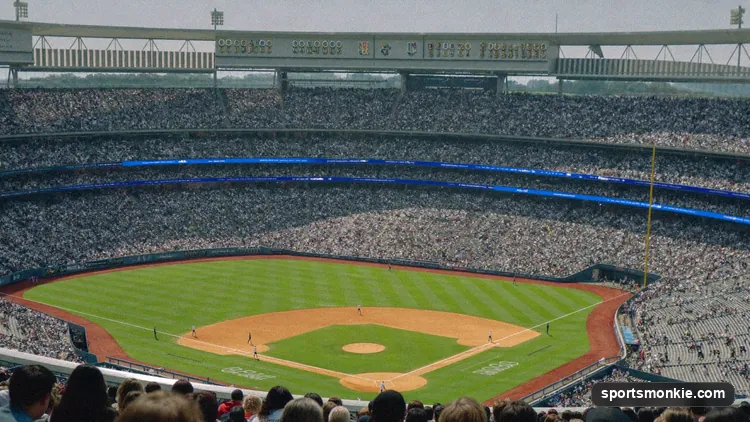
The 10 Largest MLB Stadiums by Seating Capacity, Ranked
Dodger Stadium tops the list at roughly 56,000 seats, followed by Chase Field, T-Mobile Park, Coors Field and Yankee Stadium. Every top-10 MLB ballpark by capacity, ranked and explained.

Best Pool Players of All Time: The Greatest in Billiards
The greatest pool players of all time include Efren Reyes, Earl Strickland, Ralph Greenleaf and Shane Van Boening — ranked by world titles, U.S. Open wins and longevity at the top of the pro game.

Best Scooter Riders of All Time: Freestyle & Pro Icons
A ranked look at the most decorated freestyle and pro scooter riders in history, covering their world championship records, trick innovation, and influence on the sport.

Greatest Judo Players (Athletes) of All Time
The greatest judo players of all time, including Teddy Riner, Yasuhiro Yamashita, and Ryoko Tani, who dominated World and Olympic podiums for decades.

Best Squash Players of All Time: The Definitive List
Jahangir Khan, Jansher Khan, and Nicol David are the greatest squash players ever, dominating their eras with record title hauls and unmatched consistency.

Greatest Female Figure Skaters of All Time
The greatest female figure skaters in history, from Sonja Henie to Yuna Kim, who redefined the sport with artistry, mastery, and Olympic gold.