
How Do Soccer Loans Work? The Complete Guide to Player Loans
On this page5
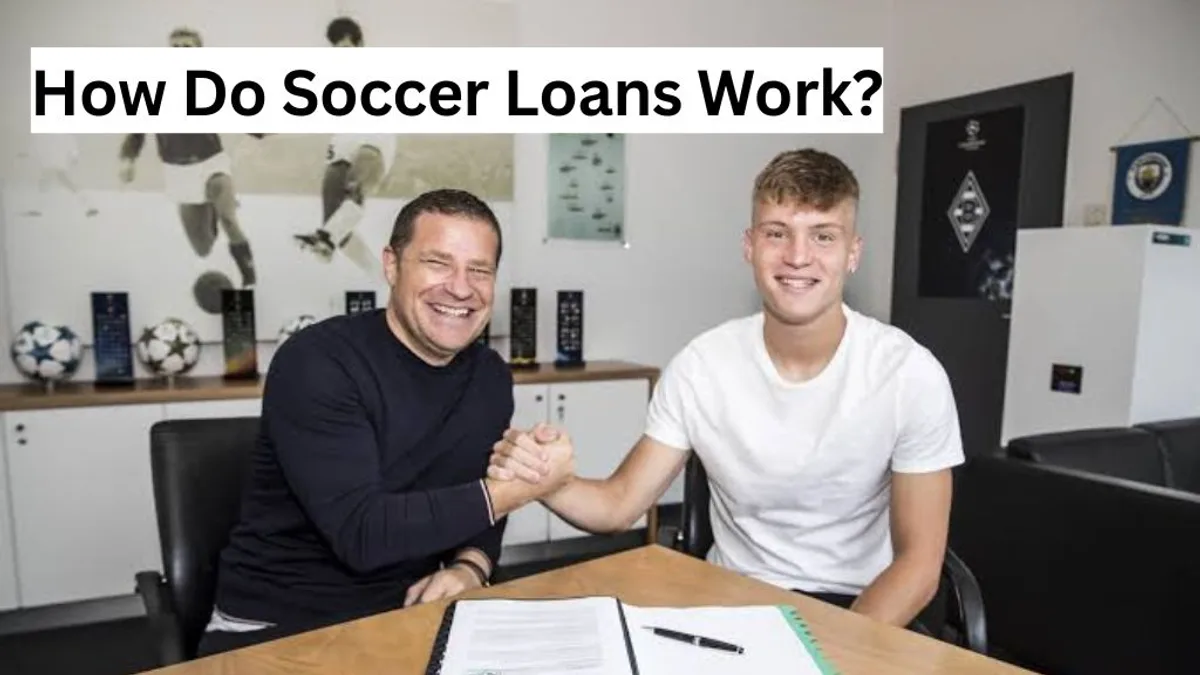
Chelsea have had more than 40 players out on loan at once in some seasons, a squad-within-a-squad scattered across Europe’s lower divisions. That’s the loan system taken to its logical extreme, but the basic mechanic behind it is simple: a player moves to another club for a set period while his parent club keeps his registration and his contract. When the loan ends, he goes home, unless the two clubs agree on something permanent instead.
Why clubs bother with loans at all
The two sides of a loan deal want different things from it.
A sending club typically wants to keep a young player developing without wasting a squad spot on someone who won’t play. It also gets to avoid carrying the full wage bill for someone sitting on the bench, and it protects the player’s resale value by keeping him match-fit rather than letting him stagnate.
A receiving club gets access to a player it likely couldn’t afford to buy outright, with no long-term wage or transfer commitment if things don’t work out. For smaller clubs, loans are often the only way to field a squad with top-flight quality mixed in. For bigger clubs, a loan spell doubles as an extended trial before committing to a permanent fee.
How the loan process works
| Step | What happens |
|---|---|
| 1. Agreement | Parent and receiving clubs negotiate loan terms (duration, wages, fees) |
| 2. Registration | The loan is registered with the relevant football association and/or FIFA |
| 3. Playing period | The player represents the receiving club for the agreed term |
| 4. Return | At the loan’s end, the player returns to their parent club unless a permanent deal is agreed |
The terms clubs actually negotiate
Loan fee. Sometimes the receiving club pays nothing beyond wages; sometimes there’s a real fee attached, especially for a proven first-team player rather than a fringe academy prospect.
Wage split. Who pays what varies deal to deal. A parent club might cover a chunk of the wages just to get a player minutes somewhere competitive, treating it as an investment in his development rather than a cost to recoup immediately.
Recall clause. Many agreements let the parent club end the loan early, usually with around two weeks’ notice, and often only during a transfer window rather than mid-season on a whim.
Option to buy. A pre-agreed fee the receiving club can pay to make the move permanent once the loan ends.
Obligation to buy. Less common: the loan converts automatically to a permanent transfer if the player hits certain appearance or performance thresholds.
Rules that keep the system in check
FIFA and individual leagues limit how far clubs can push loans. The Premier League caps how many loan players a club can name in a matchday squad, for instance, so nobody can simply stockpile talent and starve rivals of it. Loans across borders need FIFA transfer certificates and extra paperwork, and players under 18 face tighter restrictions on international loans specifically to protect them from being moved around too young.
Loans that made careers
Kevin De Bruyne played for Chelsea’s academy before loan spells at Werder Bremen taught the club he wasn’t ready for their first team, so they sold him to Wolfsburg instead. Romelu Lukaku and Mohamed Salah both went through loan spells before finding their level elsewhere. None of this was planned to work out cleanly. It rarely does. But the loan system is often how a club figures out what it actually has.
Emergency loans exist too, for goalkeeping crises or unusual injury pileups, and leagues keep these tightly restricted so they can’t be used as a workaround for normal squad building.
Frequently asked questions
What is a player loan in soccer?+
A loan is a temporary transfer where a player moves to another club for a defined period — usually six months to a full season — before returning to their parent club. The parent club retains the player's registration and long-term contract.
Who pays a loaned player's wages?+
Wage arrangements vary by agreement. In some loans, the receiving club pays all wages. In others, the parent club covers some or all of the wages as an incentive to place the player in a high-quality environment. The specific split is negotiated between the clubs.
Can a loaned player be recalled early?+
Many loan deals include a recall clause allowing the parent club to bring the player back before the loan period ends, typically with a notice period. Receiving clubs sometimes negotiate to restrict recall to specific windows.
Sources
Play & tools
Free browser games and tools — no account, no download.
- Play 38-0 — Sign a 4-4-2 of all-time football legends and chase a perfect 38-0 league season — perfect, not just unbeaten.
- Explore all our games →
Related football guides
View all →
How Do Soccer Transfers Work?
A soccer transfer moves a player between clubs during a transfer window, usually for a fee paid to the selling club, plus wages agreed with the player.
11v11 Soccer Formations: The Full-Sided Guide to Every Shape
11v11 soccer formations explained: how full-sided lineups work, the most common shapes (4-4-2, 4-3-3, 4-2-3-1, 3-5-2, 5-3-2), and how to pick one.

7v7 Soccer Formations: Best Youth Shapes for U9/U10 Explained
The best 7v7 soccer formations for youth teams are 2-3-1, 3-2-1, 2-1-2-1, 3-1-2, and 1-3-2 — each suited to a different style of U9/U10 play.
9v9 Soccer Formations: Best Youth Shapes for U11/U12 Explained
The best 9v9 soccer formations for youth teams are 3-3-2, 3-2-3, 2-4-2, 3-4-1, and 2-3-3 — here's how each one lines up and which fits your squad.
High Press in Soccer: What It Is and How It Works
High press in soccer explained: how teams trap opponents deep, key triggers, man vs zonal systems, and why Klopp, Guardiola and Bielsa built careers on it.
Inverted Fullback Explained: What It Means in Soccer Tactics
What is an inverted fullback in soccer? Learn how the role works, why Pep Guardiola popularized it, and which players do it best.