
Fly Rod Weight Explained
On this page5
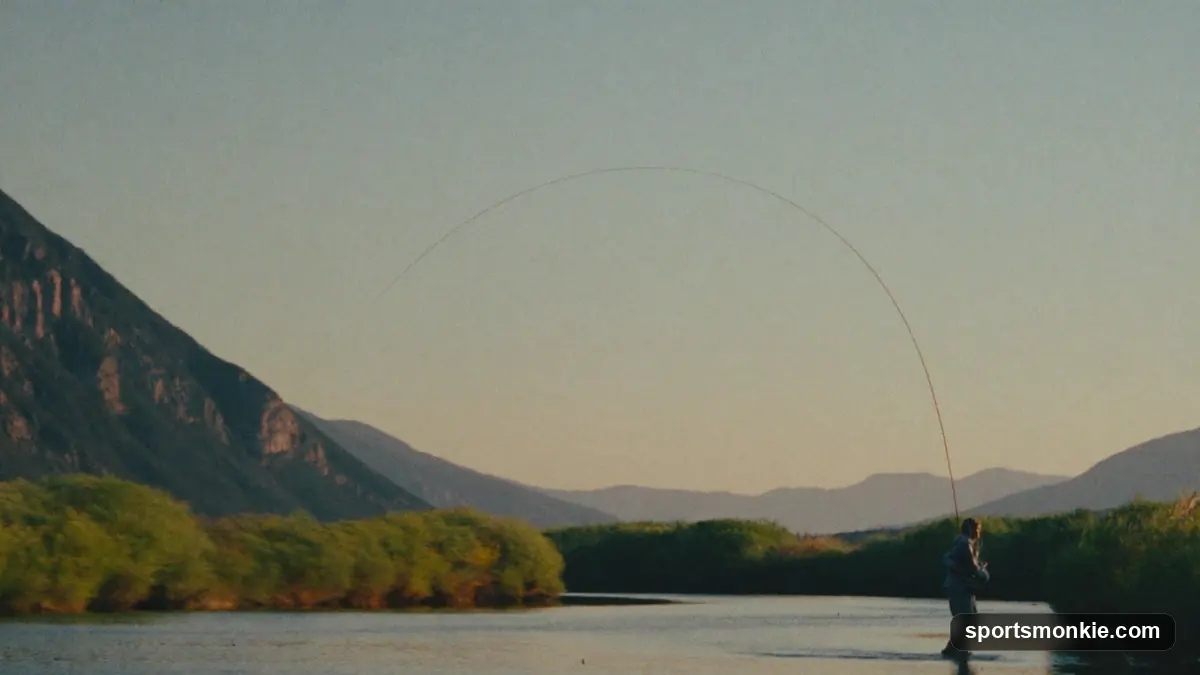
Fly rod “weight” does not mean how heavy the rod is. It’s a number, roughly 1 to 14 or higher, that matches the rod to a corresponding fly line weight and, through that, to the size of fish and flies you’re targeting. In fly fishing the weighted line is what actually carries the nearly weightless fly to the target, so rods are rated by the line class they’re built to cast: a 5-weight rod pairs with a 5-weight line.
Getting the weight right is the most important gear decision a new fly angler makes, because it determines whether your outfit can cast the flies and land the fish you have in mind. This guide explains the line-weight system, walks through which weight suits which fishing, and clears up the common confusion between weight, length and action.
The line-weight system at a glance
Rod weights run in a loose scale from ultralight to heavy saltwater. Here’s how the common numbers map to typical use, with the caveat that these are general guides rather than rigid rules.
| Rod weight | Typical use | Example targets |
|---|---|---|
| 1–3 | Small streams, delicate presentation | Small trout, panfish, brook trout |
| 4 | Light all-round, small-to-mid waters | Trout, grayling |
| 5–6 | The classic do-everything trout range | Trout (rivers/lakes), light bass |
| 7 | Heavier trout, bass, light bigger flies | Bass, big trout, small steelhead |
| 8 | All-round big-fish and light saltwater | Bonefish, bass, salmon, pike |
| 9–10 | Saltwater and strong species | Redfish, striped bass, salmon |
| 11–14+ | Big, powerful saltwater fish | Tarpon, tuna, offshore species |
The single most useful takeaway: if you want one first rod for general trout fishing, a 5- or 6-weight is the standard recommendation.
Why “weight” is really about the line
The confusing part is that the number describes the line, not the rod’s heft. A fly is almost weightless, so unlike spin fishing (where a heavy lure loads the rod), fly casting relies on the mass of the line itself to bend the rod and shoot the cast. The rod is engineered to load correctly with a matching line class. That’s why balance matters: your rod weight, fly line weight and reel should all match so the outfit casts smoothly. A 5-weight rod with an 8-weight line, or vice versa, casts poorly.
Matching weight to your fishing
Choose your rod weight by your typical target and conditions, not by buying the most versatile-sounding number blindly. If you fish tiny streams for small trout, a 3- or 4-weight is delicate and fun. For general trout across rivers and lakes, the 5- or 6-weight covers the widest range, which is why it’s the near-universal first-rod choice. Stepping up to bass, big trout or windy water, a 7-weight adds backbone. For saltwater and powerful fish, an 8-weight is the common all-round choice, with 9- to 12-weights for larger, stronger species and heavy wind.
Our fly fishing rod and setup guide covers how the rod pairs with reel, line and leader, and the fly fishing gear kit for beginners lays out the full starter kit around your chosen weight.
Weight vs length and action
Rod weight is only one of three characteristics, and they’re independent. Length (often 8–9 feet for trout) affects reach, line control and casting in tight spaces. Action (fast, medium or slow) describes how much and where the rod flexes, influencing feel and casting style. You pick a weight for the fish, then choose a length and action to suit your water and preference. Don’t conflate them: a fast-action 9-foot 5-weight and a slow-action 8-foot 5-weight cast the same line class very differently.
The bottom line
Fly rod weight is a matching system, not a measure of heaviness: pick the number that fits your target fish and flies, pair it with the same-weight line and a balanced reel, and you have an outfit that casts as intended. For most beginners chasing trout, a 5- or 6-weight is the sensible single rod; go lighter for small streams and small fish, heavier for bass, salt and big powerful species. If you’re just getting started, our fly fishing for beginners guide puts rod weight in the context of everything else you need to learn.
Frequently asked questions
What does fly rod weight mean?+
Fly rod weight is a number, roughly 1 to 14 or higher, that indicates which fly line weight the rod is designed to cast, and therefore the size of flies and fish it suits. It is not the physical weight of the rod. A matching-weight fly line is the actual casting weight in fly fishing, and the rod is built to load and cast that line, so you pair a 5-weight rod with a 5-weight line. Lower numbers are for small flies and small fish; higher numbers for big flies and big, powerful fish.
What weight fly rod should a beginner get for trout?+
For general trout fishing, a 5-weight or 6-weight rod is the classic all-round beginner choice, versatile enough for most rivers, lakes and typical trout fly sizes. A 5-weight leans slightly toward finesse and smaller waters, while a 6-weight gives a bit more backbone for wind, bigger flies or larger fish. If you'll mostly fish small streams for small trout, a 3- or 4-weight is fun; if you expect bigger fish or windy conditions, the 6-weight is the safer single choice.
What weight fly rod do I need for saltwater or big fish?+
For saltwater and large, powerful species you generally want an 8-weight or heavier. An 8-weight is a common all-round saltwater and big-fish rod (bonefish, bass, larger species), while 9- to 12-weights handle bigger, stronger fish and windier conditions. The heavier line and stiffer rod cast large flies, punch through wind, and give you the power to fight strong fish. Match the exact weight to your target species and the flies you'll throw, and check guidance for that specific fishery.
Does fly rod weight mean the rod is heavier?+
No. Fly rod weight refers to the fly line weight the rod is built to cast, not the physical heaviness of the rod. In fly fishing, the weighted fly line is what loads the rod and carries the nearly weightless fly to the target, so rods are rated by the line class they match. A higher-number rod casts a heavier line and bigger flies for bigger fish, but the rod itself isn't necessarily much heavier in your hand. Weight, length and action are three separate rod characteristics.
Sources
Play & tools
Free browser games and tools — no account, no download.
- Play today's Sports Connections — Today's Sports Connections — daily hints, answers, and play the grid.
- Play Guess the NFL Player — A new mystery NFL player every day. Eight guesses, with a clue on each — plus free unlimited mode.
- Explore all our games →
Related guides
Fly Fishing Rod and Setup: Weight, Length, and Gear Guide
Fly fishing rod and setup guide for beginners: what rod weight means, why 9-foot 5-weight is standard, and what a full starter setup costs.

What Weight Bowling Ball Should I Use?
A common guideline is a bowling ball about 10% of your body weight, up to the 16 lb max. How to pick the right weight you can actually control.
Fly Fishing Gear for Beginners: What You Actually Need
Fly fishing gear for beginners beyond the rod: waders, boots, tools, and a 4-fly starter kit, with real combo prices for the US, UK, AU, and CA.
What Is a False Start in Track? Rules and Disqualification
A false start happens when a sprinter begins before the legal starting signal or reacts early enough to violate the competition’s reaction-time rule.
What Is the Individual Medley in Swimming? Order and Rules
The individual medley combines butterfly, backstroke, breaststroke, and freestyle in one race, in that order.

What Is a Faceoff in Lacrosse? Restart and Possession Rules
A lacrosse faceoff starts each quarter and follows goals, with two players competing for the ball while teammates stay outside the restraining area.