
Fly Fishing Rod and Setup: Weight, Length, and Gear Guide

On this page8
- 01What does the “weight” number on a fly rod actually mean?
- 02What weight rod should a beginner buy?
- 03Fly rod weight by use case
- 04What rod length works best for a beginner?
- 05What does a complete beginner fly fishing setup include?
- 06Combo kit or build your own setup: which should a beginner buy?
- 07How much should you budget for a beginner rod and setup?
- 08Where this fits with the rest of your gear
For a first fly fishing rod and setup, buy a 9-foot, 5-weight rod in medium-fast action, paired with a 4/5-weight reel, weight-forward floating 5-weight line, a 9-foot 4X tapered leader, and 4X-5X tippet. That combination handles the widest range of trout water, plus bass and panfish, without being too heavy to cast all day or too light to fight wind. Buy it as a matched combo kit rather than guessing at the pieces yourself, and everything below explains why.
What does the “weight” number on a fly rod actually mean?
Unlike a lot of gear specs that vary by brand, fly rod weight is genuinely standardized, and it’s really a line spec more than a rod spec. Orvis News puts it plainly: the question of what weight rod to buy is really a question about the line you’ll cast, since the rod is built to load a specific line mass. That standard comes from the American Fly Fishing Trade Association (AFFTA), which sets a target grain weight for the first 30 feet of a fly line at each numbered rating, from 1-weight up to 14. A 5-weight line is built to weigh close to 140 grains in that first 30 feet, and rods are designed to load and cast that specific mass. Match the two numbers, Cast & Fly explains, and the rod bends the way its designer intended.
Here’s the catch most beginner guides skip: modern lines often run heavier than their printed number to help stiff graphite rods load at short range, so a “5wt” line can weigh closer to what the AFFTA standard defines as a 6wt. It rarely matters for a first setup, since rod and reel makers account for the drift, but it explains why a 5-weight rod can feel like it’s casting more line than the label suggests once you’re a season or two in.
What weight rod should a beginner buy?
A 5-weight. Orvis calls a graphite 9-foot rod in the 5- to 6-weight range the most common first fly rod, and for good reason: a 5-weight is light enough to false-cast all afternoon without tiring your arm, delicate enough for dry flies and small streams, and still has enough backbone to turn over a weighted nymph or a modest streamer.
My take: don’t overthink the 5-vs-6 debate. Both are correct beginner choices. Go 5-weight if you’ll mostly fish smaller rivers and dry flies, or 6-weight if bass, bigger rivers, and wind are more likely on your local water. If you can only own one rod for the next several seasons, the 5-weight is the safer, more universal pick.
Fly rod weight by use case
Weight scales with the size of fly you need to throw and the fish you’re targeting, not with skill level. Use this as a starting reference, not a rulebook.
| Rod weight | Typical fish | Water type | Best for |
|---|---|---|---|
| 1-3wt | Small native trout, panfish | Tiny streams, high-mountain creeks | Delicate presentations, light tippet |
| 4-5wt | Trout (6-20 inches) | Rivers, lakes, spring creeks | All-around beginner rod, dry flies and nymphs |
| 6-7wt | Larger trout, bass, small steelhead | Bigger rivers, windy open water | Streamers, bass poppers, breezy days |
| 8wt | Bonefish, redfish, steelhead, salmon | Flats, big rivers | Light saltwater, larger fish |
| 9wt+ | Tarpon, striper, permit | Open saltwater | Heavy flies, fighting big, fast fish |
A 5-weight sits at the center of that range on purpose. It’s the rod most fly shops hand a first-time buyer because it covers the largest slice of everyday fishing without forcing a trade-off.
What rod length works best for a beginner?
Nine feet. It’s the length nearly every manufacturer builds its standard trout rod around, and Orvis describes it as the most versatile of all fly rod lengths, good for mending line, keeping a fly drifting naturally, and reaching over streamside brush. There are two common exceptions worth knowing, not defaulting to: 7- to 8-foot rods work better on tight, brushy small streams where a long rod snags on branches with every backcast, and rods over 9 feet show up in nymphing setups where extra length helps manage line on the water. For a first rod, stick with 9 feet. You can specialize later once you know what kind of water you actually fish.
What does a complete beginner fly fishing setup include?
A fly rod alone doesn’t catch anything. A working setup has five parts, and skipping or mismatching any one of them is the most common beginner mistake.
- Rod: 9-foot, 5-weight, medium-fast action, four-piece for easy transport.
- Reel: Sized to match, typically labeled “4/5” or “5/6” weight. Orvis notes the reel’s main job at this level is holding line and backing, not fighting drag, so match the spool size to the rod rather than overspending on a saltwater-grade drag system.
- Backing: Thin braided line spooled on first, filling out the reel and giving a big fish somewhere to run if it strips out your whole fly line.
- Fly line: A weight-forward floating line in the same weight as the rod. This is the line you actually cast; it’s what loads the rod and carries the leader and fly out to the target.
- Leader and tippet: A 9-foot tapered leader in 4X or 5X connects the thick fly line to a length of thinner tippet, which ties directly to the fly. L.L.Bean recommends carrying a spread of 9-foot leaders in a couple of strengths so you can adjust on the water. A simple rule of thumb for sizing tippet: divide the fly’s hook size by 3. A size-12 nymph pairs with roughly 4X tippet; a size-18 midge wants closer to 6X.
Every one of those pieces has to be sized to the same weight class, or the whole system stops working together, no matter how good any single component is on its own.
Combo kit or build your own setup: which should a beginner buy?
Buy a combo kit. Building your own setup piece by piece is a reasonable project once you know what you like, but for a first rod it just adds ways to get the weight-matching wrong. A pre-assembled outfit from a brand like Orvis, Redington, or Echo comes with rod, reel, line, backing, and leader already matched and usually pre-spooled, and it typically costs less than buying the same four components separately.
The only time I’d skip a combo is if you already own a reel and line from a friend or a previous attempt at the sport and just need a rod, or if you have strong opinions about action and want to hand-pick each piece. For a first purchase, the combo removes a decision that has no upside to making yourself.
How much should you budget for a beginner rod and setup?
Expect to spend $150-$350 for a complete US outfit, or roughly £120-£250 in the UK, where Orvis’s own Encounter outfit runs $298 in the US and £239 through UK fly shops. Canadian and Australian anglers land in a similar band once local pricing and import costs are factored in, generally a little above the raw currency conversion. Add another $30-$50 for a fly box, nippers, forceps, and a small starter fly selection.
| Tier | Price (US) | What you get |
|---|---|---|
| Budget combo | $80-$150 | Functional rod/reel/line, heavier materials, fine for occasional trips |
| Mid-tier combo | $150-$350 | Lighter graphite, smoother reel drag, the sweet spot for most beginners |
| Premium rod only | $400-$900+ | Lifetime warranties, refined actions, worth it once you fish weekly |
Spend in the mid-tier band for your first outfit. A budget combo works, but the extra $70-$150 buys a noticeably lighter, easier-casting rod that makes the learning curve shorter. Premium rods pay off in feel and warranty support, not in catching more fish, so there’s no rush to spend $600 before you’ve landed your first trout on a fly.
Where this fits with the rest of your gear
A matched rod and setup is the foundation, but it’s not the whole kit. Our guide to fly fishing for beginners walks through waders, flies, and where to fish your first outing; read it alongside this one if you’re starting from zero. If archery or paddling is more your other outdoor pursuit, our recurve bow for beginners guide covers a similar first-purchase decision, and our inflatable paddle board guide is a useful comparison if you’re weighing which outdoor hobby to invest in first.
Once you’ve got a 5-weight combo in hand, the fastest way to get comfortable with it isn’t more research. It’s ten minutes on a lawn practicing your forward cast before you ever tie on a fly.
Frequently asked questions
What size fly rod should a beginner buy?+
A 9-foot, 5-weight rod in a medium-fast action. Orvis and most fly shops point beginners here because it's light enough to cast all day, forgiving of casting mistakes, and strong enough for anything from small stream trout to bass and windy rivers. It's the one rod to own if you're only buying one.
Is a 5-weight or 6-weight rod better for a beginner?+
A 5-weight for most beginners, a 6-weight if you'll mostly fish bigger rivers, streamers, or bass water. Both are beginner-appropriate; the 5-weight is lighter in hand and better for dry flies and small streams, while the 6-weight throws bigger flies and handles wind better. When in doubt, 5-weight is the safer all-around pick.
Should a beginner buy a rod, reel, and line separately or get a combo?+
Buy a combo. A pre-matched outfit removes the guesswork of pairing rod, reel, and line weight correctly, and it's usually cheaper than buying each piece alone. Brands like Orvis, Redington, and Echo sell complete combos in the $150-$300 range that come pre-spooled and ready to fish out of the box.
How much does a full beginner fly fishing setup cost?+
Roughly $150 to $350 in the US for a complete rod-reel-line-leader outfit, or about £120-£250 in the UK. Add a fly box, nippers, and a handful of flies for another $30-$50. Spending more buys lighter materials and smoother reels, not a fundamentally different fishing experience at the beginner stage.
What tippet size should a beginner start with?+
A 9-foot leader in 4X, with 4X or 5X tippet material, covers most trout water a beginner will fish. A simple rule: divide the fly's hook size by 3 to estimate the tippet X-size, so a size-12 fly pairs with roughly 4X. Go heavier (3X) for big streamers, lighter (6X) for spooky, clear water.
Can a beginner's 5-weight rod be used for fish other than trout?+
Yes. A 9-foot 5-weight handles smallmouth bass, panfish, and smaller carp without trouble, and it's a genuinely versatile first rod for that reason. It runs out of backbone for big streamers, salmon, steelhead, or saltwater species, which is where 7-weight-and-up rods take over.
Sources
Play & tools
Free browser games and tools — no account, no download.
- Play today's Sports Connections — Today's Sports Connections — daily hints, answers, and play the grid.
- Play Guess the NFL Player — A new mystery NFL player every day. Eight guesses, with a clue on each — plus free unlimited mode.
- Explore all our games →
Related guides
Fly Rod Weight Explained
Fly rod weight explained: what the number means, how the line-weight system works, and which rod weight to pick for trout, bass, salt and big fish.
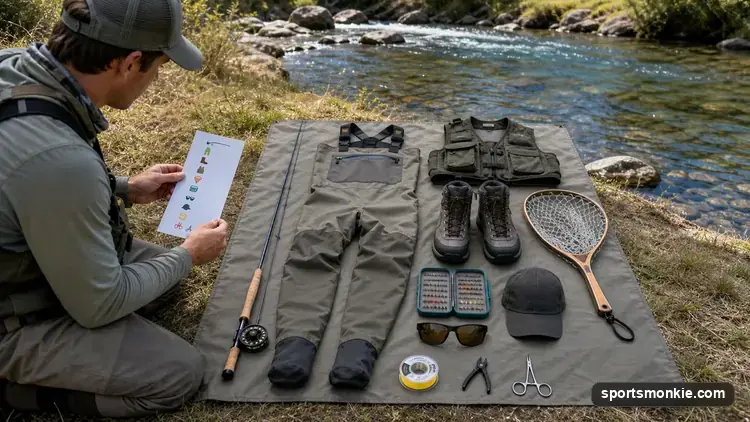
Fly Fishing Gear for Beginners: What You Actually Need
Fly fishing gear for beginners beyond the rod: waders, boots, tools, and a 4-fly starter kit, with real combo prices for the US, UK, AU, and CA.
Bouldering Gear for Beginners
The bouldering gear beginners actually need: climbing shoes, chalk and a brush for the gym, plus a crash pad and more for outdoor bouldering.
What Weight Bowling Ball Should I Use?
A common guideline is a bowling ball about 10% of your body weight, up to the 16 lb max. How to pick the right weight you can actually control.
Beginner Scuba Gear: What to Buy and What to Rent
Beginner scuba gear cost, broken down by what to buy first, what to rent, what to skip, and the Amazon-ready starter kit that makes sense for new divers.
Climbing and Bouldering Gear for Beginners: What You Need
Bouldering gear for beginners: what to rent at the gym, what's worth buying on day one, and a real starter budget from chalk bags to crash pads.