
Field Hockey Positions and Roles Explained
On this page5
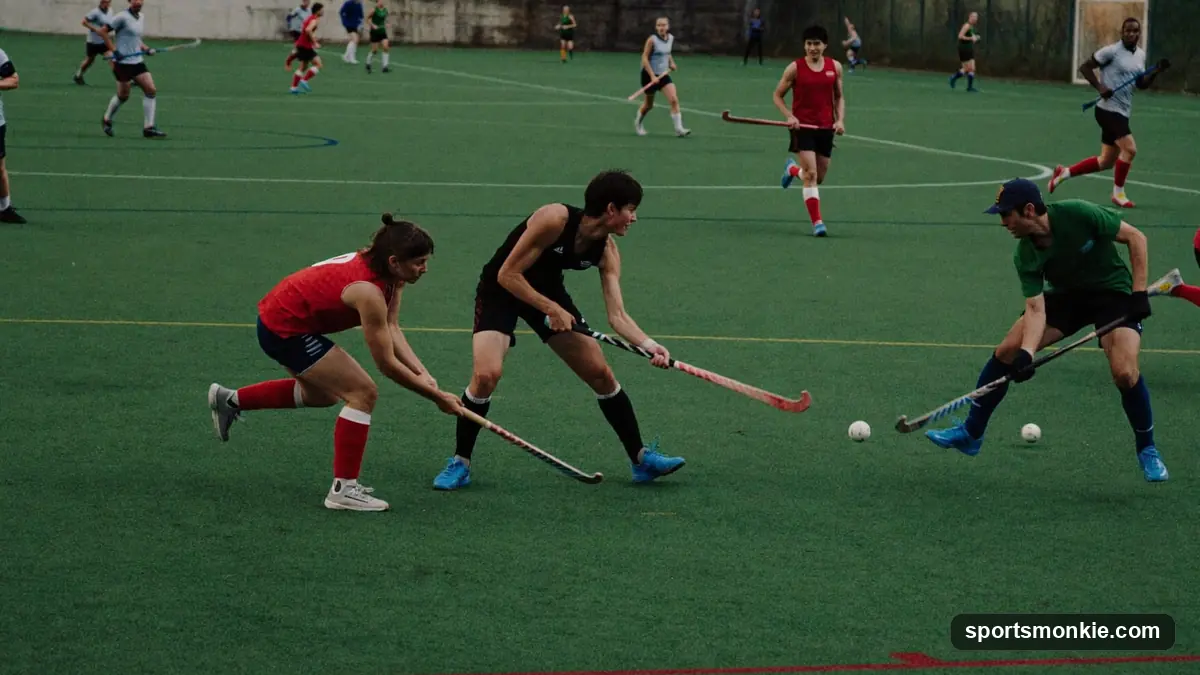
A field hockey team lines up with 11 players: one goalkeeper and ten outfield players divided into defenders, midfielders and forwards. Those ten outfielders are arranged into a formation, and each group has a clear job, from protecting the goal to creating and finishing chances. Only the goalkeeper may use their body and feet, and only inside the shooting circle.
The position names shift a little between countries and eras, older guides say fullbacks and halfbacks where modern coaches say defenders and midfielders, but the roles are the same. Below is what each position does, how the common formations balance the team, and how the set piece that decides so many games, the penalty corner, actually works.
The four groups of positions
Every outfield role falls into one of three bands, with the goalkeeper as a specialist behind them all.
- Goalkeeper: the last line of defense and the only player who can use feet and body to stop the ball, but only inside the circle. Reads the game, commands the defense and starts play after saves.
- Defenders (fullbacks and a sweeper): stop opposition forwards, clear danger and launch attacks from the back. The sweeper sits deepest, sweeping up anything that beats the other defenders.
- Midfielders (halfbacks): the engine room. They link defense to attack, cover the most ground of anyone on the pitch, and are involved in almost every phase.
- Forwards (strikers and wings): create and score. The centre forward leads the line through the middle while wings stretch play down the flanks.
The 11 roles, position by position
Traditional field hockey names each of the eleven spots. This table maps the classic labels to what each player actually does.
| Position | Group | Main job |
|---|---|---|
| Goalkeeper | Goalkeeper | Stop shots, organise defense, restart play |
| Right / left fullback | Defense | Contain wingers, clear the ball wide |
| Centre back / sweeper | Defense | Cover behind the defense, last outfield line |
| Right / centre / left half | Midfield | Link play, press, cover ground box to box |
| Right / left wing | Forward | Stretch the pitch, deliver into the circle |
| Inside forwards | Forward | Support the striker, arrive to finish |
| Centre forward | Forward | Lead the line and finish chances |
The exact split of the ten outfielders is a coaching choice, which is where formations come in.
Common formations
Formations are written from the back forward, listing defenders, then midfielders, then forwards. The classic attacking shape is 4-3-3: four defenders, three midfielders, three forwards. It gives width up front and a solid back line.
A more defensive team might use 3-3-3-1 or 5-3-2, adding bodies at the back and asking the midfield to feed a lone or paired striker. A team chasing a game might flip to a front-heavy shape to flood the circle. The logic mirrors other field sports; if you have read our breakdown of striker and forward positions in soccer, the trade-off between width, numbers and cover will feel familiar.
The penalty corner
The penalty corner is field hockey’s signature set piece and the source of a large share of goals. It is awarded for a defensive foul inside the shooting circle, or for a deliberate foul by the defending team inside their own 23-metre area.
On a penalty corner, one attacker pushes or hits the ball out from a marked spot on the backline. Up to five defenders, including the goalkeeper, must wait behind the backline until the ball is played, while the rest of the defending team stays beyond the halfway line. The attacking team stacks players at the top of the circle. The ball has to travel out of the circle and be stopped, or otherwise controlled, before an attacker can shoot. If that first shot is a hit, it must cross the goal line no higher than the backboard height to count, a safety rule that shapes how teams design their routines.
Because it is so structured, the penalty corner is a rehearsed play with specialist roles: an injector, a stopper, a drag-flicker or hitter, and runners who charge the shot. Defenses counter with their own choreographed rush, with a designated first runner sprinting at the ball the instant it is injected and the rest fanning out to block passing lanes.
Positions shape who takes each of those jobs. The drag-flicker is often a defender or midfielder with a powerful, low release, because a flick can be aimed high and still be legal where a first-time hit cannot. Forwards tend to be the runners crashing the rebound, and the goalkeeper anchors the defensive setup. It is a good example of how a player’s everyday role feeds directly into set-piece responsibilities.
How the positions connect on the pitch
The best field hockey teams do not treat these roles as fixed boxes. Midfielders drop in to make a back three when defending and push up to make a front five when attacking, so the shape breathes with the play. That fluidity is why midfield endurance matters so much and why the centre of the pitch is the hardest place to play.
Field hockey shares a lot of positional DNA with its cousins. If you want to see how the same defend-link-attack structure plays out in a stick sport with a very different tempo, our lacrosse vs field hockey comparison is a good next read, and for the players who have mastered these roles, see the greatest field hockey players.
The short version: 11 players, one keeper and ten outfielders in defense, midfield and attack, arranged in formations like 4-3-3, with the penalty corner as the set piece that turns positioning into goals.
Frequently asked questions
What is the hardest position in field hockey?+
Most players point to central midfield, because it demands the most running, constant transition between defending and attacking, and involvement in nearly every phase of play. Goalkeeper is the hardest specialist role given the reaction speed and courage required, but midfield is the toughest for sheer endurance and decision-making across a full match.
Where do you put your weakest player in field hockey?+
Coaches often place a weaker or less experienced outfield player at a wide defensive or wide forward position, where the space is more contained and mistakes are less likely to lead directly to a goal. It keeps them involved without asking them to control the central corridor, which is where games are usually decided.
What is the easiest position to play in field hockey?+
A wing, either a wide forward or a wide defender, is generally seen as the most straightforward starting role. The responsibilities are more defined and the player mostly works one channel of the pitch rather than reading the whole field, which makes it a common entry point for newer players.
How does a penalty corner work in field hockey?+
A penalty corner is awarded for a defensive foul inside the shooting circle or a deliberate foul within the defending 23-metre area. One attacker pushes the ball out from a spot on the backline while up to five defenders, including the goalkeeper, wait behind the backline. The ball must leave the circle and be stopped before an attacker can shoot.
Sources
Play & tools
Free browser games and tools — no account, no download.
- Play today's Sports Connections — Today's Sports Connections — daily hints, answers, and play the grid.
- Play Guess the NFL Player — A new mystery NFL player every day. Eight guesses, with a clue on each — plus free unlimited mode.
- Explore all our games →
Related guides
Lacrosse vs Field Hockey: Key Differences Explained
Lacrosse vs field hockey: one throws a ball through the air with a netted stick, the other pushes it along the ground. Compare rules, gear, and contact.

11 Greatest Field Hockey Players of All Time, Ranked
Meet the 11 greatest field hockey players ever, ranked by Olympic and World Cup success, individual honors, scoring records, and sustained dominance.
Football Formations and Coverages Explained: The Complete NFL Guide
Football formations and coverages explained: how NFL offenses line up, how defenses answer with zone and man coverage, and why each matchup wins or loses.
What Is an Eligible Receiver in Football?
An eligible receiver is a player allowed to catch a forward pass — the QB, backs, tight ends and the two players on the ends of the line. Interior linemen are ineligible.
Flag Football Positions Explained: 5v5 and 7v7 Roles
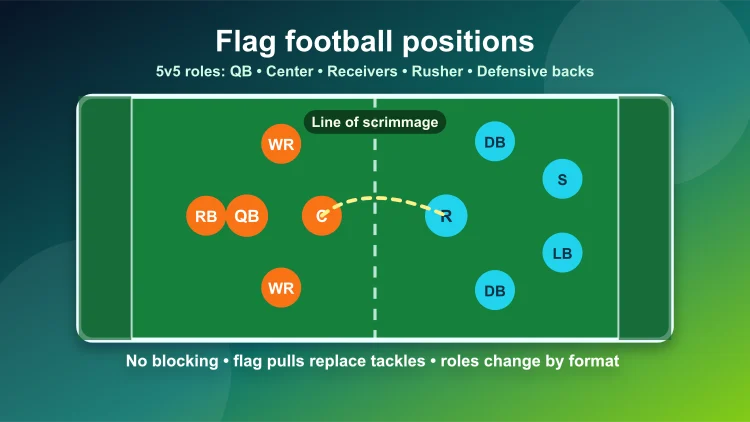
Flag football positions explained for 5v5 and 7v7: quarterback, center, receiver, running back, rusher, defensive back, safety and beginner role fit.
Women's Lacrosse Positions Explained: All 12 Roles
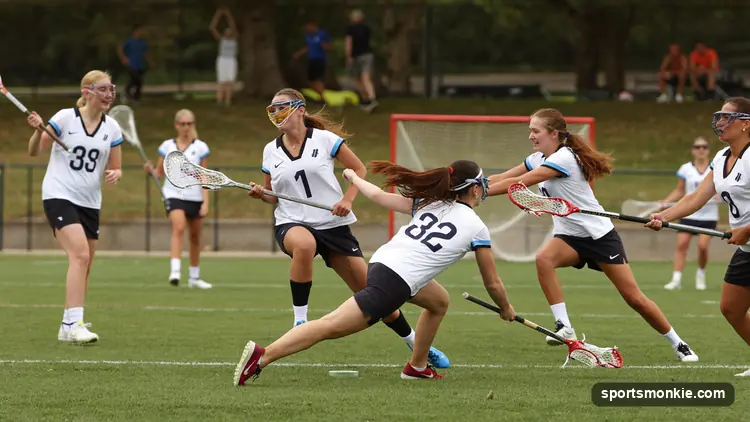
Women's lacrosse fields 12 players a side. Here are all 12 positions — attack, midfield, defense and goalie — with each role and field zone explained.