
Djokovic Calls Rule 'Stupid' After Zverev's Video Review Replays a Point at the China Open
On this page7
- 01What happened during the point Zverev challenged?
- 02Why did Djokovic call the rule stupid?
- 03What did the video review actually show?
- 04Did the replayed point change the match?
- 05Why does the timing of a hindrance claim matter?
- 06What happens next at the China Open?
- 07What happened in the Djokovic-Medvedev semi-final?
Novak Djokovic called a video-review rule “one of the most stupid change of rules that I’ve ever heard in my life” during his China Open quarter-final against Alexander Zverev on Sunday, after Zverev lost a point and then won a replay of it by proving an LED advertising board had changed during his serve. Chair umpire Adel Nour called a let and ordered the point replayed, Djokovic won the replay anyway, and the argument has since become the tournament’s biggest talking point.
What happened during the point Zverev challenged?
Zverev was serving at 1-0, 30-15 in the first set when the sequence unfolded, Tennis365 reports. Djokovic returned the serve, Zverev hooked a forehand into the tramlines and lost the point, and only then did the German go to the umpire, saying an LED board had changed during the point and asking for a video review.
The review backed him. A section of the courtside signage changed during his service motion, Reuters reports, and Nour announced the review result to the crowd before ruling the point be replayed as a let.
Why did Djokovic call the rule stupid?
Djokovic’s objection was timing, not the board. “He served, I played one shot, he played another shot, and then he challenged. Is that okay?” he asked Nour, in quotes reported by TNT Sports. “If he was annoyed by that change there, he would stop after the serve. It doesn’t make any sense.”
His wider point was about where the rule leads. “This must be one of the most stupid change of rules that I’ve ever heard in my life,” he said. “If the player sees there is a hindrance on that shot, he stops immediately. We could play a 30-shot rally, and he can lose the point, and he’s like, ‘okay, I’m going to challenge now.’” Video review in tennis was built for line calls and clear-cut checks, closer to Hawk-Eye in tennis than to a retrospective hindrance claim, and Djokovic is arguing the new use breaks the sport’s oldest convention: play the point, or stop it.
What did the video review actually show?
The footage showed the signage change happened, but not when Zverev missed. Reuters reports the board switched during the rally sequence and had not changed as Zverev struck the forehand he missed, two shots after the serve.
That gap is the whole dispute. Under a strict hindrance reading, a distraction that does not affect the shot should not erase the point. Under the rule as applied, the confirmed board change anywhere in the point was enough for a replay, which is why one camp of fans called the decision correct and another called it a free second chance, Tennis365 reports.
Did the replayed point change the match?
No, and that is part of why the story is about the rule rather than the result. Djokovic won the replayed point, TNT Sports reports, then produced the comeback: beaten 6-4 in the first set, he broke at 5-4 in the second and again at 5-4 in the third to win 4-6, 6-4, 6-4 in two hours and 35 minutes, according to Reuters.
Zverev, the top seed and reigning French Open and US Open champion, hit 19 aces and still lost. Djokovic, playing Beijing for the first time since 2015, extended his unbeaten record at an event he has won six times, the kind of late-career run that keeps him in any conversation about the greatest tennis players of all time.
Why does the timing of a hindrance claim matter?
Because tennis runs on immediate claims. A player who is hindered is expected to stop at once; continuing the rally has always read as acceptance that play was fair. A review system that lets a player bank the point, see whether he wins it, and only then ask for a replay changes the incentive on every close point in the best-of-three format used outside the Grand Slams.
That explainer point is what the source coverage leaves out: the ATP does not need to decide whether Zverev cheated, because he plainly used an allowed procedure. It needs to decide whether the procedure should require an immediate stop, which is a one-line rule fix if the tour agrees with Djokovic.
What happens next at the China Open?
Djokovic faces third seed Daniil Medvedev in Monday’s semi-final, with Alex de Minaur playing Hubert Hurkacz in the other, TNT Sports reports. Win or lose, the review debate follows him there: any LED flicker in that match will now be watched by two players who know exactly what a late claim can buy. The women’s draw at the same event has already lost both of its top seeds, after world No. 1 Elena Rybakina and No. 2 Aryna Sabalenka were knocked out on consecutive days.
For the tour, the next step is quieter. Expect the incident to be raised in player council discussions and, if the rule is clarified, an announcement that hindrance reviews must come before the next shot is played. Until then, Beijing has given every player on tour a worked example of how far the current wording stretches. Zverev’s own week carries a second storyline: with Jannik Sinner out of the Shanghai Masters, the Race to Turin lead and the world No. 1 ranking are both in play.
What happened in the Djokovic-Medvedev semi-final?
It ended in a disqualification, not a rally. Djokovic led Daniil Medvedev 7-5, 5-3 on Monday when Medvedev was disqualified after a ball he hit off the back wall struck a front-row spectator in the eye, sending Djokovic into Tuesday’s final against Alex de Minaur. Medvedev did not argue the default and said the contact was accidental, a defence the ball-abuse rule does not accept once a spectator has been hit.
Frequently asked questions
What happened in the Djokovic vs Zverev match at the China Open?+
In the second game, with Zverev serving at 1-0, 30-15 in the first set, Zverev missed a forehand after Djokovic returned his serve, then asked chair umpire Adel Nour for a video review, Tennis365 reports. The review showed a courtside LED board changed during the point, Nour called a let, and the point was replayed.
Why did Djokovic call the rule stupid?+
Djokovic argued that a hindered player must stop immediately, not finish the point and challenge only after losing it, according to TNT Sports. 'We could play a 30-shot rally, and he can lose the point, and he's like, okay, I'm going to challenge now,' Djokovic told the umpire, calling it one of the most stupid rule changes he had heard.
What did the video review actually show?+
The review confirmed that a section of LED signage changed, or went dark, during Zverev's service motion, Reuters reports. Crucially, the change did not coincide with the forehand Zverev missed two shots later, which is why Djokovic argued the point should have stood and why fans remain split on the decision.
Did the replayed point change the result of the match?+
No. Djokovic won the replayed point as well, TNT Sports reports, and went on to beat top seed Zverev 4-6, 6-4, 6-4 in two hours and 35 minutes, according to Reuters. Zverev hit 19 aces, but Djokovic broke at 5-4 in both the second and third sets to complete the comeback in the quarter-final.
What is a let in tennis, and why was one called here?+
A let is a point that is replayed because something outside the players' control interfered, most often a serve clipping the net cord. The umpire treated the LED board change as a hindrance, which carries the same remedy: the point does not count and is played again, rather than being awarded to either player.
Who does Djokovic play next at the China Open?+
Djokovic faces third seed Daniil Medvedev in Monday's semi-final, TNT Sports reports. The other semi-final pairs Alex de Minaur with Hubert Hurkacz. Djokovic, a six-time champion in Beijing playing the event for the first time since 2015, extended his unbeaten record at the tournament with the win over Zverev, Reuters reports.
Have fans and players agreed with Djokovic?+
Opinion is split. Some fans called Zverev's late challenge gamesmanship, while others argued he broke no rule because the umpire confirmed a review was allowed after the point, Tennis365 reports. A third group blamed the umpire for not stopping the point himself the moment the board changed behind the server.
Sources
- TNT Sports: Novak Djokovic blasts 'stupid' rule change in controversial win over Alexander Zverev at China Open
- Reuters via WIXX: Djokovic rallies past Zverev in thriller to reach China Open semi-finals
- Tennis365: 'Huge controversy' - Tennis fans split on 'nuts' Novak Djokovic and Alexander Zverev incident at China Open
- Tennis365: Novak Djokovic complains about 'most stupid rule change' after what Alexander Zverev did at China Open
Play & tools
Free browser games and tools — no account, no download.
- Play today's Sports Connections — Today's Sports Connections — daily hints, answers, and play the grid.
- Play Guess the NFL Player — A new mystery NFL player every day. Eight guesses, with a clue on each — plus free unlimited mode.
- Explore all our games →
Related tennis guides
View all →
Medvedev Disqualified From China Open Semi-Final After Ball Hits Spectator in the Eye
Daniil Medvedev was disqualified from the China Open semi-final against Novak Djokovic after a rebounding ball he hit struck a front-row spectator in the eye.
Hurkacz Beats Djokovic for the First Time in Nine Meetings as the Beijing Toll Catches Up in Shanghai
Hubert Hurkacz beat Novak Djokovic 6-4 6-3 in Shanghai, his first win in nine meetings, three days after Djokovic's Beijing title ended in a retirement.

Coco Gauff Calls Out 'Insane' Racist Abuse After Replayed Point at the China Open
Coco Gauff said she received an 'insane' amount of racist abuse online after a flickering LED board got a point replayed in her China Open win over Sun Xinran.
Zverev Says His Ball Bouncing Went to an Extreme as the Umpire Tells Him to Watch the Clock
Alexander Zverev, warned about the shot clock in Shanghai, says the ball bouncing that reportedly passed 12,000 at the US Open is a habit he is trying to cut.
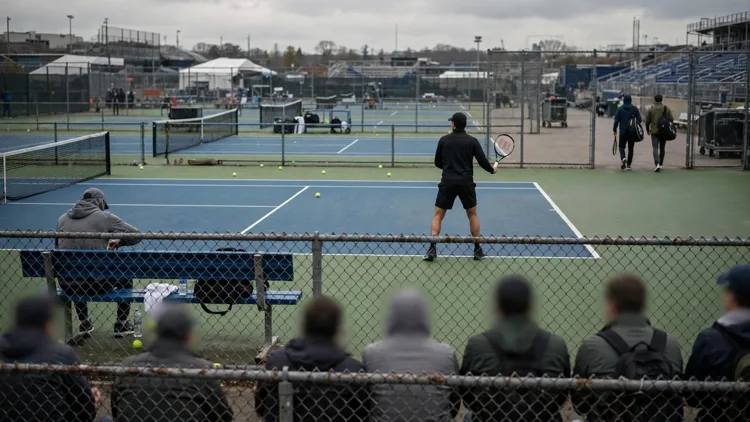
Fans Accuse Zverev of Taking Shelton and Hewitt's Practice Court in Shanghai
Spectators in Shanghai say Alexander Zverev arrived late to his practice court and stayed into Ben Shelton and Cruz Hewitt's slot. Zverev has now dismissed the claims on social media.
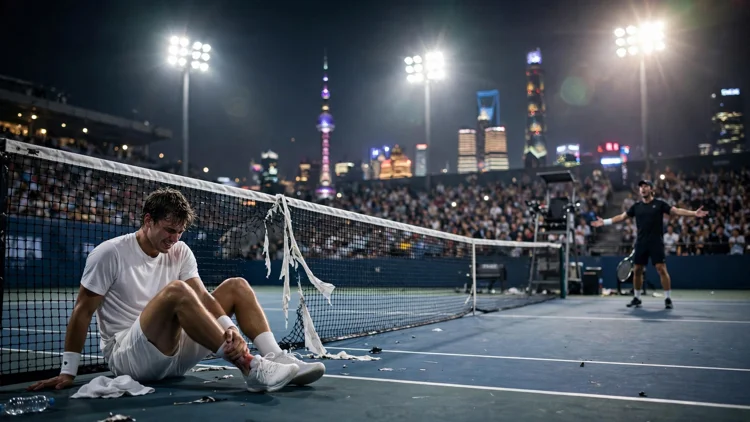
Wu Yibing Says Zverev's Shanghai Behaviour Was Unnecessary and Broke the Rhythm
Wu Yibing criticised Alexander Zverev's falls, lighting complaints and net-tape fiddling after their Shanghai match, calling them rhythm-breaking and unnecessary.