
China Open Loses Its Top Two Seeds as Rybakina and Sabalenka Fall on Consecutive Days
On this page5
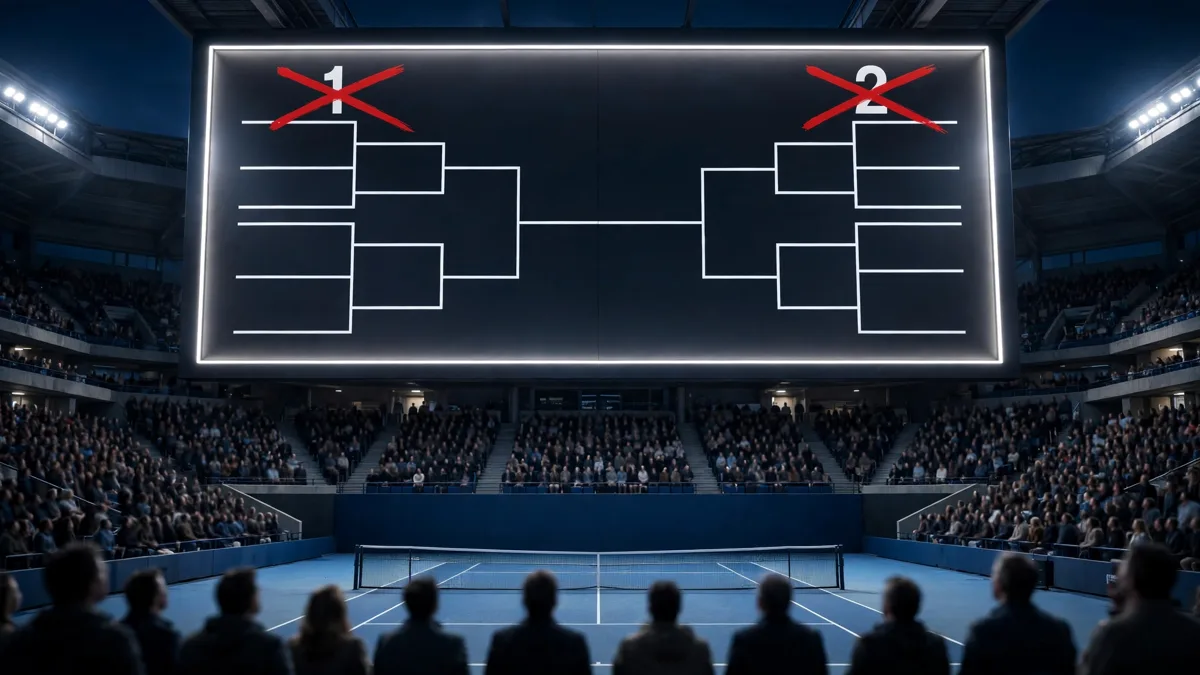
The China Open has lost both of its top two women’s seeds on consecutive days, leaving the Beijing draw without a No. 1 or No. 2 in the round of 16 for the first time since 2015. World No. 1 Elena Rybakina lost her first match since taking the top ranking, beaten by the world No. 118 on Saturday, and world No. 2 Aryna Sabalenka followed her out on Sunday, losing 6-4, 6-3 to 20-year-old Nikola Bartunkova in the third round, IANS reports. The two beaten finalists from last month’s US Open are both gone inside the opening week.
What happened to world No. 1 Elena Rybakina?
She lost to a player ranked 117 places below her. Rybakina, who replaced Sabalenka as world No. 1 last month after beating her in the US Open final, took the opening set against Russia’s Alina Charaeva, then lost 3-6, 6-4, 6-3 in two hours and eleven minutes.
The oddity inside the upset is the record it set. Charaeva became the lowest-ranked player ever to beat a reigning women’s world No. 1 after losing the first set, a mark that stretches back to the introduction of the WTA rankings in 1975, according to tournament reporting. Rybakina hit seven double faults, and Charaeva converted five of her eight break point chances. Seeding is supposed to protect the top players from exactly this kind of opening match; Rybakina’s protection lasted one match, because as the top seed she had not played before the second round.
How did Nikola Bartunkova beat Aryna Sabalenka?
By never giving her serve away. Bartunkova, the Czech world No. 34, broke Sabalenka three times and did not lose her own serve once in a 6-4, 6-3 win that took one hour and 35 minutes, IANS reports. The match turned in the sixth game of the first set, when Bartunkova saved five break points to hold for 4-2, and she finished with four aces, Al Jazeera reports.
A frustrated Sabalenka tossed her racquet when broken in the second set and netted a return on the first match point. “I focused on myself, to be calm. She’s a legend, she’s a Grand Slam champion. I’m really happy that I won the match,” Bartunkova said. It was her second win over a Top 10 player, after beating Belinda Bencic at this year’s Australian Open, IANS reports.
What records and oddities do the two upsets set?
Three, stacked together. First, neither top seed reached the round of 16: the last time that happened at this tournament was 2015, when Simona Halep and Petra Kvitova held the top two seedings, IANS reports. Second, Charaeva’s win is the lowest-ranked comeback ever recorded against a reigning world No. 1. Third, the pair who contested the US Open final last month, the two most in-form players in the sport on paper, won one match between them in Beijing.
The men’s draw at the same event supplied its own talking point a day later, when Novak Djokovic called a video-review rule ‘stupid’ during his win over Alexander Zverev. Beijing’s week has been defined by its officials and its upsets, not by its favourites.
Why does Sabalenka keep stalling in Beijing?
Because this tournament has never bent for her. Sabalenka has not gone past the quarter-finals in five main-draw appearances at the China Open, IANS reports, a record that sits oddly beside her four Grand Slam titles and her hard-court wins elsewhere. This year also continues a longer drought: she won Indian Wells and Miami at the start of 2026 but has not added a title since, despite reaching the US Open final last month.
Bartunkova’s defence exposed the pattern. Sabalenka created five break points in a single game of the first set and took none of them, and a player who cannot convert pressure in Beijing keeps handing matches to opponents willing to absorb it.
What does the double exit do to the women’s draw?
It opens it to everyone left. Bartunkova plays Austria’s Sinja Kraus next for a quarter-final place, Al Jazeera reports, and fifth seed Mirra Andreeva, the French Open champion, is now one of the highest-ranked players remaining after beating Polina Kudermetova 6-4, 6-1.
The ranking question also sharpens. Rybakina took the No. 1 spot from Sabalenka only last month, and an opening-match defeat in her first event as No. 1 hands Sabalenka an immediate, if unlikely, route back: she would have needed a deep Beijing run to take it, and instead matched Rybakina’s early exit almost exactly. Both women leave Beijing with the ranking race exactly where the US Open left it, and a WTA 1000 event with no top-two seed in its second week. Rybakina’s swing later took her out of Wuhan with a foot injury, and her return in Ningbo lasted 30 minutes before Polina Kudermetova retired at 5-0 to put her in the quarterfinals.
Frequently asked questions
Who knocked Elena Rybakina out of the China Open?+
World No. 118 Alina Charaeva beat Rybakina 3-6, 6-4, 6-3 in the second round on Saturday, in Rybakina's first match as world No. 1. Charaeva became the lowest-ranked player to beat a reigning women's world No. 1 after losing the opening set since the WTA rankings were introduced in 1975, according to tournament reporting.
Who beat Aryna Sabalenka at the China Open?+
Nikola Bartunkova, the 20-year-old Czech ranked world No. 34, beat Sabalenka 6-4, 6-3 in the third round on Sunday in one hour and 35 minutes, IANS reports. Bartunkova broke serve three times, did not lose her own serve, and saved five break points in one game of the first set for the second Top 10 win of her career.
When did the China Open last lose both top seeds this early?+
Not since 2015, IANS reports. That year top seed Simona Halep and second seed Petra Kvitova also failed to reach the round of 16 in Beijing. This year the exits came on consecutive days, with Rybakina losing her opening match on Saturday and Sabalenka falling in the third round on Sunday.
Why was Rybakina's defeat such a shock?+
It was her first match since replacing Sabalenka as world No. 1 last month, weeks after beating Sabalenka in the US Open final. She won the first set against Charaeva, then committed seven double faults as the world No. 118 recovered to win in two hours and eleven minutes, according to tournament reporting from Beijing.
What is Sabalenka's record at the China Open?+
Poor, by her standards. Sabalenka has never gone past the quarter-finals in Beijing in five main-draw appearances, IANS reports. This defeat also continues a title drought stretching back to her wins at Indian Wells and Miami at the start of 2026, despite reaching last month's US Open final.
Who does Nikola Bartunkova play next in Beijing?+
Bartunkova faces Austria's Sinja Kraus in the round of 16, Al Jazeera reports. Kraus advanced by beating Dayana Yastremska 6-1, 6-4. With both top seeds out, fifth seed and French Open champion Mirra Andreeva is among the highest-ranked players left in the women's draw after her straight-sets win over Polina Kudermetova.
Sources
- IANS: Sabalenka stunned by Bartunkova in China Open third round
- Al Jazeera via Bytes Europe: Sabalenka, Rybakina handed shock defeats at China Open
- Town Press: China Open draw blown open as Rybakina and Sabalenka crash out
- Sky Sports via Classic FM: Sabalenka suffers shock Beijing exit a day after world No. 1 Rybakina was knocked out
Play & tools
Free browser games and tools — no account, no download.
- Play today's Sports Connections — Today's Sports Connections — daily hints, answers, and play the grid.
- Play Guess the NFL Player — A new mystery NFL player every day. Eight guesses, with a clue on each — plus free unlimited mode.
- Explore all our games →
Related tennis guides
View all →
Coco Gauff Calls Out 'Insane' Racist Abuse After Replayed Point at the China Open
Coco Gauff said she received an 'insane' amount of racist abuse online after a flickering LED board got a point replayed in her China Open win over Sun Xinran.
Medvedev Disqualified From China Open Semi-Final After Ball Hits Spectator in the Eye
Daniil Medvedev was disqualified from the China Open semi-final against Novak Djokovic after a rebounding ball he hit struck a front-row spectator in the eye.
Djokovic Calls Rule 'Stupid' After Zverev's Video Review Replays a Point at the China Open
Novak Djokovic called a video-review rule 'stupid' after Alexander Zverev won a replayed point over an LED board change at the China Open in Beijing.
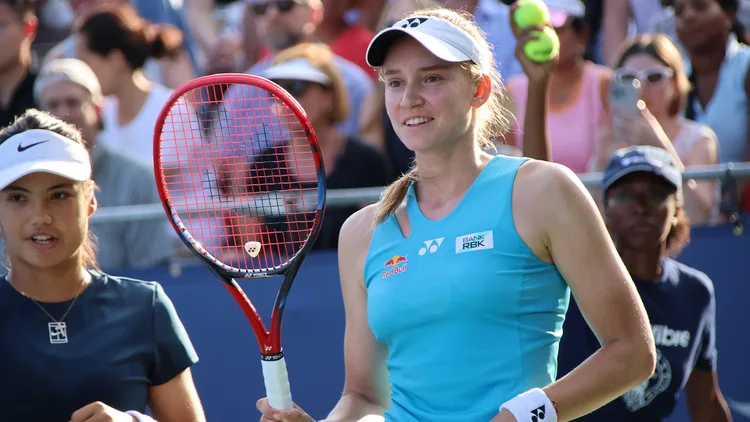
Rybakina's Ningbo Return Lasts 30 Minutes as Kudermetova Retires at 5-0
Elena Rybakina reached the Ningbo quarterfinals in 30 minutes on her return from injury after Polina Kudermetova retired at 5-0. Katarzyna Kawa is next.
Eva Lys Ends Her 2026 Season Early to Focus on Her Health and Change Her Treatment
Eva Lys announced she is ending her 2026 season early to focus on her physical and mental health and change the arthritis treatment she has used for over six years.
World No. 170 Sonay Kartal Becomes the Lowest-Ranked WTA 1000 Finalist in Wuhan
Sonay Kartal, ranked 170 and in her second event back from a spinal stress fracture, beat Jelena Ostapenko from 4-1 down in both sets to become the lowest-ranked WTA 1000 finalist since 2009.