
Best Cricket World Cup Matches of All Time

On this page11
- 01The greatest Cricket World Cup matches at a glance
- 02Australia v South Africa, 1999 semi-final (Edgbaston)
- 03England v New Zealand, 2019 final (Lord's)
- 04India v West Indies, 1983 final (Lord's)
- 05India v Sri Lanka, 2011 final (Mumbai)
- 06Sri Lanka v Australia, 1996 final (Lahore)
- 07Australia v India, 2023 final (Ahmedabad)
- 08How we ranked these matches
- 09At-a-glance: the six classics
- 10The ties that changed the rulebook
- 11Why the debate never fully settles
Placement rewards three things in order: how late the result stayed undecided, what the match changed (a first title, a rule, a country's relationship with the game), and the size of the stage. A tense final outranks a tense group game; a match that rewrote the rulebook outranks one that only thrilled.
The greatest Cricket World Cup matches at a glance
| Rank | Match | Why it stands out |
|---|---|---|
| 1 | Australia v South Africa, 1999 | Semi-final tie decided by prior position |
| 2 | England v New Zealand, 2019 | Tied final and tied Super Over |
| 3 | India v West Indies, 1983 | World Cup-defining upset |
| 4 | India v Sri Lanka, 2011 | Home champion in Mumbai |
| 5 | Sri Lanka v Australia, 1996 | A new ODI blueprint |
| 6 | Australia v India, 2023 | Host favorite stopped in final |
- The untouchable tie
Australia v South Africa, 1999 semi-final (Edgbaston)
This is the match nearly every cricket writer names first, and it earns the top spot over the 2019 final because the drama was pure sport, not a tiebreak technicality. Both sides finished level on 213, so the game was a genuine tie; Australia went through only because they had placed above South Africa in the Super Six stage.
The final over is cricket's most-replayed collapse. Needing one run off four balls with a wicket in hand, Lance Klusener drove and set off; Allan Donald, ball-watching, dropped his bat and never ran. Damien Fleming rolled the ball to Adam Gilchrist, who broke the stumps. ESPNcricinfo and The Cricket Monthly have both ranked it the greatest ODI ever played.
Stage: semi-final · Result: tied 213-213, Australia advanced · Defining moment: the Donald run-out
- The rulebook-breaker
England v New Zealand, 2019 final (Lord's)
The only reason 2019 sits second rather than first is the very thing that makes it unforgettable: it was settled by a countback, not a bat. England and New Zealand tied on 241 in regulation, tied again at 15 apiece in the Super Over, and England were crowned on 26 boundaries to New Zealand's 17. Ben Stokes anchored the chase with an unbeaten 84.
Martin Guptill's run-out on the Super Over's final ball sealed England's first World Cup. The finish was so contested — including a deflected overthrow that gifted England six runs late in the chase — that the ICC scrapped boundary countback within months. A great match that forced a rule change lands above every clean win below it.
Stage: final · Result: tied twice, England won on boundaries · First: England's maiden World Cup
- The great upset
India v West Indies, 1983 final (Lord's)
Ranked third because no result on this list changed a cricketing nation more. India, in their first final, were bowled out for 183 against a West Indies side chasing a third straight title with the most feared pace attack of the era. The total looked nowhere near enough.
Then Kapil Dev's bowlers defended it. Madan Lal and Mohinder Amarnath tore through the chase, and Kapil's back-pedalling catch to remove Viv Richards flipped the game; the West Indies folded for 140 and India won by 43 runs. Amarnath took the Man of the Match award, and the win is widely credited with turning India into the sport's commercial engine.
Stage: final · Result: India won by 43 runs · Legacy: launched India's ODI obsession
- The homecoming
India v Sri Lanka, 2011 final (Mumbai)
This final ranks above 1996 and 2023 for one reason: a host nation ending a 28-year wait in front of its own crowd, closed out by the tournament's defining innings. Chasing Sri Lanka's 274, India slipped to 114 for 3 before captain MS Dhoni promoted himself and made an unbeaten 91 off 79 balls.
Dhoni finished it with a six over long-on to win by six wickets. Gautam Gambhir's 97 built the platform, Yuvraj Singh took Player of the Tournament, and Ravi Shastri's "India lift the World Cup after 28 years" call remains one of cricket's most-replayed pieces of commentary. For anyone drilling that finishing power, our sweep-shot guide breaks down the mechanics.
Stage: final · Result: India won by 6 wickets · Defining moment: Dhoni's winning six
- The blueprint
Sri Lanka v Australia, 1996 final (Lahore)
Fifth because its influence outlasted its drama. Australia posted 241 for 7 with Mark Taylor top-scoring on 74, but Sri Lanka chased it down to win by seven wickets with 22 balls to spare, becoming the first host nation to lift the trophy and the first side to win a final batting second.
Aravinda de Silva decided it, following 3 for 42 with an unbeaten 107 to take Player of the Match. Sri Lanka's aggressive use of the top order and chase-first approach became a template later champions copied — the switch-hitting, boundary-hunting style you can trace forward in our switch-hit guide.
Stage: final · Result: Sri Lanka won by 7 wickets · First: host nation to win, and to win chasing
- The silencer
Australia v India, 2023 final (Ahmedabad)
The most recent classic ranks sixth because it was more clinical than close — but silencing an unbeaten host in front of roughly 100,000 fans earns its place. India had won all ten prior games; Australia bowled them out for 240 and controlled the chase from the middle overs.
Travis Head's 137 off 120 balls, with a rebuilding stand alongside Marnus Labuschagne (58 not out), took Player of the Match and delivered Australia a record-extending sixth title. It confirmed the pattern from our ranking of the most successful cricket teams: Australia wins the games that matter most.
Stage: final · Result: Australia won by 6 wickets · Record: Australia's sixth World Cup title
Reader interaction
Build your ranking
Drag the names into the order you think is right — or use the arrows — then submit to see how your list compares with everyone else's.
- Australia v South Africa, 1999 semi-final (Edgbaston)
- England v New Zealand, 2019 final (Lord's)
- India v West Indies, 1983 final (Lord's)
- India v Sri Lanka, 2011 final (Mumbai)
- Sri Lanka v Australia, 1996 final (Lahore)
- Australia v India, 2023 final (Ahmedabad)
Audience ranking
How everyone ranked them
Built from reader rankings using position-based points.
The cards above rank the matches; this section explains the method behind the order, sets out the results side by side, and covers the ties that ended up changing cricket’s rulebook.
How we ranked these matches
Three tests decide the order. First, how late the result stayed live: a game undecided on the final ball beats one settled with overs to spare, which is why two ties top the list. Second, consequence — a match that produced a first-ever title, ended a decades-long drought, or forced a rule change carries more weight than one that only entertained. Third, the stage, which is why a semi-final and five finals fill the list rather than group-stage classics like the 2011 Bengaluru tie.
Those tests can pull against each other, and where they do we favor consequence. The 2023 final was more one-sided than the 1996 or 2011 finals, but a home team’s unbeaten run ending in front of a six-figure crowd still clears the bar. The 1983 final was not especially close on the scoreboard, yet few results reshaped a cricketing nation more.
At-a-glance: the six classics
The table orders the matches by year for quick reference. Every result is confirmed to 2026.
| Year | Match | Stage | Venue | Result |
|---|---|---|---|---|
| 1983 | India v West Indies | Final | Lord’s, London | India won by 43 runs |
| 1996 | Sri Lanka v Australia | Final | Lahore | Sri Lanka won by 7 wickets |
| 1999 | Australia v South Africa | Semi-final | Edgbaston | Tied; Australia advanced |
| 2011 | India v Sri Lanka | Final | Mumbai | India won by 6 wickets |
| 2019 | England v New Zealand | Final | Lord’s, London | Tied; England won on boundaries |
| 2023 | Australia v India | Final | Ahmedabad | Australia won by 6 wickets |
The ties that changed the rulebook
Two of the six matches were genuine ties, and together they explain how the World Cup now settles deadlocks. In 1999, before Super Overs existed, a tied knockout was broken by tournament standing, so Australia advanced on their higher Super Six placing despite not winning the game. That mechanism felt harsh but was at least announced in advance.
The 2019 final exposed the next iteration. A tied match went to a Super Over, the Super Over also tied, and England won on boundary countback — a rule most fans had never heard of. The backlash was immediate, and the ICC replaced countback with repeated Super Overs for finals and semi-finals. The lesson threaded through both games: the closer the World Cup’s biggest matches get, the more the tiebreaker itself becomes the story.
Why the debate never fully settles
There is no fixed answer to “greatest,” because the tests above weigh differently depending on who is watching. An Australian rates 1999 and 2023; an Indian fan holds 2011 or 1983 above everything; a Sri Lankan points to 1996 as the night the sport’s balance of power shifted. The through-line is that each match on this list is remembered for one exact moment — a dropped bat, a boundary count, a six into the Mumbai night — rather than a scoreline. For more on the officials who adjudicated these finishes, see our look at the best cricket umpires.
Frequently asked questions
Has any Cricket World Cup match besides 1999 and 2019 ended in a tie?+
Yes. Ties are rare but not unique to those two games. The 2003 group meeting between Sri Lanka and South Africa finished level after a Duckworth-Lewis misread, and the 2007 Ireland-Zimbabwe group game tied at 221 apiece. The most famous besides Edgbaston is the 2011 India-England group thriller in Bengaluru, where both sides reached 338. The 1999 semi-final and 2019 final remain the only knockout ties.
Why is the boundary countback rule no longer used to decide World Cup finals?+
The 2019 final result was so contested that the ICC abolished boundary countback within months. Under the current rules, if a semi-final or final is tied and the Super Over is also tied, teams keep playing repeated Super Overs until one side wins outright. Had those rules applied in 2019, England and New Zealand would have played another Super Over rather than England winning on the number of boundaries hit across the match.
Which players have scored a century in a men's World Cup final?+
Seven batters have made a hundred in a men's ODI World Cup final: Clive Lloyd (1975), Viv Richards (1979), Aravinda de Silva (1996), Ricky Ponting (2003), Adam Gilchrist (2007), Mahela Jayawardene (2011) and Travis Head (2023). Jayawardene's 103 not out is the notable one on the losing side, scored for Sri Lanka in the final India chased down in Mumbai. Head's 137 in 2023 is the most recent.
How many times has the host nation won the Cricket World Cup?+
A host or co-host has lifted the trophy on their own soil four times. Sri Lanka did it as a co-host in 1996, India as a co-host in 2011, Australia as a co-host in 2015, and England as sole host in 2019. Most hosts have fallen short: India lost the 2023 final at home to Australia, and South Africa (2003) and the West Indies (2007) both exited without reaching their home finals.
Are these matches from the same tournament as the T20 World Cup?+
No. Every match on this list comes from the 50-over ODI World Cup, cricket's original global tournament, first held in 1975. The T20 World Cup is a separate, shorter competition launched in 2007, with its own list of classic finishes. When cricket fans say 'the World Cup' without qualification, they usually mean this 50-over event, which is why the greatest-match debate centers on games like Edgbaston 1999 and Lord's 2019.
Why do experts rank the 1999 tie above the 2019 final?+
Both are routinely called the greatest ODI ever, but the 1999 tie usually edges it because the drama was decided on the field, not by a tiebreaker. Edgbaston ended on a run-out with the scores level and no artificial rule needed to separate the sides. The 2019 final required a Super Over and then a boundary countback, plus a disputed overthrow, so purists view its finish as thrilling but flawed. It is a close, subjective call.
Sources
Play & tools
Free browser games and tools — no account, no download.
- Play today's Sports Connections — Today's Sports Connections — daily hints, answers, and play the grid.
- Play Guess the NFL Player — A new mystery NFL player every day. Eight guesses, with a clue on each — plus free unlimited mode.
- Explore all our games →
Related cricket guides
View all →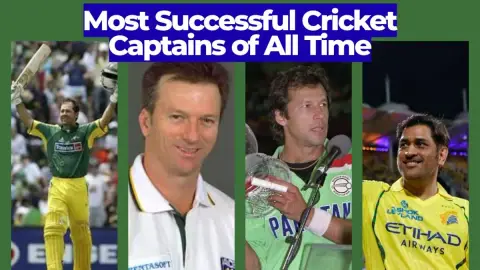
Most Successful Cricket Captains of All Time
The 12 most successful cricket captains ever, ranked by ICC trophies won and win records — from MS Dhoni's white-ball treble to Graeme Smith's Test mark.
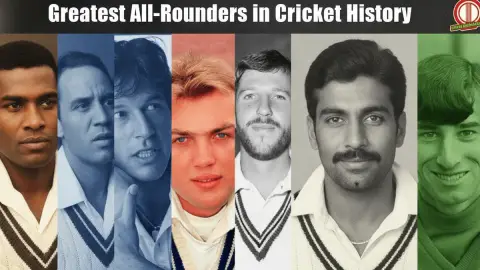
Greatest All-Rounders in Cricket History, Ranked
The 12 greatest all-rounders in cricket history, ranked from Garfield Sobers to Ben Stokes, each with the Test batting and bowling numbers that back the case.
Best Cricket Coaches Ever: 12 Greatest Ranked (2026)
John Buchanan leads our best cricket coaches ranking. See the all-time top 12 plus the 2026 cases for Gautam Gambhir, Andrew McDonald and Gary Kirsten.
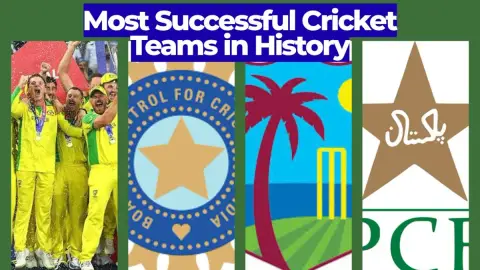
Most Successful Cricket Teams in History: The All-Time Rankings
Every major cricket nation ranked by ICC titles: Australia's 10 trophies, the West Indies dynasty, India's seven, and South Africa's 2025 WTC breakthrough.
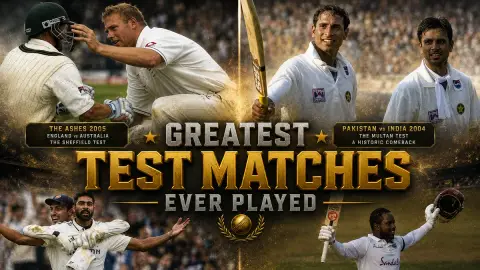
Greatest Test Matches Ever Played in Cricket
The greatest Test matches in cricket history, games remembered for drama, stunning reversals, and redefining what was possible in five-day cricket.
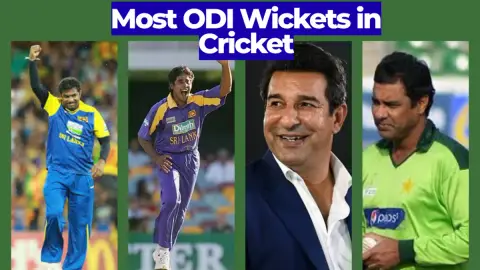
Most ODI Wickets in Cricket: All-Time Records and Top Bowlers
Muttiah Muralitharan holds the record for most ODI wickets ever. See the all-time leaders, what makes an elite ODI bowler, and key ODI bowling milestones.