
Best Cricket Coaches Ever: 12 Greatest Ranked (2026)
On this page18
- 01The greatest cricket coaches at a glance
- 02John Buchanan
- 03Gary Kirsten
- 04Duncan Fletcher
- 05Andy Flower
- 06Bob Woolmer
- 07Trevor Bayliss
- 08Darren Lehmann
- 09Rahul Dravid
- 10John Wright
- 11Justin Langer
- 12Ravi Shastri
- 13Andrew McDonald
- 14How We Ranked the Coaches
- 15What Separates a Great Cricket Coach
- 16Who is the best cricket coach in the world right now?
- 17Coach or Captain: Who Drives the Result?
- 18At a Glance: Titles and Turnarounds
Ranking weighs three things: global titles won as head coach, the size of the turnaround (inheriting a struggling side counts far more than inheriting champions), and lasting influence on coaching methods. Titles carry the most weight; a coach who reshaped the job can outrank one with a busier trophy cabinet.
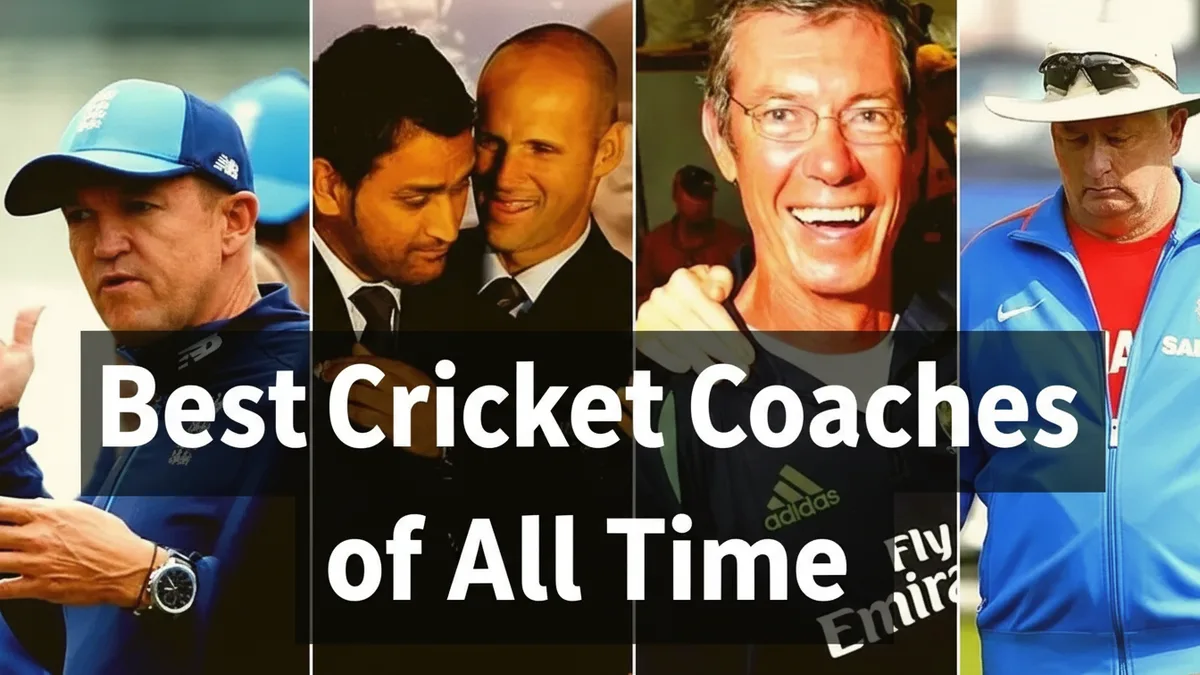
The greatest cricket coaches at a glance
| Rank | Coach | Strongest coaching case |
|---|---|---|
| 1 | John Buchanan | Australia's 2003 and 2007 World Cups |
| 2 | Gary Kirsten | India's 2011 World Cup turnaround |
| 3 | Duncan Fletcher | Modern analysis pioneer |
| 4 | Andy Flower | England's No. 1 Test rise |
| 5 | Bob Woolmer | Methods that changed the profession |
| 6 | Trevor Bayliss | England's white-ball transformation |
| 7 | Darren Lehmann | Australian culture reset |
| 8 | Rahul Dravid | Elite development pipeline |
- Dynasty builder
John Buchanan
Buchanan coached Australia to back-to-back ODI World Cups in 2003 and 2007 and oversaw a Test side that put together a world-record 16 consecutive wins. No other coach on this list sustained dominance across formats for as long: he ran the team from October 1999 to the 2007 World Cup, and Australia finished nearly every season of that span ranked first.
He ranks above Gary Kirsten because his case rests on eight years of results, not one tournament. Note the common myth: Australia's 1999 World Cup was won under Geoff Marsh, whom Buchanan replaced that October. His data-heavy, deliberately confrontational style drew pushback from senior players, but the record — the strongest era in the most successful cricket teams history — settled the argument.
Team: Australia · Titles: 2003 & 2007 World Cups · Defining feat: record 16-Test win streak · Tenure: 1999–2007
- Two-nation architect
Gary Kirsten
Kirsten took a talented but underachieving India and delivered the 2011 World Cup on home soil inside three years, then took South Africa to the No. 1 Test ranking in 2012 by winning in England. Building two different national teams into world-beaters is rarer than a single title run, which is why he sits above Duncan Fletcher.
His method was unusually hands-off: he invested in one-to-one relationships and let the captains own the tactics, an approach the 2011 squad credited for the dressing room's calm under enormous home pressure.
Teams: India, South Africa · Titles: 2011 World Cup · Defining feat: two sides to world No. 1 · Style: player-first, low-profile
- Analysis pioneer
Duncan Fletcher
Fletcher ended England's 18-year Ashes wait with the 2005 series win, the first foreign-born coach to take England to that trophy. He rebuilt the side on meticulous opposition analysis and a fitness culture it had lacked, turning perennial underachievers into a team that could beat anyone.
He ranks below Kirsten because he won one global-scale prize to Kirsten's World Cup, but his second act adds weight: after 2007 he coached India to the 2013 Champions Trophy, a second major title built on the same quiet, detail-first preparation.
Teams: England, India · Titles: 2005 Ashes, 2013 Champions Trophy · Defining feat: first foreign England coach to win the Ashes
- Standards setter
Andy Flower
As England's head coach, Flower won three global-scale prizes in quick succession: the 2010 World T20 — England's first world title in any format — plus back-to-back Ashes in 2010 and 2010-11, capped by the side reaching No. 1 in Tests in 2011.
He edges just below Fletcher on the strength of turnaround: Fletcher inherited a weaker base, while Flower took over a side already rebuilt. Flower's demanding, detail-obsessed regime raised fitness and preparation standards that outlasted him, though some players later tied that intensity to England's next Ashes collapse.
Team: England · Titles: 2010 World T20, 2010 & 2010-11 Ashes · Defining feat: England's first ICC world title · Peak: No. 1 in Tests, 2011
- Method innovator
Bob Woolmer
Woolmer changed how the job is done. He brought video analysis, sports science, and structured planning into international cricket when most teams still ran on instinct and net practice, and his coaching manuals shaped a generation that followed.
He ranks above the trophy-heavier coaches below him because his influence outran his silverware: he turned newly readmitted South Africa into 1990s world-beaters, then brought the same discipline to a volatile Pakistan dressing room in the mid-2000s. His career ended abruptly with his death during the 2007 World Cup.
Teams: South Africa, Pakistan · Legacy: pioneered video analysis & sports science · Span: 1990s–2007
- White-ball transformer
Trevor Bayliss
Bayliss inherited an England side still playing cautious ODI cricket after its 2015 group-stage exit and rebuilt it into the aggressive team that won the 2019 World Cup at Lord's on a boundary count. He gave batters license to attack and stayed out of the spotlight, letting captain Eoin Morgan run the tactics.
He also reached two ICC finals with Sri Lanka — the 2009 World T20 and the 2011 World Cup — before the England job. He ranks below Woolmer because his impact was tactical rather than method-defining, but a World Cup won by reinventing a team's entire approach is a rare credential.
Teams: England, Sri Lanka · Titles: 2019 World Cup · Also: 2009 & 2011 ICC finals with Sri Lanka
- Culture reset
Darren Lehmann
Lehmann took over Australia mid-2013 after a chaotic Ashes tour and steadied the side fast, then oversaw a 5-0 home Ashes whitewash that winter and the 2015 ODI World Cup title on home soil — two trophies in under two years.
His relaxed, players-first style was the opposite of Buchanan's clinical approach a decade earlier, proving there is more than one way to get an Australian squad firing. He sits below Bayliss because he inherited more talent and led less of a rebuild.
Team: Australia · Titles: 2015 World Cup, 2013-14 Ashes (5-0) · Style: relaxed, players-first
- Pipeline builder
Rahul Dravid
Dravid built India's talent pipeline before he ran the senior side. He led India to the 2018 Under-19 World Cup and developed a wave of players who graduated to the top team, then took over as head coach in 2021.
After near-misses including the 2023 World Cup final, he delivered the 2024 T20 World Cup, ending an 11-year ICC trophy drought. His process-driven, development-first approach — honed running the junior system — is widely credited for how quickly India's bench strength deepened.
Teams: India U-19, India · Titles: 2018 U-19 World Cup, 2024 T20 World Cup · Defining feat: rebuilt India's player pipeline
- Foundation layer
John Wright
Wright became India's first foreign coach in 2000, taking a side rattled by the match-fixing scandals and, over five years, installing professional fitness and preparation standards it had never had.
He never won a global title, which is why he ranks here rather than higher, but the structural changes he made are widely seen as the groundwork for the successes Kirsten and others later banked. An earlier stint coaching New Zealand gave him a rare dual read on subcontinental and Australasian cricket.
Teams: India, New Zealand · Titles: none global · Defining feat: professionalized Indian cricket's culture, 2000–05
- Crisis manager
Justin Langer
Langer took over Australia in 2018 days after the ball-tampering scandal, charged with rebuilding both results and reputation. He delivered Australia's first-ever T20 World Cup in 2021 alongside a home Ashes retention.
A reportedly strained relationship with senior players ended his tenure in early 2022, and his intense, demanding style — carried over from his career as an opening batter — divided the dressing room. He ranks here because the signature title came inside a short, turbulent tenure rather than a sustained run.
Team: Australia · Titles: 2021 T20 World Cup (Australia's first) · Context: rebuilt post-ball-tampering, exited 2022
- Overseas breakthrough
Ravi Shastri
Shastri coached India from 2017 to 2021 and oversaw the team's first-ever Test series win in Australia (2018-19), then a repeat in 2020-21 — results long considered near-impossible for touring sides. India also reached No. 1 in Tests and the inaugural World Test Championship final in 2021.
His template leaned on an aggressive, fast-bowling-first approach to overseas Test cricket, a philosophy Virat Kohli drove as captain. No global title is why he ranks below the trophy winners above.
Team: India · Peak: No. 1 in Tests, 2021 WTC final · Defining feat: back-to-back Test series wins in Australia
- Active leader
Andrew McDonald
McDonald took over Australia in 2022 and delivered one of the most complete coaching years on record: the 2023 World Test Championship over India at The Oval, then the 2023 ODI World Cup, again over India, in Ahmedabad.
Working alongside captain Pat Cummins, he has kept Australia near the top of every format with low-drama leadership, and Cricket Australia extended his contract through the end of 2027. He is the most successful coach active in the game as of 2026; he ranks 12th only because his body of work is still young next to the legends above.
Team: Australia · Titles: 2023 WTC & 2023 ODI World Cup · Status: head coach through 2027
Reader interaction
Build your ranking
Drag the names into the order you think is right — or use the arrows — then submit to see how your list compares with everyone else's.
- John Buchanan
- Gary Kirsten
- Duncan Fletcher
- Andy Flower
- Bob Woolmer
- Trevor Bayliss
- Darren Lehmann
- Rahul Dravid
- John Wright
- Justin Langer
- Ravi Shastri
- Andrew McDonald
Audience ranking
How everyone ranked them
Built from reader rankings using position-based points.
The list above ranks the coaches. The sections below explain how the order was set, what actually separates a great cricket coach from a competent one, and how much of a result really belongs to the person in the dressing room rather than the eleven on the field.
How We Ranked the Coaches
Three inputs decide the order. Global titles as head coach carry the most weight, because a World Cup or an away Ashes is the clearest test of a program. Turnaround comes next: inheriting a struggling side and making it win counts far more than inheriting a machine and keeping it running, which is why Buchanan’s dynasty and Kirsten’s two-nation rebuild sit above coaches with easier starting points. Method influence is the tiebreaker — Bob Woolmer ranks ahead of several trophy winners because he changed how the job itself is done.
Where records disagreed on framing, we used the version most widely cited by the ICC and ESPNcricinfo. One correction worth flagging: John Buchanan is routinely credited with three straight World Cups (1999, 2003, 2007), but the 1999 title was won under Geoff Marsh. Buchanan’s honest total is two, and he still tops the list on the strength of the surrounding Test dominance.
What Separates a Great Cricket Coach
International coaching goes well past fixing a batting stance. The coaches on this list share four traits:
- Technical range across batting, bowling, and fielding in all three formats
- Man-management that survives egos, form slumps, and dressing-room politics under pressure
- Tactical planning built for specific opponents and conditions, not a fixed template
- Talent identification, spotting and developing players early — much like the sharpest captains read a game in real time
The best combine all four. Woolmer and Wright rank on the third and fourth; Buchanan and Flower on the second and third; Kirsten’s edge was almost entirely man-management.
Who is the best cricket coach in the world right now?
Gautam Gambhir has the strongest recent tournament case in 2026. India won the 2025 Champions Trophy and then the 2026 T20 World Cup under his staff, giving him consecutive senior men’s ICC titles. That does not move him above Buchanan on an all-time list because his head-coaching record is still short, but it does answer the current version of the query.
Andrew McDonald is the closest active all-format rival. Australia won the 2023 World Test Championship and ODI World Cup during his tenure, while his contract runs through 2027. Gary Kirsten also returned to international head coaching with Sri Lanka in April 2026, adding a current assignment to the 2011 World Cup and South Africa No. 1 ranking already central to his historical case.
The distinction is useful: “best right now” rewards recent results, while “greatest of all time” also requires longevity, influence, and success across changing squads.
Coach or Captain: Who Drives the Result?
Coaching influence is real but uneven. A coach shapes culture, preparation, and long-run player development — things that show up across a multi-year tenure rather than a single session. In the moment, though, the captain runs the field. Kirsten deliberately handed tactics to MS Dhoni; Bayliss did the same with Eoin Morgan. The strongest partnerships pair a coach who builds the environment with a captain who owns the eleven, which is why the McDonald–Cummins and Shastri–Kohli pairings recur in any honest accounting of the era.
At a Glance: Titles and Turnarounds
| Coach | Top team(s) | Biggest title | Turnaround led |
|---|---|---|---|
| John Buchanan | Australia | 2003 & 2007 World Cups | Sustained a cross-format dynasty |
| Gary Kirsten | India, South Africa | 2011 World Cup | Two nations to world No. 1 |
| Duncan Fletcher | England, India | 2005 Ashes | Ended England’s 18-year Ashes wait |
| Andy Flower | England | 2010 World T20 | England’s first ICC world title |
| Bob Woolmer | South Africa, Pakistan | — | Modernized method for two nations |
| Trevor Bayliss | England, Sri Lanka | 2019 World Cup | Rebuilt England’s white-ball attack |
| Rahul Dravid | India | 2024 T20 World Cup | Built India’s talent pipeline |
| Andrew McDonald | Australia | 2023 WTC & World Cup | Stabilized a post-scandal side |
For the players these coaches worked with, see the greatest cricketers of all time, and for how the biggest tournaments unfolded, read the best Cricket World Cup matches. Coaching is also technical craft: how to bowl a leg cutter is exactly the kind of skill these staffs teach in the nets.
Frequently asked questions
Who has won the most ODI World Cups as a head coach?+
John Buchanan, with two: Australia's 2003 and 2007 titles. He is often miscredited with a third from 1999, but that trophy was won under Geoff Marsh, whom Buchanan replaced in October 1999. Gary Kirsten (India, 2011), Darren Lehmann (Australia, 2015), and Andrew McDonald (Australia, 2023) each have one ODI World Cup to their name.
Did John Buchanan coach Australia's 1999 World Cup win?+
No. Australia's 1999 World Cup was won under coach Geoff Marsh. Buchanan was appointed on 28 October 1999, several months after that tournament, and went on to win the 2003 and 2007 editions. The frequent claim that he won three straight World Cups is inaccurate; his tally as head coach is two, both at the front of Australia's dominant early-2000s era.
Do the best cricket coaches need to have been great players?+
Not at all. John Buchanan and Trevor Bayliss both had modest first-class careers yet became two of the most successful international coaches ever, largely through structure, analysis, and man-management. Gary Kirsten, Rahul Dravid, and Justin Langer were top international players first. There is no single path: the common thread is what a coach builds, not what they averaged with the bat.
Which coach transformed the most different teams?+
Bob Woolmer is the clearest example. He turned newly readmitted South Africa into a top side through the 1990s, then rebuilt a volatile Pakistan dressing room in the mid-2000s, introducing video analysis and sports-science methods most international teams later adopted. Gary Kirsten (India and South Africa) and Duncan Fletcher (England and India) also succeeded across two nations, but Woolmer's method-level influence traveled furthest.
Who are the most respected active cricket coaches in 2026?+
Gautam Gambhir has the strongest recent ICC-tournament case after India won the 2025 Champions Trophy and 2026 T20 World Cup. Andrew McDonald remains the leading active all-format rival after Australia's 2023 World Test Championship and ODI World Cup titles. Gary Kirsten returned to international head coaching with Sri Lanka in April 2026.
What does a modern cricket head coach actually do?+
A modern head coach owns team culture, tactical planning, and selection input, supported by specialist batting, bowling, fielding, and fitness coaches plus a bank of analysts. The role has grown from running net sessions into managing a large high-performance staff, workloads across three formats, and the form of senior players. Results show up over a multi-year tenure, not in any single match.
Sources
- ESPNcricinfo — John Buchanan profile
- ESPNcricinfo — Gary Kirsten profile
- ESPNcricinfo — Duncan Fletcher profile
- ICC — Rahul Dravid, India Under-19 coach (2018)
- Sky Sports — Andrew McDonald extended to 2027
- ICC — Gautam Gambhir and India's 2026 T20 World Cup win
- ICC — Gary Kirsten appointed Sri Lanka head coach in 2026
Play & tools
Free browser games and tools — no account, no download.
- Play today's Sports Connections — Today's Sports Connections — daily hints, answers, and play the grid.
- Play Guess the NFL Player — A new mystery NFL player every day. Eight guesses, with a clue on each — plus free unlimited mode.
- Explore all our games →
Related cricket guides
View all →
Greatest Cricketers of All Time: The Full Ranked List
Don Bradman's 99.94 average tops our ranked list of the 14 greatest cricketers ever, from Tendulkar and Sobers to Warne, Murali and Kohli, with the stats behind each.
Greatest All-Rounders in Cricket History, Ranked
The 12 greatest all-rounders in cricket history, ranked from Garfield Sobers to Ben Stokes, each with the Test batting and bowling numbers that back the case.
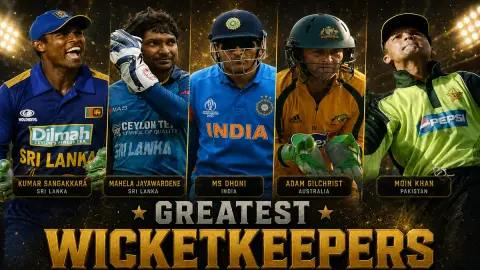
Greatest Wicketkeepers in Cricket History, Ranked
The 13 greatest wicketkeepers in cricket history, ranked and named — Gilchrist, Dhoni, Sangakkara, Boucher, Healy, Knott and more, with their dismissal records.
Greatest Batsmen in Cricket History, Ranked
The 12 greatest batsmen in cricket history ranked — Bradman, Tendulkar, Lara, Richards, Sobers, Kohli and more, with the averages, runs and records behind each name.
Best Spin Bowlers in Cricket History: All-Time Greats
Test cricket's 13 greatest spin bowlers ranked, from Muralitharan and Warne to Lyon and Ashwin — with wickets, signature deliveries, and what sets each apart.
Most Successful Cricket Teams in History: The All-Time Rankings
Every major cricket nation ranked by ICC titles: Australia's 10 trophies, the West Indies dynasty, India's seven, and South Africa's 2025 WTC breakthrough.