
What Is a Cycle in Baseball? Rarity and Records
On this page7
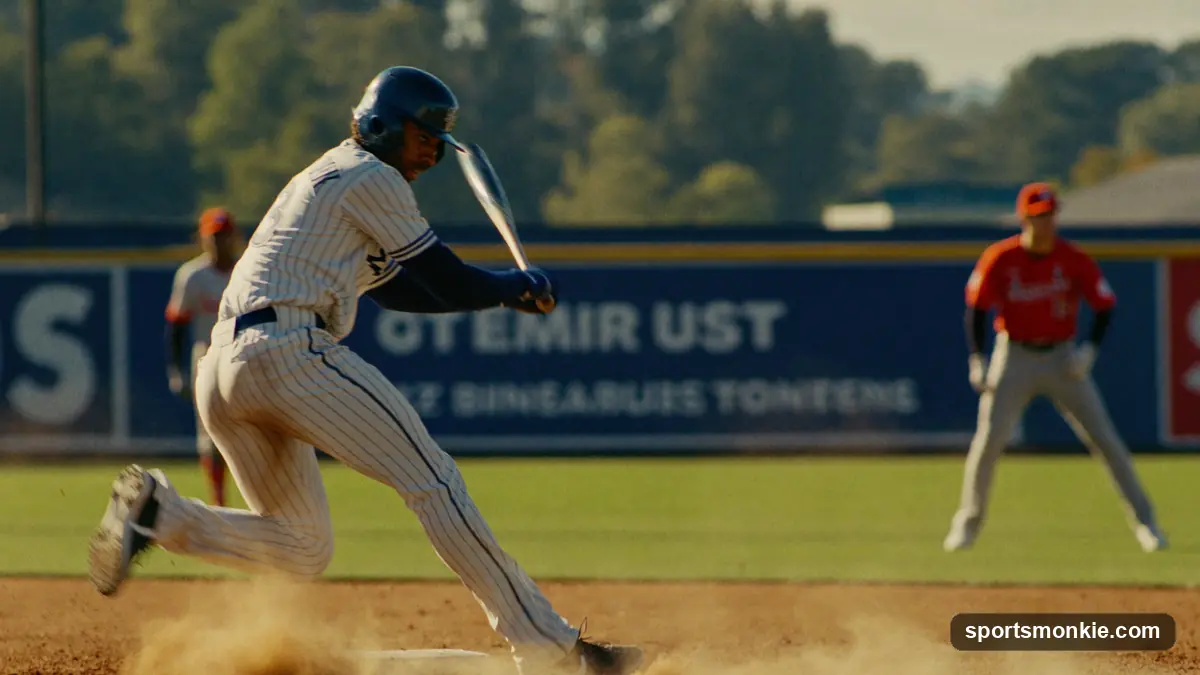
A cycle in baseball is when one batter hits a single, a double, a triple and a home run all in the same game. Collect all four hit types in one game and you have hit for the cycle, one of the sport’s most satisfying individual feats.
It does not need to happen in any set order, and the four hits can be spread across any of a player’s at-bats. What makes it special is not the difficulty of any one hit but the specific combination, and above all the triple, the hardest of the four to come by in the modern game. Here is how rare a cycle really is, how the “natural” version differs, and the records worth knowing.
What counts as a cycle
The definition is strict but simple: in a single game, the same hitter must record at least one of each of the four hit types.
- One single (a one-base hit)
- One double (two bases)
- One triple (three bases)
- One home run (four bases)
Extra hits do not disqualify anything. A player can go 5-for-5 and hit two singles along the way; as long as the double, triple and home run are also in there, it is still a cycle. Walks, hit-by-pitches and sacrifices are irrelevant to it. The one hit that trips up most bids is the triple, because it requires a ball placed just right combined with the speed to reach third base before the throw.
How rare is a cycle in baseball?
Rare enough that it makes national highlight reels. Across all of Major League Baseball since 1882, the cycle has been recorded fewer than 400 times. To put that in perspective, that is a comparable count to the number of no-hitters thrown in the same span.
| Feat | Roughly how often |
|---|---|
| Hitting for the cycle | Fewer than 400 times since 1882 |
| Natural cycle (in order) | Around 14 times in modern history |
| Multiple cycles, one career | A small handful of players |
| Two cycles in one game | Never |
Because the sport plays roughly 2,400-plus games every season, a typical year produces only a small number of cycles, sometimes just one or two, occasionally a few more. That scarcity is the whole appeal.
The natural cycle
A natural cycle is the same feat with an added twist: the hits arrive in ascending order, single first, then double, then triple, then home run. Nothing about a natural cycle helps the team more than a regular one, but the neat progression makes it a collector’s item. It has happened only around 14 times in modern MLB history, which is why it draws even more attention than the standard version.
Why the triple is the sticking point
If you watch a cycle bid late in a game, the player is almost always missing the triple. Home runs, doubles and singles all happen many times per game across the league, but triples have become the rarest hit as ballparks and defenses have changed. A batter needs to drive the ball into a gap or corner and then have the wheels to leg out three bases. That mix of power and speed is exactly why cycles cluster among fast, athletic hitters rather than pure sluggers.
It also explains a quirk of cycle nights: a player sitting on a single, double and home run will sometimes pull up at second base on a ball that could have been a triple, or push for three when a double was the safe play. The chase for that one hit type shapes the late innings.
How a cycle unfolds in a game
There is no minimum or maximum number of at-bats involved. A cycle can be completed in as few as four plate appearances, one perfect turn each of single, double, triple and home run, though that is exceptionally tidy. More often it takes five or six trips to the plate, with an extra single or two mixed in and the missing hit type arriving late.
Because the feat is only recognized once all four boxes are checked, the drama tends to build. Fans and broadcasters start tracking it around the fifth or sixth inning when a player has three of the four, and the ballpark reacts to every extra-base hit. If the outstanding piece is the triple, the tension is highest, because the player essentially needs the right batted ball and a good jump rather than something they can simply decide to do.
Cycles across baseball’s history
The feat spans the entire modern era. It has been recorded by rookies in their first weeks and by veterans late in long careers, by pure speedsters and by lumbering sluggers who somehow legged out the triple. Long-established National League franchises tend to lead the all-time counts simply because they have played more seasons since the 1880s, when the statistic was first tracked. A small number of players have managed it more than once, but no one has ever produced two cycles in the same game, which would demand eight specific hits in a single afternoon.
Cycles in the bigger picture of hitting stats
A cycle is a single-game highlight, not a measure of a career. To judge a hitter over a full season, analysts reach for rate stats instead. Our explainer on what OPS means in baseball covers the on-base-plus-slugging number that captures both power and patience, while what WAR means in baseball shows how a player’s total value is estimated across everything they do. On the pitching side, what ERA means in baseball is the classic companion stat.
Still, the cycle endures because it is vivid and complete. One player, one game, every kind of hit in the book. The short version: a single, a double, a triple and a home run by one batter in one game, in any order, and fewer than 400 hitters have ever done it.
Frequently asked questions
Does a cycle have to be in order?+
No. The four hits can come in any sequence and across any innings. When they happen to land in ascending order (single, then double, then triple, then home run), it is called a natural cycle, which is far scarcer and has been recorded only around 14 times in modern MLB history.
Has anyone hit two cycles in one game?+
No player has hit two full cycles in a single MLB game. A handful have hit for the cycle more than once across their careers, but never twice in the same nine innings, since it would require eight specific hit types in one day.
Which franchise has the most cycles?+
The Pittsburgh Pirates lead all franchises with the most cycles in their history, with more than 20. Long-established National League clubs tend to top these lists simply because they have played the most seasons since the 1880s.
Is a cycle harder than a no-hitter?+
They are similar in frequency, but a cycle depends partly on luck, since a batter cannot choose to hit a triple. The triple is the bottleneck: it is the rarest hit type in the modern game, which is why so many cycle bids fall one three-bagger short.
Sources
Play & tools
Free browser games and tools — no account, no download.
- Play 162-0 — Draft nine and see if your roster can survive a flawless 162-game MLB season.
- Explore all our games →
- Analyze a trade — Compare both sides of a fantasy baseball trade before you accept.
- Run the MLB predictor — Simulate the MLB postseason bracket down to a World Series champion.
- Open the ERA calculator — Work out earned run average from earned runs and innings pitched — handles the .1/.2 thirds convention.
- Explore all our free sports tools →
Related baseball guides
View all →
What Is the Mendoza Line in Baseball?
The Mendoza Line is a .200 batting average, the informal benchmark for poor hitting in baseball. Its origin, meaning and use beyond sport, explained.
What Is the Designated Hitter (DH) in Baseball?
The designated hitter bats in place of the pitcher and never plays the field. Since 2022 the universal DH applies in both the American and National Leagues.
What Is a Bullpen Game in Baseball?
What is a bullpen game? A team uses a chain of relief pitchers instead of a starter. Why it happens, how the win is decided, and if it works.
How Many Innings Are in a Baseball Game? (9 in MLB)
A baseball game has nine innings in MLB, the minors, and college. High school plays seven and Little League six. Here's every level, plus how long games last.
What Is a Grand Slam in Baseball?
A grand slam in baseball is a home run hit with the bases loaded, scoring all four runners for the maximum four runs possible on a single swing.
Dropped Third Strike Rule in Baseball, Explained
On an uncaught third strike, the batter can try to reach first base if it's unoccupied or there are two outs — the strikeout doesn't automatically end the at-bat.