
Snooker Rules Explained: The Full Ruleset

On this page6
Snooker is played with 15 red balls and six colours, and the whole game runs on one repeating pattern: pot a red, then a colour, then a red, then a colour, until the reds are gone — then clear the colours in order. The player with the most points wins the frame. That’s the core; the rest is the potting order, how points add up, and the fouls that quietly decide close frames.
It looks intricate the first time you watch, but the sequence is strict and logical. Once you know the values and the order, every shot a professional plays starts to make sense.
The balls and their values
There are 15 reds and six colours on the table, plus the white cue ball.
| Ball | Points |
|---|---|
| Red (x15) | 1 |
| Yellow | 2 |
| Green | 3 |
| Brown | 4 |
| Blue | 5 |
| Pink | 6 |
| Black | 7 |
The colours each start on their own marked spot. For a deeper breakdown of the values and where each colour sits, see our snooker ball values guide.
The potting order
A turn at the table is called a break or a visit. When there are reds on the table, you must pot a red first. Every potted red stays down and scores 1 point. After potting a red, you nominate and pot any colour you like — that colour is worth its value and is then re-spotted (returned to the table).
You keep alternating — red, colour, red, colour — with each colour re-spotting each time, until all 15 reds have been potted. Only then does the second phase begin: the six colours must be taken in ascending value order (yellow, green, brown, blue, pink, black), and this time they stay down once potted. When the black is potted, the frame is over.
Because you take the black (the most valuable colour) after each red for maximum points, the perfect single-visit clearance totals 147 — snooker’s maximum break.
How points and frames work
You score by potting balls and from your opponent’s fouls. The running total for a single visit is your break; a break of 50 or more is a solid contribution, and a century (100+) is the benchmark of class. Our how snooker scoring works guide breaks the point-counting down rally by rally.
A frame is won by whoever has the most points once the balls are cleared or the frame is conceded. A match is a set number of frames — best-of-9, best-of-19 at big events, best-of-35 in a World Championship final — and the first player to win the majority takes the match.
When a player falls far enough behind that the points left on the table can’t close the gap, they are said to “need snookers”, and they may concede rather than play on.
Safety, snookers and tactics
Snooker isn’t only about potting. When there’s no good pot on, a player plays a safety shot, trying to leave the cue ball where the opponent has nothing. Leaving the opponent unable to hit the required ball directly is a snooker — the tactic the sport is named after — and forces a tricky escape off a cushion. A missed escape often gives away a foul, so the safety battle is where many frames are actually won.
The fouls
Fouls are central to snooker, because they transfer points to the opponent. A foul awards a minimum of four points, or the value of the ball involved if that is higher.
- Missing all balls — the cue ball hits nothing: 4 points.
- Potting the cue ball (in-off) — the white goes down: at least 4.
- Hitting the wrong ball first — e.g. striking a colour when you’re on a red: 4, or the value of that ball if higher.
- Potting the wrong ball — a ball you weren’t on.
- Ball off the table — a ball jumps off the playing surface.
- Touching a ball with anything but the cue tip — hand, sleeve, or the cue’s other end.
After a foul, the incoming player can play the balls as they lie or, if snookered by the foul, ask their opponent to play again. The full list and penalties are covered in our snooker fouls explained guide.
Get started at the table
If you’ve never played, the rules read like a lot, but a single frame teaches them fast — pot a red, take a colour, repeat. Our how to play snooker guide walks a beginner through the setup, the break-off and a first visit, and if you enjoy how cue sports differ, the wider family of types of pool games shows how scoring and potting rules change from table to table.
The short version: 15 reds and six colours, pot a red then a colour (colour re-spots) until the reds are gone, then clear the colours yellow-to-black in order, most points wins the frame, and every foul hands your opponent at least four points.
Frequently asked questions
What is the order of balls in snooker?+
During the reds phase you alternate: a red, then any colour, then a red, then any colour. The colours are re-spotted each time until all 15 reds are potted. Once the reds are gone, you must take the six colours in strict ascending value order — yellow, green, brown, blue, pink, then black — and each stays down once potted. The frame ends when the black is potted or the outcome is otherwise settled.
How do you win a frame in snooker?+
You win a frame by scoring more points than your opponent. Points come from potting balls and from fouls your opponent commits. A frame usually ends when the final black is potted, but a player can also concede if the points remaining on the table aren't enough to catch up — 'needing snookers'. A match is decided by winning a set number of frames, such as best-of-19.
What happens if you don't hit a red first in snooker?+
When reds are still on the table, you must strike a red with the cue ball first. Hitting a colour first is a foul, and your opponent is awarded points: a minimum of four, or the value of the ball you wrongly hit if that is higher. So hitting the black first, for example, gives away seven points. After a foul the opponent can also choose to play the shot themselves or make you play again.
What is a snooker in snooker?+
A snooker is a situation where the cue ball is left so that the player cannot hit the ball they're required to hit in a straight line, because another ball is blocking the path. Being 'snookered' forces a difficult escape, often off a cushion. Laying a snooker deliberately is a core tactic, especially in the safety exchanges late in a frame when a player is behind.
How many points is a maximum break in snooker?+
The maximum break in a standard frame is 147: all 15 reds each followed by the black, then the six colours cleared in order. It represents perfect potting and perfect shot selection in a single visit. In the rare case of a free ball from an opponent's foul before the reds are broken, a break can theoretically reach 155, but 147 is the celebrated ceiling.
How big is a full-size snooker table?+
A full-size snooker table has a playing surface of 12 feet by 6 feet (roughly 3.57 by 1.78 metres), larger than a pool table. The pockets are cut tighter than pool pockets, which is part of why snooker is so precise. Smaller tables exist for homes and clubs, but professional matches are always played on the full 12-foot table.
Sources
Play & tools
Free browser games and tools — no account, no download.
- Play today's Sports Connections — Today's Sports Connections — daily hints, answers, and play the grid.
- Play Guess the NFL Player — A new mystery NFL player every day. Eight guesses, with a clue on each — plus free unlimited mode.
- Explore all our games →
Related guides
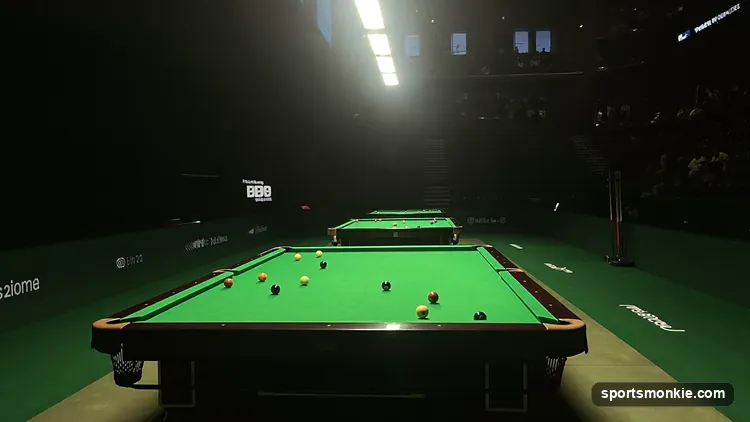
How Snooker Scoring Works: Points, Breaks and Frames
How snooker scoring works: reds score 1, colours 2 to 7, a break is your total in one visit, and most points wins the frame. With a scoring table.

How to Play Snooker: A Beginner's Guide
Learn how to play snooker: setting up the table, the break-off, taking a turn, and the pot-a-red-then-a-colour sequence, step by step for beginners.

Snooker Ball Values: Colours and Points Chart
Snooker ball values in one chart: red 1, yellow 2, green 3, brown 4, blue 5, pink 6, black 7. What each colour is worth, where it sits, and how it scores.

Snooker Fouls Explained: Penalties and the 4-Point Rule
Snooker fouls explained: every foul gives your opponent at least four points, or the ball's value if higher. The common fouls and their penalties.
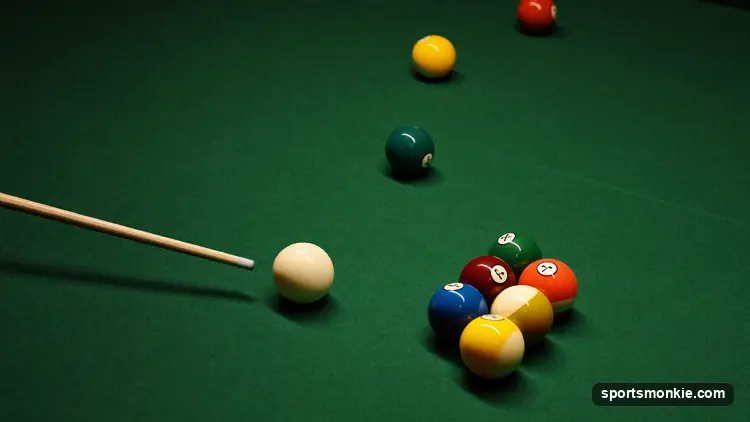
What Is a 147 Break in Snooker?
A 147 break is snooker's maximum: 15 reds with 15 blacks, then all six colours. See the scoring, free-ball exception and famous record holders.
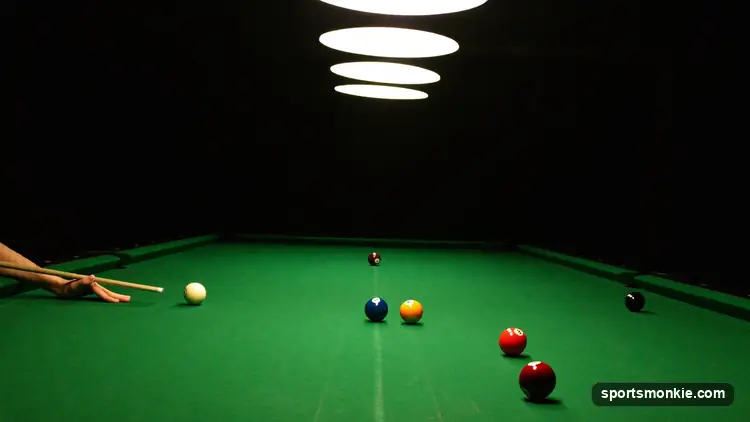
8-Ball Rules: Racking, Breaking & Winning
8-ball rules: pot all seven of your group (solids or stripes), then legally sink the called 8-ball to win. Scratch on the 8-ball and you lose the game.