
What Is LBW in Cricket? Leg Before Wicket Explained
On this page5
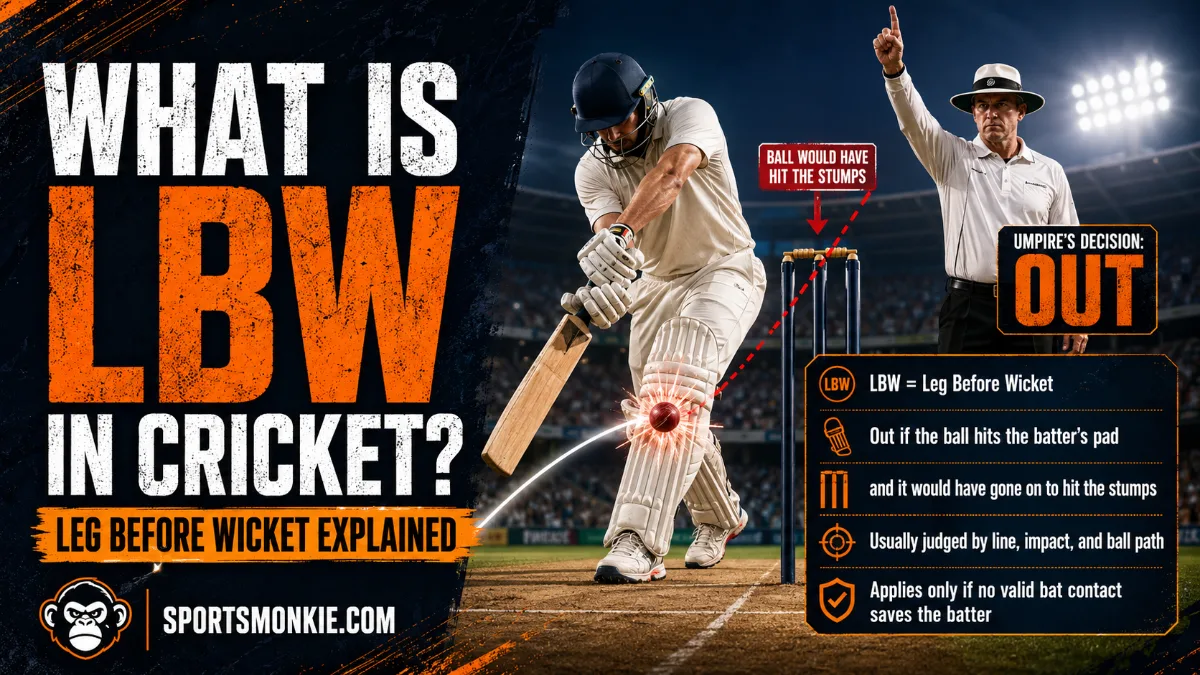
LBW means Leg Before Wicket: the batter is out when the ball hits their body, almost always the pad, and would have gone on to hit the stumps. Three conditions must all hold — the ball must not have pitched outside leg stump, it must strike in line with the stumps unless no shot was offered, and ball-tracking must show it hitting the wicket. It is Law 36 of the game.
Few dismissals cause as much argument. LBW asks the umpire to judge not just what happened, but what would have happened if the pad hadn’t been in the way. That hypothetical is why it feels complicated, but the law itself follows a clear checklist.
The basic idea
A batter is out LBW when the ball hits their body, almost always the pad, and would have gone on to hit the stumps. The batter is, in effect, using their leg to stop a ball that was heading for the wicket, so the law rules them out.
The tricky part is that several conditions all have to be satisfied before the umpire can raise the finger.
The conditions umpires check
For an LBW to be given, the umpire works through these questions:
| Question | Requirement |
|---|---|
| Where did the ball pitch? | In line with the stumps or on the off side — not outside leg stump |
| Where did it hit the batter? | In line with the stumps, unless the batter offered no shot |
| Was it going to hit the stumps? | Yes, the ball must be shown to be hitting the wicket |
There is one important exception: if the ball strikes the pad outside the off stump but the batter made a genuine attempt to play a shot, they cannot be given out.
How DRS changed close calls
Modern cricket uses the Decision Review System to settle tight LBW appeals. Ball-tracking technology predicts the path the ball would have taken and shows whether it was hitting the stumps.
When the prediction is marginal, for example the ball just clipping the top or side of a stump, the decision falls under umpire’s call: the on-field umpire’s original ruling stands. That is why two nearly identical deliveries can produce different results depending on what the umpire first decided.
What rules out an LBW entirely
Three situations end an LBW appeal before the checklist even starts, and they account for most of the confusion around the law:
- The bat hit it first. Any contact with the bat, or the glove holding the bat, before the pad makes LBW impossible. The ball’s path is irrelevant after that. This is why the third umpire checks UltraEdge before ball-tracking.
- It was a no-ball. No-balls void LBW, so DRS checks the front foot first. A delivery that pitches in line, beats the bat, and smashes middle stump is worth nothing if the bowler overstepped.
- It pitched outside leg. No exception exists for this one, however plumb it looks.
Why the law is built this way
The conditions exist to keep the contest fair between bat and ball. Without the “pitching outside leg” protection, bowlers could aim down the leg side and trap batters cheaply. Without the “hitting in line” rule, a batter could be given out to a ball missing the stumps. Put together, the checklist makes sure LBW only rewards deliveries that were genuinely going to hit the wicket, which is exactly why it remains one of cricket’s most scrutinised decisions.
Frequently asked questions
What does LBW mean in cricket?+
LBW stands for Leg Before Wicket. A batter is out LBW if the ball strikes their body, usually the pad, when it would otherwise have gone on to hit the stumps, provided conditions about where the ball pitched and where it struck are met. It is governed by Law 36.
Can you be out LBW if the ball pitches outside leg stump?+
No. If the ball pitches outside the line of leg stump, the batter cannot be given out LBW, even if ball-tracking shows it crashing into middle stump. This protection is absolute, with no exception for shot or no shot, and stops bowlers attacking from around the leg side.
What is umpire's call in an LBW review?+
Umpire's call applies when DRS ball-tracking shows a marginal decision, such as the ball just clipping the stumps. The on-field umpire's original decision then stands, out or not out, and the reviewing team keeps its review. It reflects the tracking system's own margin of error.
Can you be out LBW if you hit the ball with the bat first?+
No. If the ball touches the bat or the glove holding the bat before striking the pad, LBW cannot be given, regardless of where the ball was heading. This is why teams review for a faint inside edge, and why UltraEdge is checked before ball-tracking in a DRS review.
Can you be out LBW outside off stump?+
Yes, but only if you offer no shot. If the ball strikes the pad outside the line of off stump and the umpire judges you made a genuine attempt to play it, you are not out. Padding away a turning delivery outside off is therefore a real risk.
Can you be out LBW off a no-ball?+
No. A no-ball voids every mode of dismissal except run out, obstructing the field, and a few rare cases, so LBW is impossible. In DRS, the third umpire checks the front foot first: if the delivery was a no-ball, the review ends there regardless of ball-tracking.
Sources
Play & tools
Free browser games and tools — no account, no download.
- Play today's Sports Connections — Today's Sports Connections — daily hints, answers, and play the grid.
- Play Guess the NFL Player — A new mystery NFL player every day. Eight guesses, with a clue on each — plus free unlimited mode.
- Explore all our games →
Related cricket guides
View all →
What Is a Dead Ball in Cricket? Rule and Common Situations
A dead ball is a delivery from which no runs score and no batter is out. Learn when the ball goes dead, who decides, and why it matters in a tight finish.
DLS Method in Cricket Explained: How Rain Targets Are Set
The Duckworth-Lewis-Stern (DLS) method resets targets in rain-hit limited-overs cricket using overs and wickets left. Here's the logic, with examples.
What Is DRS in Cricket? Decision Review System Explained
DRS lets teams challenge an umpire's call using ball-tracking, edge detection, and Hot Spot. Here's how reviews work, how many you get, and umpire's call.
Appealing in Cricket: What It Is and How It Works
An appeal in cricket is the fielding side's formal request for a dismissal. Without one, an umpire cannot give a batter out, even one who clearly is.
Hitting the Ball Twice in Cricket: Law 34 Explained
Law 34 lets a batter hit the ball twice only to defend the wicket. Do it for any other reason and you are out 'hit the ball twice'. Here is how the rule works.
15 Basic Rules of Cricket Every Fan Should Know
Cricket has a detailed rulebook, but these 15 core rules cover how the game is played, how batters are dismissed, and how runs are scored.