
DLS Method in Cricket Explained: How Rain Targets Are Set
On this page4
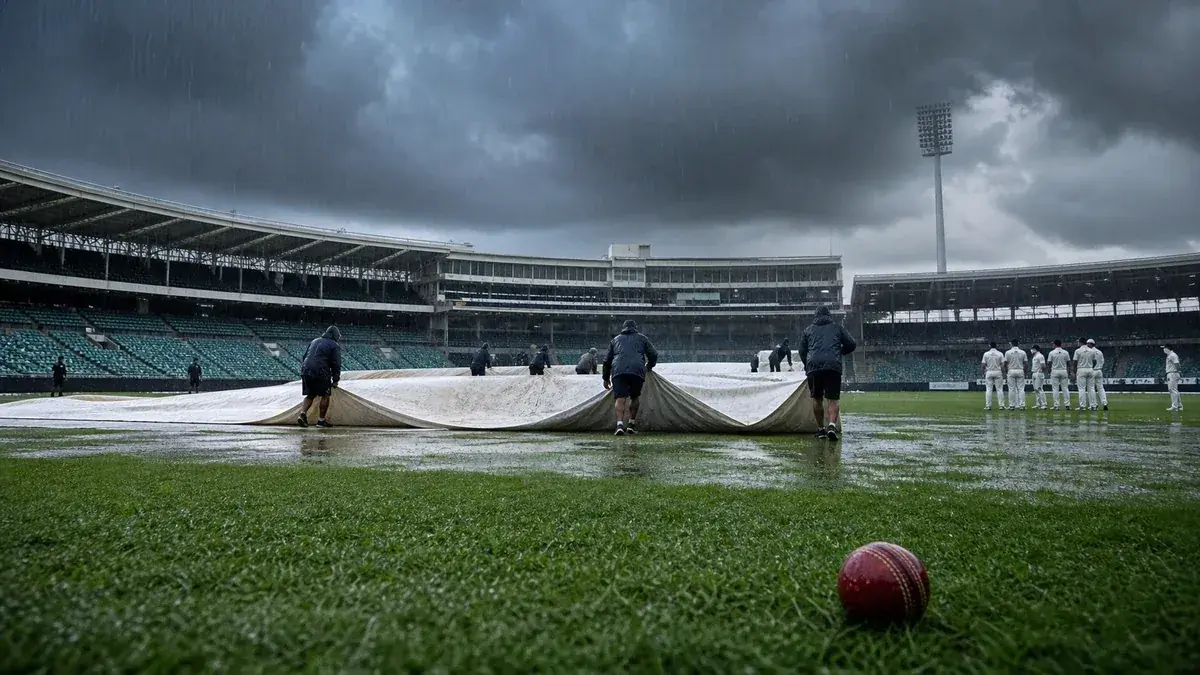
Few things cause more arguments at an Asia Cup or IPL watch party than a rain-revised target flashing on screen. The chasing team suddenly needs a number that seems too high, or the game is handed to a side that looked behind. The Duckworth-Lewis-Stern method is the reason, and once you understand what it is measuring, the “unfair” numbers start to make sense.
The core idea: resources, not just overs
A batting side has two things to spend: overs to face and wickets to lose. DLS bundles these into a single figure called “resources,” expressed as a percentage. A full 50-over innings with all ten wickets is 100% of resources.
Lose overs to rain, or lose wickets, and your remaining resource drops. DLS uses a reference table (and, at the top level, a computer model) to say exactly how much resource remains for any combination of overs left and wickets down.
Why wickets matter so much
This is the part people miss. A team chasing 180 in 20 overs with all ten wickets in hand is in a far stronger position than one chasing the same total with three wickets left. DLS knows this. It credits wickets in hand generously, because they let a team attack.
That is why a rain-cut target often looks steep. If a chasing team barely lost any wickets before the rain, DLS assumes they can still score fast, so it raises the bar accordingly.
A simple worked example
Say Team A bats first and posts 200 in a full 20-over T20. Rain then cuts Team B’s chase to 10 overs. A naive fan would halve the target to 100. DLS does not, because Team B still has all ten wickets for those 10 overs, which is a lot of resource per over.
| Team | Overs | Wickets in hand | Resource used |
|---|---|---|---|
| Team A (full innings) | 20 | 10 | 100% |
| Team B (rain-shortened) | 10 | 10 | roughly 63% |
DLS scales Team A’s 200 by the resource ratio and adds a run, so Team B’s revised target might be around 127 rather than 100. Fewer overs, but plenty of wickets, so the ask stays high.
When it applies and when it doesn’t
DLS only kicks in for limited-overs cricket, so Test formats are untouched. A minimum number of overs must be bowled to each side for a valid result, typically five per side in a T20I and twenty in a 50-over game. Below that threshold, the match is declared a no-result.
The system has been refined over the years, most notably Steven Stern’s update for the higher totals of modern T20 cricket. It is not perfect, and captains still grumble about specific cases, but it remains the fairest widely accepted way to settle a match the weather refused to let finish. If you want to understand how umpires handle stoppages once play resumes, our guide to the dead ball rule covers what does and does not count.
Frequently asked questions
Why is the DLS target higher than the run rate suggests?+
Because DLS values wickets in hand, not just run rate. A team chasing with all ten wickets can attack from the start, so DLS credits them with more scoring resource than a straight run-rate calculation, pushing the revised target up.
Who invented the DLS method?+
Statisticians Frank Duckworth and Tony Lewis created the original Duckworth-Lewis method, adopted by the ICC in 1999. Australian academic Steven Stern later updated it to handle modern high-scoring games, and it was renamed DLS in 2014.
How many overs make a match valid under DLS?+
In a T20 international, each side must usually face at least five overs for a result via DLS. In a 50-over game, it is normally at least 20 overs per side. Below that, the match is a no-result.
Sources
Play & tools
Free browser games and tools — no account, no download.
- Play today's Sports Connections — Today's Sports Connections — daily hints, answers, and play the grid.
- Play Guess the NFL Player — A new mystery NFL player every day. Eight guesses, with a clue on each — plus free unlimited mode.
- Explore all our games →
Related cricket guides
View all →
What Is a Dead Ball in Cricket? Rule and Common Situations
A dead ball is a delivery from which no runs score and no batter is out. Learn when the ball goes dead, who decides, and why it matters in a tight finish.
The Impact Player Rule in Cricket, Explained
The Impact Player rule lets a T20 team swap in one substitute mid-match to bat or bowl. Popularised by the IPL, here is how it works and when subs enter.
What Is LBW in Cricket? Leg Before Wicket Explained
LBW means the ball would have hit the stumps but struck the pad first. Here are the exact conditions umpires check and how DRS decides close calls.
Appealing in Cricket: What It Is and How It Works
An appeal in cricket is the fielding side's formal request for a dismissal. Without one, an umpire cannot give a batter out, even one who clearly is.
Hitting the Ball Twice in Cricket: Law 34 Explained
Law 34 lets a batter hit the ball twice only to defend the wicket. Do it for any other reason and you are out 'hit the ball twice'. Here is how the rule works.
15 Basic Rules of Cricket Every Fan Should Know
Cricket has a detailed rulebook, but these 15 core rules cover how the game is played, how batters are dismissed, and how runs are scored.