
Golf Club Distances Chart: How Far Each Club Goes
On this page5
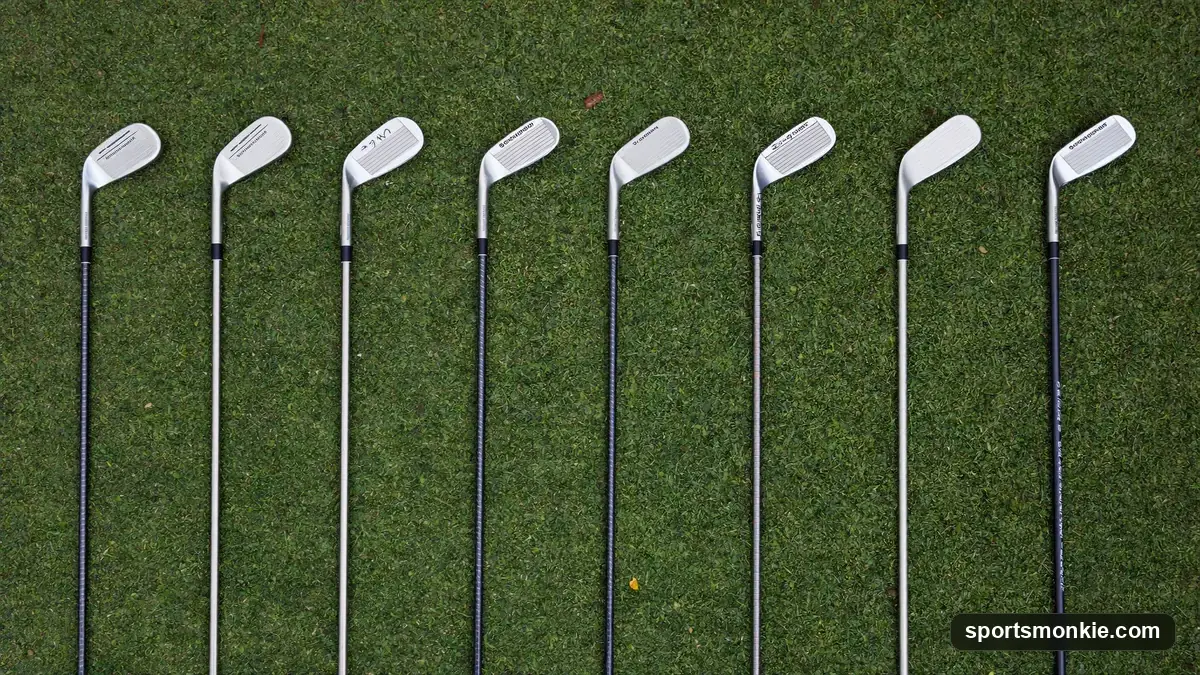
Here is a full golf club distances chart, from driver down to the wedges, split by skill level. The average male amateur hits a driver about 224 yards and a 7-iron around 145 yards, but those numbers swing hard with handicap. The chart below shows approximate average distances for beginner, average, good, and tour-level players so you can find the row that fits your game.
These are real, rounded averages from tracked-shot data — not best-ever strikes. That difference is the whole point.
The full golf club distances chart
Distances are approximate total yardages (carry plus roll) rounded to the nearest five, blending Arccos driver data, Shot Scope iron data by handicap, and published PGA Tour averages for the tour column. Use them as a map of the gaps, not a target to force.
| Club | Beginner / High (18+ hcp) | Average (10–18 hcp) | Good (5–10 hcp) | Tour (PGA avg) |
|---|---|---|---|---|
| Driver | 180 | 215 | 250 | 295 |
| 3-wood | 170 | 200 | 225 | 260 |
| 5-wood | 160 | 185 | 210 | 240 |
| Hybrid (4H) | 150 | 175 | 200 | 230 |
| 4-iron | 140 | 170 | 190 | 215 |
| 5-iron | 145* | 165 | 185 | 195 |
| 6-iron | 135 | 155 | 175 | 183 |
| 7-iron | 125 | 145 | 165 | 172 |
| 8-iron | 115 | 135 | 155 | 160 |
| 9-iron | 105 | 125 | 140 | 148 |
| Pitching wedge | 100 | 115 | 130 | 136 |
| Gap wedge | 85 | 100 | 110 | 120 |
| Sand wedge | 70 | 80 | 90 | 105 |
*Many higher-handicap golfers carry a hybrid in place of a 4- and 5-iron and hit it more consistently than the long irons it replaces — worth doing if the long irons are a weak spot.
How far does the average golfer really hit it?
The most-quoted numbers come from Arccos and Shot Scope, which track millions of real on-course shots rather than range sessions. Arccos data puts the average male amateur at 224.7 yards off the tee and the average woman at 176.2 yards. Break it down by handicap and the range is wide: elite amateurs (scratch to 4.9) average around 247 yards, while 30-plus handicappers average about 184 yards — a 63-yard spread driven mostly by speed and contact.
The key insight from that data is how stable it is. Despite new drivers every year, amateur driving distance has barely moved in seven years. Distance gains are real for tour players, but for most golfers, better contact — not new gear — is where the yards hide.
Why are your distances shorter than the chart?
Two golfers quote a 7-iron very differently. One means the shot that carried a back bunker once on a downwind par 3. The other means the yardage they can rely on eight times out of ten. Tracked data captures the second kind, including thins, toe strikes, and blocks, so it reads lower than the hero numbers golfers trade in the clubhouse.
If your distances trail the chart, you are almost certainly comparing your average against someone else’s best. Judge yourself against the tracked-data tiers here, and never against the tour column — PGA Tour players combine elite clubhead speed with near-perfect strikes most amateurs cannot repeat.
What matters more than raw distance
Consistent gapping beats raw power. If your pitching wedge and gap wedge both go 110 yards, one of them is dead weight. Aim for even steps — roughly 10 to 15 yards between irons — so you always have a club for the number in front of you.
To build your own chart properly, hit each club on a launch monitor and record the carry number, then note the average, not the longest. Our guide to a portable golf launch monitor covers affordable units that give you carry and smash factor at home, which is the honest way to fill in these rows for your own bag. Do that once and you will stop guessing on approach shots.
Using your numbers on the course
A distance chart is only useful if you play to your average, not your ceiling. Club up when you are between numbers — most amateurs come up short far more often than long. If you are still learning how scores stack up as you dial in your clubs, what does E mean in golf explains reading par and your card, and how long does 18 holes of golf take shows how quicker club decisions keep your round moving.
Frequently asked questions
How far does the average golfer hit a driver?+
The average male amateur hits a driver about 224 yards in total distance, and the average woman about 176 yards, according to Arccos data from millions of tracked rounds. Handicap matters more than most think: elite amateurs average around 247 yards while 30-plus handicappers average about 184 yards off the tee.
How far should a beginner hit a 7-iron?+
A beginner or higher-handicap golfer carries a 7-iron roughly 120 to 130 yards, based on Shot Scope tracked data for 18-plus handicappers. Mid-handicap players average around 145 yards, and better amateurs around 165. Beginners often overestimate here because they quote their single best strike, not their everyday carry.
How far should I hit each golf club?+
Use the gap between clubs rather than a fixed target. Most golfers see about a 10 to 15 yard difference from one iron to the next, stepping up to 20-plus yards between woods. Find your real 7-iron carry on a launch monitor, then space the rest around it. Consistent gaps matter far more than raw distance.
Why do I hit my clubs shorter than the charts say?+
Most published distances come from launch monitors measuring carry in ideal conditions, while tracked on-course data like Arccos and Shot Scope includes mishits and averages out lower. If your numbers trail a chart, you are probably comparing your average against someone else's best. Judge yourself against the tracked-data tiers, not tour figures.
Does swing speed determine club distance?+
Swing speed sets the ceiling, but strike quality decides how much of it you keep. Two golfers at the same clubhead speed can differ by 20 yards if one finds the center of the face and the other does not. That is why smash factor, the ratio of ball speed to club speed, matters alongside raw speed.
Sources
Play & tools
Free browser games and tools — no account, no download.
- Play today's Sports Connections — Today's Sports Connections — daily hints, answers, and play the grid.
- Play Guess the NFL Player — A new mystery NFL player every day. Eight guesses, with a clue on each — plus free unlimited mode.
- Explore all our games →
Related golf guides
View all →
How to Hit a Driver Farther: 6 Proven Ways to Add Distance
To hit a driver farther, raise clubhead speed, strike the center of the face, and hit up on the ball with a positive attack angle. Here's how to add 15-30 yards off the tee.

Average Driving Distance by Age: Where Do You Stand?
The average male amateur drives it around 225 yards, peaking in the 20s and 30s and dropping roughly 30 yards by the 60s. See the full breakdown by age and handicap.
Golf Club Lofts Chart: Standard Lofts for Every Club
A full golf club lofts chart: standard degrees for driver, woods, hybrids, irons and wedges, plus how modern 'strong' lofts changed the numbers.
What Tees Should You Play From? A No-Ego Guide
What tees should you play from? Match the total yardage to how far you hit your driver. Here is the USGA Tee It Forward chart to pick right.
Golf Grip for Beginners: How to Hold the Club Correctly
A beginner's golf grip starts with the lead hand: place the club in your fingers, not your palm, so you see two knuckles at address. Here is the step-by-step method, grip styles, and the faults to avoid.
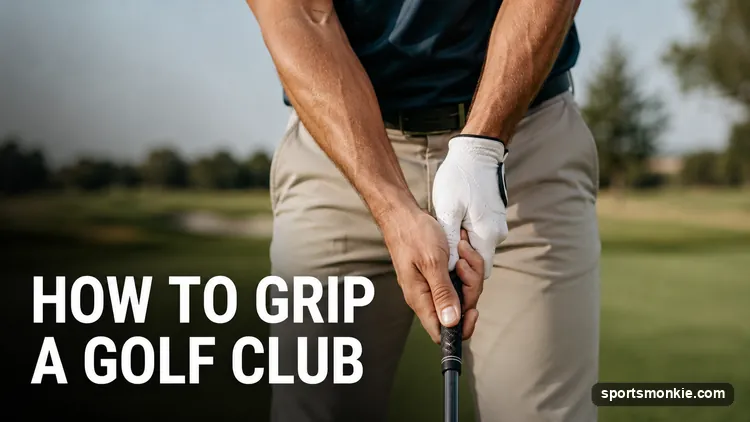
How to Grip a Golf Club: The Correct Grip in 5 Steps
To grip a golf club correctly, rest it diagonally across your lead-hand fingers, close the hand so the V points at your trail shoulder, then set your trail hand so both palms face each other. Here is the full 5-step setup, pressure scale, and fixes for the grip faults that cause slices and hooks.