
What Is a Gimme in Golf? Rules and Etiquette

On this page5
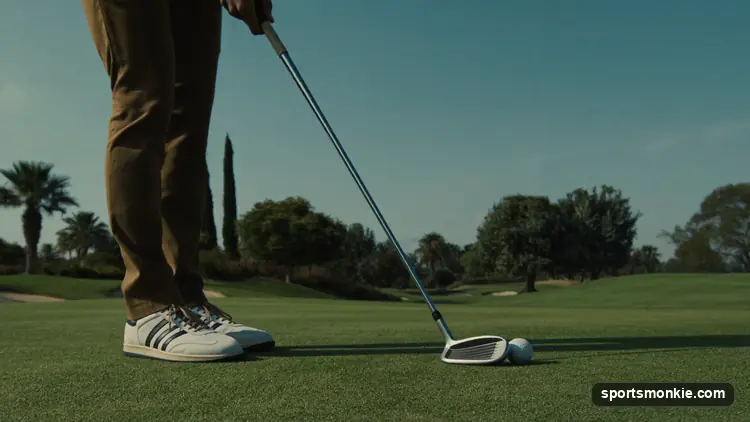
A gimme in golf is a short putt that your opponents or playing partners concede, meaning they agree you would obviously make it, so you pick up the ball and count it as holed without actually putting it. Gimmes are almost always very short putts, often described as being “inside the leather,” roughly the length of a putter grip from the hole, or somewhere around a foot to two feet.
The crucial detail most casual golfers miss is that a true, official gimme only exists in match play. There, the Rules of Golf, governed by the USGA and The R&A, allow a player to formally concede a stroke, a hole or even the match. In stroke play, conceding putts is not permitted, so any “gimme” in a stroke-play round is purely a friendly, unofficial custom. Here is how gimmes really work, where they are and are not allowed, and the etiquette around them.
Match play: where the gimme is real
In match play, golfers compete hole by hole rather than by total strokes, and the Rules of Golf explicitly allow concessions. A player may concede their opponent’s next stroke at any time before that opponent takes it, which is exactly the situation a gimme describes: rather than watch you tap in a six-inch putt, your opponent says “that’s good,” and the stroke counts as made.
A concession, once given, cannot be declined or withdrawn. Players also concede for tactical reasons, giving a short putt to keep the pace up or to avoid the small chance of a rattled opponent gaining confidence from holing out. Concessions in match play can even extend to a whole hole or the entire match, which is why you often see a player pick up their opponent’s marker as a sporting gesture.
Stroke play: gimmes are not allowed
In stroke play, every stroke counts toward your total, and there is no provision for conceding a putt. You must hole out on every hole, and picking up before doing so means you have not completed the hole, which in a formal competition results in disqualification. This surprises many social golfers because gimmes feel so normal.
The reason is fairness: because stroke play compares totals across the whole field, letting one player skip a short putt while another has to hole it would distort the scores. So in any official stroke-play event, the honest rule is simple, there are no gimmes.
The “inside the leather” rule of thumb
Since gimmes are unofficial in casual play, golfers use informal benchmarks to decide what counts.
| Situation | Is a gimme allowed? | Typical distance |
|---|---|---|
| Match play (formal) | Yes, as a concession under the Rules | Any distance the opponent chooses |
| Casual / social stroke play | Yes, by mutual agreement (custom, not rule) | Often “inside the leather,” ~1–2 feet |
| Official stroke-play competition | No, you must hole out | Not applicable |
“Inside the leather” is the classic phrase: if the ball is closer to the hole than the length from the putter head to the bottom of the grip, the group commonly treats it as a gimme. Some groups agree a distance before teeing off to avoid arguments. None of this is written in the Rules; it is etiquette.
Etiquette and the downside
Gimmes are a courtesy, so the etiquette matters. Concede or accept them graciously, do not demand a gimme for yourself, and once a putt is conceded, do not putt it “just to see,” because holing or missing it can plant doubt. In friendly rounds, generosity with gimmes keeps the game pleasant and the pace brisk.
The hidden cost is competitive. Golfers who take a lot of gimmes rarely practice the knee-knocking two- and three-footers that decide real rounds, so their handicaps can flatter them. If you post scores for a handicap, remember that unearned gimmes make your record less accurate, our guide to how to determine your handicap in golf explains why honest hole-outs matter for a true index.
How gimmes fit the wider game
A gimme is one of golf’s small social contracts, a way to speed play and show sportsmanship without bending the sport’s core principle that you have to get the ball in the hole. Understanding that it is a formal concession in match play but only a custom elsewhere keeps you on the right side of the rules when it counts. If you enjoy the language of the sport, our explainers on what a bogey is in golf and the rare albatross cover more of the scoring terms you will hear on the course.
The short version: a gimme is a conceded short putt you count as holed; it is a legitimate concession under the Rules of Golf in match play, a friendly custom in casual stroke play, and not allowed at all in official stroke-play competition, with “inside the leather” the usual informal yardstick.
Want more on the theme? Read What Is a Pro-Am in Golf? next.
Frequently asked questions
What is the point of a gimme in golf?+
A gimme speeds up play and spares everyone the tedium of tapping in a putt that is a near-certainty. In match play it also lets a player formally concede a stroke or a hole for strategic or sporting reasons. In casual and social rounds, gimmes keep the game moving and friendly. The trade-off is that relying on them can leave a golfer under-practiced on the short, pressure putts that count in real competition.
What distance is a gimme in golf?+
There is no official distance; a gimme is whatever the players agree on. A common informal benchmark is 'inside the leather,' meaning closer to the hole than the length of a putter grip, roughly a foot to two feet. Groups sometimes set their own limit before a round. Because gimmes are not part of the Rules of Golf in stroke play, no fixed distance is written anywhere; it is entirely a matter of agreement and etiquette.
What is a Dolly Parton in golf?+
A 'Dolly Parton' is golf slang for a putt with a big double break, one that swings out one way and then back the other, named as a playful nod to her famous curves. It is unrelated to a gimme; it describes the shape of a breaking putt rather than a conceded one. Golf is full of such nicknames, and this one simply flags a putt that curves dramatically in both directions on its way to the hole.
What does gimme mean in golf?+
Gimme is short for 'give me,' meaning the other players are effectively giving you the putt because it is so short you would almost certainly hole it. You pick up your ball and record the stroke as if you had sunk it. In match play this is a formal concession under the Rules of Golf; in casual stroke play it is an informal courtesy, and in official stroke-play competition it is not permitted at all.
Sources
Play & tools
Free browser games and tools — no account, no download.
- Play today's Sports Connections — Today's Sports Connections — daily hints, answers, and play the grid.
- Play Guess the NFL Player — A new mystery NFL player every day. Eight guesses, with a clue on each — plus free unlimited mode.
- Explore all our games →
Related golf guides
View all →
Golf Etiquette for Beginners: The Unwritten Rules
Golf etiquette for beginners comes down to safety, pace, and course care. Here are the unwritten rules that keep you welcome on any course.

Golf Skins Game Rules: Carryovers, Validation and Payouts
In a golf skins game each hole is a skin, won only by an outright low score. Ties carry the skin forward. Here are the rules, carryovers and payouts.

Nassau Golf Game: Rules, Presses, Payouts
A Nassau is three golf bets in one round: front nine, back nine and overall 18. How a $2 Nassau works, how presses add up, and how payouts are settled.
What Is a Mulligan in Golf? Meaning and Rules
A mulligan in golf is an informal do-over: you replay a shot with no penalty and ignore the first. It is not in the official Rules of Golf.

How Much to Tip a Caddie: A Practical Guide
How much to tip a caddie: plan on $20 to $60 on top of the bag fee for a single round, more at resorts. Here are real ranges by course type.

Why Do Golfers Yell Fore? Origin and When to Shout It
Golfers yell 'fore' to warn anyone ahead that an errant ball is heading their way. The word likely comes from 'forecaddie' — but the origin is genuinely disputed.