
What Is a Forecaddie? Role, Cost and Tipping

On this page6
A forecaddie is a caddie who walks ahead of your group to spot where every ball lands, mark it, read greens, give yardages, rake bunkers, and keep the round moving. Unlike a personal caddie, a forecaddie does not carry bags and works for the whole group rather than one player. You will usually pay one somewhere between 25 and 50 dollars per player, handed over in cash at the end of the round.
Book a round at a nicer course and “forecaddie included” often appears on the tee sheet without much explanation. Here is what you are actually getting.
What a forecaddie does
The core job is being ahead of the play. A forecaddie walks or rides out in front of the group so they can watch four tee shots at once and mark exactly where each ball comes to rest. On a blind hole or in thick rough, that alone saves a group several minutes and a fair few lost balls per round.
Beyond spotting, a good forecaddie:
- Gives yardages to the pin and to hazards.
- Reads the line and speed of putts.
- Rakes bunkers and tends or removes flagsticks.
- Replaces divots and repairs pitch marks.
- Manages pace so the group stays in position.
What they do not do is carry your bag. On most forecaddie courses you still ride a cart or use a push trolley; the caddie handles everything except the physical load.
Forecaddie vs caddie: the key difference
The confusion is understandable because both wear a bib and both know the course. The split is simple. A personal, or single, caddie is assigned to one player, carries that bag, and gives advice to that golfer alone. A forecaddie is assigned to the group, carries nothing, and spreads the same spotting and reading service across all four players.
That structure changes the economics. Because one forecaddie covers a foursome instead of one bag per caddie, the cost per player is lower, which is why cart-and-forecaddie has become the standard model at many resorts and upscale public courses.
Caddie types and typical tips
Tips vary by region, course, and whether a base caddie fee has already been charged. The figures below are typical United States guidance for a good day’s work; use them as a floor and adjust up for exceptional service or bad weather.
| Caddie type | What they do | Bags handled | Typical tip |
|---|---|---|---|
| Single caddie | Carries one bag, full advice | 1 | $50 to $100 per player |
| Double caddie | Carries two bags at once | 2 | $60 to $100 per player |
| Forecaddie | Spots, reads, rakes for the group | 0 | $25 to $50 per player |
| Cart forecaddie | Same as forecaddie, players ride | 0 | $20 to $40 per player |
For a foursome, that puts a forecaddie’s total take somewhere around 100 to 200 dollars for 18 holes, split evenly among the players. Cash at the last green is the norm, and it is customary regardless of how you scored.
Why it is called a forecaddie
The name is literal. “Fore” means in front or ahead, the same root behind the warning shout of “fore” that dates to golfers alerting those ahead of them on the course. A forecaddie is the caddie positioned in front of the group, down the fairway, watching the balls fly toward them. There is nothing more complicated to the term than a description of where the person stands.
Is a forecaddie worth the money?
For most groups, yes, and the value is not only in never losing a ball. A forecaddie speeds the round, which on a busy day can be the difference between a four-hour and a five-and-a-half-hour loop. They hand you honest yardages and reads on a course you do not know, which is worth several shots to a visitor. And they take the small chores, raking and flag-tending, off your hands so you can concentrate on playing.
The one time it is hard to justify is a casual round on a course you know well with a group happy to police its own pace. Otherwise, the per-player cost is modest next to the green fee, and it forms part of the wider cost of a round of golf at any resort. If you enjoy the help and want to understand the wider job, it is worth knowing how much caddies make across the different roles.
The quick summary
A forecaddie works ahead of your group, spotting balls and reading greens for everyone without carrying a bag, and earns roughly 25 to 50 dollars per player in cash. They speed the round and save you strokes on an unfamiliar course. Book one for your next resort round and tip well; it is one of the better-value extras in the game.
Frequently asked questions
What is the difference between a caddy and a forecaddie?+
A personal caddie carries one player's bag, gives club and read advice, and stays with that player. A forecaddie serves the whole group, walks ahead to spot where every ball lands, gives yardages and reads, and rakes bunkers, but does not carry any bags. One works for you; one works for the foursome.
How much should you pay a forecaddie?+
Plan on roughly 25 to 50 dollars per player, so a foursome commonly hands a forecaddie 100 to 200 dollars total in cash at the end of the round. Resorts often suggest a minimum, but the tip is yours to set based on service, weather, and how much the caddie helped.
What is the role of a forecaddie?+
A forecaddie walks ahead of the group to watch and mark where each ball comes to rest, read greens, provide yardages, rake bunkers, tend flagsticks, and keep the round moving. On cart courses they let players ride while still getting the ball-spotting and course knowledge a caddie provides.
Why is it called a forecaddie?+
The fore in forecaddie means ahead or in front, the same root as the warning shout fore. The caddie is positioned in front of the players, down the fairway, so they can see where shots land. The name simply describes where the caddie stands relative to the group.
Sources
Play & tools
Free browser games and tools — no account, no download.
- Play today's Sports Connections — Today's Sports Connections — daily hints, answers, and play the grid.
- Play Guess the NFL Player — A new mystery NFL player every day. Eight guesses, with a clue on each — plus free unlimited mode.
- Explore all our games →
Related golf guides
View all →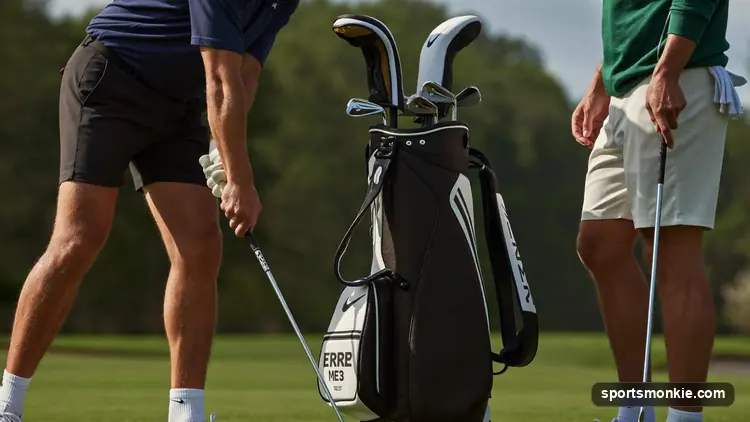
How Much to Tip a Caddie: A Practical Guide
How much to tip a caddie: plan on $20 to $60 on top of the bag fee for a single round, more at resorts. Here are real ranges by course type.

Augusta National Membership Cost
What does Augusta National membership cost? Reported initiation fees, annual dues and why the club never publishes official figures, explained.

Cost to Play Pebble Beach Golf Links
What does it cost to play Pebble Beach? As of 2025 the green fee is roughly $675+ per round, plus cart and caddie. Full breakdown and how to book.

McIlroy Says Yes to LIV Players Coming Back to the PGA Tour
Rory McIlroy, LIV's loudest critic since 2022, told a New Delhi forum he would vote to welcome its players back, called LIV half a good idea and said the threat is over.
McCumber Calls a Two-Shot Penalty on Himself That the Cameras Could Not Prove
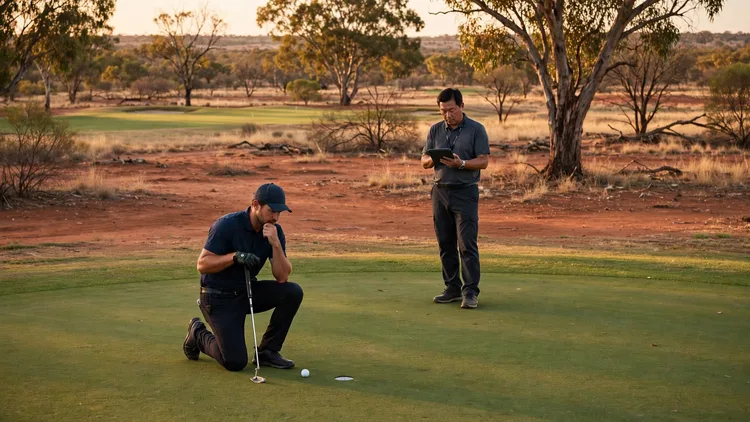
Tyler McCumber was unsure he had replaced his ball marker at the WA PGA Championship, the footage was inconclusive, and he took a two-stroke penalty anyway while tied for second.

Wind Blows Zang's Missed Putt Back Into the Hole at St Andrews
Penn senior Madeleine Zang watched her missed bogey putt stop past the hole at St Andrews, then saw a gust roll it back in for the strangest five of the week.