
What Color Is a Tennis Ball? The Science Behind the Yellow-Green
On this page6
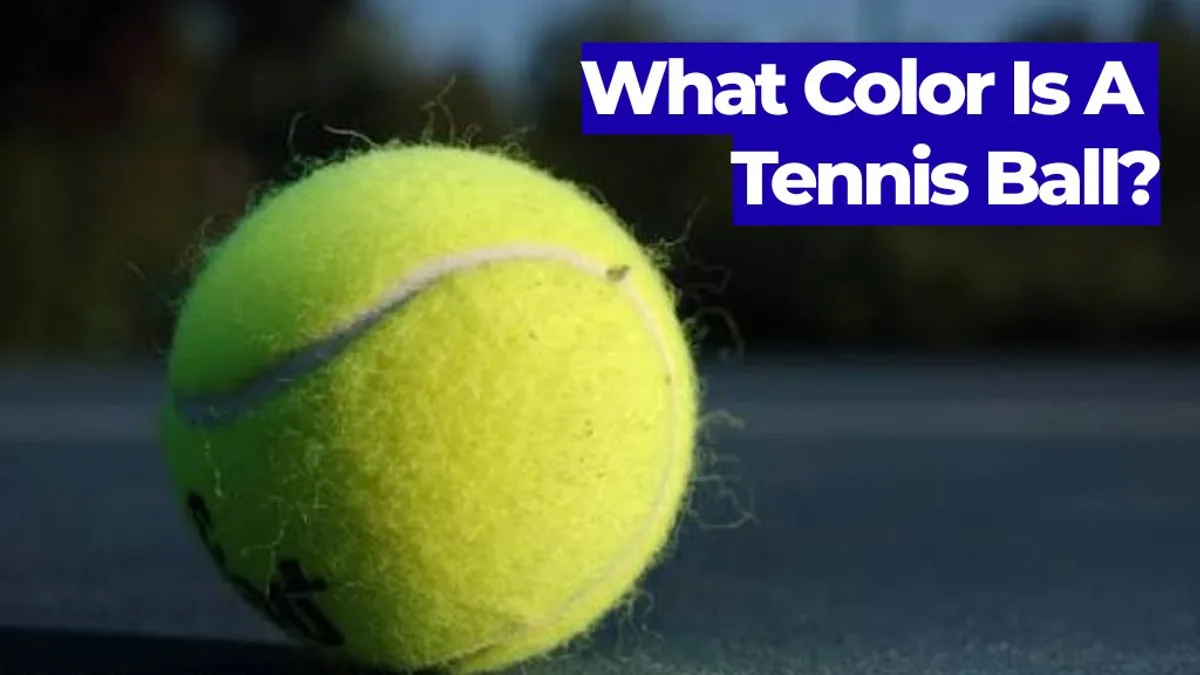
Ask ten people what color a tennis ball is and you will get two answers, split roughly down the middle, and both sides will be genuinely confused why the other one can’t see it correctly. That’s not a trick of the light. It’s built into the ball on purpose.
The official answer: optic yellow
The ITF Rules of Tennis specify that balls must be “uniform in colour” and that the color must be “optic yellow” or white. Every major professional tournament today uses optic yellow. The actual wavelength sits right between yellow and green, which is precisely why the argument never resolves. Human colour perception varies enough that some people’s eyes read optic yellow as yellow and others read it as leaning green, and neither group is wrong. The color genuinely lives in that ambiguous zone.
Why this color was chosen
| Era | Ball Color | Reason |
|---|---|---|
| Pre-1970s | White (or black on some surfaces) | Tradition; matched the white clothing rule |
| 1972 onward | Optic yellow | Research showed far greater visibility on colour TV broadcasts |
| 1986 (Wimbledon) | Switch from white to yellow | Final major holdout adopts the standard |
The change came down to television. Once colour broadcasts became standard, it was obvious that white balls were hard to track on screen, especially against a light background. Optic yellow held up against almost any court surface, grass, clay, or blue and green hard courts alike, so it became the default in 1972.
The science of optic yellow
Optic yellow, sometimes called optical yellow or sulphur yellow, activates both the green and red cones in the human eye strongly while triggering less response from the blue cones. That combination gives it unusually high luminance, so it seems to pop against almost any backdrop. It’s the same principle behind high-visibility safety vests: a color engineered to be caught by the eye fast, which matters a great deal when the object in question is moving at over 100 mph.
Wimbledon’s long holdout
Wimbledon kept white balls until 1986, well over a decade after the rest of the tour switched. The All England Club has always leaned conservative about tradition (it was also the last major to allow players to wear non-white clothing), but eventually gave in to the same argument everyone else had already accepted: yellow simply reads better on a broadcast.
Does color affect performance
No, not directly. What actually determines bounce and playability is the felt covering, internal pressure, rubber composition, and size. ITF ball specifications cover diameter, mass, deformation, and rebound, and color only enters the rulebook as the optic yellow requirement itself. Different ball models approved for tour play vary in felt texture and pressure depending on the surface they’re built for, but that’s a manufacturing decision, not a color one.
The yellow vs. green debate
The “is it yellow or green” question has turned into one of those recurring internet arguments, not unlike the dress that some people saw as blue and black and others saw as gold and white. A few things shift how someone categorizes optic yellow: the screen they’re viewing it on, the colors surrounding it (contrast shifts perceived hue), and plain individual variation in how their cone cells are distributed. The ITF’s answer is yellow. Plenty of eyes insist it’s green. Both are describing the same real optical phenomenon.
Frequently asked questions
Are tennis balls yellow or green?+
Officially, tennis balls are optic yellow — a color that appears as a yellow-green to most people. The ITF defines the color as optic yellow in its rules. Many people perceive the color differently, which is why the debate between yellow and green continues.
Why did tennis change from white balls to yellow?+
Tennis balls were originally white or black. Optic yellow was introduced in 1972 after research showed that the color was significantly more visible on colour television broadcasts. Wimbledon, however, continued to use white balls until 1986.
What are the fuzzy fibers on a tennis ball made of?+
The felt covering on a tennis ball is typically a blend of wool and nylon. This covering (also called the nap) creates aerodynamic drag that slows the ball's flight and controls its bounce characteristics.
How fast can a tennis ball travel?+
Professional serves regularly exceed 130 mph, and the fastest recorded serves have topped 150 mph. Groundstrokes are slower but still leave the racket at high speed, which is part of why a high-visibility colour like optic yellow matters so much for tracking the ball.
How often are tennis balls changed in a professional match?+
At most tour events, new balls are introduced after the first seven games, then every nine games after that. The extra two games early account for the warm-up. Fresh balls fly faster and bounce truer, so the change noticeably affects play.
Why are tennis balls pressurised?+
Most match balls are filled with air at higher-than-atmospheric pressure, which gives them their lively bounce. Over time the pressure leaks out and the ball goes 'dead', bouncing lower. That is why balls are stored in sealed cans and replaced regularly during matches.
Are all tennis balls the same?+
No. The ITF approves different ball types for different conditions, such as regular-duty felt for clay and indoor courts and extra-duty felt for hard courts. High-altitude balls are also made for thinner air. They share the optic yellow colour but differ in felt and pressure.
Sources
Play & tools
Free browser games and tools — no account, no download.
- Play today's Sports Connections — Today's Sports Connections — daily hints, answers, and play the grid.
- Play Guess the NFL Player — A new mystery NFL player every day. Eight guesses, with a clue on each — plus free unlimited mode.
- Explore all our games →
Related tennis guides
View all →
Why Do Tennis Players Grunt? The Science Behind It
Tennis players grunt because the sharp exhale at ball contact stabilises the core, releases tension and can boost power. It's a habit from early training.
Why Are Tennis Balls Pressurized? The Science Explained
Tennis balls are pressurized with air or nitrogen to give them their bounce and feel. The pressure keeps the rubber core firm so the ball rebounds fast.
What Is Deuce in Tennis? Score, Advantage, and Tiebreaks
Deuce in tennis means both players have reached 40, so one player must win two straight points to take the game.
What Is Hawk-Eye in Tennis? How Electronic Line Calling Works
Hawk-Eye uses multiple cameras and ball-tracking software to judge whether a tennis shot landed in or out.
Walkover vs Retirement in Tennis: What Is the Difference?
A walkover happens before a match begins; a retirement happens after play starts. The distinction affects results, records and tournament administration.
Clay Court Tennis: Surface, Rules, and Why It Plays So Slow
Clay court tennis is the slowest surface with the highest bounce. See red vs. green clay, sliding, ball marks, upkeep, and why Nadal owns it.