
Golf's Distance Deadline Passes Quietly, and Bifurcation Is Back on the Table
On this page7
The most consequential date in golf this month passed without anyone noticing, and that is exactly why it matters. Wednesday, October 21 was the deadline for equipment makers and other stakeholders to respond to a USGA and R&A notice on limiting distance at the elite level, Golfweek reports. Nothing changed on the day. The feedback submitted before it could still shape what professional golf looks like for years, because it feeds the next stage of a debate the governing bodies have been circling since the original rollback plan stalled.
What exactly was consulted on?
Three optional rules, requested by the PGA Tour and DP World Tour, that a competition organiser could adopt from January 2028. The governing bodies’ own September 21 notice lists them precisely: a golf ball model testing at 317.0 yards or less in overall distance, a driver head with a maximum characteristic time of 239 microseconds when tested before competition, and a maximum club length below the existing 46-inch limit for every club except putters. Golfweek explains the logic underneath them. Manufacturers currently work within testing tolerances, so equipment can perform slightly beyond published limits, and the proposed rules would tighten those tolerances and boundaries on the two variables that produce distance, the ball and the driver face.
Why did the deadline pass quietly?
Because nothing was decided, and because the last big decision in this debate was a delay. GolfMagic notes the consultation followed the governing bodies’ decision before the U.S. Open to delay the planned golf ball rollback, which took the heat out of the argument and moved it into committee rooms. Golfweek’s framing is blunter: the date slipped past most golfers without much attention, even though the responses could prove significant. That quiet is the story. The distance debate has spent years as a loud argument about principle, and its next chapter arrived as a paperwork deadline that most of the sport missed.
What would bifurcation actually look like?
Two games sharing a rulebook but not the same equipment limits. The proposed Model Local Rules would not change the existing Equipment Rules and would not affect whether any ball or club conforms, the notice states, which is the legal mechanism that makes a split possible without banning anything for amateurs. Golfweek points out the consequence plainly: if professional tours adopt different equipment restrictions, even under the auspices of Model Local Rules, the divided game that influential voices previously resisted would be here. The compromise argument, which Golfweek says increasingly looks reasonable, is that there is no distance problem at recreational level, so the restrictions should only ever apply where the problem exists.
Where does Rory McIlroy stand?
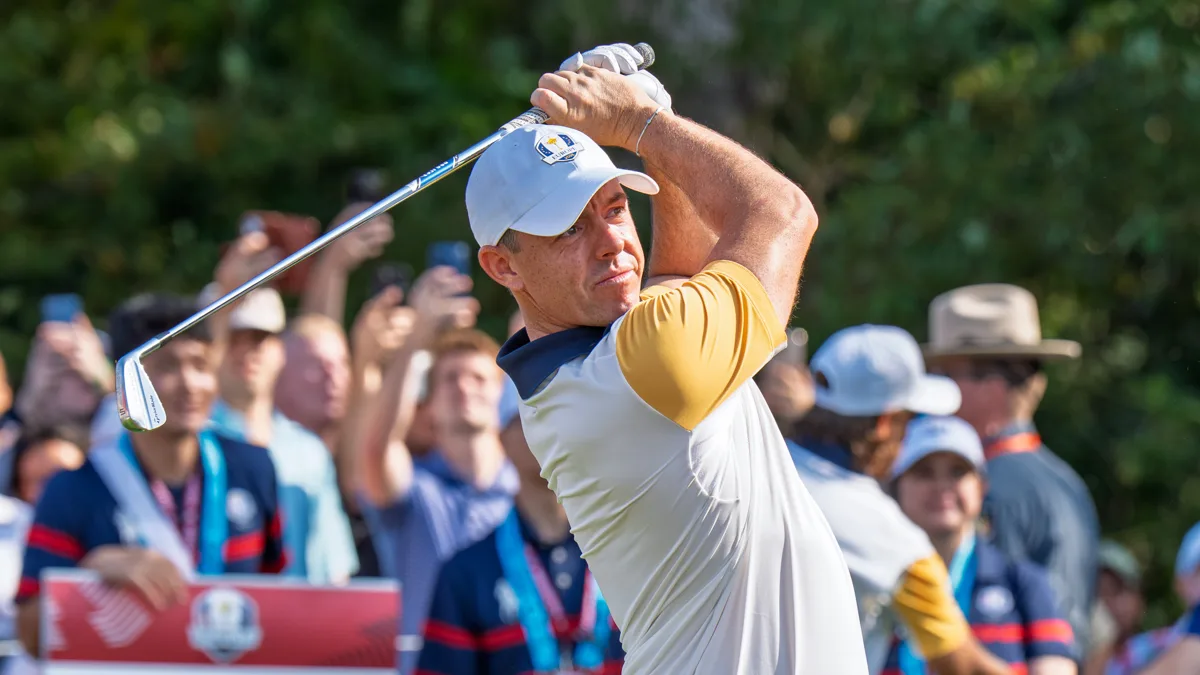
On the side of the split, and he has been there from the start. GolfMagic reports that the reigning Masters champion has backed bifurcation in the elite men’s game throughout, arguing it would bring back skills eradicated over the past two decades. His post on X put the frustration in one line: “Bifurcation was the logical answer for everyone, but yet again in this game, money talks.” McIlroy is the most prominent voice in the debate, and his position matters because the tours asking for these rules need their star players to accept them. A divided equipment rule only works if the best players play under it willingly, and McIlroy’s long-standing support removes one obstacle, even if it does not settle the argument with manufacturers.
How much distance would the rules actually take away?
That is the uncomfortable part, and both outlets are honest about it. Golfweek says that without testing and published results, nobody can really know how much of a decrease, if any, would follow, and the changes might do more to contain future gains than to substantially reduce today’s distances. GolfMagic says the same: the impact remains unclear. The numbers behind the debate show why the question is hard. South African Aldrich Potgieter led the PGA Tour in average driving distance last season at 331.1 yards, GolfMagic reports, which is the kind of figure that makes the problem feel obvious until someone has to say exactly how many yards a new ball or a stiffer driver face would remove. A rule that only stops the number growing is a different achievement from one that cuts it, and the governing bodies have not yet promised which one they are delivering.
What does this mean for the tours asking for the rules?
It puts the decision back on them, which is the point of a Model Local Rule. The PGA Tour and DP World Tour asked the governing bodies to explore these options, and the same tours would have to adopt them for their own events, a step that would also test how their players, sponsors and broadcasters react to a visibly different equipment setup. The context for that choice is a sport already living with parallel structures: the DP World Tour has just told LIV players they must choose for 2027, a story our DP World Tour tells LIV players to choose covered in full, and ten qualified players will skip the Abu Dhabi playoff event next month, as our Abu Dhabi absence report detailed. The tours are used to making structural calls now. The distance decision would be another one, and it would be the first that changes what is inside the bag rather than who is holding it.
What happens next?
The governing bodies say they will communicate again on the Overall Distance Standard test within five months, and the wider test will not change before January 2030 in any case. The nearer decision is whether any competition organiser adopts a Model Local Rule for January 2028, which would make bifurcation real in one event before it becomes real everywhere. Until then, the debate sits where the deadline left it: consulted, undecided, and easy to miss. McIlroy has already shown he will say yes to a split where others hesitate, and the tours that asked for these rules will have to decide whether they agree with him. The tour split over Rahm’s return showed how divided elite golf already is on structural questions, and Garcia’s Ryder Cup ambitions are a reminder that the players most affected by any equipment change are the ones chasing team places. The quiet deadline may yet turn out to be the loudest moment of the year in golf, just a few months late.
Frequently asked questions
What deadline passed on October 21?+
The deadline for equipment makers and other stakeholders to respond to a USGA and R&A Notice and Comment letter on limiting distance at the elite level, Golfweek reports. The governing bodies issued the notice on September 21, and the responses will help shape the next stage of a debate that has run for years without a decision.
What are the three proposed Model Local Rules?+
A ball that tests at 317.0 yards or less in overall distance, a driver head with a maximum characteristic time of 239 microseconds when tested before competition, and a maximum club length below the existing 46-inch limit, other than putters, according to the governing bodies' own notice. The PGA Tour and DP World Tour asked for the three options to be explored.
When could the new rules take effect?+
As early as January 2028, but only if a competition organiser adopts them. Model Local Rules are optional by design, Golfweek and GolfMagic both stress, so a tour or tournament committee would have to choose to use them. The wider Overall Distance Standard test will not change before January 2030, the notice confirms.
Would weekend golfers have to change their equipment?+
No. The proposed rules would not change the existing Equipment Rules and would not affect the conformance status of any conforming ball or club, the notice states. Golfweek puts it plainly: the elite proposals would not change anything for recreational golfers, where almost nobody argues there is a distance problem.
What is bifurcation, and why does it matter here?+
Bifurcation means professionals and amateurs playing under different equipment rules. It was long resisted in golf because of concern that separate standards would undermine the game's unity, GolfMagic notes. If tours adopt these Model Local Rules, the divided game arrives through the back door of optional local rules rather than a single ruling.
Where does Rory McIlroy stand on bifurcation?+
He has backed it from the outset for the elite men's game, GolfMagic reports. McIlroy argued it would bring back skills in the elite game that have been lost over the past two decades, and posted on X: 'Bifurcation was the logical answer for everyone, but yet again in this game, money talks.'
How much distance would the rules actually remove?+
Nobody knows yet, and both Golfweek and GolfMagic say so directly. Without testing and published results, it is not clear whether the changes would reduce current distances or mainly stop them growing further. Golfweek warns the changes might do more to contain future gains than to cut today's distances.
What happens next in the distance debate?+
The governing bodies will review the responses and communicate again on the Overall Distance Standard test within five months, the notice says. The next real decision point is whether any tour adopts a Model Local Rule for 2028, which would turn a consultation paper into the first divided equipment rule in the modern game.
Sources
- Golfweek: The USGA and R&A's quiet deadline could reshape the distance debate (the October 21 deadline passing unnoticed, the three Model Local Rules, January 2028 availability, January 2030 for the wider test, no effect on recreational golfers, the bifurcation point)
- GolfMagic: Golf's controversial rule change draws closer as crucial deadline passes (the October 21 cut-off, the rollback delay before the U.S. Open, Potgieter's 331.1-yard average, McIlroy's bifurcation backing and quote)
- The R&A and USGA: 21 September 2026 Notice to Manufacturers (the three Model Local Rule options with the 317.0-yard ball limit, the 239-microsecond driver limit and the sub-46-inch club limit, the January 2030 ODS date, the five-month ODS update promise, the October 21 comment deadline)
Play & tools
Free browser games and tools — no account, no download.
- Play today's Sports Connections — Today's Sports Connections — daily hints, answers, and play the grid.
- Play Guess the NFL Player — A new mystery NFL player every day. Eight guesses, with a clue on each — plus free unlimited mode.
- Explore all our games →
Related golf guides
View all →
McIlroy Says Yes to LIV Players Coming Back to the PGA Tour
Rory McIlroy, LIV's loudest critic since 2022, told a New Delhi forum he would vote to welcome its players back, called LIV half a good idea and said the threat is over.
Luiten Says LIV Returnees Should Lose Their Rights and Go Through Q School
Joost Luiten, a six-time DP World Tour winner, says players who left for LIV should lose their exemption rights, stop getting invites and earn their way back at Q School.

Chacarra Wins in India: a 63 in the Morning, a 70 in the Afternoon, and Top of the Race to Dubai
Eugenio Chacarra closed his third round with a bogey-free 63 on Sunday morning, then shot 70 to win the DP World India Championship by two and lead the Race to Dubai.
Kisner Calls McIlroy's India Trip a Money Grab and Puts a $10 Million Figure on It
Kevin Kisner used the Fore Play podcast to call Rory McIlroy's India appearance a money grab, claiming a $10 million fee that has not been disclosed or confirmed.

Schauffele Says the PGA Tour Is Split in Four Over Rahm's Return
Xander Schauffele says PGA Tour players fall into four camps over Jon Rahm's return, from ticked off to let them back tomorrow, with the Koepka door closed.

Joaquin Niemann Says a PGA Tour Return Would Be 'Incredible' as LIV Decision Nears
Joaquin Niemann, LIV Golf's record nine-time winner, says he is still deciding between LIV 2.0 equity and a DP World Tour route back to the PGA Tour.