
Wyndham Clark Rules Scrutiny Returns as McIlroy Takes His Abu Dhabi Penalty
On this page7
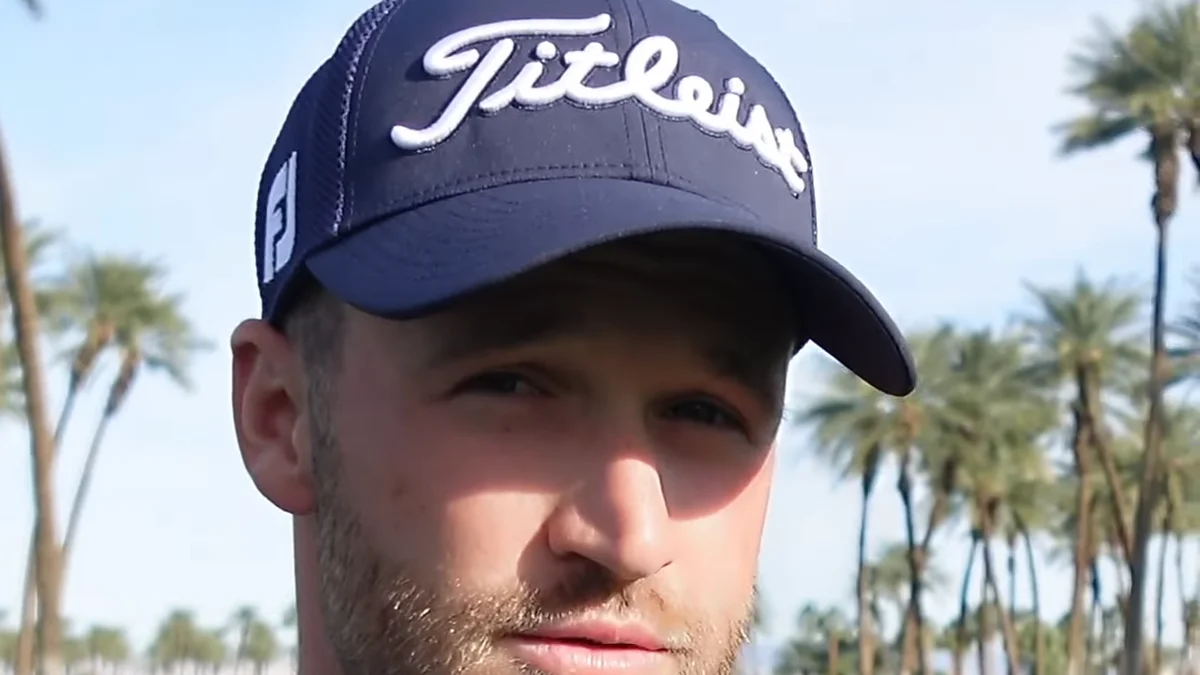
Rory McIlroy chose to take a two-shot penalty in Abu Dhabi after he could not say for certain whether he had pressed his club into the ground. Wyndham Clark has faced the same question three times on television this year and has never been penalised once. The contrast, between a player who penalised himself over a blade of grass and a player who insists he never crossed the line, is why golf’s rules argument is back four days after McIlroy’s ruling, and why it will not go away until the tours can explain the difference.
What did McIlroy actually do in Abu Dhabi?
He put his club down behind a ball in a divot, and then he could not prove he had only rested it there. The incident came on the par-4 12th in the first round of the Abu Dhabi Aldar Championship on November 5, the DP World Tour says, immediately before McIlroy’s fourth stroke, a second chip from the rough after his first attempt had rolled back down a hill into a divot. Rule 8.1b(4) permits a player to ground the club lightly right in front of or behind the ball, the tour says, and there is no penalty even if the lie is improved, but a player is not allowed to press the club on the ground. Having reviewed the footage, McIlroy was unable to say whether he had pressed the club or not, and given his concern over the perception of the footage, he chose to apply the two-stroke penalty. His six became an eight, a quadruple bogey, and his opening round became a 70 instead of a 68. The full account of the ruling, including his playing partner’s defence of him, is in the desk’s earlier report.
What did Clark do at the BMW Championship?
Something the cameras caught in far more detail, with no penalty at all. On the par-4 14th at Bellerive in the final round on August 23, Clark’s tee shot missed right into the rough while he was tied for the lead with McIlroy, Golfweek reports, and the CBS camera to his right caught him set an iron behind the ball, take a practice swing, set a different iron down, and repeat. He took more than seven practice swings and changed clubs twice, Golfweek reports, and his caddie David Pelekoudas eventually stepped between him and the lens. On the broadcast, Trevor Immelman said it live: “This is like the third club that he’s placed down behind the ball there.” Frank Nobilo followed: “So the lie might be better.” No penalty was assessed. Clark made par on the hole, closed with three straight birdies, and won by three for his third title of 2026, his sixth career PGA Tour win and $3.6 million, talkSPORT reports.
What is Clark’s defence?
That judging a lie looks like improving one, and the two are not the same. Two days later, ahead of the Tour Championship, Clark was asked about the clip and did not blink, Golfweek reports. “I think any player, when they’re trying to judge a lie, takes out different clubs to see what it feels like,” he said. “I never fully put the club down behind it. I don’t think anything of it. When the cameras are on you, they’re going to find anything.” He drew the line plainly: “That lie was never bad. It was more just judging what it was. By no means did I take a bad lie and make it really good. People can think what they want. I know I didn’t do anything that was costing the integrity of the field. That’s all I’ve got to say about that.” The tour accepted that account, and the win stands.
What are the other two incidents?
The U.S. Open in June, and Bay Hill before that. At Shinnecock Hills, video showed Clark taking practice swings and positioning his club and feet near his ball in thick fescue on the ninth hole, Golfweek reports, and tour caddie Brent Henley posted the clip with the caption “Did Wyndham Clark bend the rules here?!? He never touches the grass on this mysterious practice swing.” Clark has also pointed to an incident at the Arnold Palmer Invitational at Bay Hill, where his actions around the ball were questioned. Neither incident drew a penalty, and Clark raised both of them himself in his August answer, as evidence that cameras find things that look like something and are not. The pattern is the problem for the tours: three televised incidents, three denials, zero penalties, and a rule that turns on a distinction no camera can measure.
Why does DeChambeau keep coming up?
Because he is the player who did get penalised, for conduct that looked less visible than Clark’s. Bryson DeChambeau was docked two strokes at the Open Championship at Royal Birkdale in July for improving his lie at the fifth, Golfweek reports, a call made more than an hour after he had already signed his card. DeChambeau’s agent reportedly pointed to the Clark U.S. Open clip while defending his golfer, talkSPORT reports, which is how the two cases became one argument. The comparison is not that the incidents are identical: it is that one player paid two shots for a lie improvement the officials spotted late, while another paid nothing for three incidents the cameras spotted live. DeChambeau’s case is not the only time a penalty has split the sport this year: Jon Rahm rejected LIV 2.0 in bankruptcy court and will not play in the relaunch, and Sergio Garcia is still chasing a Ryder Cup return through the same divided landscape.
What does the rule actually say?
Less than the argument assumes. Rule 8.1b(4) allows a player to ground the club lightly immediately in front of or behind the ball, and “ground the club lightly” means allowing the weight of the club to be supported by the grass on or above the ground surface, with no penalty even if the lie is improved. Pressing the club into the ground is not allowed. A replay showing grass move can look conclusive until that allowance is understood: a club resting on grass may change the lie legally, and only additional pressure takes the action beyond the permission. McIlroy’s case turned on his own uncertainty, because he could not say whether he had pressed. Clark’s case turned on his certainty, because he says he never fully put the club down. The rule asks the player to know the difference between resting and pressing, and the tours ask the cameras to prove it. Neither side has an answer that survives the replay.
What happens next?
The argument moves to Dubai, where the season ends. McIlroy finished third in Abu Dhabi, four behind winner Jon Rahm, and now trails Race to Dubai leader Eugenio Chacarra by 534 points going into the finale, with 2,000 points on offer for the winner. Clark’s season is over, and no tour has announced any review of his incidents. The clip will keep circulating, and the question McIlroy tried to close by taking his penalty will keep being asked of the player who never had to take one. That is the cost of a ruling that looks bad even when the player says he meant nothing by it, and of a non-ruling that looks worse the more often the cameras catch it.
Frequently asked questions
What penalty did Rory McIlroy take in Abu Dhabi?+
Two shots, under Rule 8.1b(4), on the par-4 12th in the first round of the Abu Dhabi Aldar Championship on November 5. The DP World Tour says McIlroy was penalised for his actions immediately before his fourth stroke, a second chip from the rough after his ball had rolled back into a divot. His six became a quadruple-bogey eight, and his opening score became a 70 instead of a 68.
Why did McIlroy take the penalty if he was not sure he broke the rule?+
Because he was not comfortable proceeding without it. The DP World Tour says that after reviewing the footage, McIlroy was unable to say whether he had pressed the club on the ground or not, and given his concern over the perception of the footage, he chose to apply the two-stroke penalty. He said: 'I don't want the perception of, like, people thinking like I got away with something, either. So I'm happy to take a two-shot penalty and move on.'
What did Wyndham Clark do at the BMW Championship?+
On the par-4 14th at Bellerive in the final round on August 23, with his tee shot in the right rough and tied for the lead with McIlroy, Clark took more than seven practice swings and changed clubs twice, Golfweek reports, placing an iron behind the ball repeatedly. CBS analyst Trevor Immelman said live: 'This is like the third club that he's placed down behind the ball there.' Frank Nobilo added: 'So the lie might be better.' No penalty was assessed.
What did Clark say when he was asked about it?+
He denied improving his lie. 'I think any player, when they're trying to judge a lie, takes out different clubs to see what it feels like,' Clark said, Golfweek reports. 'I never fully put the club down behind it. I don't think anything of it. That lie was never bad. It was more just judging what it was. By no means did I take a bad lie and make it really good. People can think what they want. I know I didn't do anything that was costing the integrity of the field.'
What are the other two Clark incidents?+
At the U.S. Open in June, video showed Clark taking practice swings and positioning his club and feet near his ball in thick fescue on the ninth hole at Shinnecock Hills, Golfweek reports, and tour caddie Brent Henley posted the clip asking: 'Did Wyndham Clark bend the rules here?!? He never touches the grass on this mysterious practice swing.' Clark has also pointed to an incident at Bay Hill, where his actions around the ball were questioned. Neither incident drew a penalty.
How does Bryson DeChambeau fit into this?+
He is the counter-example fans keep citing. DeChambeau was docked two strokes at the Open Championship at Royal Birkdale in July for improving his lie at the fifth, Golfweek reports, a call made more than an hour after he had signed his card. Clark's defenders note the rule allows a club to be grounded lightly; his critics note DeChambeau was penalised for less visible conduct, and Clark was not penalised at all.
What does Rule 8.1b(4) actually allow?+
A player may ground the club lightly immediately in front of or behind the ball, the DP World Tour says, and there is no penalty even if the lie is improved. What the rule does not allow is pressing the club into the ground. The whole argument sits in that gap: a club resting on grass may change the lie legally, while additional pressure takes the action beyond the permission. Television cannot measure the difference, and the tours have not found a way to either.
Did McIlroy's penalty cost him the Abu Dhabi title?+
It cost him two shots on Thursday, and he finished four behind Jon Rahm, who won at 23 under with McIlroy third at 19 under. The arithmetic says the penalty alone did not decide it, but McIlroy's playing partner Eugenio Chacarra disagreed with the ruling outright, and McIlroy's own account, that he took the penalty because of how the footage looked, is what turned a rules call into the week's argument.
Sources
- DP World Tour: Statement from the DP World Tour (the two-stroke penalty under Rule 8.1b(4), the 12th hole, McIlroy unable to say whether he pressed the club, his choice to apply the penalty)
- Golfweek: Wyndham Clark defends actions after lie controversy at BMW (the seven practice swings and two club changes on the 14th, the Immelman and Nobilo quotes, Clark's full denial, the U.S. Open incident, the DeChambeau contrast)
- talkSPORT: Wyndham Clark forced to address cheating allegations days after $3.6million win (the BMW win by three shots, the $3.6 million prize, the Henley post, the U.S. Open questions, DeChambeau's agent pointing to the incident)
- SportsGossip: Wyndham Clark Cheating Scrutiny Grows After McIlroy Penalty (the November 9 framing that McIlroy's penalty has fans re-measuring Clark's three unpenalised camera moments, the 6.6-million-view U.S. Open clip)
Play & tools
Free browser games and tools — no account, no download.
- Play today's Sports Connections — Today's Sports Connections — daily hints, answers, and play the grid.
- Play Guess the NFL Player — A new mystery NFL player every day. Eight guesses, with a clue on each — plus free unlimited mode.
- Explore all our games →
Related golf guides
View all →
McIlroy Answers Two-Shot Penalty With a 63 and a Record 11 Birdies in Abu Dhabi
After a two-shot penalty turned his 68 into a 70, Rory McIlroy shot a 63 with a record 11 birdies, then a 67 on Saturday to sit two behind Jon Rahm in Abu Dhabi.
McIlroy Says Yes to LIV Players Coming Back to the PGA Tour
Rory McIlroy, LIV's loudest critic since 2022, told a New Delhi forum he would vote to welcome its players back, called LIV half a good idea and said the threat is over.
Brooks Koepka Says He Saw a Really Bad Lie Being Improved and Did Not Report It
Brooks Koepka told Dan Rapaport he watched a fellow player improve his lie on a chip shot this season, decided he could not prove it, and let karma handle it on the next hole.
Golf's Distance Deadline Passes Quietly, and Bifurcation Is Back on the Table
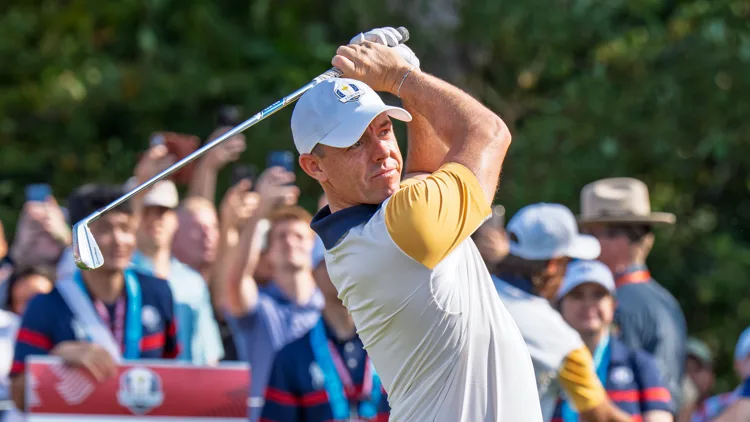
The USGA and R&A's October 21 deadline for feedback on elite distance rules has passed, with three Model Local Rules that could split pro and amateur equipment from January 2028.
Luiten Says LIV Returnees Should Lose Their Rights and Go Through Q School
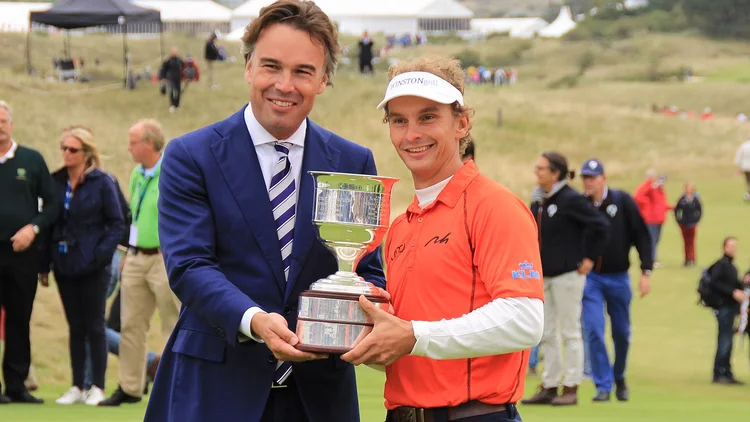
Joost Luiten, a six-time DP World Tour winner, says players who left for LIV should lose their exemption rights, stop getting invites and earn their way back at Q School.
McIlroy Backs Kinnings: LIV Wanted to 'Destroy' the DP World Tour, and Golf Needs a Reset
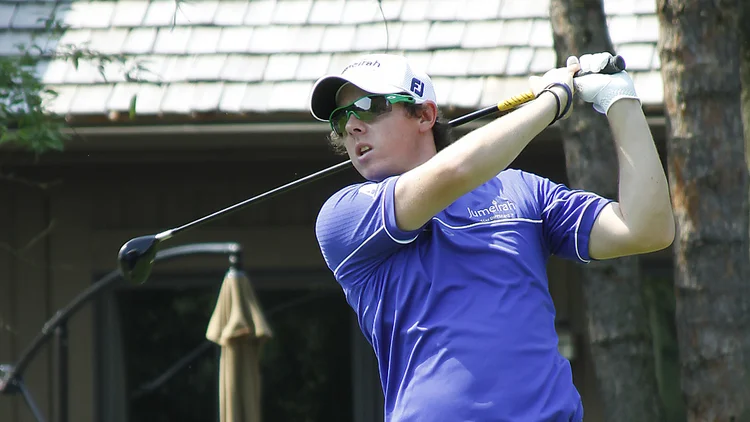
Rory McIlroy backed DP World Tour chief Guy Kinnings after Kinnings said LIV Golf aimed to 'destroy' his tour, and called for a reset in men's golf ahead of Abu Dhabi.