
How Much Does a Polo Pony Cost? Prices by Level

On this page5
A polo pony costs $3,000 to $15,000 for a safe, club-level mount in the US, $15,000 to $40,000 for a schooled medium-goal horse, and $40,000 to $100,000 for a tournament-proven high-goal pony from Argentine bloodlines. Elite horses used by professional 8-to-10-goal players can clear $250,000. And “pony” is the wrong word for all of them: a polo pony is a full-sized horse, usually 15 to 16 hands tall, carrying a name left over from a height rule that disappeared over a century ago.
That naming quirk matters because it trips up almost everyone shopping for their first horse. Below is the real price range by training level, why the “pony” label stuck, why one horse is never enough if you’re serious about the sport, and what it costs to keep a string running once you’ve bought in.
How much does a polo pony cost by skill level?
| Training level | Typical price (US$) | What you’re buying |
|---|---|---|
| Green / unstarted prospect | $1,500 - $8,000 | Young horse (often 3-4 years old), basic groundwork only; buyer does the polo training |
| Club-level, beginner-safe | $3,000 - $15,000 | Knows the basic aids, safe in arena or low-goal club chukkas |
| Medium-goal, schooled | $15,000 - $40,000 | Solid position sense, handles ride-offs and contact, ready for intermediate tournaments |
| High-goal, competitive | $40,000 - $100,000 | Argentine-bred, tournament-proven, the standard mount at 15-20+ goal level |
| Elite pro-string horse | $100,000 - $250,000+ | Championship pedigree and match record, the caliber top 8-10 goal professionals ride |
These ranges track closely across the sources that publish real numbers: World Polo Guide, the sport’s dedicated cost-tracking site, puts general horse ownership at $15,000-$100,000+ per animal, while HorseRacingSense cites $15,000-$200,000+ for a fully trained pony depending on pedigree and performance history. A single Argentine farm quoted separately sells low-goal prospects for $5,000-$7,000 and high-goal horses for $7,000-$8,000 at the source in Argentina, before import, quarantine and transport add another 15-30% for a US, UK or Australian buyer.
Training level explains most of the spread, more than breed or looks. A horse doesn’t reach high-goal peak condition until age 6 or 7, according to HorseRacingSense, which means every dollar above the green-prospect price is paying for years of professional schooling, not just the animal itself.
Why is a full-sized horse called a “polo pony”?
Because of a rule that no longer exists. The Hurlingham Club, England’s original governing authority for the sport, capped playing mounts at 14 hands in the 1870s, then raised the limit to 14.2 hands in 1895, according to the Museum of Polo and Hall of Fame. Fourteen-two hands is the technical dividing line between a pony and a horse, so the name was accurate at the time.
The club abolished the height restriction entirely in 1919 once it became clear that taller, faster horses simply played better polo. Breeders kept building bigger, quicker mounts, and today’s polo pony averages around 15.1 hands, with plenty standing over 16 hands, per the same source. The rule died; the nickname didn’t. Every polo pony you see today, from a $3,000 club horse to a $200,000 high-goal specialist, is a full-sized horse wearing a 130-year-old label.
Why do serious players need a string of ponies, not just one?
Because no single horse can survive a full match at polo speed. A pony covers roughly 3 kilometers per chukka at speeds up to 60 km/h, all while accelerating, stopping and pivoting under a rider swinging a mallet, according to Kronopolo. That output for longer than about seven minutes breaks a horse down fast, so no pony plays more than a chukka or two in a row before it needs a real rest.
This is the “string” system, and it’s the single biggest reason polo gets expensive once you move past renting a lesson horse:
- Casual, low-goal play: at least 2 ponies per player, so one can recover while the other plays.
- Regular club play: 4-6 ponies is the realistic working minimum for a player entering weekend tournaments.
- Professional and high-goal: 8-14 horses per player, according to Pololine’s reporting on the modern game, up from roughly 4 a generation ago.
That last jump isn’t cosmetic. Pololine’s reporting notes that the faster, more possession-based style of top-level polo now has players swapping horses mid-chukka rather than waiting for the whistle, which is why a competitive string keeps growing even as purchase prices climb. Multiply any of the price-by-level figures above by a 6-to-14-horse string and the real entry cost to serious polo becomes obvious fast.
What does it cost to keep a polo pony beyond the purchase price?
More than the horse itself, over time. Four categories eat the budget every year regardless of what you paid to buy the horse:
- Training: ongoing schooling to keep a horse’s polo skills sharp runs on top of general riding lessons, which World Polo Guide prices at $100-$300 an hour for private instruction.
- Veterinary care: routine work plus the injury risk that comes from a sport built on collisions and sharp direction changes; this is the cost line owners most often underestimate.
- Grooming and stabling: Pololine puts basic home stabling at roughly £2,500 a season per horse in the UK, rising to £5,000-£6,000 with premium club stabling and a dedicated groom, plus £600 or more for winter care.
- Tournament transport: hauling horses between clubs and events, a real line item once you’re playing a circuit rather than one home ground.
Scale those figures across a string and the totals get serious. Pololine puts a 10-to-14-horse professional string’s annual running cost at roughly £50,000-£84,000 before a single chukka is played, and Forbes reports that fielding a high-goal team for a 16-week competitive season, covering horses, grooms, vets, trainers and transport together, costs patrons $1-3 million. Most club-level players never get near that number, but it shows where the ceiling sits.
For a broader look at what horse ownership costs outside polo specifically, board, feed, farrier and insurance work the same way whatever discipline you ride. Our full breakdown of what it costs to own a horse covers those recurring line items in more depth, and if you’re still learning the sport itself, our guide to polo rules explained covers chukkas, scoring, and the string system these horses play into.
Where does the money actually go if you’re just starting out?
Not into buying a horse, if you’re smart about it. A beginner testing whether polo is worth the investment should rent, not buy: most clubs charge $100-$500 per chukka for a trained pony, tack and often a groom included, per World Polo Guide. Ten lessons plus twenty playing sessions and a starter equipment kit lands a realistic first-year recreational budget around $7,000-$17,500, all without owning a single horse.
That’s the right on-ramp. Buy your first pony once you know how many chukkas a week you’ll actually play and what position you’ll settle into, not before. If you want a sense of who plays this well once the string, the training and the years come together, our rundown of the best polo teams in the world breaks down the Argentine and international outfits that field the game’s most expensive strings.
FAQs
How much does a polo pony cost?
A club-level, beginner-safe polo pony costs $3,000 to $15,000 in the US. Medium-goal horses run $15,000 to $40,000, and high-goal, tournament-proven ponies from Argentine bloodlines cost $40,000 to $100,000, with elite pro-string horses ridden by top professionals clearing $100,000 to $250,000 or more.
Is a polo pony actually a horse?
Yes. Modern polo ponies stand 15 to 16 hands, well above the 14.2-hand cutoff that technically defines a pony. The name survives from an 1895 Hurlingham Club rule that capped mount height at 14.2 hands; the cap was abolished in 1919, but “polo pony” stuck as tradition.
How many polo ponies do you need to play?
At least two per player for casual, low-goal play, since a single horse can’t sustain a full match. Club players typically keep four to six. Professional and high-goal players field 8 to 14 horses, rotating a fresh mount in every chukka or even mid-chukka.
Why do polo players need so many horses?
Each chukka runs 7 minutes at a gallop-heavy pace that covers roughly 3 kilometers per pony. No horse can repeat that output chukka after chukka without breaking down, so players swap in a rested pony every 7 minutes, sometimes twice within one chukka in the faster modern game.
What’s the cheapest way to start playing polo?
Lease or lesson-pony rentals, not ownership. Most clubs rent a trained pony per chukka for $100-$500, tack and groom included, so a beginner can play a full afternoon for a few hundred dollars instead of committing $3,000-$15,000-plus upfront to buy and maintain a horse.
How much does it cost to keep a polo pony per year, beyond the purchase price?
Budget $5,000-$10,000+ per horse annually for stabling, feed, farrier and grooming even at the low end, based on UK livery figures from Pololine, before training, veterinary care, and tournament transport. A working string of 6-plus horses easily runs $30,000-$80,000 a year to maintain.
Frequently asked questions
How much does a polo pony cost?+
A club-level, beginner-safe polo pony costs $3,000 to $15,000 in the US. Medium-goal horses run $15,000 to $40,000, and high-goal, tournament-proven ponies from Argentine bloodlines cost $40,000 to $100,000, with elite pro-string horses ridden by top professionals clearing $100,000 to $250,000 or more.
Is a polo pony actually a horse?+
Yes. Modern polo ponies stand 15 to 16 hands, well above the 14.2-hand cutoff that technically defines a pony. The name survives from an 1895 Hurlingham Club rule that capped mount height at 14.2 hands; the cap was abolished in 1919, but 'polo pony' stuck as tradition.
How many polo ponies do you need to play?+
At least two per player for casual, low-goal play, since a single horse can't sustain a full match. Club players typically keep four to six. Professional and high-goal players field 8 to 14 horses, rotating a fresh mount in every chukka or even mid-chukka.
Why do polo players need so many horses?+
Each chukka runs 7 minutes at a gallop-heavy pace that covers roughly 3 kilometers per pony. No horse can repeat that output chukka after chukka without breaking down, so players swap in a rested pony every 7 minutes, sometimes twice within one chukka in the faster modern game.
What's the cheapest way to start playing polo?+
Lease or lesson-pony rentals, not ownership. Most clubs rent a trained pony per chukka for $100-$500, tack and groom included, so a beginner can play a full afternoon for a few hundred dollars instead of committing $3,000-$15,000-plus upfront to buy and maintain a horse.
How much does it cost to keep a polo pony per year, beyond the purchase price?+
Budget $5,000-$10,000+ per horse annually for stabling, feed, farrier and grooming even at the low end, based on UK livery figures from Pololine, before training, veterinary care, and tournament transport. A working string of 6-plus horses easily runs $30,000-$80,000 a year to maintain.
Sources
- Museum of Polo and Hall of Fame - History of Polo
- Kronopolo - How Many Horses Do You Need To Play Polo?
- World Polo Guide - Cost of Polo
- Forbes - The Economics Of Polo, The Sport Of Kings
- HorseRacingSense - Polo Pony Breeds
- Pololine - Changing Ponies Every Two Minutes Is Forcing The Cost Of Polo Through The Roof
Play & tools
Free browser games and tools — no account, no download.
- Play today's Sports Connections — Today's Sports Connections — daily hints, answers, and play the grid.
- Play Guess the NFL Player — A new mystery NFL player every day. Eight guesses, with a clue on each — plus free unlimited mode.
- Explore all our games →
Related guides
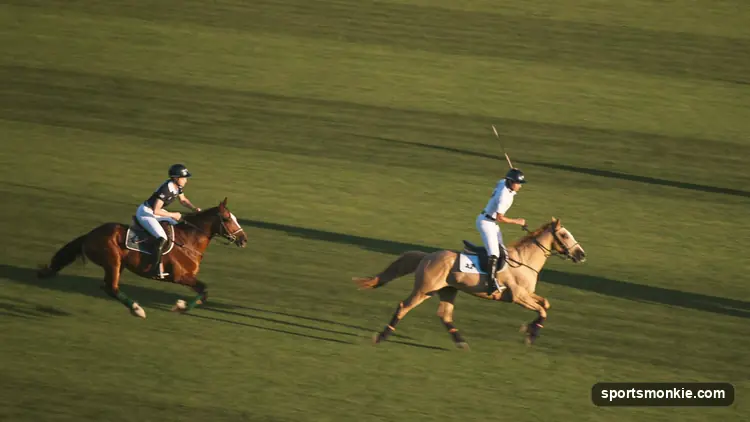
How Much Does a Polo Horse Cost?
How much a polo horse (pony) costs: green prospects to top string ponies, plus the real ongoing costs of keeping one. Typical 2026 ranges explained.
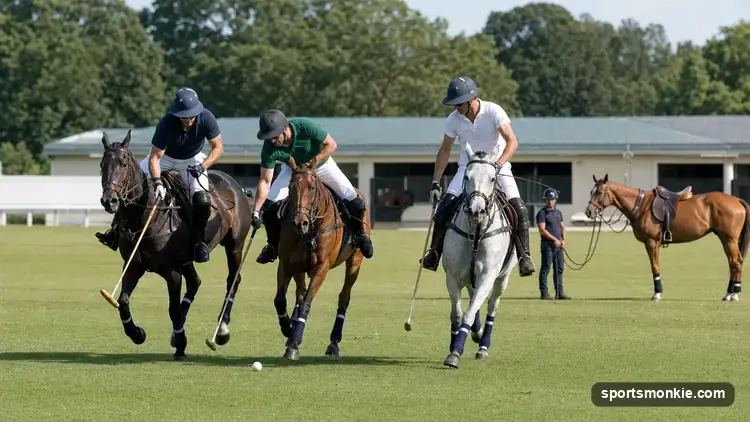
How Much Does It Cost to Play Polo? Real 2026 Prices
A single intro clinic runs $80-$175. A beginner season on club horses is $850-$3,500. Real club pricing on lessons, membership, gear and horses.

How Much Does a Polo Shirt Cost? Price Tiers Explained
A polo shirt costs $15 to $30 at budget retailers, $70 to $130 at mid-range brands, and $110 to $180 full-price at Lacoste, Ralph Lauren, and Brooks Brothers.
How Much Does an Ironman Cost? Full Breakdown
How much does an Ironman cost? Entry runs $800-$1,000, but a first Ironman budget lands $3,500-$12,000 once gear, coaching and travel are counted.
How Much Does It Cost to Own a Horse? Full Breakdown
Owning a horse costs $6,000-$20,000+ a year in the US after a $1,000-$15,000 purchase. Full breakdown of board, feed, farrier, vet and insurance costs.
How Much Does a Sailboat Cost? Buying and Survey Costs
Sailboats run $2,500 for a new Sunfish to $300,000+ for a 40-foot cruiser. Full price breakdown by size, plus what a pre-purchase survey actually costs.