
How Much Does It Cost to Build a Pickleball Court?
On this page8
- 01What does it actually cost to build a pickleball court?
- 02A worked example: a mid-range backyard court
- 03Concrete, asphalt, or post-tension: which base should you choose?
- 04Acrylic coating or modular tiles: which surface?
- 05Should you DIY or hire a contractor?
- 06Backyard court versus a full facility
- 07Is it cheaper to convert an existing tennis court?
- 08What are the ongoing costs after the build?
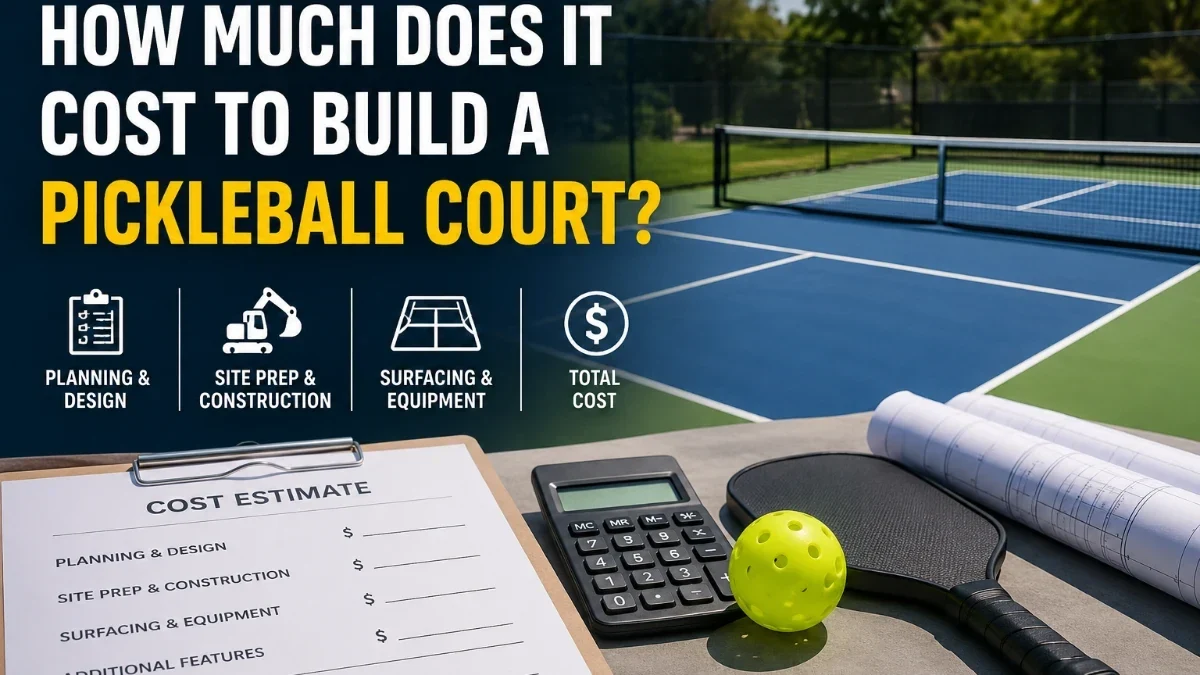
Building a single outdoor pickleball court typically costs between $20,000 and $40,000 in 2026, with most full concrete-and-acrylic builds quoted closer to $25,000 to $50,000. A budget backyard setup on flat ground can start near $15,000, while a lit, fenced court on a difficult slope runs higher. The base and site work move the number more than the surface itself. These are US figures that vary by region and site.
What does it actually cost to build a pickleball court?
A finished court is a stack of separate jobs: preparing the ground, pouring a base, coating a playing surface, and adding fencing, lighting, and a net. Each is its own line item, and each can swing by thousands of dollars. The single biggest variable is the ground you start with. A flat, well-drained lot needs little earthwork, while a sloped or waterlogged plot can add $15,000 or more in grading, drainage, and retaining walls before a court even takes shape.
Here are the typical 2026 US ranges for a single outdoor court. You pick one base option, not all three.
| Component | Typical cost |
|---|---|
| Site preparation and grading | $3,000 – $10,000 |
| Asphalt base | $6,000 – $12,000 |
| Concrete base | $10,000 – $18,000 |
| Post-tensioned concrete base | $18,000 – $25,000 |
| Acrylic color coating | $3,000 – $6,000 |
| Fencing (chain-link) | $2,000 – $8,000 |
| Lighting | $800 – $6,000 |
| Net and posts | $500 – $2,000 |
| Permits | $200 – $2,000 |
A worked example: a mid-range backyard court
Averages hide the real question, which is what a normal build adds up to. Here is a realistic mid-range court on a mostly flat suburban lot, sized to the recommended 30-by-60-foot pad rather than the bare 20-by-44-foot playing area:
| Line item | Cost |
|---|---|
| Site prep and grading (gentle slope) | $5,000 |
| Concrete base, ~1,800 sq ft at $7/sq ft | $12,600 |
| Acrylic color coating (two colors, striped) | $4,000 |
| Chain-link perimeter fencing | $6,000 |
| LED lighting, four-pole setup | $4,000 |
| Permanent net and posts | $1,200 |
| Permit | $800 |
| Total | ~$33,600 |
Drop the lighting and fencing and the same court falls to roughly $22,000. Add post-tensioned concrete and premium ornamental fencing and it climbs past $50,000. That spread, from low-20s to low-50s, is the honest answer most cost pages blur into a single average.
Concrete, asphalt, or post-tension: which base should you choose?
The base is the foundation everything else sits on, and it is where durability is won or lost. Asphalt is the cheapest at roughly $3 to $7 per square foot but needs resurfacing every 8 to 10 years as it oxidizes and cracks. Standard concrete runs about $5 to $10 per square foot and holds up far longer. Post-tensioned concrete, at roughly $15 to $20 per square foot, uses internal steel cables to stay crack-free the longest, which is why the American Sports Builders Association points to it as the premium choice on unstable or expansive soils.
My recommendation for a court you plan to keep: standard concrete for most backyards, and post-tensioned concrete only if your soil is known to shift. Asphalt makes sense mainly when budget is the hard constraint and you accept the resurfacing cycle.
Acrylic coating or modular tiles: which surface?
On top of the base goes the playing surface, and there are two real paths. A troweled acrylic color coat is the standard: $3,000 to $6,000 for a full court, giving the grippy texture and true ball bounce players expect. A cushioned acrylic system blended with granulated rubber costs more but is softer on knees and ankles.
The alternative is snap-together modular tiles, which lock over any sound flat slab. Manufacturers such as VersaCourt sell these as a DIY-friendly surface that drains fast and needs no recoating, though the upfront tile cost is higher than a coat of acrylic. Tiles shine when you already have concrete, such as an unused driveway or sport pad, and want to skip pouring a base entirely.
Should you DIY or hire a contractor?
DIY only works when the ground is already right. If you have a flat, sound slab, you can lay modular tiles yourself for a few thousand dollars, or paint lines onto existing pavement for less again, though painted concrete plays rough. The moment the job involves excavation, grading, drainage, or pouring a new slab, you need a contractor. A crooked or poorly drained base is the one mistake you cannot fix later without tearing it out. Most homeowners building from bare ground hire out the base and coating and keep the net or tiles as the weekend-friendly part.
Backyard court versus a full facility
A backyard court is a self-contained project, usually $15,000 to $50,000 depending on finishes. A dedicated indoor facility is a different scale: expect roughly $50,000 to $150,000 per court once you add the building shell, cushioned flooring, lighting, and climate control. Commercial multi-court builds cost more in total but spread fixed costs like grading and permits across several courts, lowering the per-court figure. If space is tight, USA Pickleball recommends a 30-by-60-foot total footprint as the minimum and 34-by-64 feet as preferred, which is why that run-off margin matters more than the 880-square-foot playing area on its own. For the exact lines and zones, see our guide to official pickleball court dimensions.
Is it cheaper to convert an existing tennis court?
If you already have a tennis court, or access to a tired public one, converting is almost always the cheapest route to playable pickleball. A standard tennis court fits up to four pickleball courts. Simply striping pickleball lines onto a sound tennis surface costs $1,500 to $3,500. A full strip-and-coat conversion, with crack repair, fresh acrylic, and new lines for two to four courts, typically runs $15,000 to $25,000. That is a fraction of the per-court cost of pouring new pads, and it reuses the base and fencing you already paid for. If you are weighing the two builds, our breakdown of the cost of building a tennis court shows why the larger footprint carries the higher price.
Ready to plan your build or your game? Explore more court, gear, and rules guides in our racket sports hub.
What are the ongoing costs after the build?
The build is not the end of the spending. Acrylic surfaces need recoating every four to eight years, asphalt bases need resurfacing roughly every 8 to 10 years, and nets, lights, and fencing all wear out eventually. A well-kept concrete-and-acrylic court can stay playable for 25 years or more, so budgeting a modest annual amount for cleaning, crack repair, and periodic resurfacing is what keeps small problems from compounding into a full rebuild. If you are new to the game, it also helps to learn the rules of the non-volley zone, or kitchen, before you stripe your lines.
Frequently asked questions
How much does it cost to build a pickleball court?+
A single outdoor court typically costs $20,000 to $40,000, with most full concrete-and-acrylic quotes landing between $25,000 and $50,000 once site prep, fencing, and lighting are included. A basic backyard setup on flat ground can start near $15,000. These are 2026 US figures that vary by region.
How much does a backyard pickleball court cost versus a full facility?+
A backyard court usually runs $15,000 to $50,000 depending on site work and finishes. A dedicated indoor facility costs far more, commonly $50,000 to $150,000 per court once you add the building shell, cushioned flooring, and climate control. Commercial multi-court builds spread fixed costs, lowering the per-court price.
Is it cheaper to convert a tennis court to pickleball?+
Often, yes. Adding pickleball lines to a sound tennis court costs only $1,500 to $3,500, and a full strip-and-coat conversion of one tennis court into four pickleball courts runs about $15,000 to $25,000. That is far cheaper per court than pouring a new pad from bare ground.
Should I use a concrete or asphalt base for a pickleball court?+
Concrete lasts longer and cracks less, which is why premium courts use it, at roughly $5 to $10 per square foot. Asphalt is cheaper at about $3 to $7 but needs resurfacing every 8 to 10 years. Post-tensioned concrete resists cracking best and costs the most upfront.
How much do fencing and lighting add to a pickleball court?+
Chain-link fencing to enclose a court commonly costs $2,000 to $8,000 installed, or up to $15,000 for powder-coated or ornamental steel. Court lighting adds roughly $800 for a basic setup to $6,000 for a proper multi-pole LED system that supports evening play once the sun goes down.
How big a space do you need to build a pickleball court?+
The playing area is 20 by 44 feet, or 880 square feet, but USA Pickleball recommends a minimum total footprint of 30 by 60 feet so players have safe run-off room around the lines. A tighter yard can host a court, but reduced margins affect play and safety.
Sources
Play & tools
Free browser games and tools — no account, no download.
- Play today's Sports Connections — Today's Sports Connections — daily hints, answers, and play the grid.
- Play Guess the NFL Player — A new mystery NFL player every day. Eight guesses, with a clue on each — plus free unlimited mode.
- Explore all our games →
Related racket sports guides
View all →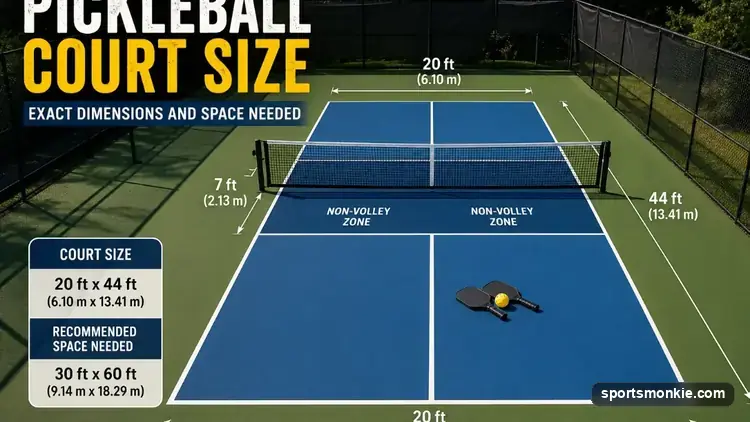
Pickleball Court Dimensions and Space Needed
Official pickleball court dimensions: 20 x 44 ft lines, 30 x 60 ft minimum playing surface, 34 x 64 ft preferred space, kitchen, net and layout.
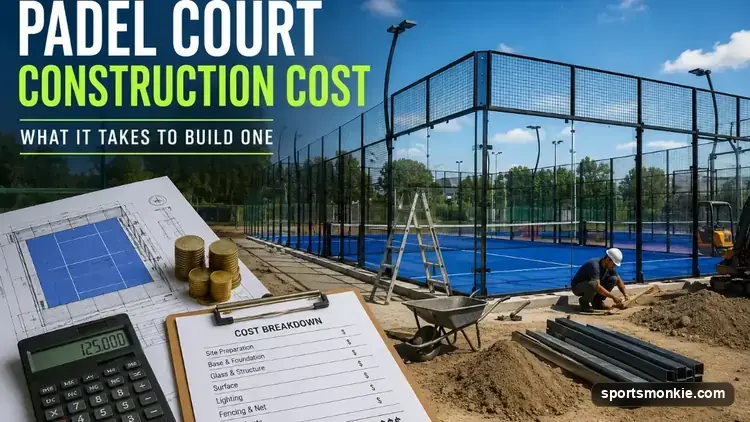
Padel Court Construction Cost, Explained
Padel court construction cost runs roughly $85k-$120k installed in the US and about £71k per court in the UK. See a breakdown of glass, turf, and labor.
How Much Does Club Volleyball Cost?
Club volleyball typically costs a few thousand dollars a season once fees, travel and gear are added. Full cost breakdown and why it's expensive.
How Much Does a Racehorse Cost?
A racehorse can cost anywhere from a few thousand dollars to millions at auction, plus tens of thousands a year to train and keep. Full price breakdown.
How Much Does It Cost to Build a Topgolf?
Building a Topgolf is a major project reportedly costing tens of millions of dollars. Here's what drives the estimate and why figures vary so widely.
Cost to Play Pebble Beach Golf Links
What does it cost to play Pebble Beach? As of 2025 the green fee is roughly $675+ per round, plus cart and caddie. Full breakdown and how to book.