
NFL Revenue Sharing Explained: Why It Drives Parity
On this page4
NFL revenue sharing is the reason a team in Green Bay competes financially with a team in New York. It is a pillar of the league’s closed model, where new clubs join only as expansion teams rather than by earning promotion. The league takes its national revenue, overwhelmingly the enormous broadcast deals, and divides it almost equally among all 32 teams, so each club collects roughly $400 million a year before it sells a local ticket. That shared base, more than any single rule, is why the NFL is the most competitively balanced league in North American sport.
What gets shared and what does not
Not all NFL money is pooled. The split runs along a simple line: national revenue is shared, local revenue mostly is not.
| Revenue type | Examples | Shared equally? |
|---|---|---|
| National media | TV and streaming broadcast deals | Yes |
| League sponsorships | Official league partners, licensing | Yes |
| Merchandise | League-wide apparel and gear sales | Yes |
| Local gate | Most ticket and club-seat income | Mostly kept locally |
| Local commercial | Concessions, parking, local sponsors | Kept locally |
The national side is so large that it dominates the total. A club’s local income still matters, and it is where big markets keep an edge, but it is the smaller slice for most teams.
How big the shared pot is
The engine is the media rights. The NFL’s national broadcast agreements are worth well over $100 billion across roughly a decade, the richest in sports, and because that money is divided evenly, every team’s cut rises in lockstep each year. That is also why the NFL salary cap keeps climbing: player costs are tied to league revenue, and league revenue is mostly this shared national money.
We know the per-team figure with unusual confidence because of one quirk. The Green Bay Packers are the only publicly, fan-owned franchise, so they release audited financials every year, per the team’s annual shareholder disclosures. Those reports show national revenue distributions in the range of $400 million per club in recent years, the closest thing the league has to an open book.
Why sharing drives parity
Here is the causal chain. Shared revenue gives every team a nearly identical financial floor. The salary cap then ties spending to that same revenue and forbids any team from exceeding it. Together they mean a small-market club can pay its stars exactly what a big-market club can, so on-field results come down to drafting, coaching, and cap management rather than checkbook size.
Compare that to European soccer, where clubs keep their own broadcast and commercial money and the wealth gap between giants and everyone else is enormous. The NFL chose the opposite model on purpose. If you want to see the contrast in detail, our explainer on Financial Fair Play covers how that open-market system tries, and often struggles, to rein spending back in.
Why owners accept it
Revenue sharing survives because it is good business for everyone, including the big markets. A league where every team can win draws bigger national audiences, which fattens the very media deals that get shared. The Dallas Cowboys make more from an equal split of a $100 billion pie than from a bigger slice of a smaller, less competitive one. Sharing is not charity; it is the growth strategy that made the shared pie so large in the first place.
The system’s fingerprints are all over the modern NFL. It is why “any given Sunday” is a real phenomenon and why sustained dynasties are rare. For the on-field payoff of all this balance, see our list of the most successful American football teams and how few franchises truly separate from the pack, and our ranking of the most valuable NFL teams shows how shared revenue lifts every club’s worth at once. The roughly $400 million figure reflects recent Packers disclosures and rises most years with the media deals, so check the latest report for the current number.
Frequently asked questions
How does NFL revenue sharing work?+
The league pools its national revenue, mainly the giant broadcast contracts plus league-wide sponsorships and merchandise, and splits it nearly evenly among all 32 teams. Local revenue like most ticket and concession income stays with each club, but the shared national pot dwarfs it.
How much does each NFL team get from revenue sharing?+
Each team receives roughly $400 million a year in national and shared revenue before it sells a single local ticket. The exact figure is public because the Green Bay Packers, the only fan-owned team, disclose their finances annually, giving a rare window into the split.
Why does revenue sharing create parity in the NFL?+
Because every team starts from nearly the same revenue base, a small-market club can compete financially with a big-market one. Paired with a hard salary cap that ties spending to that shared revenue, it stops the richest markets from simply outspending everyone for talent.
What revenue do NFL teams keep locally?+
Clubs keep most local income: club-seat premiums, concessions, parking, local sponsorships, and a share of the gate. That is where market size still matters. But because national revenue is so large and shared, local money is the smaller part of most teams' total.
How big are the NFL's media deals?+
The current national media agreements are worth over $100 billion across roughly a decade, the largest in sports. Because that money is shared equally, every team's cut rises together each year, which is also why the salary cap keeps climbing.
Do NFL owners split gate receipts?+
Yes, in part. Historically the visiting team received a share of gate receipts, a practice dating to the league's early decades that helped weaker-drawing clubs survive. The bulk of shared money today, though, comes from national media rather than the gate.
Sources
Play & tools
Free browser games and tools — no account, no download.
- Play 17-0 — Draft nine and chase a flawless NFL regular season — the perfect 17-0 run, no playoffs.
- Play 20-0 — Draft nine and chase a perfect NFL season — regular season and playoffs, undefeated.
- Play 16-0 — Draft nine and chase a perfect 16-0 — the classic 16-game NFL regular season, no playoffs.
- Play Flawless Six — Draft five players and a head coach, then chase a perfect NFL season with the right chemistry.
- Play Guess the NFL Player — A new mystery NFL player every day. Eight guesses, with a clue on each — plus free unlimited mode.
- Play NFL Wordle — A Wordle for football — guess the daily NFL player in eight tries, with green-amber-grey feedback on every clue.
- Play NFL Connections — Sort sixteen football tiles into four hidden groups of four. A new daily puzzle, four mistakes allowed, plus unlimited mode.
- Explore all our games →
- Open the schedule simulator — Pick every 2026 NFL game and watch the standings and playoff seeds update live.
- Open the squares generator — Generate a randomized, printable Super Bowl squares grid for your party — free, no sign-up.
- Open the trade calculator — Weigh any fantasy football trade instantly — clear winner and value gap.
- Run the NFL predictor — Simulate the NFL bracket and see who your picks send to the Super Bowl.
- Open the passer rating calculator — Calculate the official NFL passer rating (0–158.3) from any passing line, with the formula shown.
- Explore all our free sports tools →
Related nfl guides
View all →
What Is Dead Cap in the NFL? Bonus Proration Explained
Dead cap is leftover signing-bonus money that hits the cap after a player is cut or traded. Here's how proration accelerates and how the June 1 rule splits it.
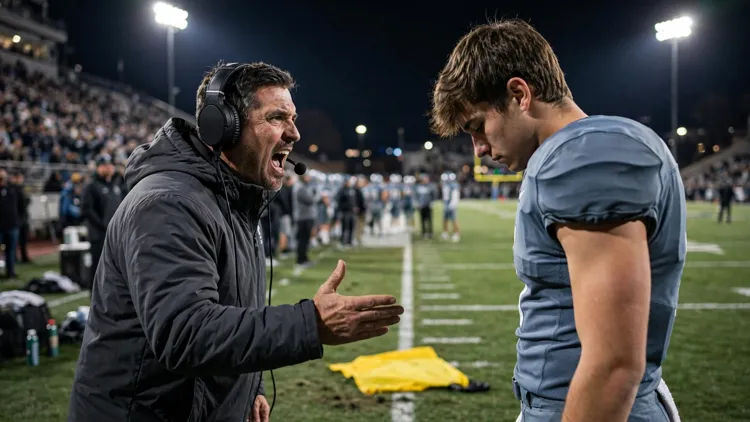
Georgia Beats Alabama 20-17 After a No-Call, a Sideline Dressing-Down and Fans Throwing Objects
Georgia's 20-17 win at Alabama turned on a pass-interference no-call, Dijon Lee Jr.'s late personal foul, Kalen DeBoer's sideline outburst and objects thrown at the tunnel.
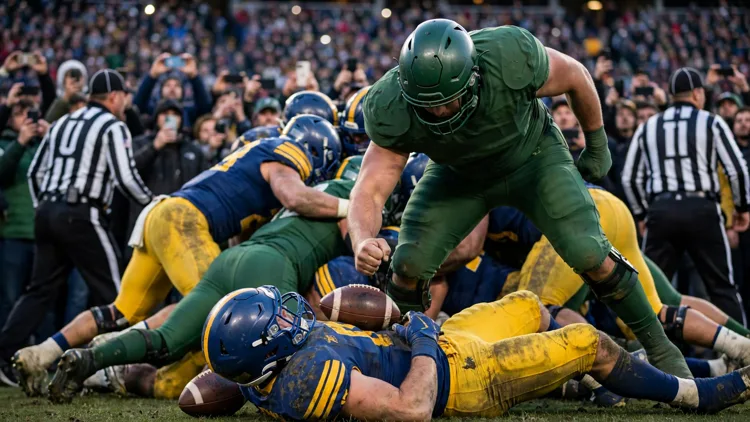
Bear Alexander's Swing at Nico Iamaleava Drew No Flag, and the Big Ten Now Has the Replay
A viral clip appears to show Oregon's Bear Alexander swinging at UCLA quarterback Nico Iamaleava in a pile, with no flag thrown, leaving the Big Ten a sportsmanship decision.
Hurricane Isaias Moves College GameDay Indoors as Georgia-Alabama Stays On Schedule
ESPN moved College GameDay inside Coleman Coliseum, Donald Trump cancelled his trip and tents were banned in Tuscaloosa, but Georgia-Alabama kicks off as planned.
Jalon Daniels Calls His Mom Onto the Postgame Desk After His First NFL Win
Undrafted Bucs rookie Jalon Daniels won his first NFL start in Dallas, then called his mother Star onto the Prime Video postgame desk live on air.
Bowles Calls Out the League's Most Flag-Happy Crew After Bucs Survive 14 Penalties in Dallas
Todd Bowles said Tampa Bay studied Alex Moore's crew all week, then watched a made 61-yard field goal wiped out by a delay penalty in a 24-16 win at Dallas.