
Most NHL Goals in a Season
On this page11
- 01Wayne Gretzky — 92 (1981-82)
- 02Wayne Gretzky — 87 (1983-84)
- 03Brett Hull — 86 (1990-91)
- 04Mario Lemieux — 85 (1988-89)
- 05Teemu Selanne — 76 (1992-93)
- 06Alexander Mogilny — 76 (1992-93)
- 07Phil Esposito — 76 (1970-71)
- 08How we ranked these seasons
- 09Why the record has to be read by era
- 10The single-season totals at a glance
- 11The team record: Edmonton’s 446 goals
This list ranks the highest single-season goal totals in NHL history by raw goals scored, exactly as the record book keeps them. Each season stands on its own, so a player can appear more than once; ties are broken by the fewer games needed to reach the total.
- The record
Wayne Gretzky — 92 (1981-82)
Gretzky scored 92 goals in 80 games for the Edmonton Oilers, the only 90-goal season in league history and the reason this record is considered untouchable. He ranks above his own 87 because of how he got there: he reached 50 goals in his first 39 games, still the fastest to 50 ever, and finished the year with 212 points.
The margin is the story. Second place on this list is five goals back, and no player in the 40-plus years since has come within 23 of 92. Leon Draisaitl led the entire NHL with 52 goals in 2024-25 and did not reach 60.
Team: Edmonton Oilers · Games: 80 · Also that year: 50 goals in 39 games, 212 points
- Same man, second time
Wayne Gretzky — 87 (1983-84)
Two seasons after the 92, Gretzky scored 87 in just 74 games, missing time to injury yet still posting the second-highest total ever. It sits above Brett Hull's 86 by a single goal, and Gretzky did it in a dozen fewer games than a full modern schedule.
This was the year the Oilers machine peaked: Edmonton scored 446 goals as a team and won its first Stanley Cup. Gretzky is the only player to own two of the top three seasons on this list, a run detailed in our ranking of the greatest NHL players.
Team: Edmonton Oilers · Games: 74 · Context: Oilers' first Cup season
- Highest by a non-Oiler
Brett Hull — 86 (1990-91)
Hull scored 86 for the St. Louis Blues, the most by anyone not named Gretzky and the peak of a three-year run in which he also posted 72 and 70. It edges Lemieux's 85 by one goal, set in the early-1990s scoring window before the dead-puck era clamped down.
Hull's total leaned on a one-timer that defenses never solved and on setup from Adam Oates. No player since 1990-91 has matched it; the next-closest modern figure is 23 goals lower.
Team: St. Louis Blues · Games: 78 · Signature: the one-timer with Adam Oates
- Two-way superstar
Mario Lemieux — 85 (1988-89)
Lemieux scored 85 for the Pittsburgh Penguins while also racking up 114 assists for 199 points, the closest anyone but Gretzky has come to a 200-point season. He ranks just below Hull on goals alone despite arguably the more complete offensive year.
His placement is a reminder that this list counts goals, not value: Lemieux's all-around dominance does not move him up, but it is why many rank his prime above Hull's overall. See how the debate shakes out in our ranking of the greatest NHL players.
Team: Pittsburgh Penguins · Games: 76 · Also that year: 199 points
- Rookie record
Teemu Selanne — 76 (1992-93)
Selanne scored 76 as a first-year player for the Winnipeg Jets, shattering the previous rookie mark of 53 and tying for fifth on the all-time single-season list. No rookie has come close since, making it one of the safest records in the sport.
He is grouped here with the other 76-goal seasons, but the rookie context sets his apart: every player ranked above him was an established star, while Selanne did it in his NHL debut season.
Team: Winnipeg Jets · Games: 84 · Record: most goals by an NHL rookie
- The 76 club
Alexander Mogilny — 76 (1992-93)
Mogilny matched Selanne's 76 in the same 1992-93 season, playing for the Buffalo Sabres alongside center Pat LaFontaine. It was a career-high by a wide margin; he never again topped 55, which is why the season stands out as a single spike rather than a sustained run.
Two players reaching 76 in one year underlines how inflated early-1990s scoring was. Neither total has been approached in the three decades since.
Team: Buffalo Sabres · Games: 77 · Setup man: Pat LaFontaine
- The mark Gretzky broke
Phil Esposito — 76 (1970-71)
Esposito's 76 for the Boston Bruins was the single-season record for a decade, until Gretzky's 92 buried it in 1981-82. It ties for fifth all-time and was the first time any player cleared 70 in a season.
His placement here is historical bedrock: every total above 76 on this list came later and was set by Gretzky, Hull or Lemieux. Esposito set the ceiling that the 1980s Oilers eventually shattered.
Team: Boston Bruins · Games: 78 · Held the record: 1970-71 to 1981-82
Reader interaction
Build your ranking
Drag the names into the order you think is right — or use the arrows — then submit to see how your list compares with everyone else's.
- Wayne Gretzky — 92 (1981-82)
- Wayne Gretzky — 87 (1983-84)
- Brett Hull — 86 (1990-91)
- Mario Lemieux — 85 (1988-89)
- Teemu Selanne — 76 (1992-93)
- Alexander Mogilny — 76 (1992-93)
- Phil Esposito — 76 (1970-71)
Audience ranking
How everyone ranked them
Built from reader rankings using position-based points.
The most goals scored in a single NHL season is 92, by Wayne Gretzky for the Edmonton Oilers in 1981-82. The ranked cards above list the highest single-season totals in league history; the sections below explain how we ordered them and why the record has to be read through the lens of its era.
How we ranked these seasons
We ranked strictly by regular-season goals, the way the NHL record book does, so the order is not a judgment of overall value. That is why Mario Lemieux’s 85-goal, 199-point season sits below Brett Hull’s 86 despite arguably being the better all-around year. Where totals tie, we broke the tie by games played, giving the edge to the season that reached the number faster. Playoff goals are excluded entirely, since the single-season record has always counted the regular season only.
Individual brilliance and team firepower ran together at the top of this list. Six of the seven seasons came from the early 1980s or early 1990s, and two of them belong to Gretzky during Edmonton’s dynasty. For the wider picture of that era’s talent, see our ranking of the greatest NHL players.
Why the record has to be read by era
Gretzky’s 92 came in an 80-game season. The NHL moved to an 82-game schedule in 1995-96, so a modern player has two extra games to work with and still cannot get close. The gap is not about games; it is about the sport.
In the early 1980s the league averaged around eight goals per game across both teams. Goaltending was weaker, equipment smaller, and defensive systems looser. Today the average is closer to six, with bigger goalies and structured defenses built to smother exactly the kind of scoring Gretzky feasted on. Auston Matthews’ 69 in 2023-24 was the most by anyone since Lemieux’s 69 in 1995-96, and it still left him short of even the 76 that ties for fifth on this list. Comparing 92 in 1982 to totals in the 50s and 60s today without that context misses the point of the record.
The single-season totals at a glance
| Player | Team | Season | Goals | Games |
|---|---|---|---|---|
| Wayne Gretzky | Edmonton Oilers | 1981-82 | 92 | 80 |
| Wayne Gretzky | Edmonton Oilers | 1983-84 | 87 | 74 |
| Brett Hull | St. Louis Blues | 1990-91 | 86 | 78 |
| Mario Lemieux | Pittsburgh Penguins | 1988-89 | 85 | 76 |
| Teemu Selanne | Winnipeg Jets | 1992-93 | 76 | 84 |
| Alexander Mogilny | Buffalo Sabres | 1992-93 | 76 | 77 |
| Phil Esposito | Boston Bruins | 1970-71 | 76 | 78 |
Every total above 76 was set before 1992, and no season on the list comes from the past three decades. That clustering is the clearest evidence of how much the scoring environment has changed.
The team record: Edmonton’s 446 goals
The single-season goal record has a team version, and the same club holds it. The 1983-84 Edmonton Oilers scored 446 goals in 80 games, an average of 5.58 per game, before winning the first of their Stanley Cups. It broke the record they had set the previous season and has never been approached since.
That team is why Gretzky’s individual totals look almost normal in context: an Oilers side built to score at a rate no modern team comes near. Put the two records together and the early-1980s Oilers hold both the most goals by a player and the most by a team in a single NHL season. For the modern economics behind today’s rosters, see the highest-paid NHL players.
As of the 2025-26 season, Gretzky’s 92 has stood for more than 40 years, and with leaguewide scoring nowhere near its 1980s peak, it remains one of the few sports records that looks genuinely out of reach.
Frequently asked questions
Is Gretzky's 92-goal record still the most NHL goals in a season?+
Yes. As of the 2025-26 season it has stood for more than 40 years and no player has reached even 87 since Gretzky himself. The closest modern challenger was Auston Matthews with 69 in 2023-24, still 23 short. With leaguewide scoring far below its 1980s peak, 92 remains one of the safest records in team sports.
Who led the NHL in goals most recently?+
Leon Draisaitl of the Edmonton Oilers won the Maurice Richard Trophy for the 2024-25 season with 52 goals, leading the league. That total, while excellent by modern standards, sits 40 short of Gretzky's record and did not reach 60, showing how far current scoring is from the early-1980s peak that produced the top of this list.
How many games did Gretzky need to score 92 goals?+
He did it in an 80-game season and set a separate record along the way by reaching 50 goals in just 39 games. That 50-in-39 pace remains the fastest to 50 in league history and is arguably as untouchable as the 92 itself, since no modern player scores at anywhere near that rate over any 39-game stretch.
Why do modern players score so many fewer goals?+
Leaguewide scoring was far higher in the early 1980s, near eight goals per game across both teams, with more open play and weaker goaltending. Today the average is closer to six. Bigger goalies, better equipment and structured defensive systems have cut scoring sharply, which is why a total in the high 60s now leads the entire league rather than sitting fifth on this list.
Has anyone scored 70 goals in the modern NHL?+
Not since the mid-1990s. Auston Matthews came closest recently with 69 in 2023-24, the most by anyone since Mario Lemieux's 69 in 1995-96. Reaching 70 has become a symbolic barrier no current player has cleared, which is part of why every season on this ranked list predates 1993.
Do playoff goals count toward this record?+
No. All totals here are regular-season goals only, which is how the NHL keeps its single-season record. Gretzky's 92, Selanne's 76 rookie mark and every other figure on the list exclude playoff scoring. Postseason goals are tracked as a separate record entirely, so a deep Stanley Cup run does not add to a player's single-season goal total.
Sources
Play & tools
Free browser games and tools — no account, no download.
- Play 98-0 — Draft a 12-player all-time NHL roster and chase a perfect 98-0 — 82 regular-season wins plus a swept Cup.
- Explore all our games →
Related ice hockey guides
View all →
Darnell Nurse Fires Back at Reporter Mark Spector With a 'Low IQ' Jab Before Facing the Oilers
Sharks defenceman Darnell Nurse used a Friday media scrum to settle a score with Sportsnet reporter Mark Spector, whose column called hockey sense his great weakness.
Oilers Say the Viral Rogers Place Ejection Had Nothing to Do With an Alberta Flag
A viral video claimed an Oilers fan was ejected for waving an Alberta flag. The Oilers say he was removed for disruptive conduct and language, not the flag.

Alex Ovechkin Says 2026-27 Will Be His Final NHL Season After 22 Years in Washington
Alex Ovechkin told his Capitals teammates on Monday that the 2026-27 season will be his last in the NHL. The all-time goals leader starts his farewell year on 929 goals.
Landeskog's Goal Is Wiped Out for a Kicking Motion as Colorado Has Two Goals Disallowed
Gabriel Landeskog had a goal overturned for a distinct kicking motion, Colorado's second disallowed goal in ten minutes, in a 3-2 shootout loss to Dallas.
Dylan Peterson Fights in His NHL Debut and His Mom's Reaction Steals the Night
Blues rookie Dylan Peterson dropped the gloves in his first NHL game in Ottawa. The broadcast found his parents in the front row, and his mother went viral.
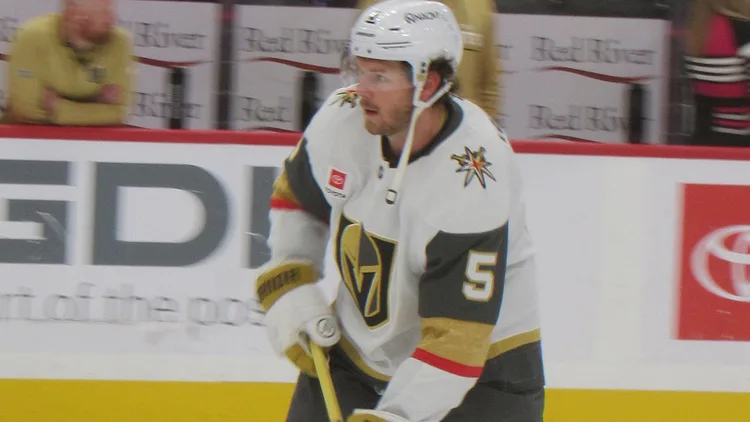
McCarron Calls Out Lauzon for Fighting Rookie Lorenz in His Second NHL Game
Vegas defenceman Jeremy Lauzon challenged Wild rookie Rieger Lorenz to a fight in Lorenz's second NHL game, and Lauzon's former Nashville teammate Michael McCarron said he did not like it.