
Manfred: Owners 'Will Not Compromise' on Salary Cap as Lockout Looms
On this page7
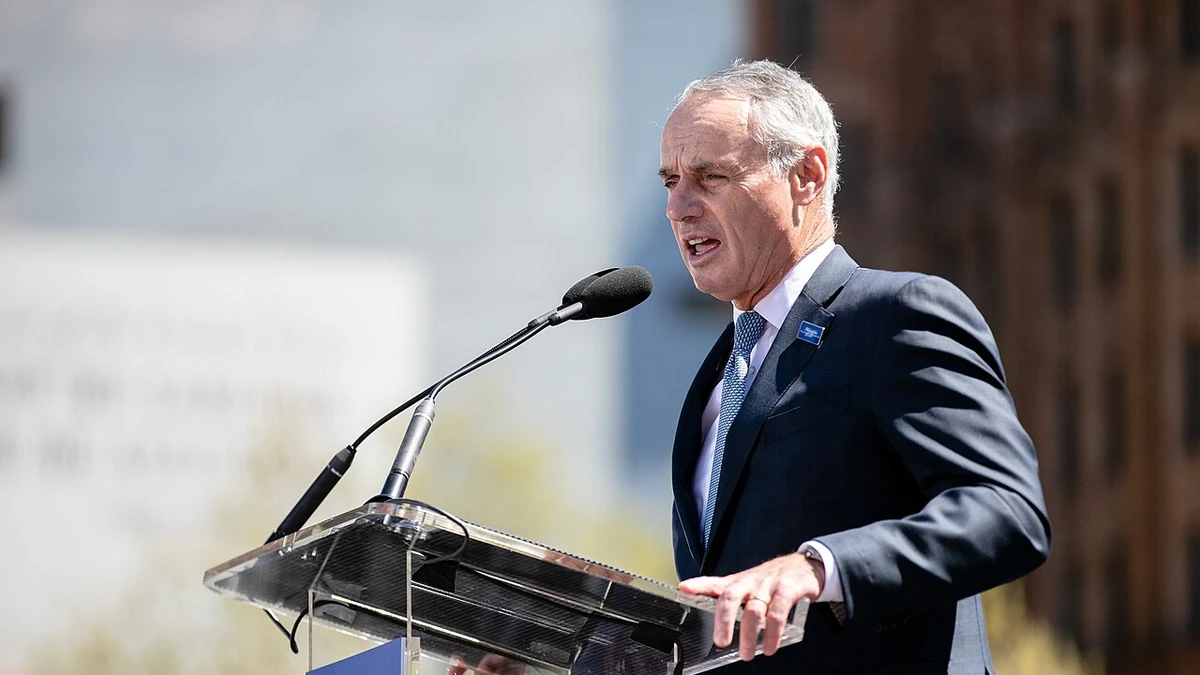
Rob Manfred has drawn the line in public. Baseball’s commissioner told reporters at the owners meetings on Wednesday that the owners will not ratify a new labour deal without a salary cap and floor, and that all 30 clubs are unanimous behind the demand. The current agreement expires on December 1, and a lockout starting December 2 would halt every trade and signing in the sport, freezing the free-agent market at the exact moment its biggest names are all in play.
What did Manfred actually say?
He said it twice, in two different ways, so nobody could miss it. “I can’t imagine the owners ratifying a deal that does not include a cap and floor,” he said Wednesday at a news conference during the owners meetings in New York. Then the line he clearly wanted to land: “There’s plenty of room for compromise, but there’s one thing that I will not compromise, and that’s the issue that we’re hearing from the vast majority of our fans: They want a salary cap and floor and on that we will not compromise.” He added: “We are not prepared to tell 70% of our fans that they’re wrong on this issue.” The Sports Business Journal reports Manfred said all 30 teams are “100 percent unanimous in support of the proposals that have been made.” This week’s meetings in Manhattan were, in his words, almost exclusively about labour.
When would the lockout start, and what would it freeze?
December 2, the day after the five-year collective bargaining agreement expires at 11:59 p.m. ET on December 1. It would be baseball’s 10th work stoppage since 1972, and the second lockout in five years. All contact between clubs and players on 40-man rosters would cease, as would all trades and signings. Manfred said the decision will be made at the last possible moment, and that the league will devote itself to bargaining, adding: “I’m not that big on Thanksgiving as a holiday. We’ll make ourselves available whenever and wherever to bargain in an effort to make an agreement.” The timing is what makes this statement land so hard. Tarik Skubal has met the Mets, Dodgers, Blue Jays and Padres and is expected to sign before the deadline, the Padres hosted Seiya Suzuki on Monday and could be the favorites to sign him, the Orioles are talking to the Diamondbacks about Ketel Marte, and the Rangers are fielding trade interest in MacKenzie Gore. A December 2 lockout stops all four tracks at once, which is why the free-agent market has been racing the calendar all week.
What are the cap and floor numbers?
A hard cap of $258.2 million and a floor of $180.2 million, starting in 2028, with the current system staying in place for 2027. A team would be allowed to sit as low as 90 percent of the floor in 2028, which is $162.18 million, but would have to spend the entire floor amount over a three-year period. Individual contracts would also be capped at 15 percent of payroll, or 16 percent for re-signing free agents. MLB says the plan includes a 50-50 split of revenue with players. The union says it calculates the players’ current share as over 55 percent, and that the league’s maths leaves out roughly $400 million in amateur signing bonuses. The two sides are not just disagreeing about a cap. They are disagreeing about what the money is.
What does the union say?
That the league is not negotiating in good faith. Interim executive director Bruce Meyer said in a statement after Manfred’s news conference: “There can be no clearer example of the league’s lack of seriousness than their insistence that they will not negotiate over the economics outside of a radical change to the system that would dramatically reduce overall player compensation for all categories of players and strip fundamental rights from players like the ability to have truly guaranteed contracts.” He added: “There should be no illusions about the owners’ true motivation in pushing for this system. They want to make more money in profits and franchise values by artificially suppressing player salaries.” The players have called the cap a non-starter. Manfred’s answer to that was blunt: “We made the proposal way back in May. Another word for ‘non-starter’ over months is a refusal to bargain.” The union has proposed a “competitive integrity tax” that would penalise teams dropping below a payroll floor, plus a higher luxury tax threshold and increased salary arbitration rights. Manfred’s response was that the union has not made a significant economic proposal since its opening offer.
Has baseball been here before?
Yes, and the parallel is the one that hangs over everything Manfred said. The last time management formally proposed a salary cap, in 1994, it led to a seven-and-a-half-month strike that caused the cancellation of the World Series for the first time in 90 years. Manfred was a junior lawyer on the owners’ bargaining team in 1994, so the history is not abstract to him. The players have refused a cap for 30 years, and the union’s position now is the same as it was then. What has changed is the owners’ argument. MLB executive vice president Morgan Sword spent 40 minutes before Manfred’s news conference laying out the economics: revenue this year was $12.9 billion, and while the World Series champion Brewers play in baseball’s smallest market, Sword called their title “truly aberrational,” noting that since 1998 only one team that did not have a top-20 payroll has won it, and that eight of the top-10 teams by payroll reached this year’s playoffs. The union disputes the validity of the league’s conclusions from those figures.
What would the cap cost the big spenders?
More than any of them have ever had to cut at once. Based on 2026 payrolls and the 2028 cap level, MLB says the Dodgers would have to cut payroll by $174 million, the Mets by $108 million, the Yankees by $83 million and the Phillies by $64 million. Since the start of the current labour contract in March 2022, those four clubs combined to commit $5.95 billion to free agents, against $5.41 billion from the bottom 22 teams in free-agent spending combined. The league also says local media revenue is $1.8 billion this year, down $575 million from a high of about $2.4 billion annually from 2021 to 2024, and that a cap and floor system is the best way to share local media revenue equally and end local blackouts. The union says blackouts are a problem MLB created and can fix without a salary cap. That is the whole argument in miniature: the league says the system is broken, the union says the league broke it.
Is there still time for a deal?
In theory, yes. In practice, the two sides are not negotiating the same deal. Every league proposal during the talks has been built around a cap and floor system, and the union says it will not negotiate economics solely within that framework. Ryan Jeffers accepting the Twins’ $23.15 million qualifying offer showed that individual players are already making their own calculations about the deadline, and the qualifying-offer decisions are now settled. MLB’s other big proposal this autumn, letting top seeds choose their playoff opponents, showed the league is willing to rethink the sport’s structures, but the cap is the one it will not move on. Manfred’s statement was designed to end any doubt about that. What it did instead was set the clock: 13 days to December 1, and then a lockout that would be the sport’s 10th stoppage in 54 years.
Frequently asked questions
What did Rob Manfred actually say?+
Speaking at the owners meetings in New York on Wednesday, Manfred said: 'I can't imagine the owners ratifying a deal that does not include a cap and floor.' He added: 'There's plenty of room for compromise, but there's one thing that I will not compromise, and that's the issue that we're hearing from the vast majority of our fans: They want a salary cap and floor and on that we will not compromise.' He also said all 30 clubs are 100 percent unanimous behind the proposals.
When would the lockout start?+
The five-year collective bargaining agreement expires at 11:59 p.m. ET on December 1. Owners are expected to impose a lockout on December 2, which would be baseball's 10th work stoppage since 1972. Manfred said the decision will be made at the last possible moment, and that the league will make itself available to bargain through Thanksgiving. The last lockout, in 2021-22, lasted 99 days.
What are the cap and floor numbers?+
MLB has proposed a hard cap of $258.2 million and a floor of $180.2 million, starting in 2028, with the current system staying in place for 2027. A team could sit as low as 90 percent of the floor in 2028, or $162.18 million, but would have to spend the full floor amount over a three-year period. Individual contracts would also be capped at 15 percent of payroll, or 16 percent for re-signing free agents.
What does the union say?+
The MLB Players Association calls the cap a non-starter and remains steadfastly opposed. Interim executive director Bruce Meyer said in a statement that the league 'will not negotiate over the economics outside of a radical change to the system that would dramatically reduce overall player compensation' and accused owners of wanting to suppress salaries to grow profits and franchise values. The union has proposed a 'competitive integrity tax' on teams below a payroll floor instead.
What would a lockout actually freeze?+
Everything. All contact between clubs and players on 40-man rosters would cease, as would all trades and signings. That lands directly on the market's biggest names: Tarik Skubal is expected to sign before December 1, Seiya Suzuki is drawing interest from the Padres and others, Ketel Marte is in trade talks with the Orioles, and the Rangers are fielding interest in MacKenzie Gore. A December 2 lockout stops all four tracks at once.
Has baseball been here before?+
Yes, and the parallel is the one Manfred's critics keep citing. The last time owners formally proposed a salary cap, in 1994, players went on a strike that lasted more than seven months and caused the first cancellation of a World Series in 90 years. Manfred was a junior lawyer on the owners' bargaining team in 1994, so he knows the history personally. The union's position is that a cap has been a non-starter for 30 years.
What would the cap cost the big spenders?+
A lot, by MLB's own presentation. Based on 2026 payrolls and the 2028 cap level, the Dodgers would have to cut payroll by $174 million, the Mets by $108 million, the Yankees by $83 million and the Phillies by $64 million. MLB says that since March 2022 those four clubs committed $5.95 billion to free agents, against $5.41 billion from the bottom 22 teams combined. The league also says revenue this year was $12.9 billion.
Is there still time for a deal before December 1?+
In theory, yes, and Manfred says the league will bargain whenever and wherever. But the two sides are not negotiating the same deal. MLB's proposals are all built around a cap and floor system, and the union says it will not negotiate economics solely within that framework. Manfred called the union's 'non-starter' stance a refusal to bargain, while the union says it has made no significant economic proposal since its opening offer because the league will not move outside the cap.
Sources
- Associated Press via theScore: Manfred says MLB owners won't compromise on salary cap (the Wednesday statement, the 70% of fans quote, the cap and floor figures, the 1994 parallel, the Sword presentation and the payroll-cut figures)
- ESPN: Rob Manfred says MLB owners won't compromise on salary cap (the lockout timetable, the Meyer statement, the 50-50 split dispute, the $400 million amateur bonus gap)
- Sports Business Journal: Manfred says all 30 teams unanimous in support of cap (the 100 percent unanimous line, the second day of owners meetings, the cap and floor starting in 2028)
- NBC Sports Bay Area: Rob Manfred says MLB owners won't compromise on a salary cap (the AP account of the statement, the December 2 lockout date, the 10th work stoppage since 1972)
Play & tools
Free browser games and tools — no account, no download.
- Play 162-0 — Draft nine and see if your roster can survive a flawless 162-game MLB season.
- Explore all our games →
- Analyze a trade — Compare both sides of a fantasy baseball trade before you accept.
- Run the MLB predictor — Simulate the MLB postseason bracket down to a World Series champion.
- Open the ERA calculator — Work out earned run average from earned runs and innings pitched — handles the .1/.2 thirds convention.
- Explore all our free sports tools →
Related baseball guides
View all →
Taillon Calls MLB's Salary-Cap Pitch a 'Nice Cover-Up' as Lockout Nears
Jameson Taillon called MLB's salary-cap video 'comically bad' and a 'nice cover-up', warning a lockout is coming with the CBA expiring on December 1.
Rumor: Rangers Fielding Trade Interest in MacKenzie Gore as Lockout Looms
The Texas Rangers are fielding trade interest in left-hander MacKenzie Gore from multiple clubs, The Athletic reports, but a deal is unlikely before the December 1 lockout freezes the market.
Harper's TikTok Replies Point to a Lost 2027 as Stubbs Calls a Missed Season 'Moronic'
Bryce Harper's cryptic TikTok replies have fans reading a lost 2027 season into his offseason, while Phillies team-mate Garrett Stubbs says it would be moronic to miss a season over the salary-cap fight.
MLB Proposes Letting Top Seeds Choose Their Playoff Opponents, and Fans Are Not Buying It
MLB's labour proposal would let higher seeds pick their Wild Card and Division Series opponents from 2027, inside a package the union says hangs on a salary cap.
Does MLB Have a Salary Cap? No — Here's Why
MLB has no salary cap. Instead it uses a competitive balance (luxury) tax to slow big spenders, which is why baseball payrolls vary more than any major US league.
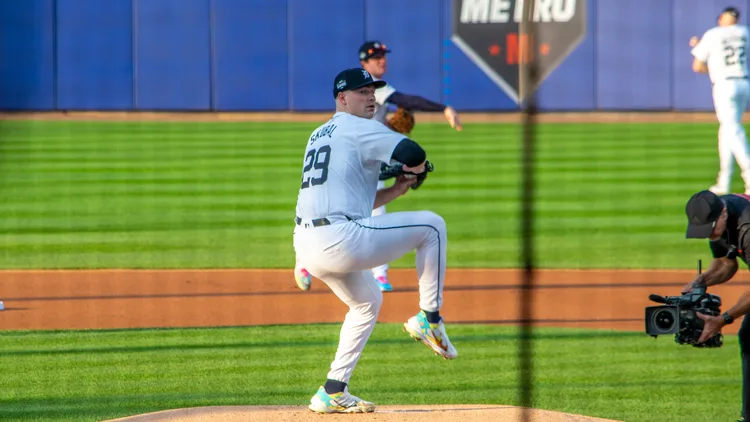
Skubal Will Not Talk About His Future, So Blake Snell Is Talking for Him
Tarik Skubal refused to discuss his free agency minutes after the Dodgers were swept, while Blake Snell, two lockers over, began recruiting him to stay.