
How Much Water Does a Golf Course Use? The Real Numbers
On this page6
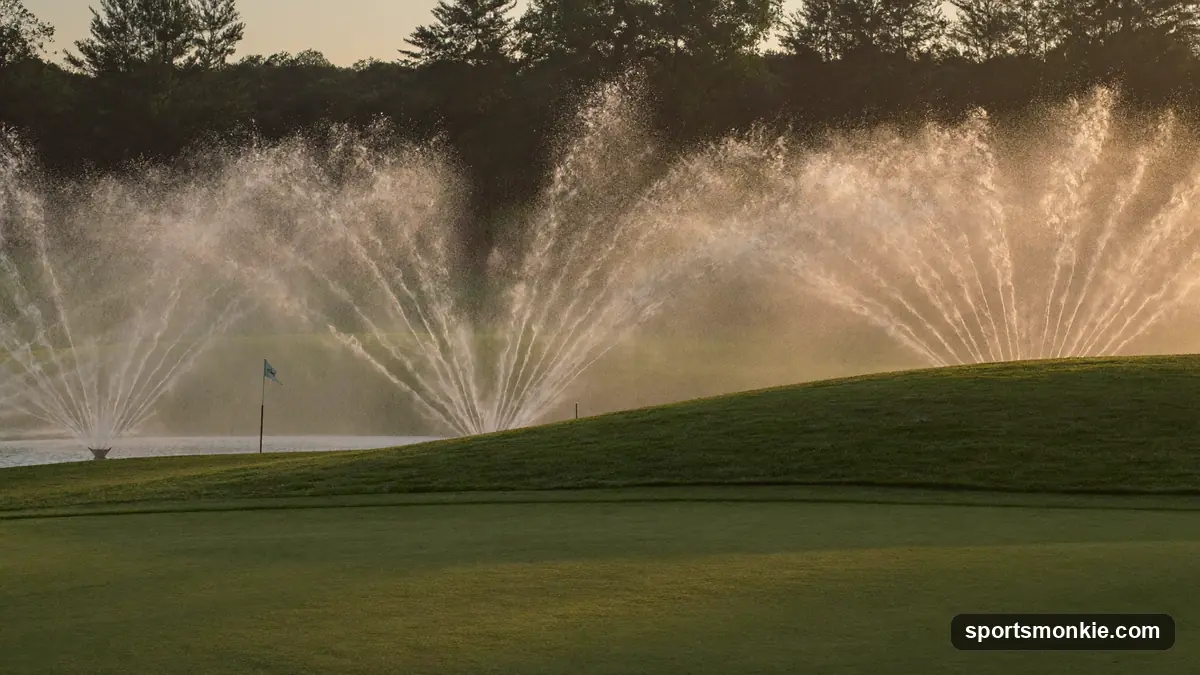
A typical 18-hole golf course uses roughly 90 to 130 million gallons of water a year, or about 312,000 gallons on an average summer day, according to figures cited by the USGA. That is the national middle. The real answer swings enormously with climate: a course in the Arizona desert can use three times the water of one in rainy Oregon, and the single biggest driver is not the sport at all — it is where the grass grows.
Here are the actual numbers, where they come from, and why the range is so wide.
How much water does a golf course use per day?
The most-quoted daily figure is about 312,000 gallons per day during the growing season (roughly May through September in most of the U.S.). Over a full year that lands near 78 to 100 million gallons for a temperate course — but courses in hot, dry regions run their irrigation far harder and for far longer.
That daily number is an average, not a rule. A links course on the Scottish coast, watered mostly by weather, might apply a fraction of it. A resort course in Palm Springs, keeping 100-plus acres of turf green through 110°F summers, can push past a million gallons on a peak day. The sport is the same; the water bill is not.
Water use by region and climate
Climate does most of the work. The table below gives representative ranges drawn from USGA and GCSAA data — treat them as ballpark figures for a typical 18-hole course, not exact meter readings, because acreage and grass type shift the totals.
| Region / climate | Typical daily use (peak season) | Approx. annual use | Main driver |
|---|---|---|---|
| Desert Southwest (AZ, NV) | 600,000–1,000,000+ gal | 200M+ gal | Extreme heat, near-zero rainfall, year-round irrigation |
| Southeast (FL, GA, TX) | ~350,000–450,000 gal | ~110–150M gal | Long hot season, offset by summer storms |
| Transition zone / Midwest | ~250,000–320,000 gal | ~85–100M gal | Moderate season, mixed rainfall |
| Northeast / Pacific NW / UK links | ~120,000–250,000 gal | ~40–65M gal | Cooler, wetter, short irrigation window |
The takeaway: a headline like “golf courses use 90 million gallons a year” is only true for the middle of the country. Quoting it for a desert course understates the reality by half; quoting it for a Scottish or Pacific Northwest course overstates it just as badly. If you want the numbers behind the sport’s costs more broadly, why is golf so expensive covers where the money goes.
What does golf use nationally?
Zoom out and the picture is large but shrinking. GCSAA’s Golf Course Environmental Profile — the industry’s most thorough water survey, funded in part by the USGA — reported that U.S. golf facilities applied roughly 1.63 million acre-feet of water in 2024 (an acre-foot is about 325,851 gallons, so that is on the order of 530 billion gallons across the country).
The direction matters as much as the total. GCSAA found that figure is down about 31% since 2005, with roughly two-thirds of the drop coming from courses simply irrigating more efficiently — better sensors, drought-tolerant grasses, and smaller irrigated footprints. Golf still uses a lot of water, but the average course uses meaningfully less than it did twenty years ago.
Where the water actually comes from
Not all of it is drinking water, and that distinction is central to the debate. Courses pull from four broad sources:
- On-site ponds and lakes — many courses store and recirculate their own water.
- Wells and groundwater — common but increasingly regulated in dry states.
- Municipal / potable supply — the source that draws the most criticism.
- Recycled or reclaimed (effluent) water — treated wastewater unfit for drinking but fine for turf.
The USGA reports that about 21% of all water applied to U.S. courses is recycled or reclaimed. In water-stressed states, that share is far higher — many Arizona and Nevada courses are required to irrigate with recycled water, taking pressure off potable supply. A course watering with treated effluent is using water that would otherwise be discharged, which is a very different footprint from one drawing straight from a reservoir.
Is a golf course a water waster?
It depends heavily on the course, and honest framing beats outrage. A desert resort course irrigating 130 acres of non-native turf with potable water is a legitimate concern in a drought. A links or heathland course watering greens and tees only, using recycled water and native fescue, sits at the opposite end.
Two facts complicate the “golf wastes water” headline. First, most of a course’s acreage — rough, native areas, water features — is often not irrigated at all; the intensively watered zones are greens, tees, and fairways. Second, the industry’s total use has fallen while the number of rounds played has held up, per GCSAA’s surveys. The trend is toward less water per course, not more.
How courses are cutting use
The tools are unglamorous but effective: soil-moisture sensors that water only when turf needs it, weather-based controllers, wetting agents that help water penetrate, drought-tolerant grass varieties like bermuda and fine fescue, and shrinking the irrigated footprint by letting roughs go native. The USGA has backed a long-term research and funding push aimed at cutting golf’s water use substantially over the coming years, and GCSAA’s falling national totals suggest the effort is landing.
If you are weighing what a round actually costs to put on — water is only one line item — see our breakdown of the average cost of a round of golf. Water, land, and labor are the three big ones, and how a course sources its water increasingly shapes the other two.
Frequently asked questions
How many gallons per day do golf courses use?+
A typical U.S. golf course uses around 312,000 gallons of water per day during the growing season, according to USGA-cited figures. That average hides huge variation: a course in the desert Southwest can apply 600,000 to over 1 million gallons a day, while a cool, rainy Northeast course may use under 200,000.
How much water does an 18-hole golf course use per year?+
Most 18-hole courses use somewhere between 90 and 130 million gallons a year, though the range is wide. GCSAA and USGA data put warm-climate courses well above that and cool, wet-region courses well below. Total annual use depends on climate, turf acreage, grass type, and how efficiently the course is irrigated.
Is 2000 gallons a month a lot?+
For a household, 2,000 gallons a month is modest — the average U.S. home uses closer to 9,000 gallons monthly. But it is trivial next to a golf course, which can apply that much water in a few minutes during peak season. The scales are not comparable: courses irrigate 100-plus acres of turf, not a single lawn.
Do golf courses recycle water?+
Increasingly, yes. The USGA reports that about 21% of all water applied to U.S. golf courses is recycled or reclaimed (effluent) water rather than potable supply. In arid states like Arizona and Nevada, many courses are required to use recycled water, and the share is far higher than the national average.
Where do golf courses get their water?+
Courses draw from a mix of sources: on-site ponds and lakes, wells and groundwater, municipal supply, and recycled or reclaimed wastewater. GCSAA surveys show superintendents have shifted toward non-potable and recycled sources over the past two decades, both to cut costs and to reduce pressure on drinking-water supplies.
Sources
Play & tools
Free browser games and tools — no account, no download.
- Play today's Sports Connections — Today's Sports Connections — daily hints, answers, and play the grid.
- Play Guess the NFL Player — A new mystery NFL player every day. Eight guesses, with a clue on each — plus free unlimited mode.
- Explore all our games →
Related golf guides
View all →
Cost to Play Pebble Beach Golf Links
What does it cost to play Pebble Beach? As of 2025 the green fee is roughly $675+ per round, plus cart and caddie. Full breakdown and how to book.

How Much Does a Golf Club Fitting Cost?
How much a golf club fitting costs: free retailer fittings, paid studio sessions, full-bag vs single-club, and whether it's worth it. 2026 ranges.

What Is a Municipal Golf Course?
A municipal golf course is a public course owned by a local government. What 'muni' means, how it differs from other public courses, and who runs it.
What Does MC Mean in Golf? Missed Cuts
MC in golf means Missed Cut: a player finished 36 holes outside the cut line and does not play the weekend. What the cut is, and who still gets paid.

How Long Does 9 Holes of Golf Take? Times by Group Size
Nine holes of golf takes about 2 to 2.5 hours for a foursome, and closer to an hour on your own. See how long 9 holes take by group size and cart use.
How Many Acres Is a Golf Course? Size by Course Type
Most 18-hole golf courses cover about 110 to 190 acres, averaging near 150. Here is how course type, layout and land use change the acreage.