
F1 Agrees V8 Engines Will Return in 2030 to Bring Back the Noise
On this page6
Formula 1 will bring back V8 engines in 2030. The FIA, Formula One Management, the teams and the engine manufacturers have reached a unanimous agreement in principle on a 2.1-litre turbocharged V8 running on sustainable fuels, with a much smaller hybrid element than the current power units. It is the first V8 formula since 2013, and it still needs a vote from the World Motor Sport Council in Shanghai in December before it becomes the rule.
What has Formula 1 agreed?
A framework, not a finished rulebook. The agreement covers a 2.1-litre turbocharged V8 as the power unit of choice, carrying over some geometrical specifics from the current design, with limited hybridisation and sustainable fuels. The electrical component would produce 200kW, compared with 350kW in the current system, and half of that would be reserved for an overtaking mode rather than spread across the whole lap. The FIA said the overriding objective is to deliver a power unit which is a lot less complex, lighter and cheaper than the current ones, with relevant and sustainable technology, and with the aim of enhancing attack-oriented racing and a sound which resonates with fans. McLaren’s Zak Brown said it was now a matter of dotting the i’s and crossing the t’s, and Alpine’s Flavio Briatore agreed. “We have the agreement, basically. It’s not signed, but it looks like everybody’s agreed to 2030 V8s,” Briatore said.
Why now?
Because the current engines have spent a season being criticised by the people who have to drive them and the people who have to listen to them. The 1.6-litre V6 hybrids were introduced only this season, with power split almost evenly between combustion and battery, and the complexity of the new power units and the way they are used have affected the driving challenge, including through some of the fastest corners. A two-step change across 2027 and 2028 to move away from the near 50-50 split was already planned. The V8 agreement goes further and brings the next engine formula forward by a year, from 2031 to 2030, cutting the current cycle short. FIA president Mohammed Ben Sulayem, who has consistently pushed for a return to V8 power, called the agreement a significant milestone in shaping the future of Formula 1, and described it as an opportunity to reconnect with the DNA of the championship, bringing back the sound, emotion and pure racing that is loved worldwide.
How is the new V8 different from the last ones?
It is a turbo hybrid, not a return to the old screamers. Formula 1 last used naturally aspirated V8 engines from 2006 to 2013, 2.4-litre units with no hybrid element at all. The 2030 unit keeps a turbocharger and a reduced electrical system, runs on advanced sustainable fuels, and uses a 2.1-litre capacity chosen deliberately to contain development costs by building on aspects of the existing 1.6-litre V6 design. The electrical share falls from roughly half of total power to around 200kW, with 100kW available throughout the race and the remaining 100kW held for an overtaking mode. The FIA also wants the engine change to coincide with a lighter chassis, with the aim of making the cars more agile and better suited to close racing. Five of the six Mercedes-powered cars in Las Vegas already run a new turbo specification, which shows how much of the current development effort is going into squeezing the existing formula, and the V8 decision is the sport admitting that effort has a ceiling.
What still has to happen before it is final?
A vote, and then the detail. Despite the unanimous backing among the stakeholders, the 2030 regulations are not yet formally approved. The proposals must still pass a vote by the FIA World Motor Sport Council, with its next meeting scheduled in Shanghai in December to lay out the framework in full, and they must receive approval from the power unit manufacturers. The final regulatory framework is expected to be presented at that meeting, with details including the final power unit cost cap yet to be settled. The FIA’s own channels briefly published, then removed, graphics announcing the agreement earlier in the week, which is a reminder that this deal has already had one false start in public. The F1 Commission is separately discussing a cost-cap catch-up mechanism for lower-placed teams, so the money argument around the new formula is still live as well.
Who wanted this, and who wanted more?
The team bosses in Las Vegas were all on message, with one exception. Brown and Briatore both confirmed the agreement, and Cadillac’s Dan Towriss said he was happy with the direction, with the team set to continue using Ferrari engines until the end of 2029 and a Cadillac V8 available from 2030. Towriss added that the team’s new power unit facility opens on December 18, so as a new manufacturer coming into the sport, the direction is obviously very helpful. The dissenting note came from Max Verstappen, who has said he would prefer V10s. The agreement is for V8s, and the V10 idea did not make it into the deal, but the fact that the sport’s biggest star wanted to go further says something about how unpopular the current formula has become. Verstappen inherits pole in Las Vegas after Antonelli’s penalty, so he will start Saturday’s race at the front while the sport argues about what his car will sound like in four years.
What does it mean for the Las Vegas weekend?
Nothing on the timing sheets, and everything in the background. The race on Saturday night is still run under the current V6 hybrid rules, and the weekend’s engine stories are still the ones that decide grid slots: Russell started the Singapore Grand Prix from the back of the grid after Mercedes confirmed a new engine, and the same arithmetic has put five drivers on penalties in Las Vegas. But the announcement landed in the Las Vegas paddock for a reason, with the FIA president signalling the return this week and the team bosses confirming it ahead of the race. The FIA admitted human error gave some cars extra power in Singapore sprint qualifying, which is the kind of complexity the V8 framework is meant to leave behind. The cars on the grid on Saturday night are the last generation of a formula the sport has already decided to walk away from.
Frequently asked questions
What engines will Formula 1 use from 2030?+
A 2.1-litre turbocharged V8 running on sustainable fuels, with a substantially reduced hybrid element producing 200kW, half of which would be reserved for an overtaking mode. It would be the first V8-powered Formula 1 car since 2013, when the sport switched to V6 hybrids, and the framework was agreed unanimously by the FIA, Formula One Management, the teams and the power unit manufacturers.
Is the V8 deal final?+
No. It is an agreement in principle, and the technical regulations have not been finalised. The definitive framework is due to be presented to the FIA World Motor Sport Council at its meeting in Shanghai in December, and it still needs approval from the council and from the power unit manufacturers. Details including the final power unit cost cap are yet to be settled.
Why is Formula 1 going back to V8s?+
Because the current engines have been heavily criticised since they were introduced this season. The 1.6-litre V6 hybrids split power almost evenly between combustion and battery, and drivers and fans have attacked the complexity and the way the power is used. FIA president Mohammed Ben Sulayem called the return an opportunity to reconnect with the DNA of the championship, bringing back the sound, emotion and pure racing that is loved worldwide.
How is the new V8 different from the old ones?+
The old V8s were naturally aspirated 2.4-litre engines used from 2006 to 2013. The new one is a turbocharged 2.1-litre unit with limited hybridisation and sustainable fuels, so it will sound different from the old screamers. The 2.1-litre capacity was chosen to contain development costs by building on aspects of the existing 1.6-litre V6 design, while reducing the complexity and weight of the overall power unit.
What did the team bosses say?+
McLaren's Zak Brown said it was now a matter of dotting the i's and crossing the t's, and Alpine's Flavio Briatore agreed, saying everybody has agreed to 2030 V8s. Briatore added that the sport needs an engine with a lot of noise and a simple engine, and that it is the best for the spectator. Cadillac's Dan Towriss said he was happy with the direction, with a Cadillac V8 available from 2030.
What about Verstappen wanting V10s?+
Max Verstappen has said he would prefer V10s, and the reports around the agreement note that preference. The agreement reached is for V8s, not V10s. The V8 framework is the one the FIA, the teams and the manufacturers have all signed up to in principle, and the V10 idea did not make it into the deal.
What happens to the current V6 hybrids?+
They stay for now. The current power units were introduced only this season, and a two-step change across 2027 and 2028 to move away from the near 50-50 power split was already planned. The V8 agreement brings the next engine formula forward by a year, from 2031 to 2030, cutting short the current cycle. The FIA also wants the engine change to coincide with a lighter chassis, to make the cars more agile and better suited to close racing.
Sources
- Reuters: Agreement in principle for F1 to have V8 engines in 2030, says Brown (the agreement in principle, Brown's and Briatore's quotes, Towriss on Cadillac's V8 and its December facility opening, Ben Sulayem signalling the return, the 2006-2013 V8 era)
- PlanetF1: FIA makes major announcement over V8 engine return (the unanimous agreement, the 2.1-litre turbo V8 with a smaller hybrid element at around 10 percent of power output, the December World Motor Sport Council meeting, the FIA statement on a less complex, lighter and cheaper power unit)
- Crash.net: Unanimous agreement for F1 V8 engine return plan reached (the unanimous agreement, the 200kW electrical component with half reserved for overtake mode, Ben Sulayem's milestone quote, the December framework presentation, the 2026 criticism driving the change)
- Speedcafe: F1 agrees on V8 engine return for 2030 (the 2.1-litre capacity chosen to contain costs, the lighter chassis aim, the support of Ben Sulayem and Stefano Domenicali, the framework still needing council and manufacturer approval)
- Karlo Bag: Formula 1 moves closer to V8 engine return in 2030 (Verstappen's stated preference for V10s over the agreed V8 formula, the BBC technical overview of the 2.1-litre concept)
Play & tools
Free browser games and tools — no account, no download.
- Play 24-0 — Draft an F1 chassis and two drivers, then chase a perfect 24-0 — win every race on the 24-round calendar.
- Explore all our games →
Related motorsport guides
View all →
Antonelli Tops Las Vegas Qualifying but Starts Sixth as Verstappen Inherits Pole
Kimi Antonelli set the fastest time in Las Vegas qualifying, but a five-place grid penalty hands pole to Max Verstappen for Saturday's race.
Plastic Debris Halts Las Vegas FP2 as Russell Tops a Wet Session
George Russell topped a wet Las Vegas FP2 after a plastic-debris red flag, with FP1 washed out and Verstappen managing one timed lap.
Leclerc Backs Press Freedom as FIA Bans Journalist Over 'Sneaky' Column
Charles Leclerc said journalists should ask tough questions after the FIA revoked Daily Mail correspondent Jonathan McEvoy's accreditation for the rest of 2026, prompting a boycott.
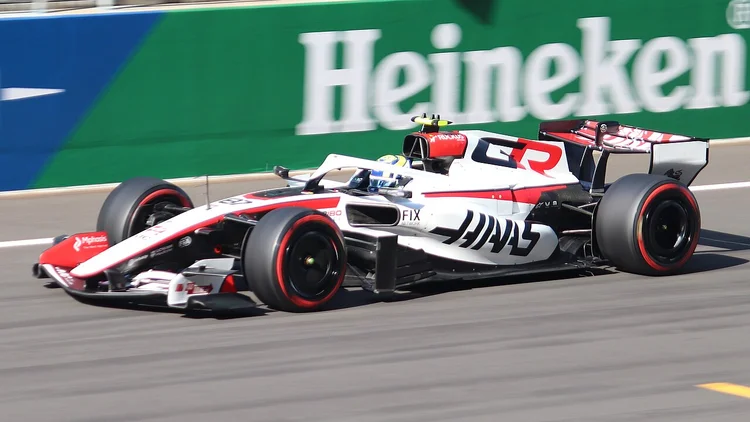
Bearman: 'There's No Excuse' for Still Having No 2027 Haas Deal
Ollie Bearman says there is no excuse for Haas still not confirming him for 2027, with the delay traced to his Ferrari contract talks.
Mercedes Gives Its New Turbo to Antonelli Only as Russell Dodges a Grid Penalty in Las Vegas
Mercedes will debut its long-awaited ADUO turbo upgrade at the Las Vegas Grand Prix, but only on Kimi Antonelli's car. George Russell keeps the old specification to protect his fight for second in the championship.
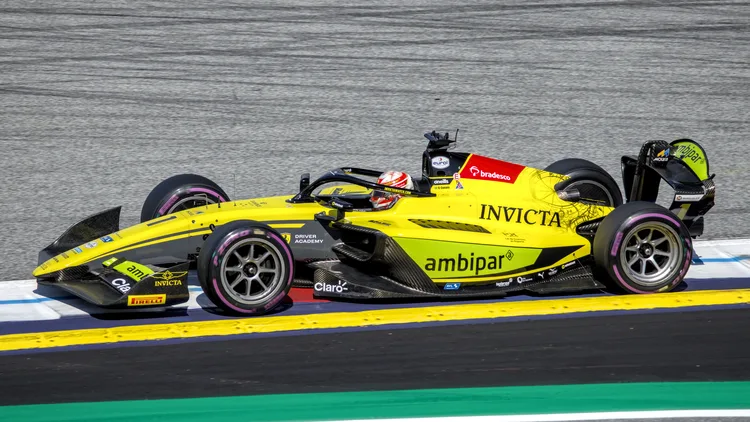
Haas Gives Camara a Second Race in Las Vegas as Hirakawa Takes Bearman's Practice Seat
Haas has confirmed Rafael Camara will race again in Las Vegas after his crash-and-last debut in Brazil, while Ryo Hirakawa takes Oliver Bearman's car for first practice, fresh from his WEC title.