
Easiest Sports to Learn and Play for Beginners
On this page6
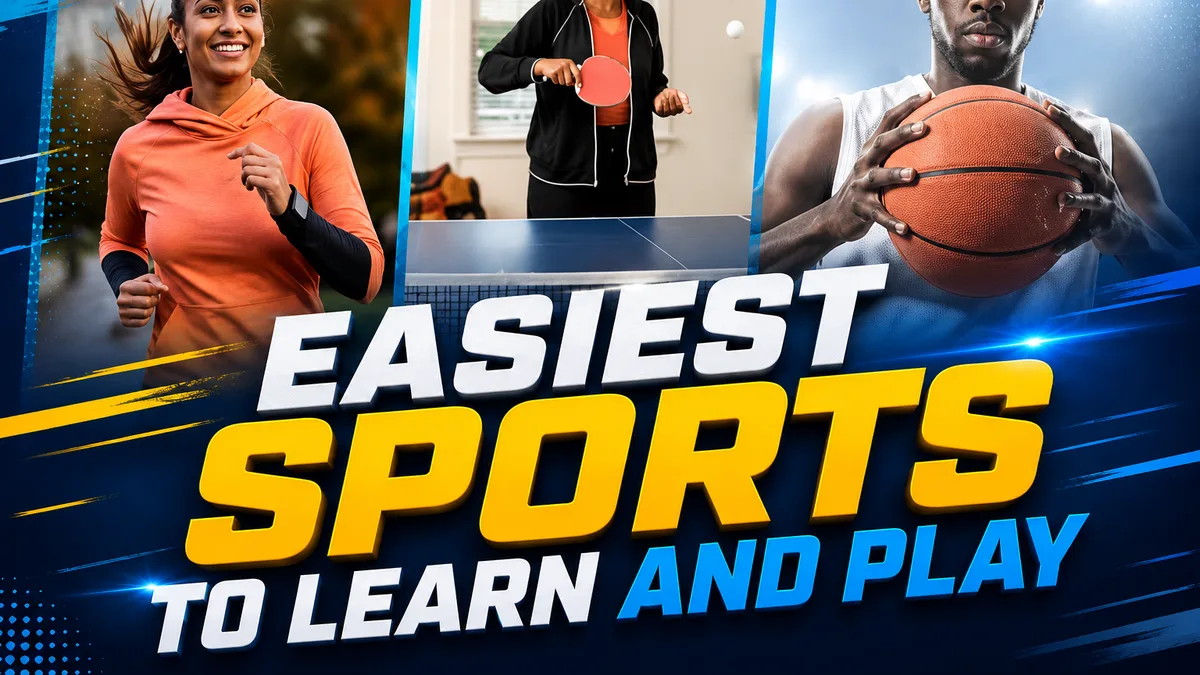
The easiest sports to learn are pickleball, running, swimming, cycling, table tennis, recreational volleyball, and bocce ball. Each one shares three traits: cheap or minimal equipment, simple rules you can absorb in minutes, and a skill floor low enough that a total beginner has fun on day one. Most people quit a new sport in the first week because the rules take longer to learn than the fun takes to arrive — the sports below flip that order.
What makes a sport easy to learn
A sport’s accessibility comes down to a few measurable things:
- Rule complexity: fewer rules means faster onboarding
- Equipment cost and availability: low barriers to entry
- Physical demands: whether a beginner’s baseline fitness is enough to participate
- Skill ceiling for casual play: can you have fun before mastering technique?
A sport that scores well on all four is genuinely easy for a newcomer, not just simple on paper. The clearest modern proof is pickleball, which checks every box and, as a result, has drawn tens of millions of first-timers in just a few years.
The easiest sports to learn and play
1. Pickleball
Pickleball is the easiest racquet sport to pick up. The court is smaller than a tennis court, the plastic ball moves slowly, the serve is underhand, and the paddle is light and easy to control. Most beginners manage a rally within their first 15 minutes and can play a real game the same day. Equipment is cheap and courts are now everywhere, which is exactly why it has exploded in popularity.
2. Running
Running needs nothing beyond a decent pair of shoes. No teammates, no referee, no rulebook for casual use. Start with short distances, build up at your own pace, and walk-run intervals make it workable even at a low fitness level. It is also the cheapest sport on this list to begin.
3. Swimming
There is a short learning curve to get the basic strokes down, but once that clicks, swimming becomes one of the most forgiving activities around. Public pools are everywhere, and the low-impact nature of the sport keeps injury risk minimal, which makes it a favorite for older adults and anyone protecting their joints.
4. Cycling
Most adults already know how to ride a bike. Recreational cycling needs no team, no court, and barely any tactics. Even someone new to road or trail riding can be enjoying long rides after a session or two of getting used to the bike, and it stays gentle on the joints.
5. Table tennis (ping-pong)
Table tennis is quick to pick up and has real depth if you want to chase it. The casual version — just hitting the ball back and forth — is fun within minutes. Equipment is cheap, and it is playable indoors year-round regardless of weather.
6. Recreational volleyball
Among team sports, casual volleyball has about the lowest barrier to entry. The court is clearly split in half, the objective is obvious, and a backyard or beach game does not need strict rule enforcement. Mixed-ability groups fit together easily, so nobody has to be an expert to join.
7. Bocce ball
Bocce is approachable at any age or fitness level. The goal — roll your ball closest to the target — needs no explanation. No running, no special clothing, and no expensive gear, which makes it one of the most inclusive activities you can start.
8. Golf (driving range)
Full 18-hole golf has a steep learning curve, but hitting balls at a driving range is open to complete beginners. Plenty of people enjoy range sessions for years without ever playing a full round, treating it as a low-pressure way to build a swing.
Beginner-friendly sports at a glance
| Sport | Equipment cost | Rules complexity | Team required | Physical demand |
|---|---|---|---|---|
| Pickleball | Low | Simple | No (doubles common) | Low–Moderate |
| Running | Low | None | No | Moderate |
| Swimming | Low | Minimal | No | Moderate |
| Cycling | Medium | Minimal | No | Low–Moderate |
| Table tennis | Low | Simple | No (can solo rally) | Low |
| Volleyball | Low | Simple | Yes (2+ per side) | Moderate |
| Bocce ball | Low | Very simple | No | Very low |
| Golf (range) | Medium | Minimal at range | No | Low |
The pickleball boom: the easiest sport of the 2020s
If you want evidence that “easy to learn” drives real participation, look at pickleball. According to the Sports & Fitness Industry Association, roughly 24.3 million Americans played pickleball in 2025, up from about 19.8 million in 2024 — a jump of more than 170% over three years. As of 2025 it had been the fastest-growing sport in the United States for five consecutive years.
The infrastructure has raced to keep up. The number of places to play grew by more than 50% in 2024, and the U.S. now has tens of thousands of dedicated pickleball courts. Its appeal spans generations: casual players make up the bulk of the base, while a growing core of committed players and strong turnout among adults over 55 show how well a gentle learning curve translates into a sport people actually stick with. For a beginner in 2026, pickleball is the clearest on-ramp into an active, social sport.
Tips for picking the right beginner sport
- Play to your environment. Near a lake? Swimming or kayaking. Near hills? Cycling. Near a park or gym? There is probably a pickleball court now.
- Consider social preference. Solo sports like running suit people who would rather train alone; team and doubles sports like volleyball and pickleball work better if group energy motivates you.
- Start casual before going competitive. Almost every sport on this list is far easier recreationally than in an organized league.
- Get the equipment right first. Proper running shoes, a paddle or racket sized to your hand — small choices like these shape how much you enjoy the first few weeks.
Why these sports build lifelong habits
Low-barrier sports tend to stick because the payoff arrives before the effort piles up. When a beginner sees progress fast and is not buried under complicated rules or pricey gear, they keep showing up — and that is really the only thing that makes a habit last. Pickleball’s rapid rise is the same story at scale: make a sport easy to start, and people will not just try it once, they will build their week around it.
Frequently asked questions
What is the easiest sport to learn for adults?+
Pickleball, swimming, table tennis, and running are widely considered the easiest sports for adults to pick up. They require minimal equipment and simple rules, and most beginners can rally or complete a session on day one. Pickleball in particular has surged in popularity precisely because adults can learn the basics in under an hour.
What sport can I learn in a day?+
Running, cycling, bocce ball, and pickleball can all be learned in a single day. The core mechanics are intuitive, and most people can play recreationally within their first session. Pickleball beginners typically manage a rally within their first 15 minutes on the court.
What is the easiest team sport to learn?+
Recreational volleyball is often cited as the easiest team sport for beginners. The rules are straightforward, the court is clearly divided, and casual play needs only basic hand-eye coordination. Backyard and beach games rarely require strict officiating, so mixed-ability groups mix easily.
Why is pickleball considered so easy to learn?+
Pickleball uses a small court, a slow-moving plastic ball, and an underhand serve, which lowers the physical and technical barrier compared with tennis. The paddle is light and easy to control, and rallies are short. That combination is why most first-timers can play a real game the same day they start.
What is the cheapest sport to start?+
Running is the cheapest sport to start, since a single pair of decent shoes is the only real requirement. Bocce ball, bodyweight-style casual play, and public-pool swimming are also very low cost. Pickleball and table tennis are affordable too, with entry-level paddles and bats available for modest prices.
What is the easiest sport for someone who is out of shape?+
Bocce ball, casual table tennis, and driving-range golf demand very little cardiovascular fitness, making them ideal for people who are out of shape. Walk-run intervals also make running approachable at low fitness. These activities let beginners build enjoyment first and stamina gradually.
Is pickleball or tennis easier for beginners?+
Pickleball is easier for beginners than tennis. The court is smaller, the ball moves slower, the serve is underhand, and rallies are shorter, so new players spend less time chasing the ball and more time in play. Many tennis skills transfer to pickleball, but pickleball has the gentler learning curve.
What low-impact sports are easy for older adults?+
Swimming, cycling, bocce ball, and pickleball are all low-impact and popular with older adults. Swimming and cycling remove joint pounding almost entirely, while bocce and pickleball keep movement gentle. Pickleball's rise has been driven in part by strong participation among players over 55.
Sources
Play & tools
Free browser games and tools — no account, no download.
- Play today's Sports Connections — Today's Sports Connections — daily hints, answers, and play the grid.
- Play Guess the NFL Player — A new mystery NFL player every day. Eight guesses, with a clue on each — plus free unlimited mode.
- Explore all our games →
Related records & rankings guides
View all →
How to Play Pickleball Singles: Strategy and Court Coverage
Pickleball singles strategy: where to serve, how to cover the court, when to attack, and why it rewards fitness and placement over doubles touch.
Pickleball Strategy for Beginners: 5 Habits That Win Points
A beginner pickleball strategy primer: serve deep, get to the kitchen, dink with patience, aim the middle, and keep the ball in play to win more points.
Pickleball Rules for Beginners: A Simple Guide
New to pickleball? Learn the serve, the two-bounce rule, the non-volley kitchen zone, scoring to 11, and the faults that trip up beginners the most.
10 Best Tennis Drills for Beginners to Learn Fast
The best tennis drills for beginners start with mini-tennis inside the service boxes, then add drop-feed rallies, target cones, and wall drills. Here are 10 drills ranked by what they build.
Around the Post Shot in Pickleball (ATP): Legal and Deadly
The around-the-post shot is legal in pickleball — you hit the ball around the outside of the net post, and it can travel below net height. Here's how.
The Double-Bounce Rule in Pickleball, Explained Simply
The double-bounce (two-bounce) rule means the ball must bounce once on each side before anyone can volley. Here's why it exists and the faults it causes.