
Cubs Sign Trevor Rogers to Five-Year, $120 Million Deal
On this page6
The Chicago Cubs have their first big move of the winter, and it cost them $120 million. Left-hander Trevor Rogers has agreed to a five-year deal with Chicago, first reported by MLB Network’s Jon Morosi on Monday night, with the terms confirmed by Ken Rosenthal of The Athletic and the deferrals reported by ESPN’s Jeff Passan. The deal is pending a physical. Rogers went 10-11 with a 4.03 ERA for Baltimore in 2026, and the Cubs are betting the pitcher they are buying is the one who posted a 1.81 ERA the year before.
What did the Cubs agree to?
Five years, $120 million, an average of $24 million a season. The deal includes an escalator package and deferrals that will bring down the net present value, according to MLB Trade Rumors, though the salary breakdown and deferral structure have not been reported. Rogers declined Baltimore’s $23.15 million qualifying offer to reach the open market, and USA Today calls him the second-best left-handed starter available this winter. For a Cubs team that watched its rotation empty in a week, the money is the cost of certainty.
Who reported the deal, and what is still to come?
Morosi broke the agreement late Monday, Rosenthal had the five-year, $120 million terms, and Passan added the deferrals. Multiple outlets confirmed it within hours, which is the usual shape of a done deal waiting on paperwork. What is still to come is the physical, the formal announcement, and the rest of the rotation. The Cubs have not said when Rogers will be introduced, and with a week left before the December 1 lockout, the timing matters: once the owners lock the players out, nothing else gets done until a new agreement is reached.
What are the Cubs getting on the mound?
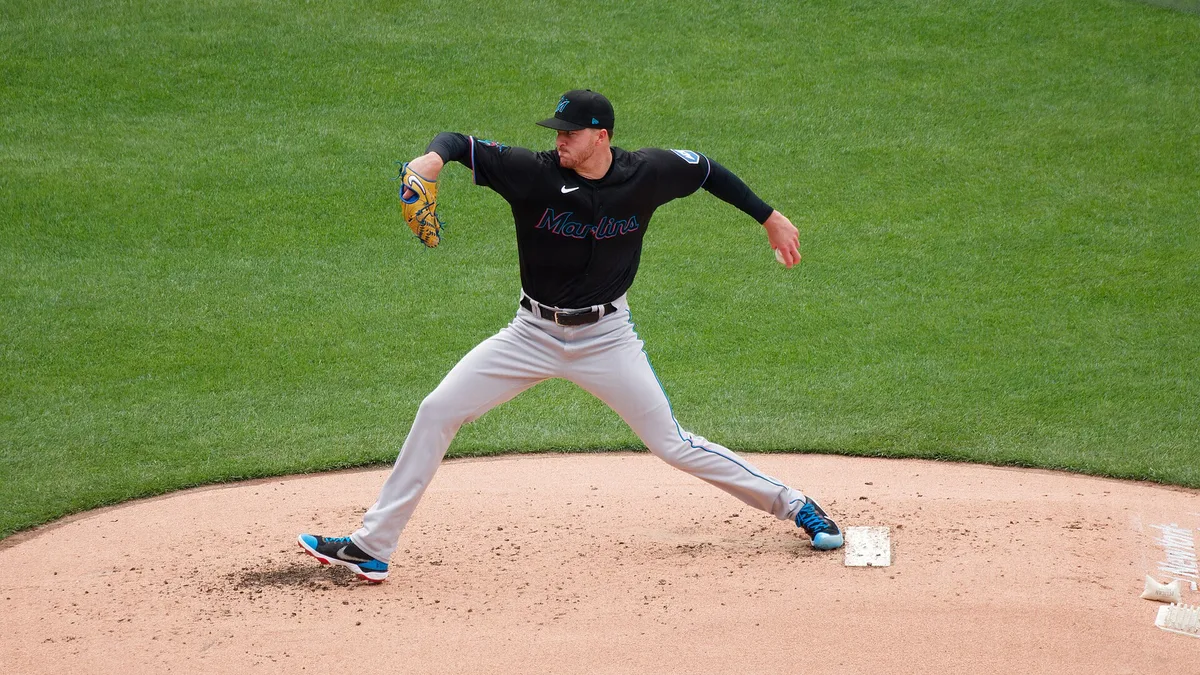
A 29-year-old left-hander with a split personality on the stat sheet. In 2026 he made 30 starts, a career high, with 157 strikeouts and 39 walks in 169 and two-thirds innings. Across seven major league seasons he is 34-48 with a 3.88 ERA, 678 strikeouts and 234 walks in 689 and two-thirds innings over 132 starts. He spent his first four and a half seasons with Miami before Baltimore acquired him in July 2024 for infielder Connor Norby and outfielder Kyle Stowers. Sports Illustrated calls his arsenal Wrigley Field-friendly, which is the polite way of saying his stuff should play in a ballpark that punishes fly-ball pitchers.
Why was 2025 so much better than 2026?
Because 2025 was brilliant and short, and 2026 was durable and ordinary. Rogers went 9-3 with a 1.81 ERA in 18 starts in 2025 before a right kneecap dislocation ended his season. The injury is the hinge of the whole deal: the Cubs are paying for the pitcher who posted that 1.81 ERA, while the 4.03 ERA in 2026 is the reminder that the 2025 version only lasted 18 starts. A pitcher with a dislocated kneecap in his recent history and a $24 million average salary is a bet on the medicals, which is why the physical is more than a formality here.
Why do the Cubs need him now?
Because there is almost nobody left to pitch. Shota Imanaga, Clay Holmes, Kevin Gausman and David Peterson all became free agents after the season, Matthew Boyd declined his mutual option, and the Cubs declined Colin Rea’s option. Rogers is the first piece of a rebuild, not the finishing touch, and MLB Trade Rumors puts the Cubs’ 2027 payroll projection at around $168 million even after adding his $24 million average. The front office made it clear it was pursuing a refurbished rotation for 2027, and Rogers is the first name on the new depth chart.
What does it mean for the rest of the winter?
It unblocks the second tier of the pitching market. Tarik Skubal’s record nine-year, $450 million deal with the Mets set the top of the market on Saturday, and the Cubs were in that race too: they were one of the teams chasing Skubal before the Mets won him. Rogers is the first pitcher to sign after Skubal, which tells the rest of the market where the money sits. Baltimore now has a hole of its own, having lost the starter it traded two prospects for two summers ago. The money in the game keeps growing: the Brewers’ World Series title came with a $493,044 full postseason share, the third-largest ever. MLB’s own business is moving just as fast, with the league proposing that top seeds choose their playoff opponents. For the Cubs, the next question is who follows Rogers into a rotation that still has several open spots.
Frequently asked questions
What are the terms of Trevor Rogers' deal with the Cubs?+
Five years and $120 million, an average of $24 million a season. The agreement is pending a physical, and it includes an escalator package plus deferrals that will bring down the net present value, according to MLB Trade Rumors and ESPN's Jeff Passan. The salary breakdown and deferral structure have not been reported yet.
Who reported the Rogers deal first?+
Jon Morosi of MLB Network first reported the agreement late Monday night. Ken Rosenthal of The Athletic then reported the five-year, $120 million terms, and Jeff Passan of ESPN added that the deal includes deferrals. Multiple outlets confirmed the agreement within hours, and the Cubs have not formally announced it yet.
What did Rogers do for Baltimore in 2026?+
He went 10-11 with a 4.03 ERA, 157 strikeouts and 39 walks in 169 and two-thirds innings over 30 starts. It was his first full season as an Oriole after the July 2024 trade from Miami, and his 30 starts were a career high. The ERA was the weakest of his full seasons, which is the main question on the deal.
What about his 2025 season?+
He went 9-3 with a 1.81 ERA in 18 starts, the best stretch of his career. A right kneecap dislocation limited him to those 18 starts, so the season was brilliant and short at the same time. The Cubs are paying for the pitcher who posted that 1.81 ERA, while the 2026 line is the reminder of the risk.
How did Rogers end up in Baltimore?+
He spent his first four and a half major league seasons with the Miami Marlins before Baltimore acquired him in July 2024 for infielder Connor Norby and outfielder Kyle Stowers. Across seven major league seasons he is 34-48 with a 3.88 ERA, 678 strikeouts and 234 walks in 689 and two-thirds innings over 132 starts.
Why do the Cubs need a starter this badly?+
Their rotation emptied in a week. Shota Imanaga, Clay Holmes, Kevin Gausman and David Peterson all became free agents after the season, Matthew Boyd declined his mutual option, and the Cubs declined Colin Rea's option. Rogers is the first piece of the rebuild, and he joins a staff that needs retooling from the top down.
How does the deal fit the winter market?+
It is the second major pitching deal of the winter, behind Tarik Skubal's record nine-year, $450 million agreement with the Mets. USA Today calls Rogers the second-best left-handed starter on the market, and the deal comes with a week left before the December 1 lockout, when the market is expected to freeze.
When will the deal become official?+
After Rogers passes his physical, which is the standard contingency on a deal of this size. The Cubs have not announced a date for the physical or the formal introduction. Once it is official, the question turns to who follows Rogers into a rotation that still has several open spots.
Sources
- Field Level Media: Reports: Cubs agree to 5-year, $120M deal with LHP Trevor Rogers (the agreement, the physical contingency, the 2026 line, the 2025 kneecap injury, the Marlins trade and the six Cubs rotation departures)
- New York Post: Cubs signing Trevor Rogers to five year, $120 million contract (Rosenthal on the terms, Passan on the deferrals, the September 19 start against Milwaukee)
- USA Today: Trevor Rogers, Cubs agree to five-year, $120 million deal (the ESPN first report, Rogers as the second-best left-handed starter on the market, the qualifying-offer context)
- MLB Trade Rumors: Cubs to sign Trevor Rogers (the escalator package and deferrals, the $24 million average annual value, the $168 million 2027 payroll projection, Morosi first and Rosenthal on terms)
- Sports Illustrated: Grading the Cubs' reported signing of Trevor Rogers to a big five-year deal (Morosi's first report, Passan on the five-year, $120 million figure, the Wrigley-friendly arsenal, the refurbished rotation)
Play & tools
Free browser games and tools — no account, no download.
- Play 162-0 — Draft nine and see if your roster can survive a flawless 162-game MLB season.
- Explore all our games →
- Analyze a trade — Compare both sides of a fantasy baseball trade before you accept.
- Run the MLB predictor — Simulate the MLB postseason bracket down to a World Series champion.
- Open the ERA calculator — Work out earned run average from earned runs and innings pitched — handles the .1/.2 thirds convention.
- Explore all our free sports tools →
Related baseball guides
View all →
Rumor: Mets, Dodgers and Cubs Are Circling Tarik Skubal as the Lockout Clock Runs Down
Tarik Skubal is the winter's top free agent, with the Mets, Dodgers and Cubs all in the mix, and the December 1 lockout may force a fast decision.
Skubal Signs Nine-Year, $450 Million Mets Deal, a Record for a Pitcher
Tarik Skubal agreed to a nine-year, $450 million deal with the Mets, the largest contract ever for a pitcher, ending the winter's biggest sweepstakes.
Goldschmidt Joins Mets on One-Year Deal a Day After Skubal's Record Signing
Paul Goldschmidt agreed to a one-year, $8 million deal with the Mets, crossing town from the Yankees a day after New York landed Tarik Skubal for a record $450 million.
Rumor: Teruaki Sato Draws a Five-Team Race With a December 1 Deadline to Sign
Reports link Japanese Triple Crown winner Teruaki Sato to the Dodgers, Mets, Padres, Phillies and Yankees, but the December 1 lockout gives him weeks, not months, to sign.
Ryan Jeffers Accepts Twins' $23.15 Million Qualifying Offer in Surprise Reversal
Ryan Jeffers accepted the Minnesota Twins' one-year, $23.15 million qualifying offer after reports said he would decline, making him the highest-paid catcher in baseball by average annual value in 2027.
Sonny Gray Hits Free Agency as Red Sox Decline His $30 Million Option
Sonny Gray is a free agent after Boston declined the $30 million mutual option for 2027. The 36-year-old takes a $10 million buyout after an 18-5, 2.72 ERA season and wants to pitch in 2027.