
BYU Keeps Disputed Fumble Touchdown as Big 12 Officials Face Third Week of Questions
On this page6
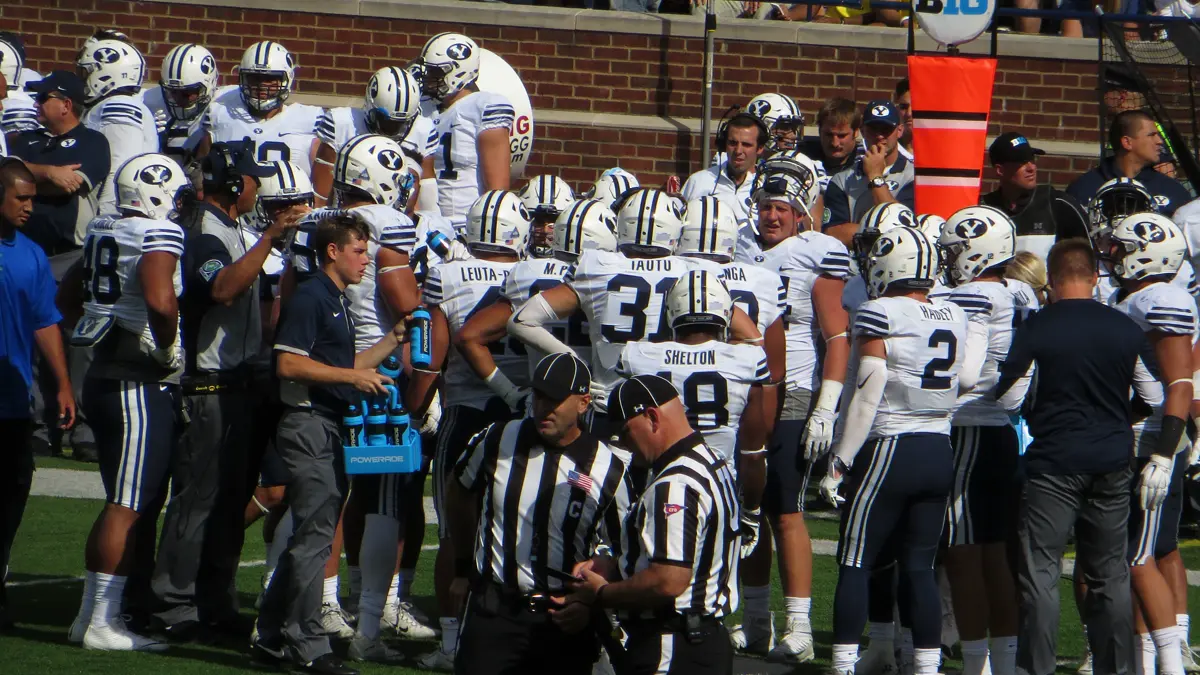
BYU kept a touchdown on Saturday that its own officials had first ruled dead. The No. 9 Cougars opened the scoring against Arizona State on a second-and-goal fumble at the 1-yard line, lost the play to a forward-progress ruling, got the ball back on review, and then got the touchdown on a second review. Fox rules analyst Mike Pereira said the final step was not allowed, Arizona State coach Kenny Dillingham was visibly furious, and BYU won 27-20 with the disputed seven points still on the board. The touchdown is the story, but the sequence is the scandal.
What happened on the play?
A sneak, a fumble, and then two reviews that moved the ball in opposite directions. On second and goal from Arizona State’s 1-yard line in the first quarter, BYU quarterback Bear Bachmeier fumbled the snap on a sneak attempt. Officials ruled after the play that his forward progress had been stopped, which ends the play wherever the ball is. A first review gave BYU the ball at the 1-yard line. Then Dillingham called a timeout, which prompted officials to look at the fumble again, and the second review overturned the ruling once more: running back Sione Moa was credited with recovering the fumble and getting into the end zone, and BYU led 7-0. The final score was 27-20, which means the seven disputed points are also the margin, even though BYU could have scored on third down from the 1 anyway. That is the uncomfortable arithmetic of the afternoon: a touchdown that was probably coming, awarded in a way the rules analyst says cannot happen.
Why did Pereira say the touchdown should not count?
Because a dead play cannot be advanced. Pereira’s argument on the Fox broadcast was precise and repeated: the ruling on the field was that the runner was down initially, and if that is the case, the play has been ruled dead. You can give a recovery, but you cannot give an advance, unless a new rule has been invented. He added that the timing of the whistle was not the deciding factor, saying Dillingham was right and that the officials had killed the play in the field of play with the ball out. On the replay shown after the reviews, no whistle was audible once forward progress was stunted, but the official said on the intercom that the play had been stopped for forward progress. That intercom line is what makes Pereira’s case hard to dismiss: the crew itself announced the stoppage, then awarded the advance anyway.
What did Dillingham and Griffin add?
The coach’s fury and the broadcast booth’s pattern charge. Dillingham argued on the sideline that the whistle had blown and the play was dead, and Pereira backed him twice on air, saying plainly that Kenny is right. Robert Griffin III, calling the game with Connor Onion, went further: he said Pereira was 100 percent correct, that Dillingham was justified in being frustrated, and that this was three weeks in a row where Big 12 officials had just made up rules as they went. Griffin’s line is what turned a review dispute into a conference story, because it invites every fan to supply their own example from the last fortnight. The Big 12 has a recent history of owning its mistakes in public, as it did when it conceded a replay error in Notre Dame’s loss at BYU, covered in the Notre Dame clock-error story, and when it fined UCF $100,000 for chants at the BYU game, covered in the UCF fine story. Silence here would be a choice, not an oversight.
Why is this the third straight week for BYU?
Because the Cougars cannot escape the officials, whether they win or lose. A week earlier, their double-overtime loss to UCF was riddled with officiating decisions, from a reviewed sack to a spike before a blocked kick to a roughing-the-kicker flag that gave UCF a fresh set of downs, covered in the UCF double-overtime story. The week before that, BYU’s upset win over Notre Dame ended with a potential game-changing pass interference call that was not made on the final play. USA Today strings those three weeks together deliberately, and Griffin’s broadcast comment does the same. The pattern matters more than any single flag, because it changes how the next BYU game will be watched: every close call will now be read as either a correction or a continuation.
Did the call actually change the result?
Probably not the winner, but certainly the argument. BYU had third down from the 1 still to come, and a team that scores 27 points does not win or lose on one goal-line snap alone. But a seven-point margin in a 27-20 game means the disputed touchdown is the difference on the scoreboard, and Arizona State was denied the goal-line stand it had apparently earned when the play was first ruled dead. That is why Dillingham’s anger reads as more than a coach venting about a loss: his team did the hard part, stopping the sneak, and then watched the points go up anyway after two reviews. College football has produced its share of wild finishes this season, from Georgia’s win at Alabama turning on a no-call to a swing at a quarterback that drew no flag in Oregon-UCLA, but this one is different because the officials announced the stoppage themselves before reversing it.
What happens next?
The explanation window. Pereira said these situations should not keep arising week to week, and that further explanation tends to arrive as the week wears on. The Big 12 can defend the review sequence, concede another error, or say nothing and let the next crew assignment speak for it. BYU, meanwhile, stays a one-loss, ninth-ranked team with a playoff case intact and a credibility problem it did not create but cannot shake. The next ranking will treat BYU as a contender. The next broadcast will treat its games as a test of the officials. Both readings are now part of the same story, and Saturday’s fumble at the 1 is why.
Frequently asked questions
What happened on the disputed BYU touchdown?+
On second and goal from Arizona State's 1-yard line in the first quarter, BYU quarterback Bear Bachmeier fumbled on a sneak attempt. Officials ruled his forward progress had stopped, which ends the play. After a first review BYU kept the ball at the 1, and after a second review officials overturned the ruling again and awarded a touchdown to Sione Moa for recovering the fumble in the end zone, putting BYU up 7-0.
Why did Mike Pereira say the touchdown should not count?+
Because the play had already been ruled dead. Pereira said the ruling on the field was that the runner was down, so the officials could award the recovery but not the advance into the end zone. His line on the Fox broadcast was that giving the advance would require a new rule. He added that the timing of the whistle did not matter, because the officials had killed the play in the field of play.
What did Kenny Dillingham argue?+
That the play was dead and the ball could not be advanced. Dillingham was visibly upset on the sideline and argued the whistle had blown. Pereira backed him on the broadcast, saying twice that Kenny is right. On the replay shown afterwards, no whistle was audible after forward progress was stunted, but the official said on the intercom that the play had been stopped for forward progress.
What did Robert Griffin III say about the call?+
That Pereira was completely correct and Dillingham was justified in his frustration. Griffin, who called the game with Connor Onion, said it was the third week in a row that Big 12 officials had just made up rules as they went. His comment turned a single review into a pattern argument, which is why the play travelled far beyond the BYU-Arizona State audience.
Why is this the third straight week of BYU officiating controversy?+
USA Today frames it as a three-week run. A week earlier, BYU's double-overtime loss to UCF was riddled with officiating decisions, covered in [the UCF double-overtime story](/ucf-stuns-byu-double-overtime-chaotic-ending/). The week before that, BYU's upset win over Notre Dame ended with a potential game-changing pass interference call that was not made, and the Big 12 later conceded a replay error in that game, covered in [the Notre Dame clock-error story](/big-12-admits-clock-error-notre-dame-byu/).
Did the touchdown decide the game?+
Not on its own. BYU went on to win 27-20, and a touchdown on second and goal is a swing of at most seven points in a seven-point game, which is exactly why the call matters. USA Today notes BYU could have scored on the next play anyway, with third down still to come from the 1. The argument is about process, not inevitability: a dead play should not produce points.
Has the Big 12 responded to the call?+
Not as of Saturday evening. Pereira said on the broadcast that these situations should not keep arising week to week, and that further explanation tends to arrive as the week wears on. That is the open thread: whether the conference issues a statement, defends the review sequence, or quietly moves on to the next crew assignment.
What happens next for BYU?+
The Cougars stay in the playoff conversation as a one-loss, ninth-ranked team, but the officiating cloud follows them into every big game now. Their next ranking and their next game will both be read through this sequence, and any Big 12 explanation will be measured against Pereira's simple test: a recovery can be awarded, but a dead play cannot be advanced.
Sources
- USA Today: Another week, another BYU officiating controversy (the two-review sequence, Dillingham's timeout prompting the second look, Pereira's recovery-not-advance argument, the UCF and Notre Dame pattern, the 27-20 final)
- Fox Sports: Why BYU's opening touchdown vs. Arizona State sparked review and debate (the second-and-goal setup, the Moa recovery credit, Griffin's three-weeks comment, the intercom forward-progress explanation)
- Arizona Republic via azcentral: Big 12 officials under fire for controversial BYU TD vs Arizona State (the forward-progress ruling, the ball at the 1 after the first review, the touchdown after the second review, Dillingham irate)
- Awful Announcing: Fox rules analyst Mike Pereira confounded by Big 12 officials over overturned BYU-ASU call (the replay-center involvement, the no-whistle replay note, Pereira's frustration quote)
Play & tools
Free browser games and tools — no account, no download.
- Play 17-0 — Draft nine and chase a flawless NFL regular season — the perfect 17-0 run, no playoffs.
- Play 20-0 — Draft nine and chase a perfect NFL season — regular season and playoffs, undefeated.
- Play 16-0 — Draft nine and chase a perfect 16-0 — the classic 16-game NFL regular season, no playoffs.
- Play Flawless Six — Draft five players and a head coach, then chase a perfect NFL season with the right chemistry.
- Play Guess the NFL Player — A new mystery NFL player every day. Eight guesses, with a clue on each — plus free unlimited mode.
- Play NFL Wordle — A Wordle for football — guess the daily NFL player in eight tries, with green-amber-grey feedback on every clue.
- Play NFL Connections — Sort sixteen football tiles into four hidden groups of four. A new daily puzzle, four mistakes allowed, plus unlimited mode.
- Explore all our games →
- Open the schedule simulator — Pick every 2026 NFL game and watch the standings and playoff seeds update live.
- Open the squares generator — Generate a randomized, printable Super Bowl squares grid for your party — free, no sign-up.
- Open the trade calculator — Weigh any fantasy football trade instantly — clear winner and value gap.
- Run the NFL predictor — Simulate the NFL bracket and see who your picks send to the Super Bowl.
- Open the passer rating calculator — Calculate the official NFL passer rating (0–158.3) from any passing line, with the formula shown.
- Explore all our free sports tools →
Related nfl guides
View all →
Big 12 Admits Clock Error Stole Notre Dame's Last Play in 28-24 Loss at BYU
The Big 12 admitted its replay crew wrongly cleared the final play of Notre Dame's 28-24 loss at BYU, costing the Irish one last snap from the 8-yard line.
Big 12 Fines UCF $100,000 Over BYU Chants and Adds In-Game Penalties for a Repeat
The Big 12 fined UCF $100,000 for discriminatory chants aimed at BYU during the Knights' upset win, and announced a new policy that can cost a team yardage or free throws if it happens again in the same game.

UCF Stuns No. 2 BYU 39-31 in Double Overtime After Chaotic Ending
UCF beat No. 2 BYU 39-31 in double overtime in Orlando after a wild finish to regulation featuring a blocked kick, a helmet-off runoff and a disputed call.
Arizona State Parts Ways With Greg Powers and Hires Dave Hakstol as the Mayich Review Continues
Greg Powers is out at Arizona State and Dave Hakstol is in, while the independent review of Matthew Mayich's August collapse is still running.
McKinney Fined $25,000 for Blasting Officials After Packers' Lions Loss
The NFL fined Packers safety Xavier McKinney $25,000 for his post-game criticism of the officials after Green Bay's 20-17 loss at Detroit, a fine McKinney says was worth it.
Caleb Williams Keeps Wearing the Cleats the NFL Fined Him For
The NFL fined Bears quarterback Caleb Williams $11,941 for the visible Caddix logo on his cleats in Week 6. He has appealed, says the shoes are safer, and plans to keep wearing them, with Caddix offering to pay the fines.