
Youngest World Cup Winner in History
On this page5
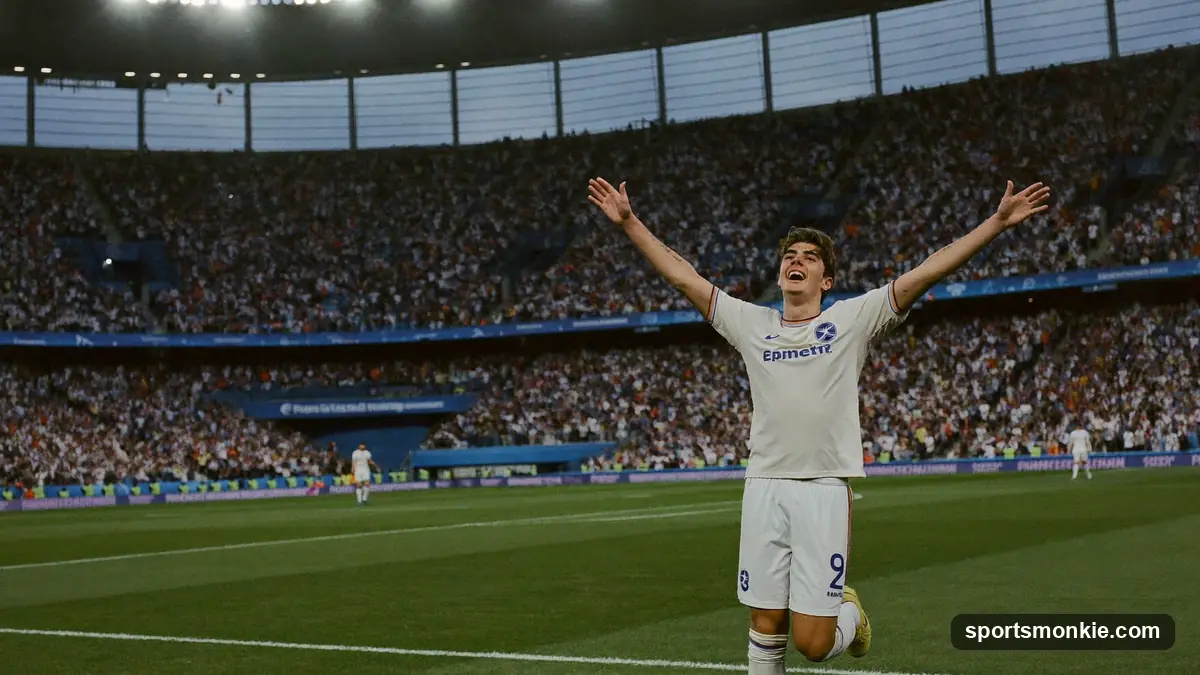
Pelé is still the youngest player ever to win the FIFA World Cup: 17 years and 249 days old when Brazil beat Sweden in the 1958 final, a match he personally decided with two goals. Nobody has gone younger in 68 years, though Spain’s 2026 title run came closer than anyone since Kylian Mbappé, with two teenagers, Lamine Yamal and Pau Cubarsí, breaking into the all-time top 10.
Below is the full leaderboard of the youngest World Cup winners, verified against official ages and match dates, plus what it takes to actually break the record rather than just approach it.
The youngest World Cup winners of all time
Age is measured from birth date to the date of that tournament’s final. A “winner” is anyone named in the champion squad, even players who never took the field, which is why two names below (marked “squad only”) are on the list on a technicality.
| Rank | Player | Age at final | Team & year | Played the final? |
|---|---|---|---|---|
| 1 | Pelé | 17 years, 249 days | Brazil, 1958 | Yes — scored twice |
| 2 | Ronaldo | 17 years, 298 days | Brazil, 1994 | No — squad only |
| 3 | Giuseppe Bergomi | 18 years, 201 days | Italy, 1982 | Yes |
| 4 | Coutinho | 19 years, 6 days | Brazil, 1962 | No — ruled out by injury |
| 4 | Lamine Yamal | 19 years, 6 days | Spain, 2026 | Yes — started |
| 6 | Marco Antônio | 19 years, 135 days | Brazil, 1970 | Yes |
| 7 | Pau Cubarsí | 19 years, 178 days | Spain, 2026 | Yes — started |
| 8 | Kylian Mbappé | 19 years, 207 days | France, 2018 | Yes — scored |
| 9 | José Altafini (“Mazzola”) | 19 years, 340 days | Brazil, 1958 | No — dropped before final |
| 10 | Rubén Morán | 19 years, 344 days | Uruguay, 1950 | Yes |
Pelé and Bergomi are the only two players on this list who were both under 19 and actually played a World Cup final. Everyone else needed to be either 19 or a non-playing squad member to make the top 10.
Pelé in 1958: the record that started it all
Pelé arrived at the 1958 World Cup as a 17-year-old and left it as the sport’s brightest new name. He scored the only goal in the quarter-final, a hat-trick in the semi-final against France, and two more in the 5-2 final win over Sweden. His second in the final, a lifted flick over a defender followed by a volley, became one of the tournament’s defining images.
Winning the World Cup at 17 would be remarkable on its own. Doing it as the team’s decisive attacking force is why Pelé’s record is treated as a class apart from squad-list trivia like Ronaldo’s or Coutinho’s entries.
2026 rewrote the top 10: Yamal and Cubarsí arrive
Spain’s 1-0 extra-time win over Argentina at MetLife Stadium on 19 July 2026 put two Barcelona-raised teenagers into World Cup history. Lamine Yamal, 19 years and 6 days on final day, started and drove Spain’s attack throughout the tournament; Pau Cubarsí, 19 years and 178 days, started at centre-back in every knockout match, including the final. Together they became just the third and fourth teenagers, after Pelé and Bergomi, to start and win a World Cup final.
Neither man got closer to Pelé than Bergomi did in 1982. But the gap between Mbappé’s 2018 mark and the new benchmark shows how rare it is for two teammates from the same tournament to both crack the all-time youngest-winner top 10 — before 2026, only Brazil’s deep 1958 and 1962 squads had managed that.
What it measures, and why it is so hard to do
“Youngest World Cup winner” measures a single moment: a player’s exact age on the date of the final their team won, regardless of playing time earlier in the tournament. That is deliberately generous, since it lets squad members like Ronaldo and Coutinho onto the list despite never playing a minute. It is also why the list splits cleanly into two groups: genuine difference-makers (Pelé, Bergomi, Yamal, Cubarsí, Mbappé, Marco Antônio, Morán) and squad members who were simply young and lucky enough to be named in a winning 22 or 23 (Ronaldo, Altafini, Coutinho).
The hard part is not being 19 on a World Cup squad, several dozen players have managed that. It is being trusted to start, let alone decide, a final before your body and reputation have caught up with your talent. Managers at the biggest tournament in the sport overwhelmingly pick experience over promise in a final; Pelé, Bergomi, Yamal and Cubarsí are the exceptions, not the rule.
The active chase, as of 2026
With Yamal and Cubarsí now occupying two of the top seven all-time spots, Spain’s next generation is the closest active challenge to Pelé’s mark, assuming either wins another World Cup as a teenager, which is impossible since both will be in their twenties by the 2030 tournament. In practice, no currently active teenager is positioned to threaten 17 years and 249 days; the next realistic run at the record would need a breakout 16- or 17-year-old to emerge for a genuine contender before the 2030 World Cup in Spain, Portugal and Morocco. History suggests that is a low-probability event: it has happened exactly once since the tournament began in 1930.
For the countries chasing the trophy itself, our list of the most World Cups won ranks the serial winners, and for the sharpest single moments of these tournaments, the fastest goal in World Cup history and the World Cup Golden Boot winners capture the players who defined them. For more football records and explainers, visit our football hub. Pelé lifted the trophy at 17 and scored twice in the final; 68 years and one Spanish teenage takeover later, no one has done it younger.
Frequently asked questions
Who is the youngest player to win the World Cup?+
Pelé is the youngest World Cup winner, at 17 years and 249 days when Brazil won the 1958 final against Sweden. He is also the youngest player to score in a World Cup final, having netted twice that day. No player younger than Pelé has ever been part of a World Cup-winning team on the pitch.
Did Pelé actually play in the 1958 final?+
Yes, and he was decisive. Pelé scored two goals in Brazil's 5-2 win over hosts Sweden, including a famous lifted finish over a defender. His semi-final hat-trick and final brace made him the tournament's breakout star at 17, which is what makes his record more than a technicality about squad lists.
Was Ronaldo really a younger World Cup winner than Pelé?+
By date of birth, yes: Ronaldo was 17 years and 298 days as a squad member of Brazil's 1994 winners, about 49 days older than Pelé was in 1958. Ronaldo never played a minute of that tournament, so Pelé is credited as the youngest winner who actually featured, and he was younger regardless of the technicality.
Who is the youngest World Cup winner of 2026?+
Lamine Yamal, at 19 years and 6 days when Spain beat Argentina 1-0 in the 2026 final, is the youngest player from that tournament and now sits fourth on the all-time list. Teammate Pau Cubarsí, 19 years and 178 days, also cracked the all-time top 10 after starting the final at centre-back.
Is Kylian Mbappé still the youngest World Cup winner of the 21st century?+
No, Lamine Yamal and Pau Cubarsí are both younger than Mbappé was in 2018. Mbappé won the World Cup with France at 19 years and 207 days and scored in the final; Yamal and Cubarsí won it at 19 years 6 days and 19 years 178 days respectively, moving Mbappé down to sixth on the all-time list.
Why is Pelé's youngest-winner record so hard to break?+
A player must be a genuine contributor to a World Cup-winning team before turning 18, which needs extraordinary talent and a manager willing to trust a teenager on the biggest stage. Very few teenagers even make a World Cup squad, and Yamal and Cubarsí, both 19 in 2026, still finished roughly a year and a half older than Pelé was in 1958.
Which World Cup winners are counted even though they never played?+
FIFA and record-keepers count any player named in a champion squad, even unused ones. Ronaldo (1994), Coutinho (1962, ruled out by injury) and José Altafini/'Mazzola' (1958, dropped before the final) are all officially youngest-winner entries despite not playing in their final, which is why some lists separate 'winners' from 'players who featured.'
Sources
Play & tools
Free browser games and tools — no account, no download.
- Play 38-0 — Sign a 4-4-2 of all-time football legends and chase a perfect 38-0 league season — perfect, not just unbeaten.
- Explore all our games →
Related football guides
View all →
The Fastest Goal in World Cup History
Hakan Sukur scored after just 10.8 seconds for Turkey in 2002, the fastest goal in World Cup history. The full leaderboard of the quickest goals ever.
Most Goals in a Single World Cup Match
Oleg Salenko scored 5 goals for Russia against Cameroon in 1994, the most by a player in one World Cup match. The full list, explained.
FIFA Women's World Cup Records: The 10 That Matter Most
The USA's 4 titles top the list, but Marta's 17 goals, a 13-0 rout, and a 90,185-strong crowd in 1999 are just as remarkable. Ranked, verified records as of 2026.
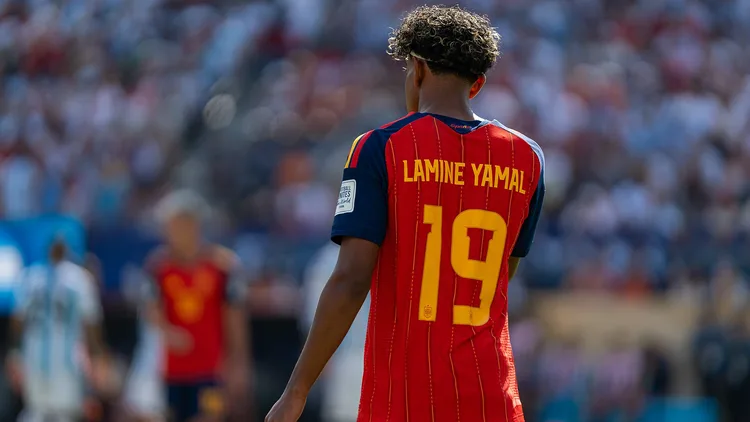
Facundo Bernal's Ban Is Decided: Four Matches for the Two Headbutts on Lamine Yamal
The RFEF committee has banned Facundo Bernal for four matches, the Article 103 minimum, for grabbing Lamine Yamal by the neck and headbutting him twice.
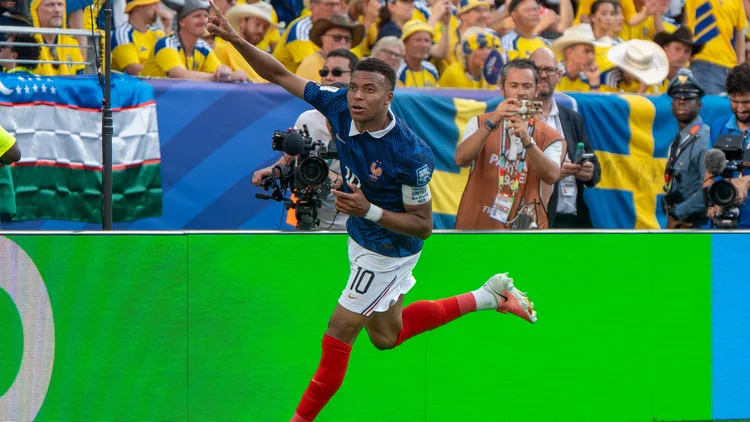
Mbappe Scores Twice as Real Madrid Beat Sevilla 4-1, Including a Turn Goal and a Panenka
Kylian Mbappe turned clear of two defenders and rounded the keeper for one goal and chipped a Panenka penalty for another as Real Madrid beat Sevilla 4-1.

Youngest Ballon d'Or Winner (Record Holder)
Ronaldo Nazário is the youngest Ballon d'Or winner, taking the 1997 award aged 21. The full list of the youngest winners, from Owen to Messi, explained.