
What Is a Shank in Golf? Why It Happens
On this page6
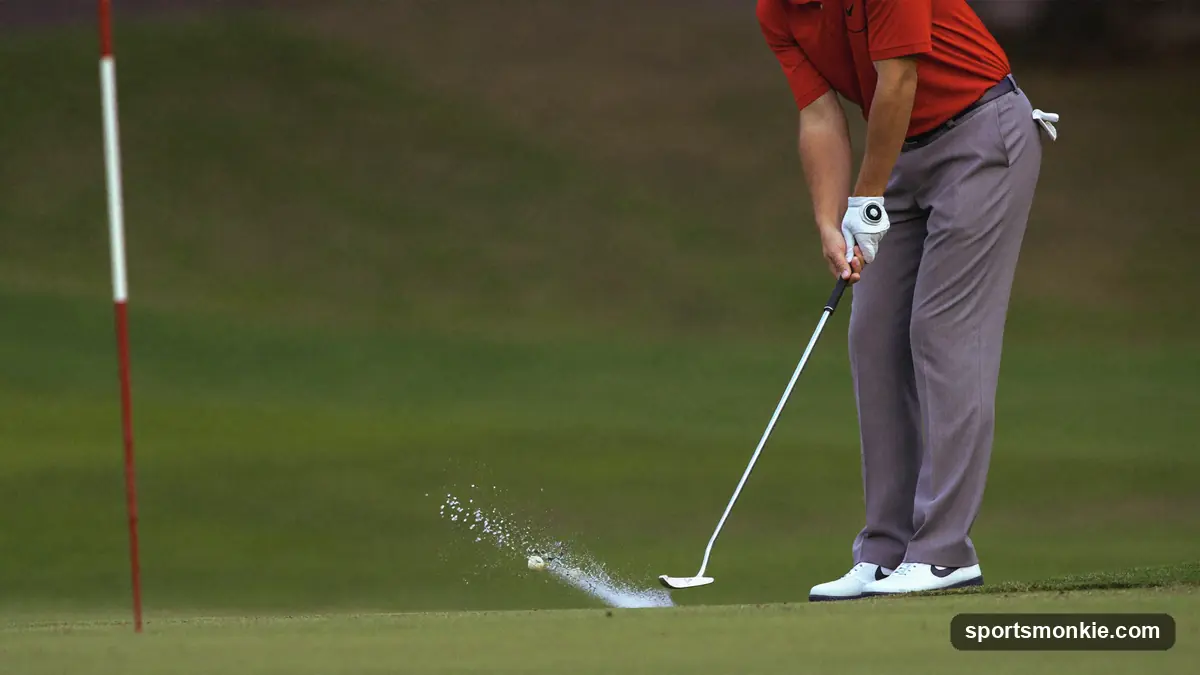
A shank in golf is a shot where the ball strikes the hosel — the rounded neck where the shaft meets the clubhead — instead of the face, sending it squirting almost sideways, low and fast. For a right-handed golfer it usually darts sharply right. It happens most with wedges and short irons, and the cause is nearly always the clubhead arriving too far from your body at impact.
Here is exactly what a shank is, why it happens, how it differs from a slice, and how to stop it.
What a shank actually is
The clubface has a sweet spot in the middle. Just inboard of the heel sits the hosel, a curved metal section with no loft and no face. When the ball catches that hosel, it does not fly — it shoots off at a wild angle, typically dead right and barely off the ground.
Because the strike misses the face entirely, a shank feels and sounds different from a normal mishit: a dull clack and an instant sideways rocket. It is one of golf’s most dreaded shots precisely because it comes out of nowhere and can repeat until you find the cause.
The main cause of a shank
At its root, a shank means the clubhead has moved further from your body during the downswing than it was at address, so the hosel is presented to the ball. A few common triggers push it there.
The usual culprits are the hands and arms thrusting the club outward toward the ball, weight rolling onto the toes so the whole body drifts forward, and an exaggerated in-to-out swing path that swings the hosel into the ball. Standing too close at address makes any of these worse. Fix the distance the clubhead travels from your body and the shank disappears.
Shank vs slice vs other mishits
A shank is often confused with a slice, but they are entirely different faults. This table sorts the common mishits by what goes wrong.
| Mishit | What the ball does | Part of club at fault | Main cause |
|---|---|---|---|
| Shank | Squirts low and sharply right | Hosel | Clubhead too far from body at impact |
| Slice | Flies off the face, curves hard right | Face (open) | Open face + out-to-in path |
| Toe strike | Weak, low, often right | Toe of face | Clubhead too far from body, off-centre |
| Thin/blade | Low screamer, little height | Leading edge | Bottom of arc too high, hitting ball’s middle |
| Fat/chunk | Short, heavy, turf-first | Sole into ground | Bottom of arc behind the ball |
The key distinction: a shank fails at contact, while a slice is struck cleanly on the face and curves in the air. Diagnosing which one you have points you at the right fix.
What is casting, and does it cause shanks?
Casting is a related swing fault worth knowing. It means releasing the angle between your wrists and the club too early in the downswing — “casting” the clubhead outward from the top like throwing a fishing line. You lose lag, power and control.
Casting does not always cause a shank, but it can, because throwing the clubhead out and away from the body is exactly the move that presents the hosel. It also robs distance and consistency in its own right. If your mishits come with a weak, high, glancing feel, casting is a likely contributor, and the Titleist Performance Institute’s swing-fault library is a good place to understand it.
How to fix a shank fast
The quickest on-course fix is to change where the ball meets the face. Set up with the ball toward the toe, stand a fraction further away, and grip down slightly. Feel like the club stays close to you through impact rather than reaching out.
A proven drill, echoed by the PGA of America’s shank guidance, is to place a headcover or a tee just outside the ball and make swings that miss it — this trains the clubhead to travel closer to your body. Keeping your weight in your heels, not your toes, reinforces the same thing. Most golfers cure a shank within a bucket of balls once they know the cause.
Getting past the mental side
Shanks come loaded with fear, and the tension that fear creates often makes them worse — a tight grip and a lunge toward the ball are shank fuel. Slowing down, breathing, and committing to a smooth, balanced swing does more than any swing thought.
Treat a shank as information, not a curse: it is telling you the clubhead is drifting away from your body. Fix that one thing and it goes away. If you are working through the wider game and want a realistic target to aim at, our guide to how to break 100 in golf lays out where the strokes really hide.
Frequently asked questions
What is the main cause of a shank?+
The clubhead reaching impact too far from your body, so the ball strikes the hosel instead of the face. This usually comes from the hands and clubhead moving out toward the ball on the downswing, weight shifting onto the toes, or an overly in-to-out path. The face never touches the ball at all — the rounded hosel does.
What is considered a shank?+
A shank is any shot where the ball hits the hosel, the rounded neck where the shaft joins the clubhead, rather than the face. The ball squirts almost sideways, low and fast, usually far right for a right-handed golfer. It is most common with wedges and short irons and feels jarring because the strike is completely off the face.
What is the difference between a shank and a slice?+
A shank is a contact error — the ball hits the hosel and shoots sharply sideways with little height. A slice is a curve error — the ball is struck on the face but bends hard right in the air from an open face and out-to-in path. A shank fails at impact; a slice flies off the face and curves during flight.
How do you fix a shank?+
Move the ball slightly toward the toe at address, stand a touch further from it, and feel like the club stays close to your body through impact. Keeping your weight in your heels rather than your toes helps too. A useful drill is placing a tee just outside the ball and swinging without hitting it, grooving contact off the centre of the face.
Sources
Play & tools
Free browser games and tools — no account, no download.
- Play today's Sports Connections — Today's Sports Connections — daily hints, answers, and play the grid.
- Play Guess the NFL Player — A new mystery NFL player every day. Eight guesses, with a clue on each — plus free unlimited mode.
- Explore all our games →
Related golf guides
View all →
How to Fix a Shank in Golf: Causes and Drills That Stop It Fast
Fix a shank by moving the strike off the hosel: stand a hair farther from the ball, keep your weight back on your heels, and swing the club more from the inside. Here are the real causes and the drills that stop the shanks fast.
What Is a Hole-in-One in Golf?
A hole-in-one is a score of one stroke on a par-three, par-four or par-five hole, although the hole's official par and format still matter.

The Career Grand Slam in Golf, Explained
The career grand slam means winning all four professional majors in a career. Only six men have done it, most recently Rory McIlroy in 2025.
Golf Drop Rules, Explained
Golf drop rules under Rule 14.3: drop from knee height into a relief area, and replay if the ball rolls out. When you drop and what it costs.

The 4 Golf Majors in Order
The four men's golf majors in calendar order: the Masters, the PGA Championship, the U.S. Open and The Open Championship. Dates, venues and history.

Cost to Play Pebble Beach Golf Links
What does it cost to play Pebble Beach? As of 2025 the green fee is roughly $675+ per round, plus cart and caddie. Full breakdown and how to book.