
Golf Drop Rules, Explained
On this page7
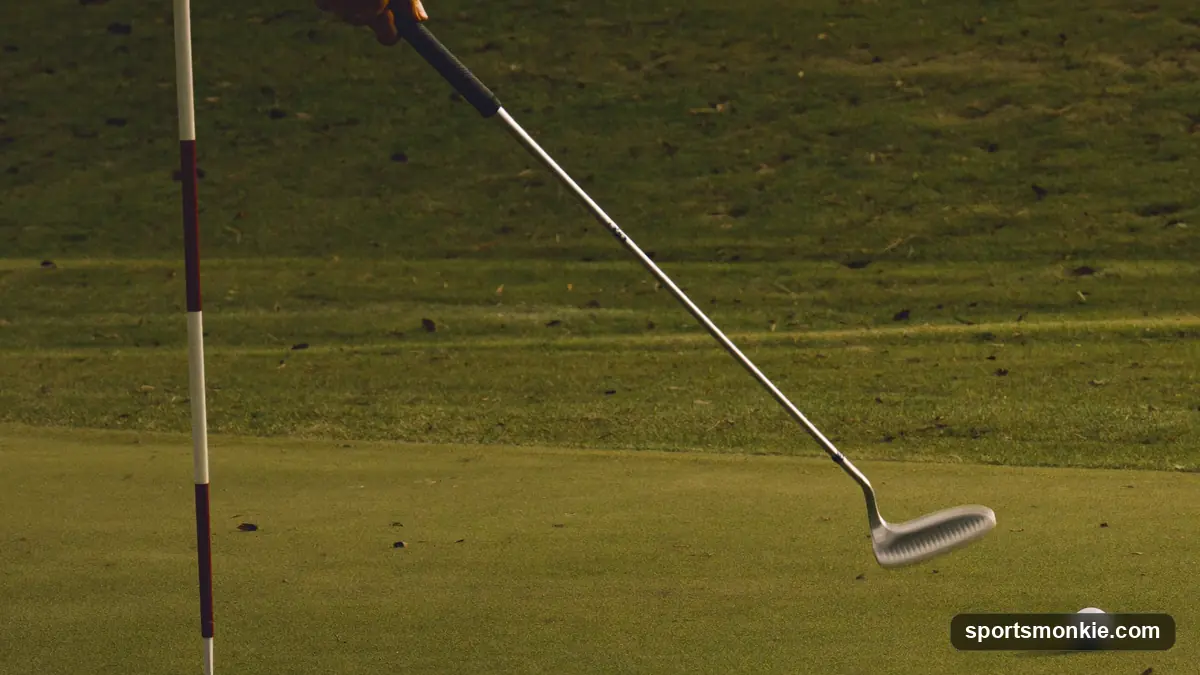
Golf’s drop rules set out how you put a ball back into play when you take relief, and the modern procedure comes from Rule 14.3 of the Rules of Golf: you drop the ball from knee height, let it fall straight down, and it must land and stay inside a defined relief area. If the ball rolls out of that area, you drop again; if it rolls out a second time, you place it where it landed.
The 2019 rewrite of the rules simplified dropping and changed the old shoulder-height method to knee height, so the ball settles closer to where it lands. Some drops are free and some cost a penalty stroke, depending on why you are taking relief. Here is the full procedure, when each type of drop applies and what it costs you.
The modern drop procedure, step by step
Rule 14.3 lays out a precise method, and doing it wrong can cost a penalty:
- Use the original ball or another ball. Either is allowed.
- Drop from knee height. Hold the ball at the height of your knee while standing upright and let go. Do not drop from shoulder height (the pre-2019 method).
- Let it fall straight down. You cannot throw, spin or roll it, and it must not touch you or your equipment before hitting the ground.
- It must land in the relief area and come to rest there.
The relief area is measured from a reference point, using either one or two club-lengths depending on the type of relief, and it can never be nearer the hole than that point.
One club-length or two?
A frequent source of confusion is how big the relief area is. The distance depends on the situation.
| Relief type | Relief area size | Penalty |
|---|---|---|
| Free relief (cart path, casual water, ground under repair) | 1 club-length | None |
| Unplayable ball, lateral drop | 2 club-lengths | 1 stroke |
| Red penalty area, lateral relief | 2 club-lengths | 1 stroke |
| Yellow penalty area, back-on-the-line | On the line (no width limit) | 1 stroke |
Your longest club except the putter, almost always the driver, is used to measure a club-length. The relief area is measured no nearer the hole than the reference point.
Free drops versus penalty drops
Not every drop costs you. A free drop applies when something abnormal interferes with your ball or stance, an artificially surfaced cart path, casual water, ground under repair or an immovable obstruction like a sprinkler head. You find the nearest point of complete relief, mark it, and drop within one club-length, no penalty.
A penalty drop applies when you choose to escape a bad spot at a cost. Declaring your ball unplayable, or taking relief from a penalty area, adds one stroke. The mechanics of the drop are identical; only the stroke count differs. The colour of the stakes matters here too, and the difference between red and yellow stakes determines which relief options you get.
When the ball rolls out
Because a dropped ball can bounce and roll, the rules have a clear fallback. If your properly dropped ball comes to rest outside the relief area, you must drop a second time. If that second drop also rolls out of the area, you then place the ball on the spot where it touched the ground on that second drop. The knee-height rule exists precisely to reduce how far the ball rolls, making this sequence less common than under the old shoulder-height method.
Common drop mistakes that cost strokes
Even good players slip up on the details, and the penalty for a wrong drop is usually one stroke:
- Dropping from the wrong height. Shoulder height is the old rule; since 2019 it must be knee height. Drop from too high and, if you play the ball, you add a penalty stroke.
- Not re-dropping when it rolls out. If your ball settles outside the relief area, you must drop again, playing it from an outside-the-area spot is a mistake.
- Playing before correcting a bad drop. You can fix a botched drop without penalty as long as you have not yet made a stroke; once you play, the penalty sticks.
- Measuring with the wrong club. The relief area is measured with your longest club other than the putter, so use the driver, not a wedge, to get the full club-length.
Knowing these avoids turning a routine relief situation into an unnecessary penalty.
How drops connect to other rules
Dropping is the shared mechanic behind several different relief situations. When your first ball may be gone, you might avoid a long walk back by playing a provisional ball instead, then only convert to a stroke-and-distance drop if the original is truly lost. And an up-and-down save often starts from a drop, getting relief, then chipping close and holing the putt.
Knowing the drop procedure cold means you can take relief quickly and confidently, without guessing at heights or distances while the group behind waits.
The bottom line
The heart of golf’s drop rules is short: knee height, straight down, land and stay in the relief area, re-drop then place if it rolls out. Beyond that, the only things that change are the size of the relief area (one or two club-lengths) and whether the relief is free or costs a stroke. Master those and you will handle cart paths, unplayable lies and penalty areas smoothly, exactly as Rule 14.3 intends.
Frequently asked questions
Is a drop a one or two stroke penalty?+
It depends on why you are dropping. Some drops are free (zero penalty), such as relief from a cart path, casual water or a sprinkler head in your way; you drop and play on without adding a stroke. Others cost one penalty stroke, including taking relief from a penalty area, declaring your ball unplayable, or a stroke-and-distance drop for a lost ball. A drop is essentially never a two-stroke penalty on its own; two-stroke penalties come from other rules breaches, not from the act of dropping.
What is the current rule for dropping the ball in golf?+
Since the 2019 rules modernisation, you drop from knee height under Rule 14.3, meaning the ball is released from the height of your knee while you stand upright, not from shoulder height as in the old rules. You must let it fall straight down without throwing, spinning or rolling it, and it has to land in and stay within the relief area. The knee-height change was made so the ball settles closer to where it lands and is less likely to roll far, giving more consistent and predictable relief.
Do you drop for 3 or 4 in golf?+
The number you are 'playing' after a drop depends on your penalty count, not the drop itself. For example, after a tee shot out of bounds you take stroke-and-distance relief: one shot played plus one penalty stroke means your drop is your third stroke. Take an unplayable near the green after several shots and you might be dropping for four, five or more. The drop procedure is the same regardless; what changes is how many strokes and penalties you have already accumulated on the hole.
When can you take an unplayable drop?+
You may declare your ball unplayable almost anywhere on the course except in a penalty area, and it is entirely your decision, no one else can force or refuse it. For a one-stroke penalty you then have three options: play again from where you last hit (stroke and distance), drop within two club-lengths of the ball no nearer the hole, or drop on the line from the hole through the ball, going back as far as you like. You choose whichever gives you the best next shot.
Sources
Play & tools
Free browser games and tools — no account, no download.
- Play today's Sports Connections — Today's Sports Connections — daily hints, answers, and play the grid.
- Play Guess the NFL Player — A new mystery NFL player every day. Eight guesses, with a clue on each — plus free unlimited mode.
- Explore all our games →
Related golf guides
View all →
What Is a Hole-in-One in Golf?
A hole-in-one is a score of one stroke on a par-three, par-four or par-five hole, although the hole's official par and format still matter.

The Career Grand Slam in Golf, Explained
The career grand slam means winning all four professional majors in a career. Only six men have done it, most recently Rory McIlroy in 2025.
The 4 Golf Majors in Order
The four men's golf majors in calendar order: the Masters, the PGA Championship, the U.S. Open and The Open Championship. Dates, venues and history.

Cost to Play Pebble Beach Golf Links
What does it cost to play Pebble Beach? As of 2025 the green fee is roughly $675+ per round, plus cart and caddie. Full breakdown and how to book.

The Most Exclusive Golf Clubs
The world's most exclusive golf clubs, from Augusta National to Cypress Point. What makes a club exclusive and why money alone can't get you in.

Most Masters Wins: Golf's Green Jacket Kings
Jack Nicklaus holds the record with six Masters wins. The full list of multiple green jacket winners, records and the numbers behind Augusta's greats.