
Verstappen Calls Austin Bumps 'Unacceptable' as Norris Reveals His Headache-Tablet Routine
On this page5
TL;DR: Max Verstappen says the bumps at Austin’s Circuit of the Americas are “unacceptable” and “out of control”, citing spinal strain from vertical impacts topping nine G. Lando Norris backs him, revealing he takes headache tablets before sessions because the bumps slam his head into the headrest. The drivers want the track dug up and rebuilt, not patched.
The world champion and the defending champion disagree on plenty. On Austin’s asphalt, they agree completely.
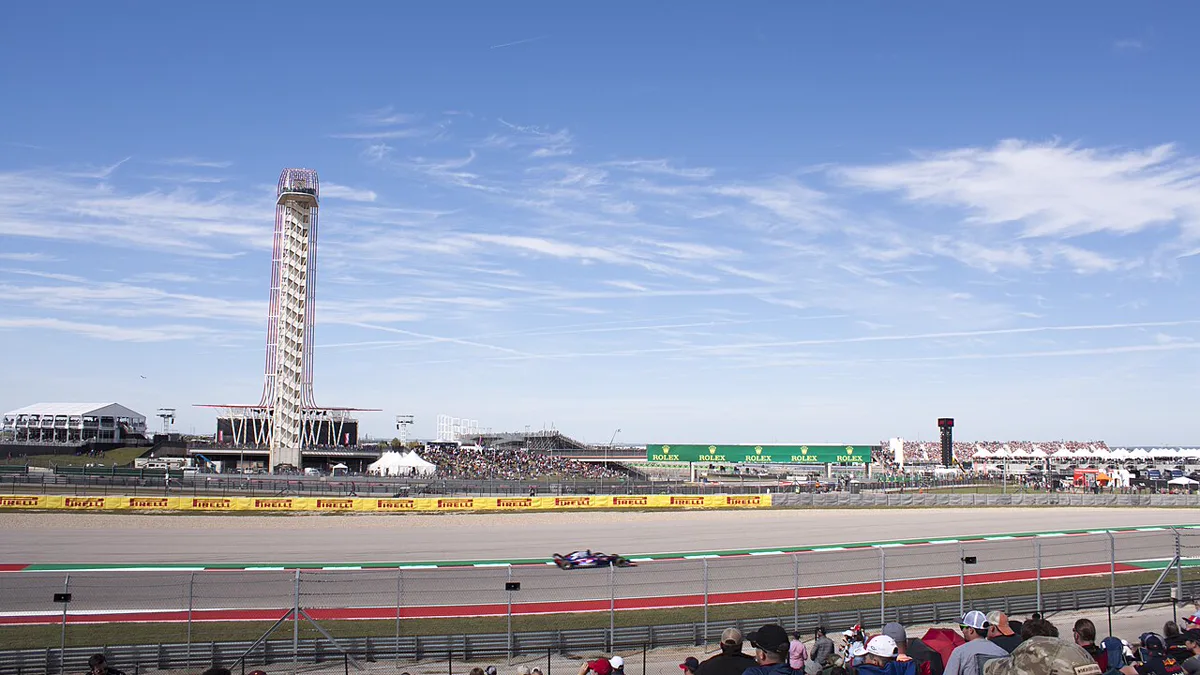
Max Verstappen opened the offensive at Thursday’s United States Grand Prix press conference, and it was not a comfort complaint. He praised the Circuit of the Americas as “one of the best layouts ever”, then called the bumps on it unacceptable and out of control, warned that checks on his lower spine had given him cause for concern, and argued that grinding down individual bumps will never fix a problem he says lives beneath the surface. Lando Norris followed him in, harder to dismiss: the 26-year-old champion takes headache tablets before going out on rough circuits, and says Verstappen is right.
What exactly did Verstappen say?
He drew a line between the circuit and its surface. “I love this track, I love this place. It’s one of the best layouts ever,” he said, per the BBC’s Austin reporting. “But for me the bumps are unacceptable.” The repairs, he argued, are treating the symptom: “You have to get to the root of the problem, so what lies beneath the asphalt.” A lasting fix, he said, means fully opening up the track and rebuilding the surface properly, an expensive job, but “the only way to get rid of it because these bumps are not natural and they are out of control.” His spine evidence: vertical impacts exceeding nine G at this circuit last year, versus five to six G under normal cornering, and his own line from the spinal checks, “the bottom end doesn’t look that great.”
Why did Norris bring up headache tablets?
Because the impacts are not abstract. “If you build a new track now, the regulations of building a new track, the tolerances you have to be within are pretty small,” Norris said, per Autosport. “It certainly doesn’t fit anywhere close to what those regulations are now, let’s say. But it’s an old track, not a new track. So, yeah, it’s pretty bad. Like there’s a lot of places I need to take headache tablets before I go out simply because it’s so bumpy and you’re hitting your head pretty hard against the headrests because of the bumps.” He has raised it, he said, many times: “There’s only so much we can complain about things, but he [Verstappen] is right. He’s certainly right.” A reigning champion medicating before a session is the strongest line of the whole row.
Why doesn’t resurfacing fix it?
Geology. COTA sits on expansive clay-based soil that shrinks and swells with the seasons, so the bumps keep coming back after every repair. The track was last fully resurfaced in 2024 and has since been partially resurfaced in places and had bumps ground down in others, without a lasting effect. The FIA’s 2026 event notes list fresh resurfacing from the entry of Turn 9 to the entry of Turn 11, with smoothing approaching Turns 12 and 19 — exactly the kind of targeted work Verstappen calls superficial. Verstappen also expects the 2026 cars’ behaviour under braking, as their active wings close, to make some impacts more severe.
Why has it got worse again this year?
The 2026 regulations were supposed to soften the ride, and early in the season they did. But the development war has pushed performance levels close together, ride heights have crept back down, and cars are bottoming out more often. Russell put the mechanics plainly: the cars run about 10mm of ride height at the end of the straights, “a centimetre from the ground, so any tiny bump you really feel it,” and the move to 18-inch wheels has “lost all of that effective suspension in the tyre.” His prescription is simpler than Verstappen’s: “F1 tracks probably need to be repaved every couple of years just to make it a bit more consistent.” Whether a repave would satisfy a driver who wants the foundations rebuilt is the open question Friday’s running starts to answer, in a paddock where the FIA has already admitted to a human-error power glitch this season.
Does this threaten the race?
Nothing in the rules says so. The FIA’s Grade 1 certification tests a surface with a four-metre straight edge and permits a plus-or-minus 3mm tolerance; once homologated, certification lasts three years. The drivers’ comments establish no finding that the circuit is unsafe, and Russell still files bumps under the cost of racing. Verstappen’s argument is that the standard is what should move: “it’s stuff we’ve brought up many, many times.” The row lands in a season where driver voice has already moved the sport — the same paddock that demanded an answer on sprint venues where cars cannot pass and watched the Singapore sprint descend into record chaos is now testing whether pressure works on concrete. The Austin weekend already carries title arithmetic for Andrea Kimi Antonelli; the surface may decide how much of it survives Sunday.
Frequently asked questions
What did Verstappen say about the Austin track bumps?+
At Thursday's US GP press conference he said: 'I love this track, I love this place. It's one of the best layouts ever. But for me the bumps are unacceptable.' He called them 'out of control', said repeated local repairs cannot fix movement beneath the asphalt, and argued the only lasting answer is to 'fully open up the track' and rebuild the surface properly, however expensive.
Why did Norris mention headache tablets?+
Norris said he takes headache tablets before track sessions on circuits like Austin because the bumps slam his head against the headrest. Per Autosport's report he added: 'It's pretty bad. There's a lot of places I need to take headache tablets before I go out simply because it's so bumpy and you're hitting your head pretty hard against the headrests.'
What did Verstappen claim about his spine?+
He said checks on his lower spine gave him cause for concern after several years in the cars: 'the bottom end doesn't look that great,' per the BBC's Austin reporting. He cited vertical impacts exceeding nine G at COTA, compared with five to six G in normal cornering. These are the driver's own descriptions, not an independent medical diagnosis that Austin alone damaged his back.
Hasn't COTA been resurfaced recently?+
Yes, and Verstappen calls it superficial. The track was last fully resurfaced in 2024, but the expansive clay-based soil beneath Austin shifts with the seasons and keeps recreating the bumps. The FIA's event notes for 2026 list fresh resurfacing from the entry of Turn 9 to the entry of Turn 11, with smoothing at Turns 12 and 19 — work Verstappen dismisses as grinding individual bumps instead of fixing the root.
What is George Russell's view?+
Russell is less alarmed but agrees with the diagnosis. He told reporters F1 tracks should be repaved every couple of years for consistency, noting modern cars run about 10mm of ride height at the end of straights and that 18-inch wheels, with their much smaller tyre sidewalls, have lost the cushioning the old tall sidewalls provided. So every small bump is felt strongly.
Why is this coming up now if drivers have complained for years?+
Because Friday's running is the first direct test of the new surface work with the 2026 cars. Drivers were loudest during the 2022-2025 ground-effect era, when stiff low cars made COTA brutal; this year's regulations were supposed to help, but as performance has converged, ride heights have dropped again and cars are bottoming out more often. The complaints are a safety argument now, not just a comfort one.
Does this mean COTA is unsafe to race on?+
No such finding exists. The FIA's Grade 1 certification allows a plus-or-minus 3mm surface tolerance, and the drivers' comments do not establish that the circuit is unsafe — only that the repeated patching is not solving a geology problem. Verstappen argues drivers should not have to accept it; Russell treats bumps as part of racing.
Sources
- Autosport: 'It's pretty bad' – why Norris needs headache tablets for a bumpy Austin circuit (Norris's full quotes, Verstappen's 'unacceptable' verdict, Russell's 10mm/18-inch explanation, the 2024 resurfacing and clay-soil context)
- Grandprix.com: Verstappen and Norris raise concerns over Austin bumps (the spine checks, the root-cause quote, the honesty caveat that no medical diagnosis or unsafe finding exists, the Turn 9-11 event-note resurfacing)
- BBC Sport (via PA, carried by The Gazette): Lando Norris and Max Verstappen reveal toll F1 cars are taking on their spines (Verstappen's 'bottom end' spine quote, Norris on Hamilton and Alonso's longevity, the nine-G impact detail)
Play & tools
Free browser games and tools — no account, no download.
- Play 24-0 — Draft an F1 chassis and two drivers, then chase a perfect 24-0 — win every race on the 24-round calendar.
- Explore all our games →
Related motorsport guides
View all →
Singapore Sprint Sets a Record With Nine Retirements as Russell Crashes From the Lead
Nine cars retired from Saturday's Singapore sprint, a record for the format: Russell crashed from the lead, and the McLarens collided on the last lap.
Verstappen Gets a Reprimand and a Warning Point for His Portimao GT3 Collision
GT World Challenge stewards found Max Verstappen wholly to blame for an avoidable collision in Portimao practice and gave him a reprimand and a warning point.
Verstappen Gets a New Voice in Austin as Hart Takes Over From Lambiase at Three Races
Tom Hart will engineer Max Verstappen in Austin, Brazil and Las Vegas as Red Bull phases in Gianpiero Lambiase's successor before his move to McLaren.

Norris Appears to Mock Stroll in a Nightclub Video Hours After His Singapore Apology
Lando Norris was filmed at a Singapore nightclub appearing to mock Lance Stroll hours after apologising to McLaren for his sprint collision with Piastri.
Antonelli Can Become F1's Youngest Champion in Austin: The 126-Point Arithmetic Explained
Kimi Antonelli leads F1 by 102 points after Singapore. He can clinch the title in Austin at 20, but only with a win and help from Russell and Hamilton.
Verstappen and Hamilton Say F1 Should Not Run Sprints Where Cars Cannot Pass
Singapore sprint winner Max Verstappen and runner-up Lewis Hamilton say street tracks where passing is near impossible are the wrong place for sprint races.