
Tsitsipas Says Letting His Father Be a Father Again Freed His Tennis
On this page5
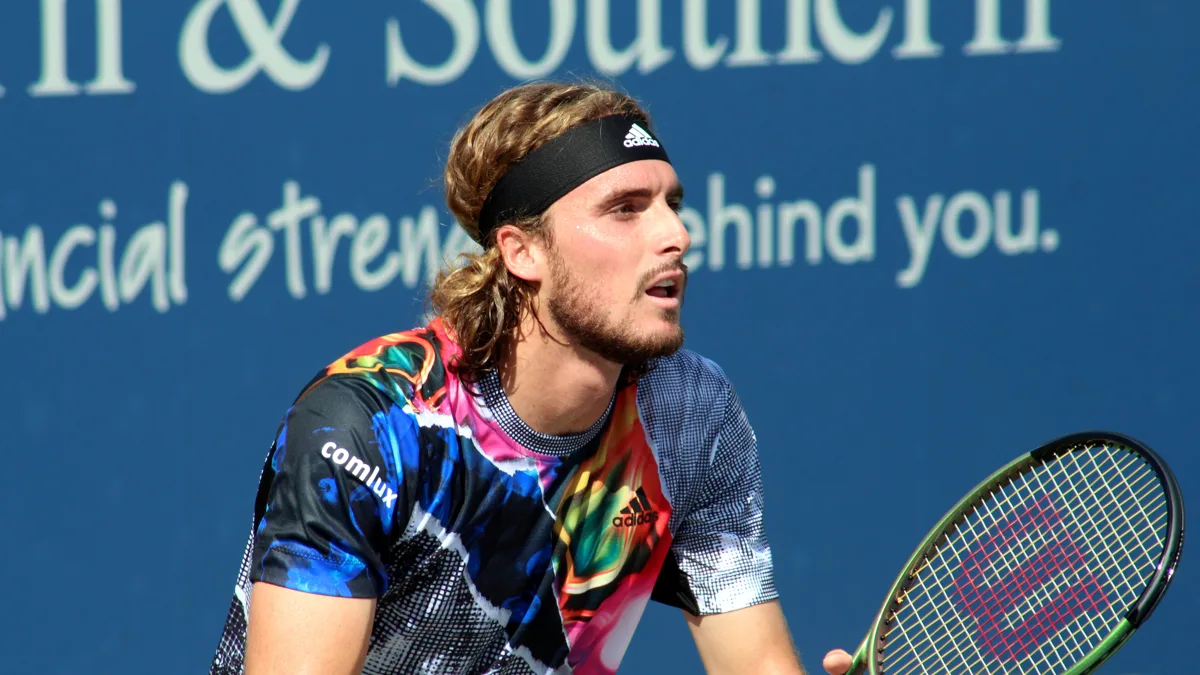
Stefanos Tsitsipas says his road back began with letting go of the one relationship that built his career. In a Times of India interview at the Almaty Open published on Tuesday, the 28-year-old said allowing his father to be a father again, rather than both father and coach, has improved their relationship and freed his tennis. The numbers he brought with him are hard to argue with: 16-14 across his first 16 events of the season, then 21-8 in the 10 tournaments since the split just before Wimbledon.
What did Tsitsipas actually say about his father?
That the two roles could no longer live in the same person. “I love my father, and I love him as a father,” he said in Almaty. “I want to keep the professional part out of my relationship with my father. My relationship with him has improved now that he’s not my coach. It was very difficult for me to separate the coach and the father. I had reached a point where I could not avoid being triggered.” The interview recounts the public side of that strain, a father in his fifties hurling instructions from the box and heated exchanges between the two at tournaments around the world. “We’re still in touch, and I really like the way things are right now,” he added.
When did the split happen, and what came before it?
Just before Wimbledon, when he told Greek media he was ending the professional relationship for good. The dip had started with his body, a back problem troubling him for some time, and the strained coaching relationship compounded it until his confidence went with it. A player who finished in the top 10 for five straight years from 2019 to 2023, and reached the Roland Garros final in 2021 and the Australian Open final in 2023, fell to No. 88 in June. The Times of India lists him at No. 39 this week; Tennis Majors, in its own Almaty reporting, lists No. 43. The two reports disagree on the exact number, and this page does not merge them. Both agree on the direction of travel.
What does he say changed once the pressure came off?
His willingness to experiment. “Eliminating the pressure factor does help,” he told the Times of India. “Before, I felt pressured a lot of the time. There were a lot of things piled up within me, and certain people triggered me in a negative way. Removing some of those triggers, and having people around me who keep me calm and help me be more forgiving on myself when things don’t work out, allows me to experiment more and not be afraid to try things.” He went further than form: “I’m playing better now than I played a few years back. I feel like I was kind of stuck in the past.” The revival has already had its strange chapters, including the Shanghai night when a ball fell from Fritz’s pocket twice and Tsitsipas had to earn match point again, a win over the world No. 12 that sits inside the 21-8 run alongside victories over Arthur Fils and Jiri Lehecka.
Who is around him now, and what is the autumn plan?
Thomas Perrin day to day, with Patrick Mouratoglou overseeing the process. Tennis Majors, reporting separately from Almaty on Sunday, has the other half of the revival: a body that finally allows a full schedule. “Last year, I didn’t have a healthy body, and it affected my ranking and my confidence,” he said. “But now suddenly I can have long runs without being affected by it.” That is why a player of his standing is loading up on autumn 250s. He is accumulating points to close the season strongly, be seeded at the 2027 Grand Slams and avoid big names in the early rounds, and he expects next season to be about being hunted rather than hunting. He credited Perrin, who joined from the Mouratoglou Academy, with bringing calmness and a collaborative approach. The backhand tells the same story in miniature: one of only three top-50 players with a one-hander, long targeted by opponents, he now calls it a weapon, which is a long way from the week Zverev saved four set points against Alexander Bublik in Shanghai while Tsitsipas was still rebuilding.
What happens next in Almaty?
A round-of-16 match against Mikhail Kukushkin, the 38-year-old home wildcard playing his farewell tournament, after Tsitsipas opened with a three-set win over Aleksandar Kovacevic on Tuesday. The draw matters less than what the week is for. Every autumn win is a seeding argument for January, and every interview like Tuesday’s is a player explaining, in his own words, that the fix was personal before it was technical. The contrast with the season’s other coaching stories, from Ben Shelton’s birthday win in Shanghai to Jannik Sinner ending his season for knee treatment, is that Tsitsipas is the rare case where the split made the family closer and the tennis better at the same time. Whether that holds through the indoor swing is the next question, and it is his to answer on court.
Frequently asked questions
What did Tsitsipas say about his father in Almaty?+
That he loves his father as a father and wants to keep the professional part out of their relationship. He told the Times of India it was very difficult to separate the coach and the father, that he had reached a point where he could not avoid being triggered, and that their relationship has improved now that Apostolos is not his coach.
When did the coaching split happen?+
Just before Wimbledon, when Tsitsipas told Greek media he was ending his professional relationship with his father for good, per the Times of India interview. His ranking had fallen to No. 88 in June after a back problem and the strained coaching relationship took their toll on his confidence.
What do the numbers say about his revival?+
The interview's own split is stark. Across his first 16 events of the season he went 16-14. In the 10 tournaments since Wimbledon he has gone 21-8, won the Gstaad title in July to end a 16-month drought, and beaten Arthur Fils, Jiri Lehecka and Taylor Fritz, all ranked inside the top 20 at the time.
Who coaches him now?+
Thomas Perrin works with him day to day, with Patrick Mouratoglou overseeing the process. Tennis Majors reported from Almaty that Tsitsipas credited Perrin, who joined from the Mouratoglou Academy, with bringing calmness to the team and a collaborative approach to decisions.
Why is he playing so many autumn tournaments?+
To accumulate ranking points and close the season strongly enough to be seeded at the 2027 Grand Slams and avoid big names in the early rounds, he told Tennis Majors on Sunday. He said he would not normally play this many events, and that next season he expects to be hunted rather than hunting.
How is his back?+
Better, by his own account. Tennis Majors reported that he said his body no longer limits how much he can play, after last year, when he did not have a healthy body and it affected his ranking and his confidence. He said he can now have long runs without being affected by it.
Who does he play next in Almaty?+
Mikhail Kukushkin in the round of 16, after opening with a three-set win over Aleksandar Kovacevic on Tuesday. Kukushkin, the 38-year-old home wildcard, is playing his farewell tournament and beat Stefanos Sakellaridis in his opener, per Tennis Majors.
Sources
- Times of India via 7Globe: 'I'm playing better now': Stefanos Tsitsipas on father-coach split, pressure and his tennis revival (the Almaty interview in full: the father quotes, the pressure and triggers account, the 16-14 and 21-8 splits, the Gstaad title and the backhand detail)
- Tennis Majors: Tsitsipas: Healthy, Aims for Top and 2027 Grand Slam Seeding (independent Almaty reporting from Sunday: the healthy-body comments, the autumn points chase for a 2027 seeding, and the Perrin credit)
- Surprise Sports: Tsitsipas targets ranking revival at Almaty Open (confirmation of the Tuesday interview's coaching and reduced-pressure themes and the Almaty schedule, main draw from October 19 with finals on Sunday, October 25)
Play & tools
Free browser games and tools — no account, no download.
- Play today's Sports Connections — Today's Sports Connections — daily hints, answers, and play the grid.
- Play Guess the NFL Player — A new mystery NFL player every day. Eight guesses, with a clue on each — plus free unlimited mode.
- Explore all our games →
Related tennis guides
View all →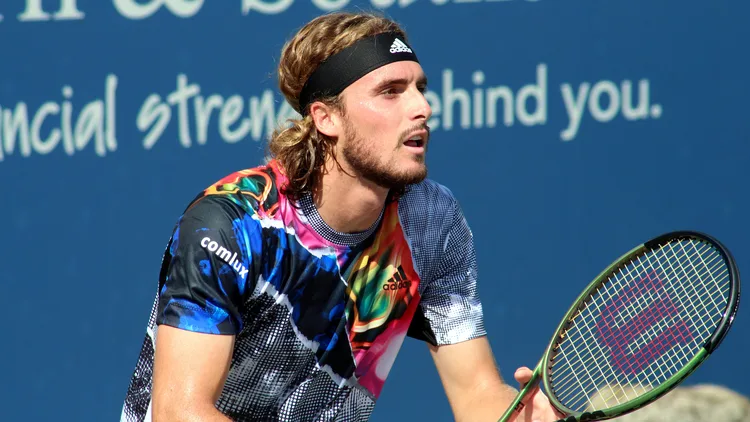
A Ball Fell From Fritz's Pocket Twice, and Tsitsipas Had to Earn Match Point Again
Taylor Fritz lost a ball from his pocket on consecutive points at 2-5 in the third set in Shanghai, a match point was replayed, and Stefanos Tsitsipas still closed it out.
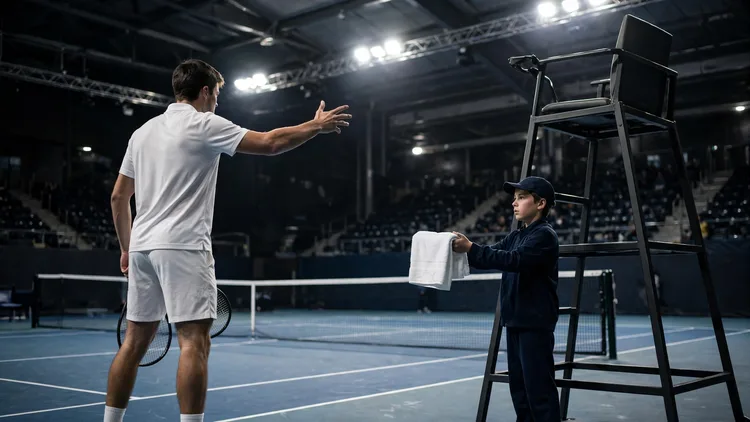
Jodar Is Warned for Swearing at a Ball Kid, Then Completes His Third Shanghai Comeback
Rafael Jodar was warned for unsportsmanlike conduct after swearing at a ball kid over a towel in Shanghai, calmed down, and beat van de Zandschulp from a set down again.
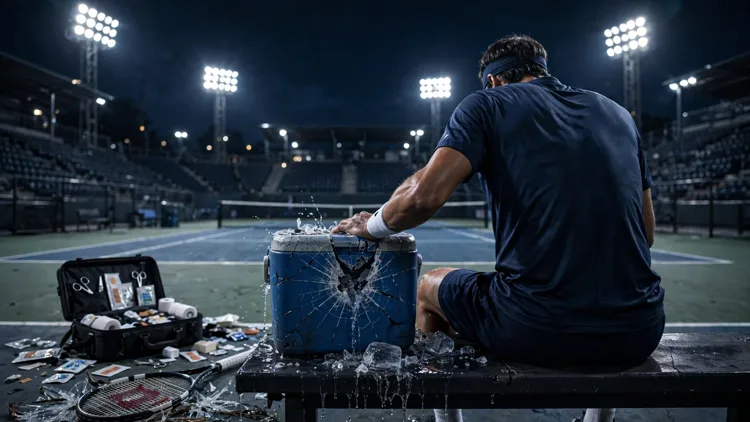
Bublik Smashes His Racket, Cuts His Hand on a Cooler, Then Beats Nakashima in Shanghai
Alexander Bublik blew two set points, smashed his racket, kicked his chair and cut his hand on a courtside cooler in Shanghai, then beat Brandon Nakashima.
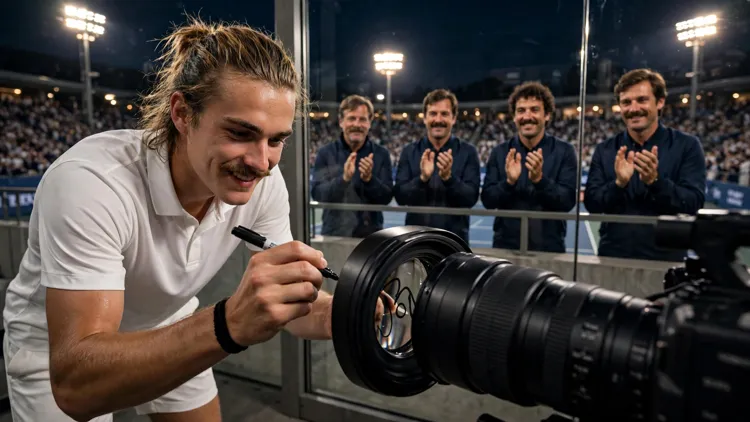
Carlos Alcaraz and His Whole Team Wear Moustaches in Shanghai After a Tokyo Pact
Carlos Alcaraz opened his Shanghai Masters campaign sporting a moustache, and so did his entire team box, after a pact made celebrating his Tokyo title.
Zverev Saves Four Set Points on a Troublesome Ankle to Beat Bublik in Shanghai
Alexander Zverev saved four set points and played through a recurring ankle problem to beat Alexander Bublik 7-6(6), 4-6, 7-6(1) in Shanghai.
Bergs Beats Alcaraz in Shanghai and Hands Zverev the Year-End No. 1
Zizou Bergs beat Carlos Alcaraz 7-5 7-6(4) in Shanghai on Monday, a result that confirmed Alexander Zverev as the ATP's year-end world No. 1.