
Richest Indian Footballers: The Full Ranked List
On this page13
- 01Richest Indian footballers, at a glance
- 02Why These Net Worth Figures Vary So Much
- 031. Gouramangi Singh
- 042. Gurpreet Singh Sandhu
- 053. Sunil Chhetri
- 064. Sandesh Jhingan
- 075. Lallianzuala Chhangte
- 086. Anirudh Thapa
- 097. Udanta Singh
- 108. Jeje Lalpekhlua
- 119. Bhaichung Bhutia
- 1210. Liston Colaco
- 13How We Ranked Them
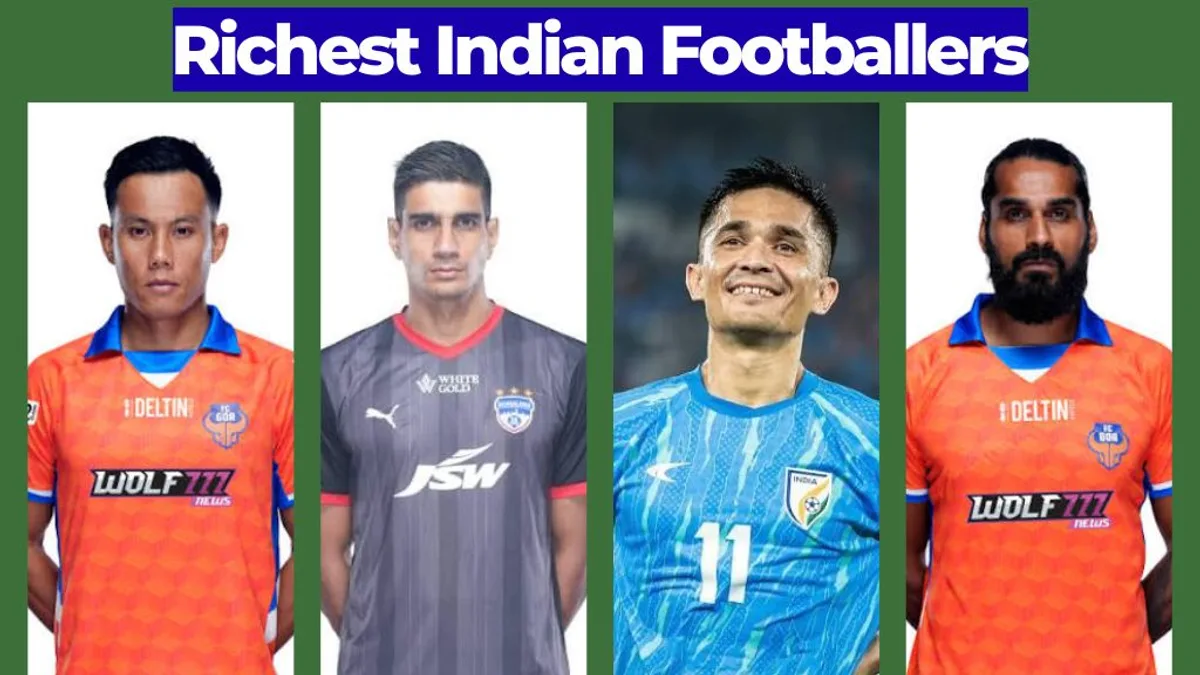
Ask a casual Indian sports fan who India’s richest footballer is and almost everyone says Sunil Chhetri. The reported numbers say otherwise. Net-worth trackers and Indian business press now put a pair of names — Gouramangi Singh and Gurpreet Singh Sandhu — ahead of Chhetri, built on longer earning windows, post-playing roles, and (in Sandhu’s case) a rare stint drawing a European salary. None of these figures are officially confirmed — Indian football, unlike the IPL, doesn’t publish player earnings, and none of these totals come close to what India’s richest cricketers bank from a single IPL season — but here’s the full ranked list as reported heading into the 2026-27 season, with the actual names and numbers instead of a generic summary.
Richest Indian footballers, at a glance
| Rank | Player | Reported Net Worth | Current Role/Club | Why they rank here |
|---|---|---|---|---|
| 1 | Gouramangi Singh | ₹40-45 crore | Bengaluru FC (technical/development) | Longest earning window; post-playing salary plus investments |
| 2 | Gurpreet Singh Sandhu | ₹30-35 crore | East Bengal FC | European club wages (Norway) plus national-team captaincy |
| 3 | Sunil Chhetri | ₹28-32 crore (estimates vary widely) | Hyderabad FC (mentor/player-coach) | India’s most recognisable footballer; two decades of endorsements |
| 4 | Sandesh Jhingan | ~₹41-48 crore / ~$10M (estimates vary) | Free agent / ISL defender | Adidas, Gatorade, MyProtein deals; Croatian club trial |
| 5 | Lallianzuala Chhangte | ₹10-15 crore | Mumbai City FC | Attacking output plus apparel-brand ventures |
| 6 | Anirudh Thapa | ₹8-12 crore | Chennaiyin FC | Consistent ISL and national-team performer |
| 7 | Udanta Singh | ~₹43 crore / $5M (estimates vary) | FC Goa | Fastest Indian footballer; national-team regular |
| 8 | Jeje Lalpekhlua | ~$9 million | ISL veteran | Long ISL scoring career, multiple club moves |
| 9 | Bhaichung Bhutia | ~₹5 crore | Retired / football administration | Pioneer status; 84 caps, 27 goals for India |
| 10 | Liston Colaco | $1-5 million (wide estimate) | Mohun Bagan Super Giant | Signed for a then-record ₹1 crore domestic transfer fee |
Why These Net Worth Figures Vary So Much
Before the rankings, a caveat worth repeating: Indian footballers don’t have their contracts or net worth audited and published the way IPL cricketers do. Different trackers estimate the same player’s wealth using different assumptions about endorsement income, property, and career earnings, so you’ll see Chhetri quoted anywhere from roughly ₹8 crore to over ₹30 crore depending on the source. The figures below are the most current and most-cited reported estimates, not confirmed numbers.
1. Gouramangi Singh
Gouramangi Singh isn’t the name most fans expect at number one, but multiple 2026 wealth trackers place him there, with an estimated net worth of ₹40-45 crore. A former India international defender with 71 caps and 7 goals across a career spanning Chennaiyin FC, Mohun Bagan, and Mahindra United, Gouramangi has stayed inside the game in a technical and development role at Bengaluru FC. That combination — a long playing career plus a continuing paid role, reportedly alongside investments in academies and property — is what separates him from players whose income stopped when their boots did.
2. Gurpreet Singh Sandhu
Gurpreet Singh Sandhu remains the benchmark for what an Indian footballer can earn outside the ISL. He became the first Indian in decades to play regularly in a European top flight when he signed with Norway’s Stabaek, and that European wage — small by continental standards but well above ISL pay — helped build an estimated ₹30-35 crore net worth. Now with East Bengal FC and still India’s first-choice goalkeeper, Sandhu combines a strong domestic salary with sponsorship deals that come from being the most internationally credentialed name between the posts in Indian football.
3. Sunil Chhetri
Chhetri debuted for the senior national team in 2005, and that longevity is why his commercial standing has stayed untouchable for two decades even as reported net-worth estimates for him vary enormously (from roughly ₹8 crore to over ₹30 crore depending on the tracker). Now in a mentor and player-coach capacity at Hyderabad FC, he’s endorsed sportswear brands, FMCG products, and digital platforms, and his social media following outpaces every other Indian footballer by a wide margin. He remains, by reputation if not always by raw net worth, the face of Indian football’s commercial era.
4. Sandesh Jhingan
Sandesh Jhingan’s estimated net worth ranges from around ₹41 crore to ₹48 crore ($10M) depending on the source, built on ISL club contracts plus one of the stronger individual endorsement portfolios among current Indian defenders — Adidas, Nike, Gatorade, and MyProtein have all backed him. Jhingan has also had a trial with a Croatian club, part of a pattern where his profile and marketability have consistently outpaced most defenders of his generation, even without a permanent move abroad materialising.
5. Lallianzuala Chhangte
Chhangte’s reported ₹10-15 crore net worth reflects his status as one of Mumbai City FC’s most productive attacking players, with income built on club contracts, sponsorship deals, and a growing apparel-venture side business. As a regular in India’s senior squad with genuine end product, he sits among the clearer examples of a player whose on-pitch performance has translated directly into commercial opportunity, rather than relying mainly on reputation.
6. Anirudh Thapa
Anirudh Thapa’s estimated ₹8-12 crore net worth comes from steady, unspectacular consistency: repeated ISL seasons for Chennaiyin FC, reliable national-team call-ups, and a handful of lifestyle-brand collaborations that come with being seen as future captain material. He hasn’t had the marquee transfer or European trial that boosts some names on this list, but few Indian midfielders have matched his level of sustained club and country output over the past several seasons.
7. Udanta Singh
Udanta Singh’s net worth is reported anywhere from roughly $1.5 million to $5 million (around ₹43 crore at the higher estimate), income built primarily on ISL salary at FC Goa plus brand promotions and social media deals that come with being widely regarded as the fastest player in Indian football. His reported annual salary sits in the mid-lakh range, well below the marquee tier, which shows how much of his estimated wealth comes from sponsorship rather than club wages alone.
8. Jeje Lalpekhlua
Jeje Lalpekhlua’s estimated net worth of around $9 million reflects one of the longer, more well-travelled ISL scoring careers among Indian forwards, spanning multiple club moves and years as a reliable frontline option. He never had the sustained spotlight Chhetri commanded, but his consistency as a goal-scoring option across several ISL franchises built a durable earnings base over more than a decade in the league.
9. Bhaichung Bhutia
Bhaichung Bhutia’s reported net worth of around ₹5 crore looks modest next to the ISL-era names above him, but that’s a function of timing — he built his career and earnings before Indian football’s current sponsorship boom. Bhutia won titles with Mohun Bagan, East Bengal FC, and United Sikkim FC, scored 27 goals in 84 caps for India, and remains the pioneer whose commercial and on-pitch legacy paved the way for the endorsement opportunities today’s ISL stars now enjoy.
10. Liston Colaco
Liston Colaco’s estimated net worth sits in a wide $1-5 million range, but his wealth-building moment is clearer than most: he became the most expensive Indian player in a domestic transfer when Mohun Bagan Super Giant paid a then-record ₹1 crore fee to sign him from Hyderabad FC in 2021. With a reported annual salary near ₹1.5 crore and a rising market value, Colaco represents the newer generation of ISL attackers whose transfer-market price tag has become as much a wealth signal as their actual salary.
How We Ranked Them
This list is ordered by the most current and most-cited reported net-worth estimate for each player as of 2026, cross-checking business-press coverage against player-profile and sports-finance trackers where multiple figures existed. Because none of these numbers are officially disclosed, players with wide estimate ranges (Chhetri, Jhingan, Udanta Singh, Colaco) are placed using the midpoint or most commonly repeated figure rather than the highest claim. Compare that to Indian football’s much smaller commercial ceiling against the ISL’s own broadcast and sponsorship growth, or see how these numbers stack up against Asia’s highest-paid footballers playing in Europe and the Gulf, where even a mid-table salary dwarfs India’s top domestic wage.
Frequently asked questions
Who is the richest footballer in India?+
By most current estimates, former India international Gouramangi Singh tops the list with a reported net worth around ₹40-45 crore, built through his playing career and a technical/development role at Bengaluru FC. Goalkeeper Gurpreet Singh Sandhu (₹30-35 crore) and captain-turned-legend Sunil Chhetri are close behind, though exact figures are never officially disclosed.
Is Sunil Chhetri really richer than Gurpreet Singh Sandhu or Gouramangi Singh?+
Not by most 2026 net-worth estimates. Chhetri's fame and endorsement profile are unmatched, but Gouramangi Singh and Gurpreet Singh Sandhu are currently reported to have higher total net worth, partly because Sandhu also earned European club wages in Norway and Gouramangi has moved into a paid technical role.
How much do Indian Super League players earn?+
ISL salaries vary widely under the league's salary-cap structure. Marquee foreign signings earn the most, senior domestic internationals like Chhangte and Thapa earn several lakhs to a few crore a season, and young academy players earn far less. None of these salary figures are published officially by clubs.
Where do these net worth figures come from?+
Indian footballers and their clubs do not publish salary or net-worth figures. The numbers in this list are drawn from sports-finance trackers, business-press reporting, and player-profile sites, cross-checked where possible. Treat every figure here as a reported estimate, not an audited number.
Can Indian footballers become as rich as Indian cricketers?+
Not currently, and not soon. The gap between the ISL and the IPL's commercial machine is enormous — even India's [richest cricketers](/richest-indian-cricket-player/) out-earn every name on this list several times over. Football's endorsement and broadcast revenue in India is growing but starts from a much smaller base.
Why is Sunil Chhetri still on this list if he's retired from playing?+
Chhetri stepped back from a full-time playing role but remains commercially active through mentoring, brand endorsements, and media appearances, which keeps him among India's highest-earning football figures even as his on-pitch role has shrunk.
Do Indian footballers earn much from endorsements?+
Modestly compared with cricketers, but it's real money for the players at the top. Sandesh Jhingan holds deals with Adidas, Gatorade, and MyProtein; Chhetri has had national FMCG and sportswear campaigns; most other ISL regulars rely mainly on club salary rather than a big endorsement slate.
Is Indian football's earning potential growing?+
Yes, gradually. Rising ISL broadcast deals, expanding sponsorship interest, and a deeper pool of India internationals playing (or trialing) abroad are slowly lifting the ceiling on what a top Indian footballer can earn, even if the gap with cricket and with Asia's highest-paid footballers stays wide.
Sources
Play & tools
Free browser games and tools — no account, no download.
- Play 38-0 — Sign a 4-4-2 of all-time football legends and chase a perfect 38-0 league season — perfect, not just unbeaten.
- Explore all our games →
Related football guides
View all →
Richest Football Clubs in the World: The Full 2026 Ranking
Real Madrid leads the Deloitte Football Money League with over €1.1 billion in revenue, ahead of Barcelona, Bayern Munich, PSG, and Liverpool. Here are the 12 richest clubs, ranked.

Highest-Paid Asian Footballers Right Now, Ranked
Kim Min-jae, Son Heung-min and Salem Al-Dawsari lead the ranked list of the highest-paid Asian footballers, with reported club salaries, clubs and why each ranks where it does.
Richest Indian Cricket Players: The Top 13 Ranked by Net Worth
Ajay Jadeja tops the list on inherited royal wealth, but Sachin Tendulkar is the richest Indian cricketer through the game itself. Full ranked top 13 by net worth.
Highest-Paid Footballers in the UK: Premier League Wages Ranked
Erling Haaland's £525,000-a-week Manchester City deal tops the highest-paid footballers in the UK. See the Premier League's top 10 earners for 2026-27, ranked by wage.

Most Followed Footballers on Instagram (2026 Rankings)
Ranked: the 10 most followed footballers on Instagram as of 2026, with follower counts, from Cristiano Ronaldo's 670M+ down to Mohamed Salah.

Richest Female Soccer Players in the World Right Now
The wealthiest women's football players ranked, from Marta and Megan Rapinoe's career fortunes to Khadija Shaw and Trinity Rodman's record 2026 contracts.