Ohio Governor Gives 2022 Athletes a Fifth Year, and the NCAA President Pushes Back
On this page6
- 01What does the Ohio order actually change for a 2022 athlete?
- 02Why did the NCAA leave the class of 2022 out?
- 03What did Charlie Baker say, and how fast did he say it?
- 04Does the order have teeth if the NCAA simply ignores it?
- 05How does this sit alongside the other college rows this month?
- 06What happens next, in court and in Congress?
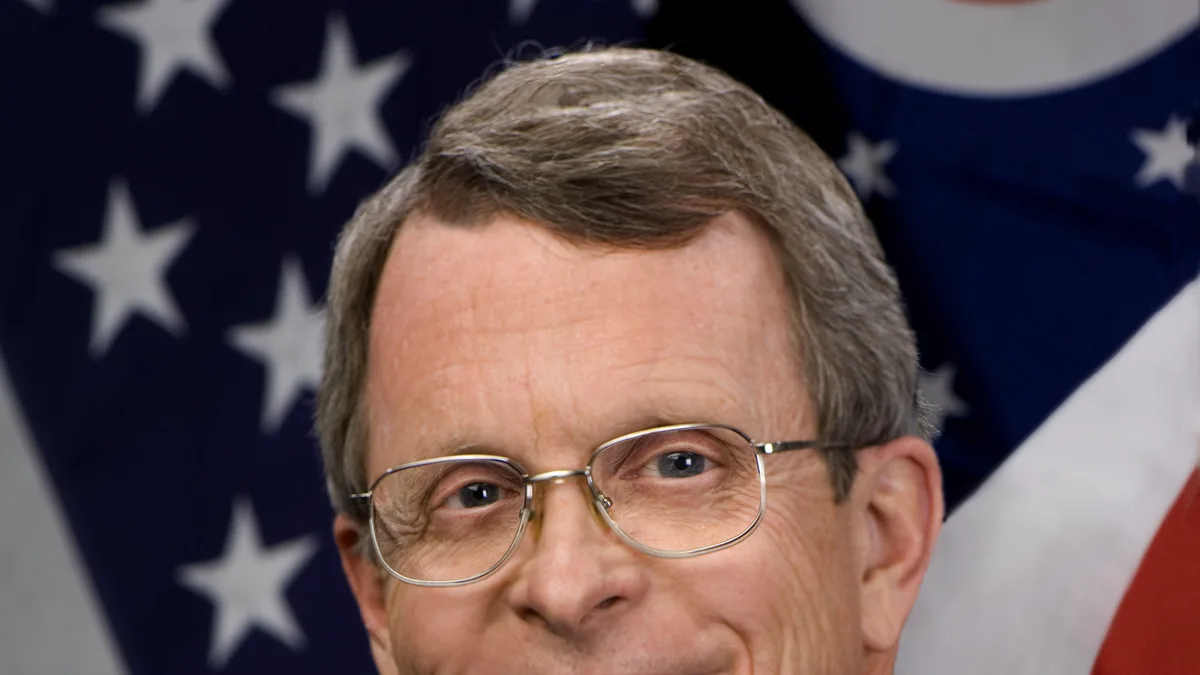
A governor signed a piece of paper on Tuesday that says Ohio’s colleges may ignore the NCAA on one narrow question, and the NCAA’s president answered within hours that the paper changes nothing. Gov. Mike DeWine’s executive order gives class of 2022 athletes in Ohio a fifth year in 2026-27, the class the NCAA’s new eligibility model left out. Charlie Baker’s reply, in a letter to member schools, said a governor cannot legislate NCAA eligibility rules. Both men are now on the record, and the schools in the middle have to decide whose instruction to follow.
What does the Ohio order actually change for a 2022 athlete?
On paper, everything, and the Columbus Dispatch printed the operative sentence. No Ohio college, public or private, may uphold any rule that prevents a class of 2022 athlete from fully playing in 2026-27, regardless of four completed seasons or eligibility used up under current or older NCAA regulations, and regardless of the NCAA’s interpretation of its own bylaws. Three conditions apply: the athlete must have been within five years of their 19th birthday and of enrolling in college at the start of 2026-27, must have been eligible at the end of their last season, and must not have played in a professional league. DeWine framed it as fairness, saying Ohio athletes should have the same opportunity as athletes in other states, the Associated Press reports. Lt. Gov. Jim Tressel, who won national titles coaching at Ohio State and Youngstown State, backed the order on the same grounds.
Why did the NCAA leave the class of 2022 out?
Because the new model was not made retroactive. The NCAA’s age-based policy, in effect since the summer, allows athletes five years to play up to five seasons, counted from their 19th birthday or from starting college, Front Office Sports reports. The governing body then decided that model does not reach back to the freshman class of 2022, whose members had already played four seasons under the older landscape. Hundreds of those athletes have sued, the Associated Press reports, arguing the cutoff is unfair and costs them money in an era when schools now share revenue with players and athletes earn from their name, image and likeness. Ohio’s order is the first by a governor on this question, Front Office Sports reports, although other governors have weighed in before.
What did Charlie Baker say, and how fast did he say it?
The same day. Baker’s memo to member schools, published by ESPN and quoted by the Dispatch, said the governor of Ohio cannot legislate NCAA eligibility rules and called one elected official making rules for his own schools’ advantage a terrible way to run athletic competitions. He said eligibility rules made through the NCAA’s governance process have been and will continue to be applied consistently across the membership, including in Ohio. He also used the moment to push Congress to pass the Protect College Sports Act, the bill that would put guardrails around player pay and limit the lawsuits players can bring. No Ohio Division I program, not No. 4 Ohio State, not Cincinnati, not any of the six Mid-American Conference schools, responded immediately, the Associated Press reports.
Does the order have teeth if the NCAA simply ignores it?
That is the live argument, and the lawyers quoted by Front Office Sports split it into two parts. The order does not require any school to roster a 2022 athlete; it gives schools cover if they choose to, sports attorney Darren Heitner told the outlet. Boise State sports law professor Sam Ehrlich said the order only has legal teeth if the schools think it has legal teeth, and that the NCAA has several legal theories available if it wants to attack it. Nebraska attorney general Mike Hilgers questioned whether such an order can be enforced across a league at all. Seton Hall professor Bob Boland called it a fairly strong statement of policy that could sway Ohio’s supreme court in Borovicanin v NCAA, the first case filed on this issue, whose plaintiffs won eligibility at first and then lost their injunction on appeal. The Dispatch, meanwhile, reports the practical answer at the state’s flagship: Ohio State’s men’s and women’s basketball programs are not expected to be affected, and the football roster is already set. The fight is real, and the biggest program in the state may sit it out.
How does this sit alongside the other college rows this month?
College programs have spent October arguing about authority inside their own buildings: Michigan receiver Zack Marshall apologised after leaked texts criticising his own coordinator became public, and the Big Ten’s officiating became the story after Bear Alexander’s unflagged swing at Nico Iamaleava. This row is one level up, between a state and the national governing body, over who writes eligibility law at all. The weather version of the same disruption played out when a hurricane moved College GameDay indoors while Georgia and Alabama played on, and the human version when Jalon Daniels called his mother onto the postgame desk after his first NFL win, a reminder of how short the window is that the 2022 class is fighting over: one more season is a career for the players inside it.
What happens next, in court and in Congress?
Three clocks are running. In Denver, the 10th Circuit panel hearing Wisne vs NCAA asked hard questions of the players’ lawyer about how the market for these athletes is defined, asked the NCAA’s lawyer the mirror-image questions, and asked both sides whether it should simply wait for Congress, the Associated Press reports. Both sides said no, because the football season is halfway over and basketball is about to start. In Washington, the House is due to consider the Protect College Sports Act, which passed the Senate last month and would codify the NCAA’s policy in federal law without cancelling cases already filed. And in Ohio, the test case has not happened yet: it arrives the first time an Ohio school names a 2022 athlete it intends to play under the governor’s order, and the NCAA has to choose between enforcing its rule against that school or letting the order stand. The Associated Press noted the precedent everyone in the room is thinking about: California’s NIL law was copied by other states until the NCAA had to give in nationally. One order may not move the NCAA. A queue of governors might.
Frequently asked questions
What does DeWine's executive order actually do?+
It bars any state or private college in Ohio from upholding a rule that stops a class of 2022 athlete from fully playing in 2026-27, even if that athlete has completed four seasons or used up eligibility under the NCAA's current or older rules, the Columbus Dispatch reports. The conditions are that the athlete was within five years of their 19th birthday and of enrolling at the start of 2026-27, was eligible at the end of their last season, and has not played in a professional league.
Why is the class of 2022 the group in dispute?+
Because of how the NCAA phased in its new model. The new guidance allows athletes up to five seasons, but the governing body decided it does not apply retroactively to athletes who started in 2022 and had already played four seasons, Front Office Sports reports. Hundreds of athletes from that class have sued for a fifth year, arguing the cutoff is unfair and costs them earning chances in the revenue-sharing era, the Associated Press reports.
What did NCAA president Charlie Baker say in response?+
That the governor cannot legislate NCAA eligibility rules, and that one elected official making rules for his own schools' advantage is a poor way to run competitions, the Associated Press and the Columbus Dispatch report, quoting his memo to member schools. Baker said eligibility rules set through the NCAA's governance process will keep being applied consistently across the membership, including in Ohio, and he again urged Congress to pass the Protect College Sports Act.
Does the order force Ohio schools to play these athletes?+
No. The order stops schools from enforcing the NCAA restriction, but it does not require any school to roster or play anyone. Sports attorney Darren Heitner told Front Office Sports the order gives schools cover if they choose to act. Boise State sports law professor Sam Ehrlich told the same outlet the order only has legal teeth if schools treat it as having them, and Nebraska's attorney general publicly questioned whether it is enforceable across a league.
Will this change Ohio State's teams this season?+
Not on current reporting. The Columbus Dispatch reports the order is not expected to affect Ohio State's men's or women's basketball programs, and the football team's roster is already set for the season. The eight Division I programs in Ohio, Ohio State, Cincinnati and six Mid-American Conference schools, gave no immediate response on Tuesday, the Associated Press reports. The programs closest to the line are the basketball rosters still being finalised under the new five-year uncertainty.
What is happening in the courts at the same time?+
A lot, on the same day. In Wisne vs NCAA, a lower court first ruled for the players and an appeals court blocked that ruling, and on Tuesday a three-judge panel of the 10th Circuit in Denver questioned both sides and did not rule immediately, the Associated Press reports. The judges asked whether they should wait for Congress to act on the Protect College Sports Act, and both sets of lawyers urged them not to wait, given how narrow the window is for the 2022 class. Front Office Sports notes the Ohio order could also influence the state's own Borovicanin case when its supreme court reviews it.
Has a state forced the NCAA to back down like this before?+
Once, on a bigger stage. The Associated Press compared the order to California's decision to clear the way for name, image and likeness pay through state law, a move other states copied until the NCAA had to allow NIL payments across the country. Front Office Sports reports legal experts expect the same copying risk here: one governor's order may lack teeth on its own, but several governors acting together would be much harder for the NCAA to fight.
Sources
- Associated Press via ESPN: Ohio Gov. DeWine signs order, 2022 athletes can play in 2026-27 (the order, the Baker letter, the Tressel support, the Wisne hearing and the NIL comparison)
- The Columbus Dispatch: Ohio State not expected to be impacted by order granting 5th year of eligibility (the order text, the three conditions, the Baker memo wording and the Ohio State impact assessment)
- Front Office Sports: Ohio Gov. issues executive order challenging NCAA eligibility policy (the first-governor point, the expert reaction from Heitner, Ehrlich and Boland, the Hilgers objection and the Borovicanin angle)
- Associated Press via NBC Sports: Ohio governor signs order letting state's colleges allow 2022 athletes a 5th year of eligibility (the same-day Baker response and the eight Ohio Division I programs)
Play & tools
Free browser games and tools — no account, no download.
- Play 17-0 — Draft nine and chase a flawless NFL regular season — the perfect 17-0 run, no playoffs.
- Play 20-0 — Draft nine and chase a perfect NFL season — regular season and playoffs, undefeated.
- Play 16-0 — Draft nine and chase a perfect 16-0 — the classic 16-game NFL regular season, no playoffs.
- Play Flawless Six — Draft five players and a head coach, then chase a perfect NFL season with the right chemistry.
- Play Guess the NFL Player — A new mystery NFL player every day. Eight guesses, with a clue on each — plus free unlimited mode.
- Play NFL Wordle — A Wordle for football — guess the daily NFL player in eight tries, with green-amber-grey feedback on every clue.
- Play NFL Connections — Sort sixteen football tiles into four hidden groups of four. A new daily puzzle, four mistakes allowed, plus unlimited mode.
- Explore all our games →
- Open the schedule simulator — Pick every 2026 NFL game and watch the standings and playoff seeds update live.
- Open the squares generator — Generate a randomized, printable Super Bowl squares grid for your party — free, no sign-up.
- Open the trade calculator — Weigh any fantasy football trade instantly — clear winner and value gap.
- Run the NFL predictor — Simulate the NFL bracket and see who your picks send to the Super Bowl.
- Open the passer rating calculator — Calculate the official NFL passer rating (0–158.3) from any passing line, with the formula shown.
- Explore all our free sports tools →
Related nfl guides
View all →
Georgia Beats Alabama 20-17 After a No-Call, a Sideline Dressing-Down and Fans Throwing Objects
Georgia's 20-17 win at Alabama turned on a pass-interference no-call, Dijon Lee Jr.'s late personal foul, Kalen DeBoer's sideline outburst and objects thrown at the tunnel.
Lanning Says Alexander Will Face No Oregon Punishment for the Iamaleava Swing
Dan Lanning said Monday that Bear Alexander will not be punished by Oregon, calling the swing a late attempt to punch the ball out, while UCLA's Bob Chesney called the play egregious and Nico Iamaleava's knee injury was reported as a torn ACL.
Hurricane Isaias Moves College GameDay Indoors as Georgia-Alabama Stays On Schedule
ESPN moved College GameDay inside Coleman Coliseum, Donald Trump cancelled his trip and tents were banned in Tuscaloosa, but Georgia-Alabama kicks off as planned.
Michigan's Zack Marshall Apologizes for Leaked Texts Criticizing Coordinator Jason Beck
Michigan tight end Zack Marshall apologized after group-chat texts criticizing offensive coordinator Jason Beck and the Wolverines' scheme leaked online.
Highest-Paid NCAA Football Coaches: Reported Pay
Kirby Smart and Ryan Day top college football coaching pay at a reported $13M+ a year. Full table, plus why public-school salaries are actually verifiable.
Stephen A. Smith Walks Back Lane Johnson Comments After First Take Mental-Health Row
Stephen A. Smith mocked Lane Johnson's mid-season retirement on First Take, was challenged on his own panel, and spent Wednesday clarifying he was attacking the Eagles' chaos, not mental health.