
Stefan Milicevic Banned for 24 Years After Running a Match-Fixing Network
On this page5
The longest ban of this tennis season belongs to a player most fans have never watched. Stefan Milicevic, a 29-year-old Serbian whose career peaked at No. 1,338 in the world, has been suspended for 24 years by the International Tennis Integrity Agency for fixing matches and, more seriously in the agency’s eyes, for persuading other players to fix theirs. The ban runs until October 8, 2050. His fine, $70,000, is roughly fourteen times what Tennis Watcher records as his entire career prize money.
What did the ITIA announce on Thursday?
A deemed sanction of unusual size. Milicevic fixed six matches between 2022 and 2024, five of them his own, and attempted to fix six more, the ITIA said, via Sky Sports. On top of that, he was charged with recruiting or attempting to recruit multiple professional players as part of a corrupt network during the same period, resulting in a number of other players fixing matches. While suspended he cannot play in, coach at or attend any event sanctioned by World Tennis, the ATP, the WTA, the Grand Slams or any national association. The same agency ended a career by paperwork from the other direction this week, when Gael Monfils’s Paris farewell was cancelled by his place on the ITIA retired list: one list removes a legend quietly, the other removes a qualifier until he is 53.
Why did recruiting other players change the case?
Because it turned a seller into a supplier. The ITIA confirmed that the length of the ban reflected the seriousness of the anti-corruption offences and the recruitment attempts, and that Milicevic’s refusal to cooperate did not determine it, TennisUpToDate reports. That distinction matters for every lower-tier player reading the ruling. Fixing your own matches is priced as corruption. Building the market for other people’s corruption is priced as organising, and organising is what carries a sanction measured in decades rather than years. The tour’s top end spent the same week on a very different kind of history, as Iga Swiatek completed her set of WTA 1000 semi-finals in Wuhan, and the gap between those two stories is roughly the gap between the tour’s broadcast product and its third tier, where an 11-match player can operate for two years before anyone adds it up.
How can a 24-year ban be imposed without a hearing?
By silence, under the agency’s own rules. The ITIA made seven separate attempts to obtain a response from Milicevic through multiple channels during its 2026 investigation and received none, TennisUpToDate reports. It issued a Notice of Major Offense on September 24. He did not respond to that either, so a deemed sanction under the ITIA’s sanctioning guidelines took effect on October 9, and the case never went before an independent anti-corruption hearing officer. There is no contested ruling to appeal line by line, because there was never a contest. The outcome is a career-ending penalty produced entirely by one side’s evidence and the other side’s absence, which is procedurally tidy and leaves the public record thinner than a case this size would normally leave.
What has the ITIA not said yet?
Almost everything below the headline. The agency did not give details about which matches were fixed, and it did not name any of the other players involved, the Associated Press reports. Those two silences are where the rest of this story lives. If a number of other players fixed matches because Milicevic recruited them, those players are presumably identifiable from the same investigation, and their cases have yet to surface. One thread is already visible: Marino Jakic, Milicevic’s playing partner at an ITF event in Osijek in August 2023, has been provisionally suspended since June 24 while the ITIA investigates potential breaches in 2023, TennisUpToDate reports. A provisional suspension is not a finding, and Jakic’s appeal against it was turned down in August on the basis that substantial evidence supported it. Cases at this level of the sport rarely arrive with crowds attached; the week’s other tennis discipline-adjacent story, Karolina Muchova winning her first ten tiebreaks of the century, shows how much cleaner the sport’s oddities look when nobody is selling them.
What happens next?
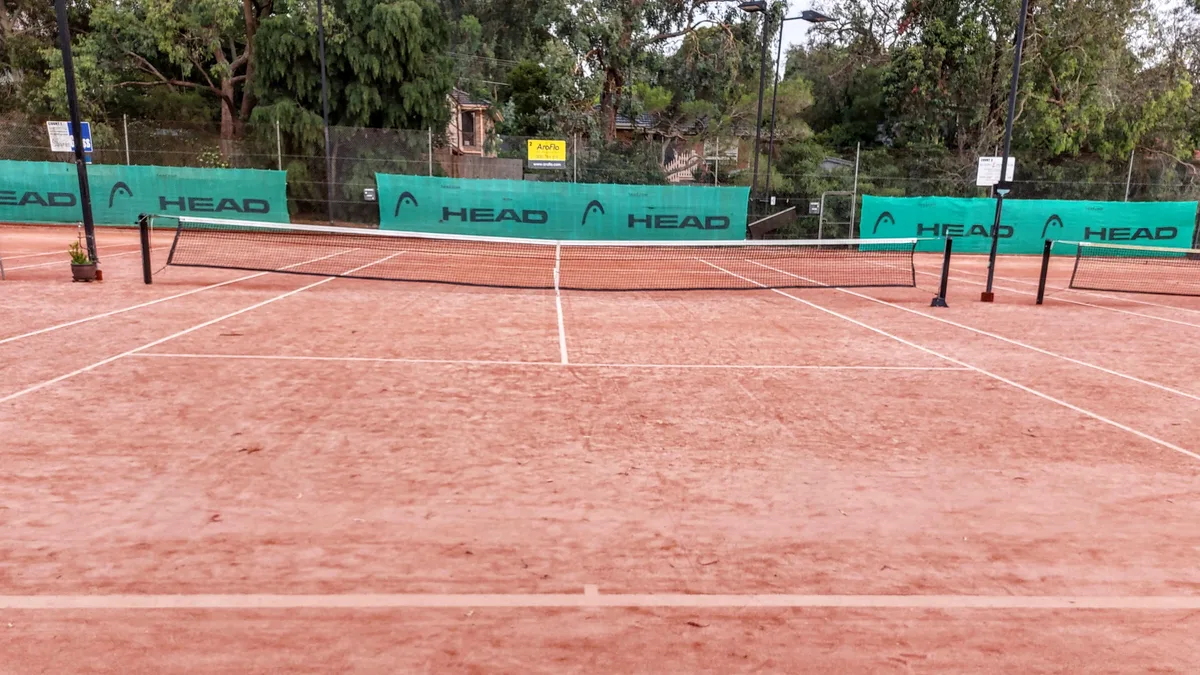
More names, most likely. An investigation that ends with its organiser banned for 24 years and its recruits unnamed is an investigation with announcements still to make, and the ITIA has said its work on the network continues. Milicevic himself has a theoretical route back through appeal, but a player who answered none of seven approaches and one formal notice has shown no sign of wanting a hearing he could have had for free. His playing record stays where it stopped: 11 professional matches across the period in question, a career high of No. 1,338 reached at 17, and a place in the record books he never came close to reaching with a racquet, on the same autumn calendar as Ben Shelton’s birthday win in Shanghai. The court in the file photo for this story is empty. For Milicevic, every sanctioned court now is, until 2050.
Frequently asked questions
How long is Stefan Milicevic banned for?+
Twenty-four years, until October 8, 2050, when he will be 53. While suspended he cannot play in, coach at or attend any event organised or sanctioned by World Tennis, the ATP, the WTA, the Grand Slam tournaments or any national association, Sky Sports reports, and he has also been fined $70,000.
What did the ITIA find Milicevic did?+
That he fixed six matches between 2022 and 2024, five of them matches he played in himself, attempted to fix six more, and recruited or attempted to recruit multiple professional players as part of a corrupt network, which resulted in a number of other players fixing matches, the ITIA said, via Sky Sports and the Associated Press.
Why is the ban so long for a player ranked No. 1,338?+
Because of the recruiting. The ITIA confirmed the length reflected the seriousness of the offences and his attempts to involve other professionals, not his failure to cooperate, TennisUpToDate reports. A player who sells his own matches damages his own results; a player who builds a network damages other people's, which is why the sanction runs to 2050.
Did Milicevic defend himself against the charges?+
No. He did not engage with the investigation at all. The ITIA made seven separate attempts to obtain a response through multiple channels, he did not reply to the Notice of Major Offense issued on September 24, and a deemed sanction took effect on October 9 without a hearing before an anti-corruption hearing officer, TennisUpToDate reports.
Who else was involved in the network?+
The ITIA has not said. It has not named the other players who fixed matches, identified which matches were fixed, or detailed the fixtures involved, the Associated Press reports. The agency's wider investigation is ongoing, and TennisUpToDate reports his former doubles partner Marino Jakic is provisionally suspended while a separate investigation continues, which is not a final finding.
How much tennis had Milicevic actually played?+
Very little at any level above the tour's third tier. He played 11 professional matches in the 2022 to 2024 period the charges cover, all of them on the third tier, the New York Post reports, and his career-high singles ranking was No. 1,338, reached as a teenager in August 2014. Tennis Watcher puts his career prize money at $4,858, against a $70,000 fine.
Sources
- Sky Sports: Stefan Milicevic given 24-year ban for match-fixing (the ITIA statement, the corrupt-network charge, the $70,000 fine and the October 8, 2050 end date)
- Associated Press via theScore: Serbian tennis player gets 24-year ban for match fixing (the six fixed and six attempted matches, the unnamed players and matches, and the non-cooperation finding)
- TennisUpToDate: ITIA bans Serbian tennis player until 2050 (the seven contact attempts, the September 24 notice, the deemed sanction of October 9, the sanction reasoning and the Jakic provisional suspension)
- New York Post: Serbian tennis player hit with 24-year ban in match-fixing scandal (the 11 third-tier matches played in the period and the seven attempts to reach him)
- Tennis Watcher: Serbian player banned 24 years for match-fixing network (the organiser framing of the case and the $4,858 career prize-money figure)
Play & tools
Free browser games and tools — no account, no download.
- Play today's Sports Connections — Today's Sports Connections — daily hints, answers, and play the grid.
- Play Guess the NFL Player — A new mystery NFL player every day. Eight guesses, with a clue on each — plus free unlimited mode.
- Explore all our games →
Related tennis guides
View all →
Monfils's Paris Farewell Is Off After an Anti-Doping List Retired Him First
Gael Monfils has been on the ITIA retired list since October 5, ending his career weeks before the Paris Masters farewell he was expected to get.
A Ball Fell From Fritz's Pocket Twice, and Tsitsipas Had to Earn Match Point Again
Taylor Fritz lost a ball from his pocket on consecutive points at 2-5 in the third set in Shanghai, a match point was replayed, and Stefanos Tsitsipas still closed it out.
Gea's Shanghai Run Ends After 22 Minutes as a Psoas Injury Stops His Quarter-Final
Arthur Gea's breakout Shanghai run ended in his first Masters 1000 quarter-final, retiring at 4-1 down against Davidovich Fokina with a psoas injury felt in the warm-up.
Carlos Alcaraz and His Whole Team Wear Moustaches in Shanghai After a Tokyo Pact
Carlos Alcaraz opened his Shanghai Masters campaign sporting a moustache, and so did his entire team box, after a pact made celebrating his Tokyo title.
Terence Atmane Apologizes After Racket Throw Nearly Brings a Default in Shanghai Qualifying
Terence Atmane threw his racket toward the side fence in Shanghai qualifying, retired against Bernard Tomic, then apologized and said he will step back.
Coco Gauff Calls Out 'Insane' Racist Abuse After Replayed Point at the China Open
Coco Gauff said she received an 'insane' amount of racist abuse online after a flickering LED board got a point replayed in her China Open win over Sun Xinran.